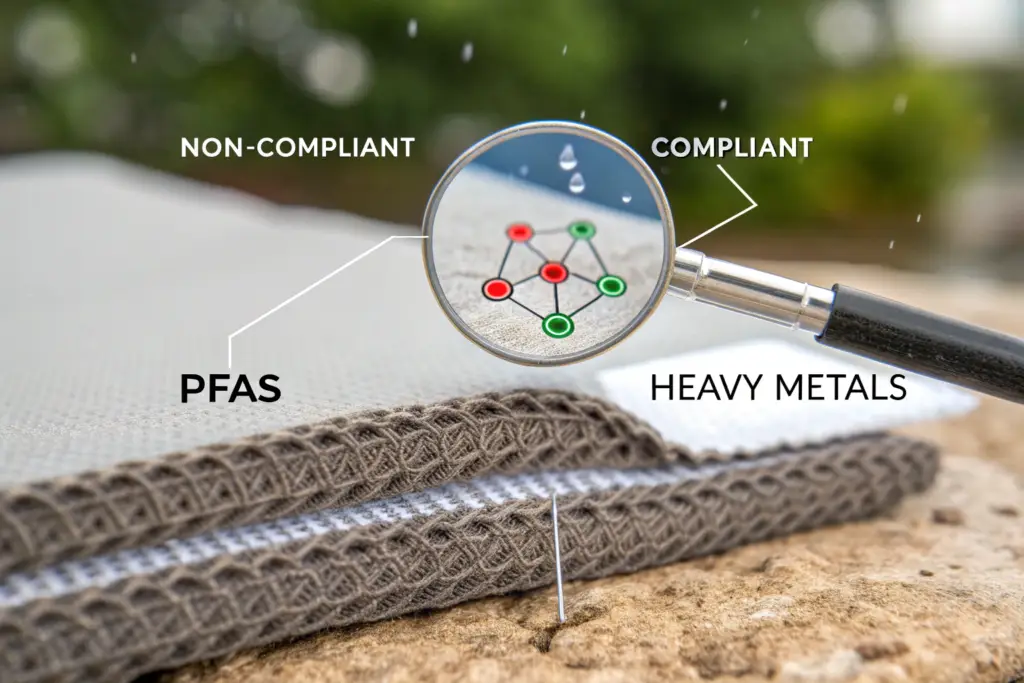
The waterproof coating on a ski jacket is its first line of defense against snow and sleet, a critical performance feature that defines the garment's utility. This coating—whether a polyurethane (PU) layer, a polyvinyl chloride (PVC) derivative, or the chemistry behind a Durable Water Repellent (DWR) finish—is a complex application of chemicals. For consumers and brands prioritizing safety, a pressing question arises: does the pursuit of dryness come at a hidden chemical cost? The answer hinges not on the function of waterproofing itself, but on the specific substances used to achieve it and whether they fall within the strict limits set by OEKO-TEX®.
Yes, waterproof coatings on ski jackets can be OEKO-TEX® compliant, but compliance is not inherent to the technology. It is achieved only when the coating formulation excludes or strictly limits restricted substances such as certain plasticizers, solvents, heavy metal catalysts, and, most critically, per- and polyfluoroalkyl substances (PFAS) used in traditional DWR finishes. The coating is treated as an integral part of the textile substrate during certification testing, meaning the entire coated fabric must pass the OEKO-TEX® STANDARD 100 criteria.
At Shanghai Fumao, we confronted this issue head-on with a client in 2023 who was experiencing inconsistent waterproof performance in their mid-tier ski jacket line. The root cause was traced to an inexpensive, non-certified PU coating that used organotin compounds as catalysts—substances restricted by OEKO-TEX® due to their toxicity. While the coating initially repelled water, the chemical instability led to premature cracking and failure. We switched to a PU coating from an OEKO-TEX® certified mill that used compliant catalysts. Not only did this solve the performance issue (the coating remained flexible and durable), but it also allowed the entire jacket to be certified. The client’s return rate for waterproofing failures dropped by over 60%, proving that compliant chemistry often correlates with superior, durable performance.
What Types of Waterproof Coatings Are Used, and What Are Their Risks?
Understanding the common coating technologies is essential to evaluating their compliance pathways. Each has a distinct chemical profile with specific risk factors.
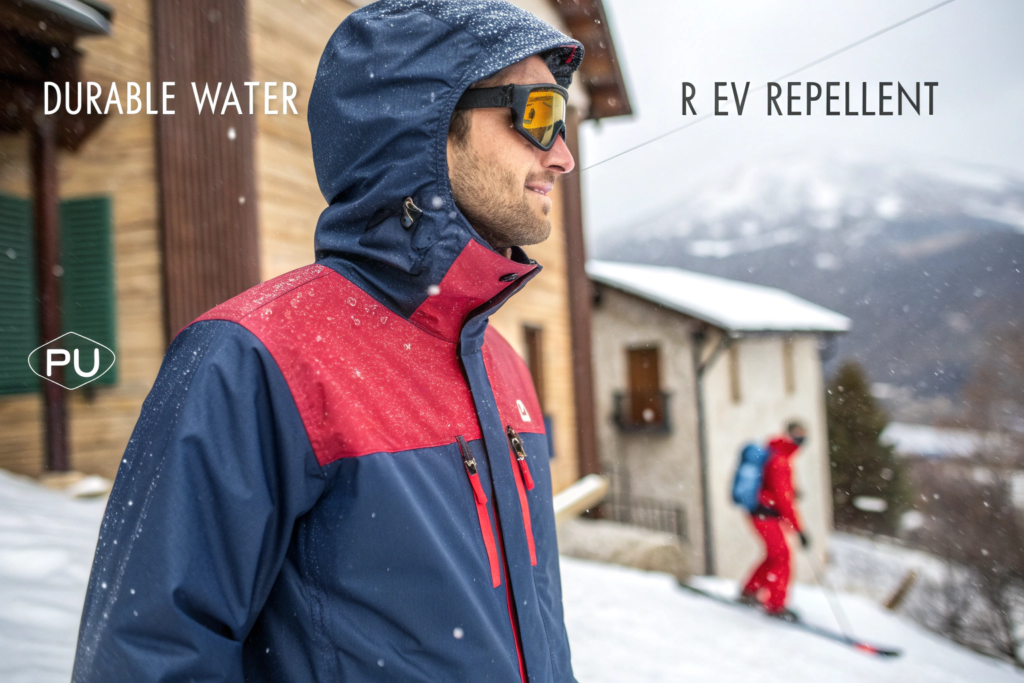
The primary types are Durable Water Repellent (DWR) finishes applied to the face fabric, and hydrophilic or microporous polyurethane (PU) coatings/laminates that create a waterproof barrier. Older technologies like PVC coatings are now rare in performance skiwear due to weight and environmental concerns.
1. Durable Water Repellent (DWR) Finishes
- Function: Does not make fabric waterproof. It causes water to bead up and roll off the outer surface, preventing the face fabric from becoming saturated ("wetting out"), which would compromise breathability.
- Traditional Chemistry: Long-chain PFAS (C8, C6 fluorocarbons). These are highly effective and durable but are now widely restricted due to their persistence as "forever chemicals."
- OEKO-TEX® Compliance Challenge: PFAS are heavily regulated under OEKO-TEX®. To be compliant, DWR finishes must now be PFAS-free, relying on alternatives like:
- Hydrocarbon-based (C0) DWR: Uses silicone or paraffin wax chemistry. Softer hand feel, but may have lower durability and require more frequent re-treatment.
- Dendritic Polymer Technology: A newer, high-performance PFAS-free option offering good durability.
- What is Tested: The presence and concentration of restricted PFAS compounds, as well as any other additives (e.g., cross-linking agents, solvents) in the finish.
2. Polyurethane (PU) Waterproof Coatings and Laminates
- Function: A continuous layer that physically blocks liquid water while allowing vapor (sweat) to pass through via molecular diffusion (hydrophilic) or microporous structure.
- Chemistry: The PU polymer itself is generally inert. The risks come from:
- Solvents: Used in application (e.g., dimethylformamide - DMF, now largely phased out but still restricted).
- Catalysts: Such as organotin compounds or mercury-based catalysts, used to speed up the polymerization reaction.
- Plasticizers: Added to keep the coating flexible in cold temperatures (e.g., certain phthalates).
- Isocyanates: Residual monomers from PU formation.
- OEKO-TEX® Compliance Challenge: The certification ensures that residuals of these harmful processing chemicals are below strict limits. A compliant PU coating uses safer catalysts (e.g., bismuth, zinc) and has efficient curing and washing processes to remove residuals.
How Does OEKO-TEX® Testing Actually Evaluate a Coated Fabric?
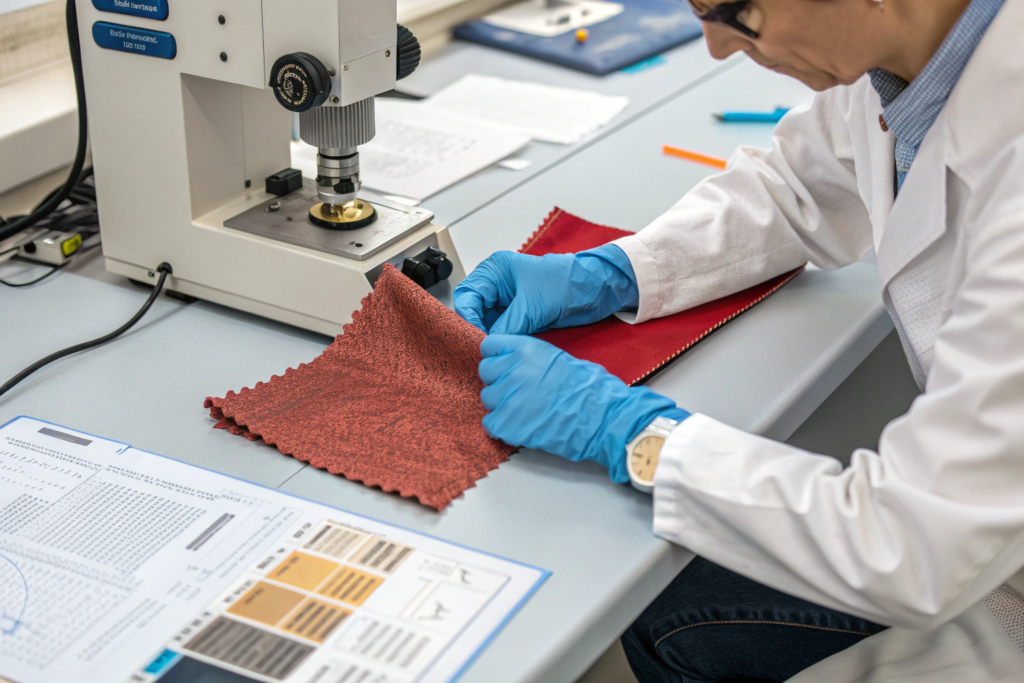
The coating isn't tested in isolation; it is tested as part of the finished textile article. This holistic approach is crucial because chemicals can migrate.
OEKO-TEX® testing evaluates the coated fabric through extraction tests that simulate various exposure scenarios (saliva, sweat, acidic/alkaline environments) to see what chemicals leach out, and through analysis that detects the presence of restricted substances within the coating matrix itself. The fabric sample, including its coating, is subjected to a battery of chemical analyses.
Key tests relevant to waterproof coatings include:
- Extraction with Artificial Perspiration (Acidic & Alkaline): Simulates what might transfer to skin from a lining or cuff. Can detect plasticizers, dyes, heavy metals.
- Extraction with Artificial Saliva: Critical for children's wear (Class I), relevant for glove cuffs or bibs.
- Gas Chromatography-Mass Spectrometry (GC-MS): Identifies and quantifies volatile and semi-volatile organic compounds (VOCs/SVOCs) like residual solvents, certain plasticizers, and PFAS.
- Tests for Heavy Metals: Like antimony (a catalyst in polyester, which may be the base fabric) or cadmium/lead (potential impurities in colorants or coatings).
A "pass" means that under these aggressive extraction conditions, the amount of any restricted substance that migrates from the coated fabric is below the stringent OEKO-TEX® limit. This provides a high safety margin for real-world use, even when the jacket is exposed to sweat, rain, or friction.
The Critical Concept of "Article"
In OEKO-TEX® terms, the coated fabric is an "article." If a brand purchases pre-coated fabric, the coating mill should have an OEKO-TEX® certificate for that specific coated fabric. If a garment factory applies the coating, then that factory's coating process and chemistry must be part of their certified production system. As a brand, you need to know which scenario applies and request the appropriate certificate.
How Can Brands Specify and Verify Compliant Waterproofing?
As a brand, you cannot assume compliance based on a supplier's generic claims of "waterproof" or "eco-friendly." Proactive specification and verification are required.
Brands must explicitly require OEKO-TEX® compliance for waterproof coatings in their technical packs, demand valid certificates from the coating applicator (mill or factory), and consider performance testing to ensure the compliant coating also meets functional durability standards. This two-pronged approach covers both safety and performance.
Step-by-Step Verification Guide:
- In Your Tech Pack: Under "Material Spec," write: "Outer shell fabric must be OEKO-TEX® STANDARD 100 certified, including all waterproof coatings and DWR finishes. PFAS-free DWR is required."
- Request Documentation: From your garment manufacturer, request:
- The OEKO-TEX® certificate for the coated shell fabric. The "Article Description" should mention the coating (e.g., "Polyamide woven fabric with polyurethane coating").
- A Statement of Compliance from the coating mill confirming the DWR is PFAS-free, if not explicitly stated on the certificate.
- Verify the Certificate: Use the OEKO-TEX® online database. Check that the certificate is valid and issued to the fabric/coating mill.
- Audit Performance: Compliant chemistry must not sacrifice performance. Order a laboratory test for:
- Water Resistance: AATCC 22 (Spray Test) or ISO 4920.
- Hydrostatic Head: ISO 811 to measure waterproofness in mm.
- Durability to Washing: Test water resistance after 5, 10, and 20 washes (AATCC 135) to ensure the coating or DWR is durable.
A manufacturer like Shanghai Fumao can facilitate all this. We provide certified coated fabrics from vetted mills and can arrange independent performance testing, giving you a single point of accountability for both safety and function.
What Are the Red Flags?
- Supplier says: "The coating is safe, but we don't have a separate certificate for it." (The coating is part of the fabric article and must be included in the fabric's certificate.)
- Supplier says: "Our DWR is C6, it's eco-friendly." (C6 is a PFAS. It is being phased out and is likely non-compliant with upcoming standards.)
- You receive a certificate for the "base fabric" only, with no mention of coating. This is insufficient.
What Is the Future of Compliant Waterproofing? PFAS-Free DWR.
The industry is in a definitive transition away from PFAS-based chemistry. The OEKO-TEX® 2024/2025 updates are accelerating this shift.
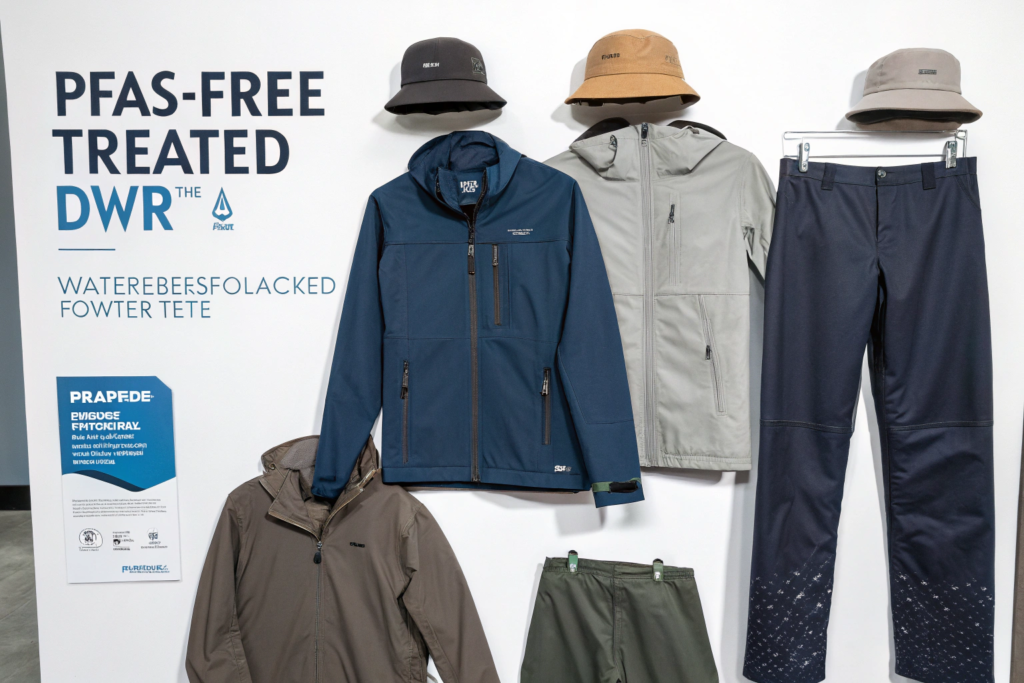
The future is PFAS-free DWR (often called C0 DWR). While earlier generations had performance gaps, newer technologies using dendritic polymers or advanced silicone hybrids are closing the durability gap, offering robust water repellency that withstands multiple washes and abrasion. The key for brands is to work with mills and manufacturers who are investing in these next-generation solutions.
Performance Trade-offs and Management:
It's acknowledged that some PFAS-free DWR may initially have slightly lower durability than legacy C8 finishes. However, this can be managed through:
- Consumer Education: Care labels that recommend gentle washing and reproofing with aftermarket PFAS-free sprays.
- Design: Using face fabrics that physically shed water more easily (e.g., certain weaves).
- Quality Application: Ensuring the DWR is applied evenly and cured properly at the mill.
The sustainable branding opportunity is significant. Marketing a jacket with "High-Performance, PFAS-Free Waterproofing" aligns with consumer values and positions the brand as a responsible leader.
Conclusion
The waterproof coating on a ski jacket is absolutely capable of being OEKO-TEX® compliant, but this status is earned through deliberate chemical formulation and rigorous third-party testing—not bestowed by function alone. For brands, the mandate is clear: move beyond performance specs to chemical specs. Require OEKO-TEX® certification for the coated fabric, demand transparency on PFAS status, and validate that compliance does not compromise technical performance. In doing so, you ensure that the barrier keeping your customers dry is not also a source of hidden chemical exposure.
The mountain environment deserves respect, and that includes ensuring our gear protects without polluting—externally or internally.
Ready to source ski jackets where waterproofing is both high-performance and verified safe? Partner with Shanghai Fumao. We connect you with OEKO-TEX® certified, PFAS-free waterproof technologies that don't force you to choose between dryness and responsibility. Contact our Business Director Elaine to develop your next technically sound and chemically clean collection: elaine@fumaoclothing.com.