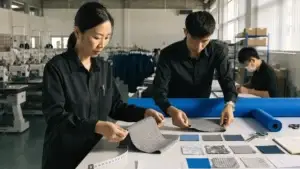
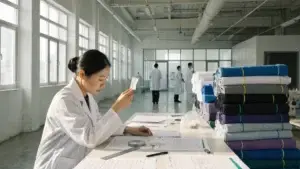
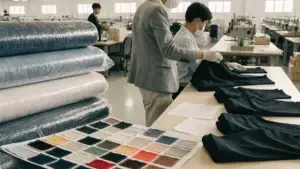
The 3-layer (3L) ski shell—comprising an outer face fabric, a waterproof/breathable membrane, and an inner lining—represents the pinnacle of weather protection technology. For brands and consumers, the promise is total defense against wind, snow, and moisture. Yet, this performance relies on a complex lamination of distinct materials, each with its own chemical profile. From a safety and compliance perspective, treating this laminate as a single, homogeneous material is a critical and risky oversight. The chemical integrity of the final garment depends on the safety of each individual layer, as harmful substances can migrate from one to another during lamination, wear, or cleaning.
Every layer in a 3-layer ski system must be independently tested and certified because chemical residues from any single component can compromise the entire laminate's safety, performance can degrade due to incompatible chemistries between layers, and full supply chain transparency is required to mitigate risk and ensure end-product integrity. Relying on a final garment test alone is like checking a car's safety rating without inspecting the brakes, airbags, and frame separately—it misses critical points of failure.
At Shanghai Fumao, we encountered a stark lesson in 2022. A client sourced a 3-layer laminate from a new supplier that provided an OEKO-TEX® certificate for the "final fabric." During our pre-production spot-check, we independently tested the inner lining mesh separately. The results showed elevated levels of an allergenic disperse dye—a substance restricted by OEKO-TEX® but not flagged in the composite test because its concentration was diluted across the total weight of the three layers. The face fabric and membrane were clean, but the lining was not. Had we proceeded, the finished jackets would have failed a rigorous audit. We rejected the fabric, sourced a pre-certified lining, and had it laminated in-house under controlled conditions. This incident, which cost us time but saved the client a major recall, cemented our protocol: every component layer must arrive with its own, valid certification.
How Do Chemicals Migrate Between Laminated Layers?
The lamination process itself, along with the conditions of use, creates pathways for chemical transfer. Understanding these mechanisms underscores why composite testing is insufficient.
Chemicals can migrate between layers via diffusion during the high-heat and pressure of lamination, through off-gassing and re-deposition over time, and via moisture transport (sweat, rain) during wear which acts as a solvent, carrying substances from one layer to another and potentially to the wearer's skin. A 3-layer laminate is not a sealed, inert sandwich; it's a dynamic system.
Key migration pathways:
- Thermal Migration during Lamination: The adhesives (hot melt or solvent-based) used to bond the layers are applied with heat. Residual solvents, plasticizers, or softeners in any of the three layers can become volatile, migrating into the adhesive or adjacent layers. If the membrane contains non-compliant substances, they can transfer to the inner lining that touches the skin.
- Off-Gassing and Condensation: Certain chemicals, like formaldehyde or toluene, can slowly off-gas from one layer and condense on another, especially within the microclimate of the sealed jacket.
- Moisture-Mediated Transfer: This is most critical for ski wear. Perspiration is slightly acidic and contains salts and oils. As it moves from the skin through the lining and membrane via vapor, it can solubilize and carry chemical residues from the membrane's inner surface or adhesive back towards the skin. This is a direct exposure route.
Therefore, certifying only the final laminated fabric provides a snapshot that may average out a "hotspot" of contamination in one layer. Independent, layer-specific testing identifies and isolates risk at its source.
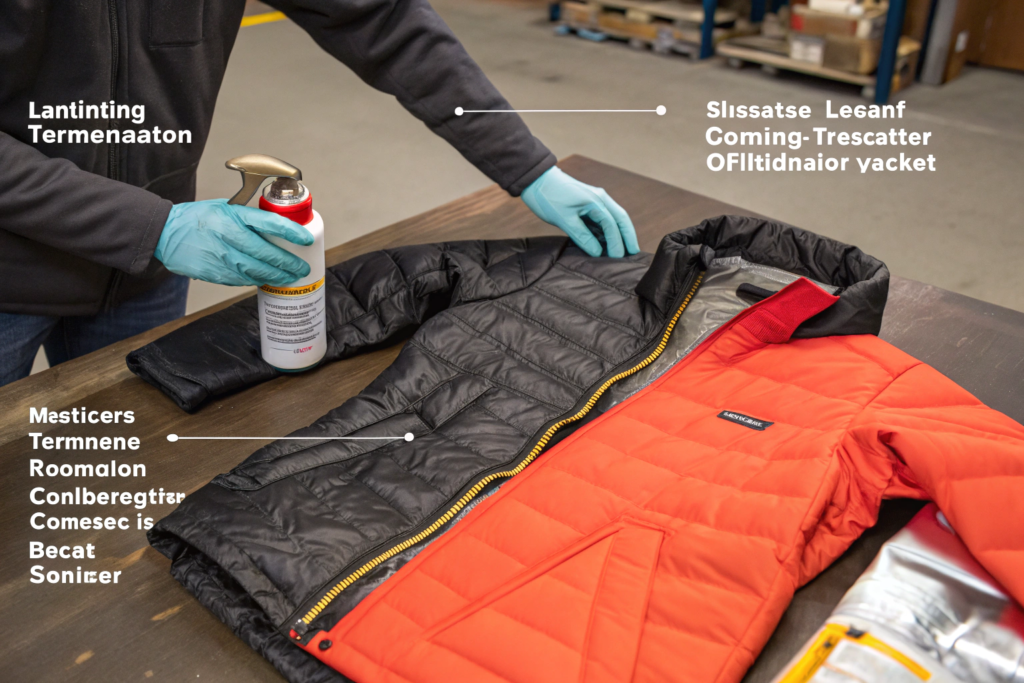
What Are High-Risk Substances Specific to Each Layer?
Each layer has unique chemical processes that introduce specific risks:
- Outer Face Fabric: Dyes, Durable Water Repellent (DWR) finishes (historically PFAS/PFC-based), processing aids, and anti-static agents.
- Waterproof Membrane: Often a polyurethane (PU) or ePTFE (like GORE-TEX) layer. PU production can involve solvents (DMF, MEK) and catalysts. ePTFE membranes may have oleophobic treatments.
- Inner Lining/Scrim: This is the critical interface with skin. It's often a lightweight polyester or nylon mesh. Risks include allergenic disperse dyes, heavy metals in pigments, and chemical softeners.
- Adhesive/Lamination Chemistry: The "glue" holding it all together. Can contain residual solvents, monomers, and plasticizers.
An independent certification for the lining (to OEKO-TEX® Class II, ideally) is non-negotiable. The membrane and face fabric, while not in direct skin contact, must also be certified to prevent them from contaminating the lining over time.
What Are the Performance Risks of Non-Certified Layers?
Beyond health, using non-certified or incompatible layers can sabotage the technical performance that defines a 3L system. The chemistry must work in harmony.
Non-certified layers pose performance risks including delamination due to incompatible adhesives, degradation of the DWR finish, reduced breathability from chemical clogging of the membrane's pores, and accelerated wear from internal chemical breakdown. The high cost of a 3L garment is justified by its durability and performance; uncertified materials jeopardize that value proposition.
Specific performance failures linked to chemistry:
- Adhesive Failure: Residual surfactants or spin finishes on non-certified face fabric can inhibit adhesive bonding, causing the layers to separate (delaminate) after repeated flexing or washing.
- Membrane Clogging: Certain lubricants or softeners from an uncertified lining can volatilize with body heat and condense on the inner surface of the microporous membrane, physically clogging the pores and drastically reducing breathability. This is often perceived as the jacket "wetting out" from the inside.
- DWR Inactivation: Alkaline or acidic residues from dyeing or finishing can neutralize the chemistry of a fluorocarbon-free DWR, causing it to fail prematurely, leading to the outer fabric saturating with water ("wetting out").
When each layer is independently certified, the chemistry is controlled and documented, ensuring compatibility. Certified materials from reputable mills are processed to remove these interfering residues. This is a core part of quality assurance that protects your brand from performance-based returns and warranty claims.
How Does This Impact Durability and Warranty Claims?
A 3L jacket is a long-term investment. Its failure reflects poorly on the brand.
Customers experiencing delamination or loss of waterproofness often file warranty claims. If the root cause is traced to chemical incompatibility between non-certified layers, the brand bears the full cost of replacement and damaged reputation. By sourcing independently certified layers, the brand transfers this compatibility risk upstream to the material suppliers who are responsible for their product meeting the OEKO-TEX® standard, which includes parameters for material compatibility. This provides a stronger basis for recourse and reduces internal warranty costs.
How to Implement and Verify a Layer-by-Layer Certification Protocol?
For brands, this requires a shift in sourcing strategy and supplier management. The goal is to build a verifiable chain of custody for each layer before they are ever laminated.
Implementing a layer-by-layer protocol means specifying and procuring each component (face fabric, membrane, lining) separately with its own OEKO-TEX® certificate, then working with a laminator and garment manufacturer who can track and verify these materials through production. This adds steps but de-risks the entire operation.
A practical implementation workflow:
- Specify & Source Separately:
- Face Fabric: Source from a mill with OEKO-TEX® certificate for the finished, DWR-treated fabric.
- Membrane: Source from a chemical company (e.g., GORE-TEX, proprietary PU) with its own product certification.
- Lining: Source a lining fabric with a OEKO-TEX® Class I or II certificate.
- Qualify the Laminator: Your laminator must be able to:
- Receive and store each certified material separately.
- Use OEKO-TEX® compliant adhesives.
- Provide documentation tracing each roll of laminated fabric back to the certificate IDs of its three components.
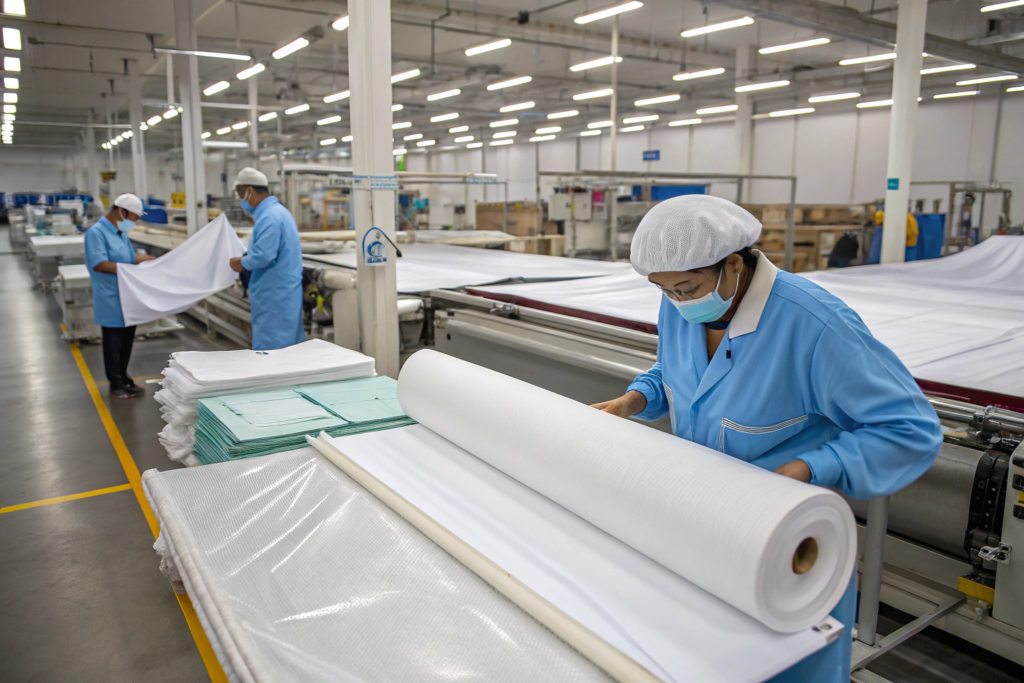
- Garment Manufacturer Verification: Your final factory (like Shanghai Fumao) must verify the laminated fabric roll arrives with a "passport" listing the three component certificates. They should also conduct random batch testing on incoming laminated fabric to ensure no contamination occurred during lamination.
This model gives you maximum control and transparency. It is how we manage high-integrity 3L production for our most demanding clients.
What Documentation Should You Demand from Suppliers?
For each layer, demand:
- The official OEKO-TEX® STANDARD 100 certificate in the supplier's name.
- A test report or statement of conformity linking the specific batch/lot number of material you are purchasing to that master certificate.
- Safety Data Sheets (SDS) for key chemical treatments (DWR, membrane coating).
For the laminator, demand a lamination report for your order that includes the three input certificate numbers and the output roll numbers.
This creates a paper trail that can be audited at any point.
What Are the Cost and Lead Time Implications?
This rigorous approach has tangible impacts on the production schedule and cost, but they are investments in risk mitigation.
Implementing independent layer certification adds 2-4 weeks to the sourcing timeline and increases material costs by 15-25% compared to sourcing a pre-laminated, generically certified fabric of unknown layer integrity. However, it drastically reduces the risk of batch failure, warranty cost, and brand liability. The cost is in due diligence; the savings are in crisis aversion.
Cost Breakdown (Per Meter of 3L Fabric):
- Generic "Certified" Laminate (No Layer Proof): $10.00
- Independently Certified Layers: $11.50 - $12.50
- Premium for certified face fabric: +$0.50
- Premium for certified membrane: +$0.50
- Premium for certified lining (Class II): +$0.50
- Administrative & verification cost: +$0.50
Timeline Impact:
- Standard Sourcing: Select pre-laminated fabric from a swatch book: 1 week.
- Certified Layer Sourcing: Identify and qualify three separate suppliers, receive and verify certificates, send components to laminator: 3-5 weeks.
For brands producing high-value technical shells, this premium is a justifiable cost of doing business responsibly. It is the price of absolute confidence.
Conclusion
The 3-layer ski system is a marvel of textile engineering, but its complexity demands an equally sophisticated approach to safety assurance. Independent testing and certification of each layer is not an optional extra; it is a fundamental requirement for any brand that takes performance, durability, and consumer health seriously. It closes the loopholes of composite testing, ensures chemical compatibility for long-term performance, and builds an auditable, transparent supply chain.
In an industry where trust is worn on the outside but built from the inside out, there is no substitute for this level of diligence. The mountain environment is punishing enough; your gear's chemical makeup shouldn't add to the risk.
If you are developing 3-layer ski apparel where every detail counts, partner with a manufacturer who understands that safety is built layer by layer. At Shanghai Fumao, our vertically integrated approach to certified material sourcing and controlled lamination ensures your 3L systems are safe from the ground up. Contact our Business Director Elaine to engineer your next collection with uncompromising integrity: elaine@fumaoclothing.com.