Transitioning an existing ski apparel collection to full OEKO-TEX® certification is a strategic business move that goes beyond a simple material swap. It’s a deliberate process of supply chain transformation, requiring careful planning, phased execution, and clear communication. For brands feeling the pressure from consumers and retailers for greater transparency, or those seeking to future-proof against tightening regulations, this transition is no longer optional—it’s imperative. However, a haphazard approach can lead to production delays, cost overruns, and inconsistent messaging. The key is to treat it not as a procurement exercise, but as a product line evolution managed with the precision of a ski descent.
To successfully transition your ski collection to fully OEKO-TEX® certified, you must adopt a phased, category-prioritized approach, conduct a comprehensive material audit, engage in deep collaboration with a certified manufacturing partner, and develop a clear marketing rollout plan that communicates the added value to your customers. The goal is to achieve 100% certification without disrupting sales, damaging margins, or confusing your brand narrative.
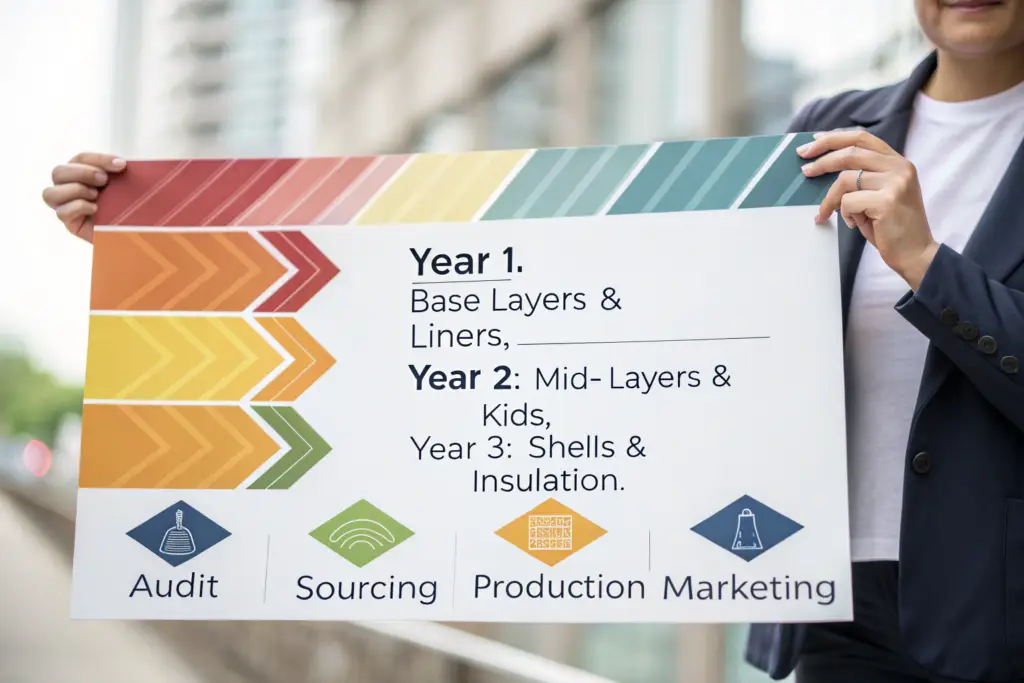
At Shanghai Fumao, we guided a well-established mid-market ski brand through a two-year, full-line transition. They began with a scattered assortment of certified and non-certified products, causing confusion in their marketing. We started by mapping their entire best-selling collection (over 80 SKUs) against our database of certified material alternatives. We then executed a 3-phase plan: Year 1 focused on all next-to-skin layers (base layers, glove liners); Year 2 transitioned mid-layers and kids' wear; Year 3 completed the overhaul with technical shells and insulated apparel. This phased approach allowed them to manage cash flow, test market reception, and build a compelling "Journey to Clean" story that actually increased customer engagement over time. Their wholesale sell-through for transitioned categories improved by an average of 18%.
What Is the First Step: The Pre-Transition Audit?
Before changing a single thread, you must know exactly what you’re working with. A thorough audit lays the factual groundwork for the entire project.
The first step is a comprehensive pre-transition audit that maps your current Bill of Materials (BOM) for every style, identifies non-certified components, assesses compatibility with available certified alternatives, and calculates the initial cost and timeline implications. This audit turns an abstract goal into a concrete action plan with defined metrics.
The audit should cover four key areas:
- Material Inventory: List every fabric, insulation, membrane, thread, zipper, button, cord, and label in your current collection. For each, note the supplier and whether it has any existing certification.
- Performance Benchmarking: Document the key performance specs of current materials (e.g., waterproof rating, breathability, weight, stretch). This becomes your benchmark for finding certified equivalents.
- Supply Chain Analysis: Identify which suppliers are capable of providing certified versions. This may reveal that some long-term suppliers cannot make the transition, necessitating a search for new partners.
- Cost & Lead Time Baseline: Understand the current cost and lead time for each component. This will be the baseline against which you measure the impact of certification.
This audit is most effective when done in partnership with your manufacturer. At Shanghai Fumao, we provide this as a consulting service. We take a client's tech packs, cross-reference them with our certified material library, and produce a detailed "Transition Readiness Report" that identifies low-hanging fruit (easy swaps) and complex challenges (unique materials needing new certification).

How to Prioritize Which Products to Transition First?
Not all products are created equal from a transition perspective. Prioritization is critical for managing risk and demonstrating early success.
Use this decision matrix to prioritize:
| Priority Tier | Product Types | Why Start Here? |
|---|---|---|
| Tier 1 (High Impact, Lower Complexity) | Baselayers, Beanies, Neck Gaiter, Kids' Apparel. | Direct skin contact carries highest safety need. Often simpler constructions. Market response is strongly positive. Easy "win." |
| Tier 2 (Core Revenue, Medium Complexity) | Fleece Mid-Layers, Softshell Pants, Light Insulated Vests. | High-volume products. Transition stabilizes your core line. More components than Tier 1, but certified options are plentiful. |
| Tier 3 (High Complexity, High Value) | 3-Layer Waterproof Shells, Technical Insulated Jackets, Bib Pants. | Most complex BOMs (multiple fabrics, membranes, laminates, trims). Longest lead times for requalification. Critical to get right for brand reputation. |
Starting with Tier 1 allows you to:
- Build internal confidence and processes.
- Generate marketing stories quickly.
- Manage smaller, less risky initial investments.
- Work out kinks with your manufacturing partner before tackling complex shells.
How to Source and Qualify New Certified Materials?
This is the operational heart of the transition. Sourcing is not just about finding a certified fabric; it’s about finding a certified fabric that meets your performance, aesthetic, and cost parameters.
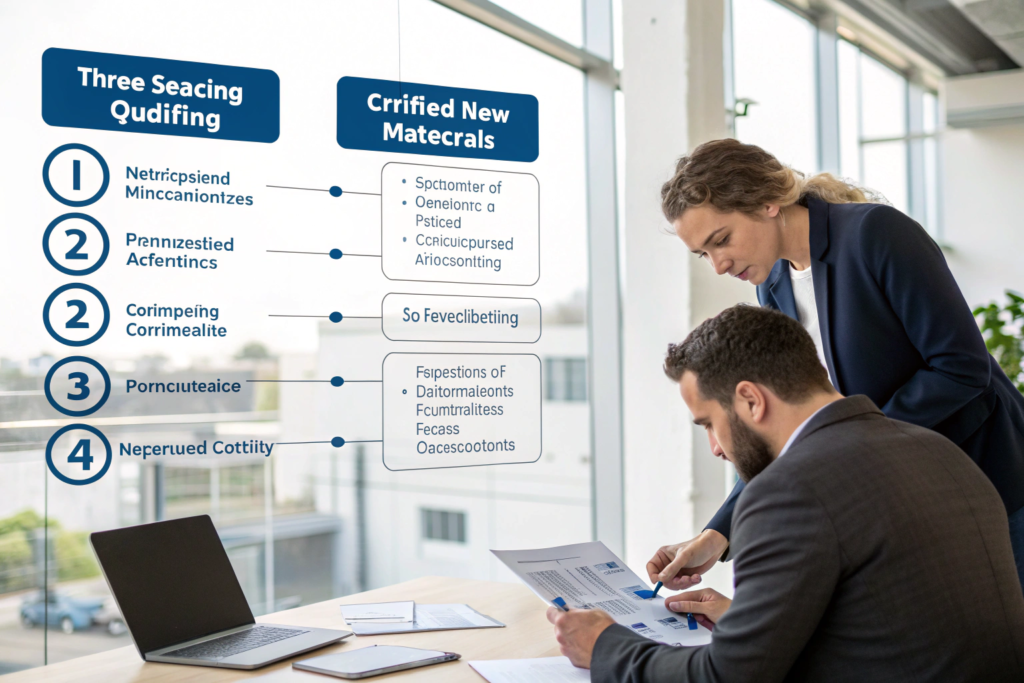
Sourcing and qualifying new certified materials requires a methodical, three-stage process: 1) Identification of potential certified alternatives from your manufacturer’s network; 2) Prototyping and performance testing; 3) Verification of certification documentation and supply capacity. Speed to market is less important than getting it right.
Stage 1: Identification & Sampling
Leverage your manufacturer’s certified material library. A partner like Shanghai Fumao will provide swatch cards of certified fabrics, trims, and insulations that match or exceed your performance benchmarks. Key questions at this stage:
- "Is this material available in the colors we need?"
- "What is the mill's minimum order quantity (MOQ) for this certified fabric?"
- "Can you provide the OEKO-TEX® certificate for this specific material?"
Stage 2: Prototyping & Testing
Never skip full prototyping. Order strike-offs (fabric dyed to your color) and make full prototype garments.
- Wear-Test: Subject the prototype to real-world conditions. Does the new certified membrane breathe as well? Does the face fabric have the same hand-feel?
- Lab-Test: Conduct key performance tests (waterproofness, breathability, colorfastness) to ensure the certified material meets your technical specifications. The cost of testing is insignificant compared to the cost of a failed product launch.
- Fit Verification: Ensure the new fabric’s drape and stretch don’t alter the garment’s fit.
Stage 3: Documentation & Capacity Lock-in
Once a material is approved, secure the supply chain.
- Get the Certificate: Obtain the official OEKO-TEX® certificate for the material, linked to the mill.
- Confirm Lead Times: Understand the mill’s production schedule for this certified fabric.
- Place a Forward Commitment: To secure capacity and potentially better pricing, consider placing an advance order for the fabric needed for your first production run.
How to Manage the Production Transition with Your Factory?
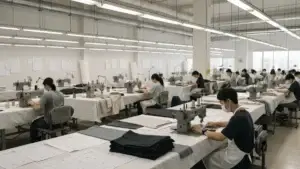
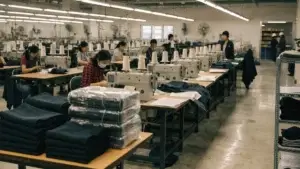
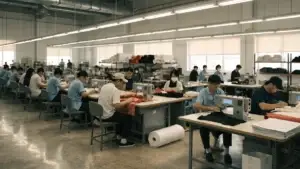
A smooth production handoff from old to new materials is a test of your partnership with your manufacturer. Clear communication and joint planning are essential.
Manage the production transition by establishing a clear timeline with your factory, implementing a "last-time buy" for old materials, conducting a pilot production run, and updating all internal documentation and tech packs to reflect the new certified BOM. Treat the factory as a project manager, not just an order taker.
A successful transition plan should include these milestones:
- Joint Timeline Development: Co-create a calendar with dates for: final material approval, pilot run, main production, and shipment.
- Last-Time Buy Decision: Determine if you will produce one final batch of the non-certified version to cover sales while the certified version is being produced. This prevents a stock-out.
- Pilot Run (Mandatory): Produce a small batch (e.g., 50-100 pieces) of the new certified version. Use this batch for final quality sign-off and for creating new marketing assets (photos, videos).
- Tech Pack & Documentation Update: This is critical. Every style’s tech pack must be updated with the new certified material codes, supplier names, and OEKO-TEX® certificate references. This becomes the single source of truth for all future production.
- Quality Control Protocol Alignment: Ensure the factory’s QC checkpoints are updated to verify the new certified components (e.g., checking for the correct OEKO-TEX® labels).
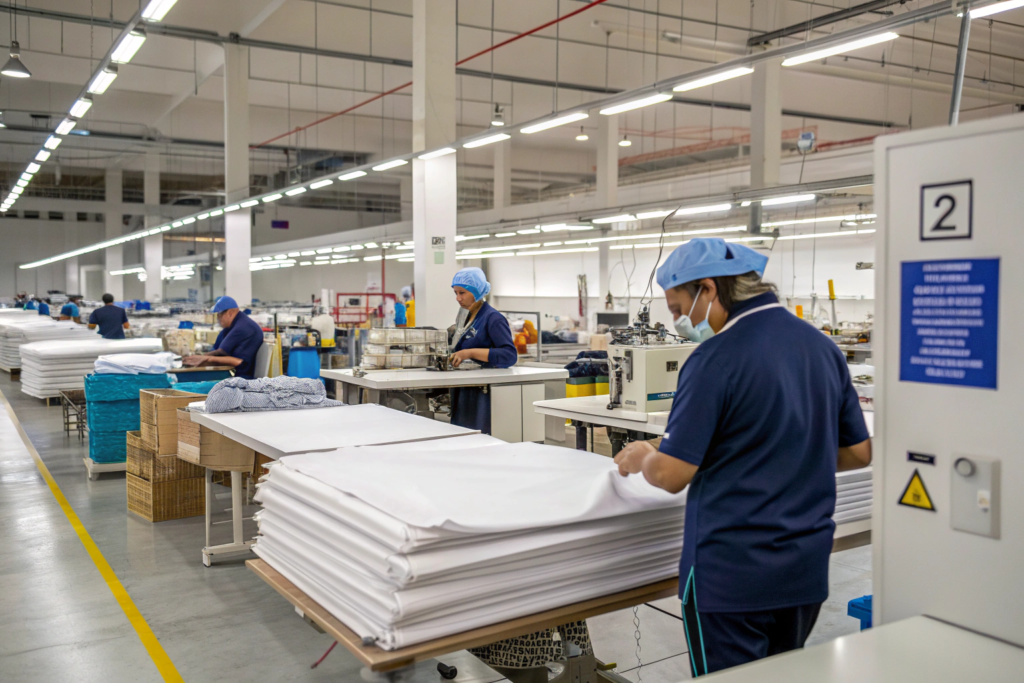
A manufacturer experienced in transitions will have a structured process for this. Our team at Shanghai Fumao assigns a dedicated project manager to oversee such transitions, ensuring no detail is missed between material warehouses, cutting rooms, and sewing lines.
What Are Common Pitfalls in the Production Phase?
- Assuming Compatibility: A new fabric may sew differently, requiring needle or tension adjustments on the production line. The pilot run identifies this.
- Labeling Errors: Ensuring the correct OEKO-TEX® label (Class I, II, or III) is sewn into the correct garment. A detailed specification sheet is vital.
- Documentation Mix-Up: Old and new tech packs must be version-controlled to prevent the factory from accidentally using an old BOM.
How to Communicate the Transition to Your Market?
A transition is a powerful brand story if told correctly. A poorly communicated change can confuse customers or imply previous products were unsafe.
Communicate the transition as an evolution of your brand’s commitment to responsibility, focusing on the added value of third-party verified safety. Use a phased narrative that educates, celebrates milestones, and invites your community along for the journey. Transparency builds trust; marketing spin erodes it.
Phased Communication Strategy:
- Phase 1: The "Why" Announcement (Before Launch): Use your blog, email newsletter, and social media to talk about your brand’s journey. "We’re on a path to ensure every product we make is OEKO-TEX® certified. Here’s why it matters for you and the planet." Focus on education, not sales.
- Phase 2: Category Launch Celebration: When your first certified category (e.g., base layers) launches, make it a event. "Introducing our first fully OEKO-TEX® certified collection: Built for trust, from the skin out." Provide clear explanations of what the certification means.
- Phase 3: Ongoing Progress Reports: Share updates. "This season, 60% of our line is certified. Next stop: 100%." Use infographics to show progress. This builds anticipation and shows commitment.
- Phase 4: Full Line Revelation: When the final category is converted, make it a flagship moment. "Mission Accomplished: Every garment we make is now OEKO-TEX® certified." This is a powerful brand-defining statement.
Update All Customer Touchpoints:
- Website & Product Pages: Update copy and imagery. Feature the OEKO-TEX® logo and a link to a simple explainer page.
- Packaging & Hangtags: Incorporate the OEKO-TEX® label into new packaging designs.
- Sales & Retailer Training: Equip your team and retail partners with simple talking points about the value of the transition.
What Is the Long-Term Impact on Your Brand and Supply Chain?
Completing the transition is not the end; it’s the beginning of operating at a higher standard. The long-term benefits are transformative.
The long-term impact includes a solidified reputation as a trusted, responsible brand, a simplified and de-risked supply chain, increased resilience to regulatory changes, and the creation of a valuable marketing asset that differentiates you in a crowded market. Your supply chain becomes a strategic advantage, not a necessary evil.
Operationally, you will have:
- A Curated Supplier Network: You’ve moved from a scattered group of suppliers to a vetted network of certified partners.
- Streamlined Compliance: No more scrambling for documentation with each order. The system is in place.
- Enhanced Quality Consistency: Certified mills and factories operate under stricter process controls, leading to more predictable, high-quality output.
- Stronger Partner Relationships: You’ve deepened your relationship with a manufacturing partner like Shanghai Fumao who can support your long-term vision.
This foundation allows you to innovate faster and with greater confidence, knowing that safety and responsibility are baked into your process from the start.
Conclusion
Transitioning your entire ski collection to OEKO-TEX® certification is a marathon, not a sprint. It demands strategic planning, disciplined execution, and patient capital. Yet, the reward is a brand fortified with undeniable integrity, a supply chain hardened against risk, and a product line that speaks directly to the values of the modern consumer. In an industry built on trust in harsh environments, this transition is the ultimate investment in your brand's longevity and legacy.
The mountain of work required to achieve 100% certification is daunting, but the view from the summit—a fully transparent, responsible, and trusted brand—is worth the climb.
Ready to begin your transition with a partner who has mapped the route? At Shanghai Fumao, we provide the blueprint, materials, and production expertise to guide your brand to full OEKO-TEX® certification seamlessly. Contact our Business Director Elaine to start your journey: elaine@fumaoclothing.com.