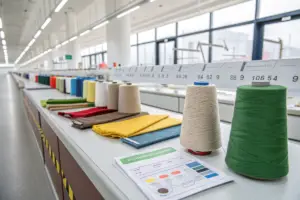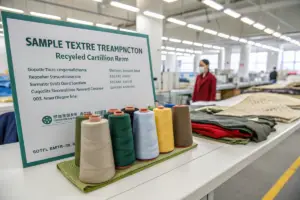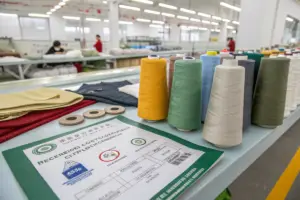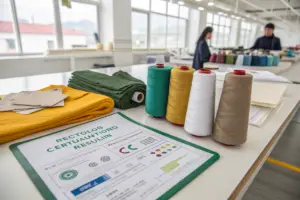
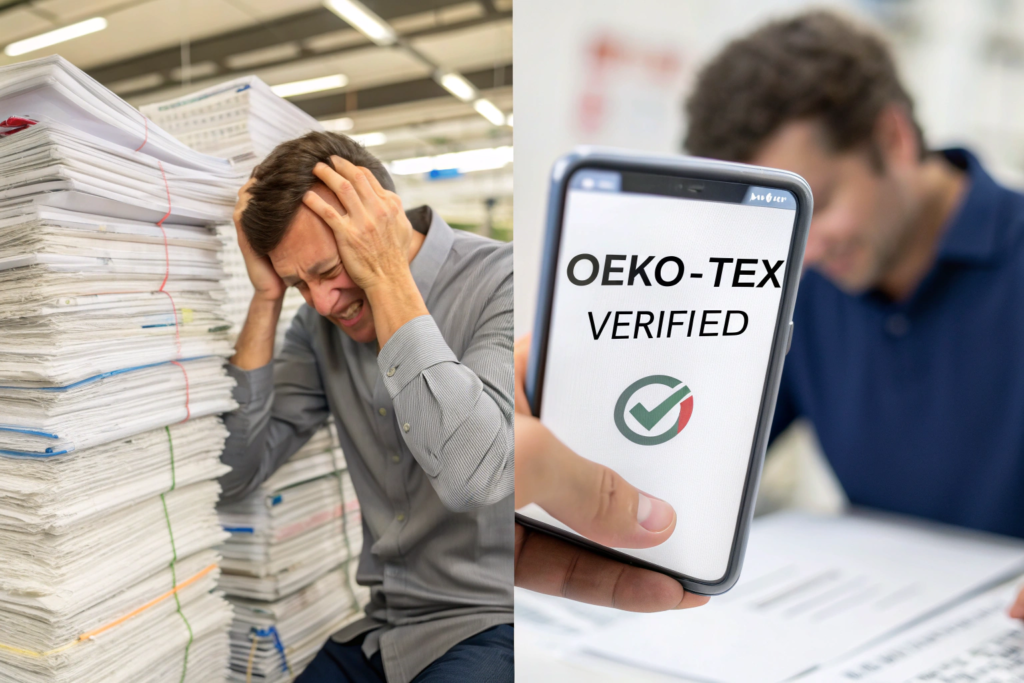
As a buyer, you spend countless hours vetting factories, auditing processes, and inspecting shipments to ensure quality. What if a significant portion of that due diligence could be replaced by a globally recognized, scientific standard? For apparel sourcing, especially in sensitive categories like activewear and children's wear, this is not a theoretical question. OEKO-TEX certification provides a powerful framework that simplifies and supercharges your quality control efforts.
OEKO-TEX certification streamlines buyer quality control by replacing subjective assessments with objective, lab-tested criteria for harmful substances; by establishing a consistent benchmark across all suppliers; and by shifting the burden of proof for chemical safety from the buyer to the certified supply chain. This reduces audit complexity, minimizes risk, and builds a foundation of trust.
This system directly addresses core buyer pain points like inconsistent quality and the fear of supplier fraud. Let's break down exactly how this works to your advantage.
How Does OEKO-TEX Replace Complex Chemical Audits?
Auditing a factory’s chemical management is highly technical. You need to check Safety Data Sheets (SDS), inventory logs, and wastewater treatment—a process prone to obfuscation. The OEKO-TEX STANDARD 100 certification does this work for you. It is not a factory process certificate; it is a product certificate. The end product itself is tested by an independent, accredited institute for a defined list of hundreds of regulated substances.
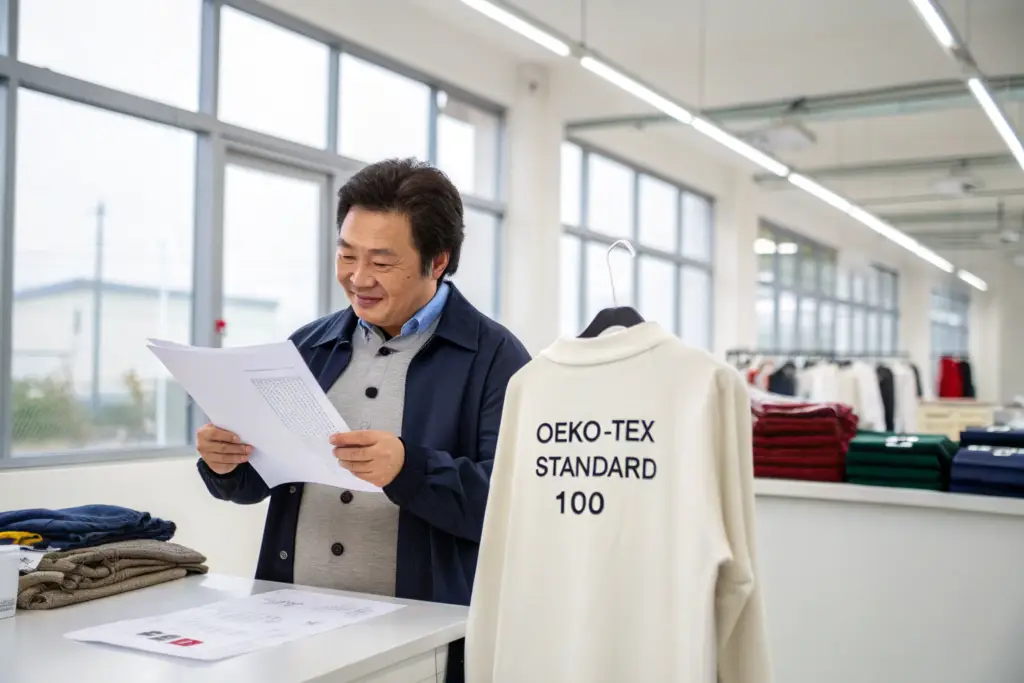
This means you don’t have to be a chemist to ensure safety. You simply verify the valid certificate number in the OEKO-TEX database. For instance, last year, a client from Seattle was evaluating two new potential suppliers for a line of yoga pants. Instead of conducting expensive, on-site chemical audits for both, they prioritized the supplier that could provide current OEKO-TEX certification. This instantly validated the product’s safety and saved them weeks of investigation and thousands of dollars in audit costs.
What Specific Substance Risks Does It Eliminate for Buyers?
OEKO-TEX testing covers risks buyers often lack the resources to check:
- Heavy Metals: Like lead in pigments or antimony in polyester.
- Allergenic Disperse Dyes: Common in polyester but restricted for skin contact.
- PFAS (Forever Chemicals): Used in water-repellent finishes.
- Formaldehyde: Used for wrinkle resistance.
- Pesticide Residues: In natural fibers like cotton.
By requiring this certification, you delegate the complex task of screening for these substances to experts. The certificate is your proof of due diligence, significantly simplifying your own quality assurance protocol.
How Does This Prevent Supplier Fraud on Specifications?
A common issue is suppliers substituting cheaper, non-compliant fabrics or trims. Because an OEKO-TEX certificate is issued for a specific article/product, any unapproved material change invalidates it. This acts as a powerful deterrent. At Shanghai Fumao, our certification covers precisely what we produce. If a buyer requests a material change, we must re-submit for testing. This system creates a verifiable chain of custody that protects you. It transforms quality control from a reactive inspection to a proactive, built-in constraint on the manufacturing process.
How Does It Create a Unified Quality Benchmark Across Suppliers?
Managing multiple suppliers across different countries leads to inconsistent quality standards. Each factory has its own “good enough.” OEKO-TEX provides a single, unambiguous benchmark that every supplier must meet, regardless of location. This is invaluable for buyers sourcing from China, Vietnam, and India simultaneously.
You can issue one clear directive: “All fabrics and final garments must comply with OEKO-TEX STANDARD 100, Class I for kids wear, Class II for adult wear close to skin.” This replaces pages of subjective quality descriptions. We use this standard internally as the baseline for all our production at Fumao Clothing. It ensures that whether we’re producing knit polos or woven jackets, the fundamental safety quality is consistently high, making our clients’ supply chain management far more straightforward.

How Does This Simplify the Tech Pack and Communication?
Inefficient communication with sales reps often stems from ambiguous quality terms. Embedding OEKO-TEX requirements in your tech pack eliminates guesswork. Instead of writing “use safe, eco-friendly dyes,” you specify “dyes must comply with OEKO-TEX STANDARD 100 criteria, latest version.” This gives your quality team a clear, non-negotiable point to check during pre-shipment inspections. The reduction in back-and-forth clarification is significant.
Can It Reduce On-Site Inspection Failures?
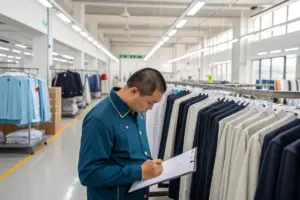
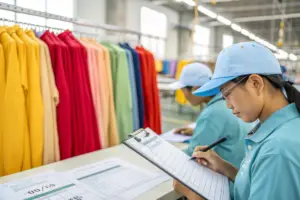
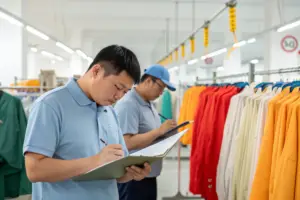
Absolutely. By ensuring the chemical and safety base is covered by certification, your on-site inspections can focus on other critical aspects: construction quality, stitching, color matching, and packaging. This makes inspections more efficient and effective. For example, an inspector doesn’t need to question the safety of a print; the valid certificate confirms it. This focused approach directly combats delayed shipments by catching construction issues early, before the more fundamental (and time-consuming) chemical safety problem arises.
How Does the Certification Shift Risk and Build Trust?
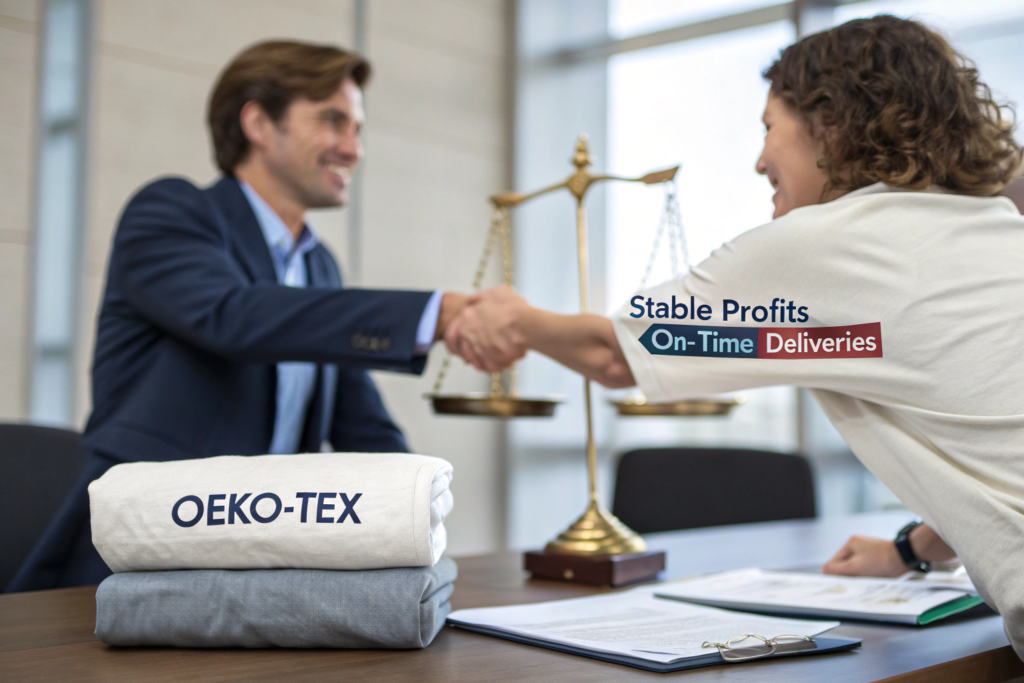
Ultimately, quality control is about risk management. OEKO-TEX certification shifts a substantial portion of chemical compliance risk away from you, the buyer, and onto the certified supplier and the testing institute. This builds a deeper level of trust and allows for more strategic partnerships.
When you work with a certified partner like Shanghai Fumao, you’re not just buying a product; you’re leveraging a system. We invest in the certification and maintain the compliant processes because our business depends on it. This aligns our interests with yours. A late shipment due to a failed safety test hurts us just as much as it hurts you. This alignment is the antidote to the adversarial buyer-supplier dynamic.
What is the Tangible Impact on Time-to-Market?
Streamlined quality control accelerates your timeline. With pre-certified materials and processes, the prototyping and approval phases move faster. There’s less time spent sending samples to third-party labs for validation. We’ve seen this with clients who switch to a certified supply chain. Their product development cycles shorten by 2-3 weeks because the fundamental safety question is already answered. This is a critical advantage in avoiding missed selling seasons.
How Does This Enhance Brand Reputation and Retailer Relations?
For distributors and brand owners, a certified product is a marketable asset. It provides a verifiable story for consumers. More importantly, it simplifies selling to large retailers who have their own strict corporate social responsibility and compliance mandates. You can provide the OEKO-TEX certificate as part of your vendor packet, often satisfying a major portion of their requirement. This smooths the path to shelf space and builds your reputation as a reliable, professional brand.
Is OEKO-TEX Certification Cost-Effective for Buyers?
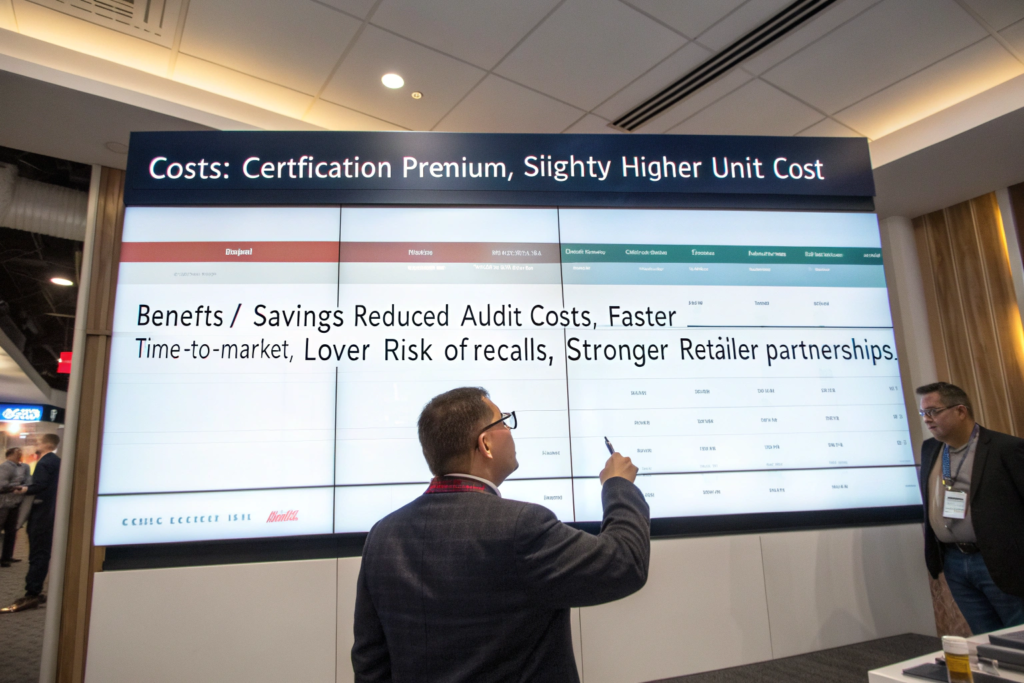
Viewing certification as an added cost is a short-sighted perspective. It is an investment in supply chain efficiency and risk mitigation. The cost of a failed shipment, a product recall, or brand damage from a non-compliant product dwarfs the certification premium.
Furthermore, by consolidating your orders with a certified, full-package manufacturer like us, the cost is optimized. We spread the certification and testing costs across multiple clients and orders, making it a very efficient model. You gain the benefit of a rigorous standard without bearing the full cost of individual product testing. This is part of the competitive pricing and exceptional value we deliver through optimized systems.
How Should Buyers Negotiate with Suppliers on Certification?
Be direct. Include certification as a mandatory requirement in your RFQ. Ask for the current certificate and verify it online. Discuss who bears the cost—often, it is shared or built into the unit price. A reputable supplier will be transparent. If a supplier balks or cannot provide proof, consider it a major red flag about their overall quality control processes and commitment to transparency.
What’s the First Step to Streamline My Sourcing?
Start by requiring OEKO-TEX certification from your next potential supplier. Use it as a filter to narrow down your list to only the most reliable partners. Then, focus your due diligence on their production capability, communication, and commercial terms.
Conclusion
OEKO-TEX certification is far more than a label on a garment. For buyers, it is a powerful tool that streamlines quality control by outsourcing complex chemical verification, establishing a universal quality baseline, and fundamentally rebalancing risk in the supply chain. It saves time, reduces cost in the long run, and builds a foundation of trust that enables true partnership.
If you are looking to reduce sourcing headaches and build a more resilient, quality-driven supply chain, partnering with a certified manufacturer is the logical first step. Let Shanghai Fumao be that partner. We integrate OEKO-TEX standards into every stage of our full-package manufacturing process. Contact our Business Director Elaine at elaine@fumaoclothing.com to discuss how we can bring efficiency, reliability, and certified quality to your next apparel order.