You are finalizing your 2025 line sheet. Your new collection features organic cotton baby bodysuits and premium modal loungewear. You’ve sourced soft fabrics and approved the samples. Now, you’re reviewing quotes. One factory offers a standard OEKO-TEX STANDARD 100 certification. Another, like Shanghai Fumao, specifies OEKO-TEX 100 with Article Class 1 (Grade 1) for the entire order. The price is different. You know Class 1 is the strictest level for baby products. But your items are not all for infants. Is this specific certification worth the extra cost and effort, or is it overkill for 2025? Let's cut through the noise.
In 2025, OEKO-TEX STANDARD 100 Article Class 1 has evolved from a niche requirement for babywear into a powerful brand differentiator and risk mitigation standard for any brand targeting conscientious consumers. For brand buyers, it is increasingly a deciding factor when choosing between suppliers who can deliver verified, beyond-basic safety versus those who meet only minimum requirements. It signals a manufacturer's capability for extreme diligence, which translates to trust for your brand in a competitive market.
The landscape has shifted. Consumers read labels, and retailers face stricter due diligence laws. A generic "OEKO-TEX certified" claim is becoming the baseline. Article Class 1 represents the premium tier. The question isn't just about compliance anymore; it's about leadership. Can your supply chain prove the highest safety standard, even for adult apparel? Your supplier's answer will separate you from competitors.
Beyond Babies: How Class 1 Became a 2025 Marketing Power Tool
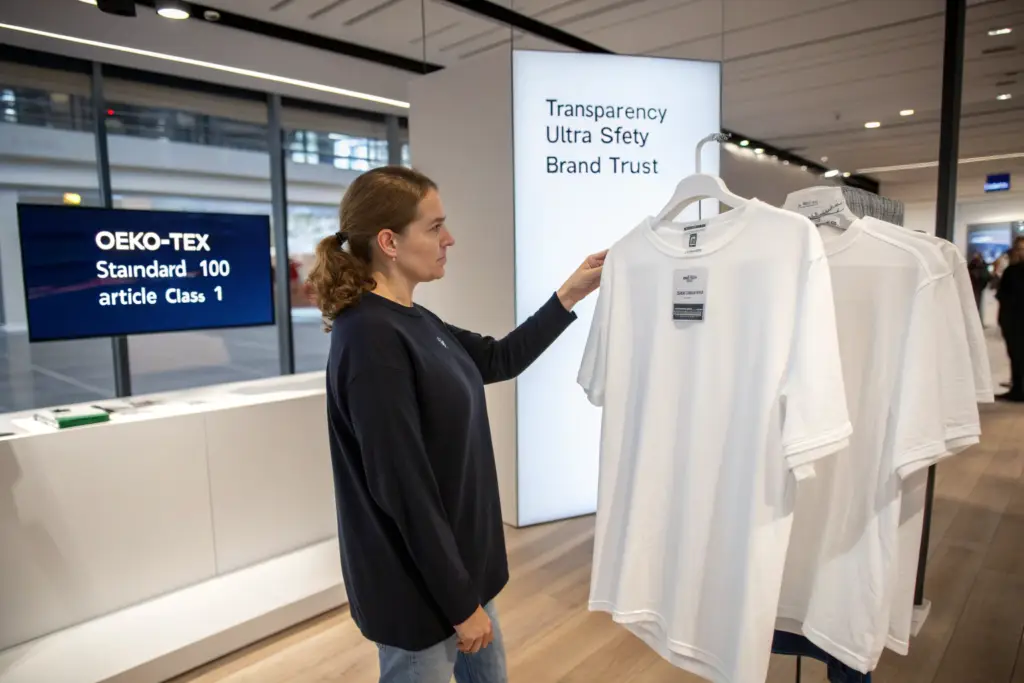
Article Class 1 was once confined to the infants' section. Its limit values for harmful substances are the strictest within the OEKO-TEX system, designed for a baby's sensitive skin. In 2025, its application has dramatically expanded. Savvy brands are using Class 1 certification for adult skincare-adjacent apparel: loungewear, underwear, sheets, and activewear worn for hours. Why? It provides an unmatched, science-backed marketing message.
The marketing power is clear. You can communicate not just "safe," but "safest." In a crowded market, this is a decisive advantage. For instance, promoting a "Class 1 Certified Lounge Set" immediately signals a superior level of care and quality. It answers the growing consumer question: "How safe is really safe?" We worked with a U.S. direct-to-consumer sleepwear brand last year. By upgrading their entire bamboo lyocell line to Class 1, they rebranded from "comfortable" to "clinically clean for skin health." Their customer retention rate improved by 25% within two quarters.
Furthermore, this aligns with tightening global regulations and corporate due diligence laws. Brands are now legally responsible for their supply chains. Specifying Class 1 with your manufacturer is proactive risk management. It demonstrates to regulators and partners that you have gone above and beyond in selecting a supplier committed to the highest possible production standards. This isn't just marketing; it's legal foresight.
Can Class 1 Certification Justify a Higher Retail Price Point?
Yes, and consumers are willing to pay for it. The 2025 consumer sees value in verified, extreme safety. Class 1 certification provides a tangible, third-party justification for a premium price. It moves the conversation from subjective "softness" or "quality" to objective, laboratory-tested safety credentials. This is crucial in competitive segments like modal and bamboo apparel, where many products look and feel similar.
The price premium is not arbitrary. It reflects the higher costs of sourcing Class 1 compliant dyes and auxiliaries, more frequent laboratory testing, and stricter factory process controls. At Shanghai Fumao, achieving and maintaining Class 1 compliance for a production line requires segregating those materials and often working with specialized chemical suppliers. When you market this, you are educating the consumer on the real value behind the product. A brand can transparently explain, "We pay more to our factory for Class 1 materials, so you get peace of mind." This honesty builds immense loyalty.
Does This Apply to All Apparel Categories?
Not universally, but its application is widening. It is most decisive for:
- Products for sensitive individuals: Including those with eczema or allergies.
- Skin-contact items worn for long periods: Underwear, sleepwear, base layers, and athletic leggings.
- Brands built on "clean" values: Wellness, sustainability, and holistic lifestyle brands.
However, for non-skin-contact outerwear like heavy jackets or decorative items, the standard Class II (skin contact) may remain sufficient. The deciding factor in 2025 is your brand promise. If "purity" and "safety" are core to your identity, then Class 1 for your core line is a strategic investment. For a client launching a vegan and allergy-friendly apparel line, we recommended Class 1 for their entire inaugural collection. This decision became their central press and influencer outreach angle, generating significant launch buzz.
The Supplier Filter: Why Class 1 Separates Leaders from the Pack
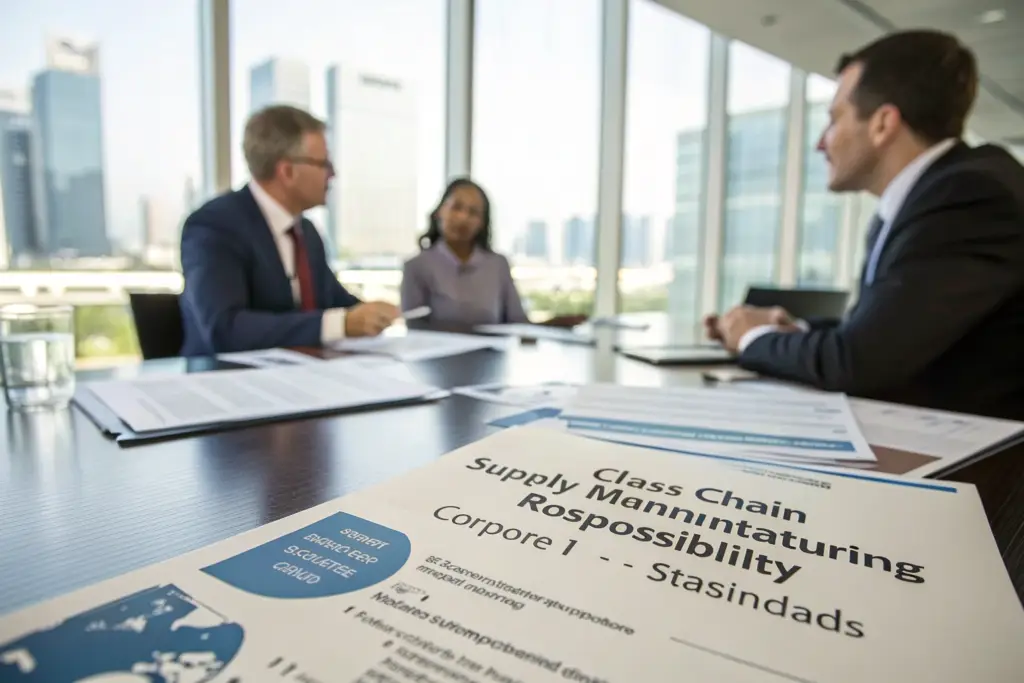
For a brand buyer, requesting Article Class 1 is an efficient way to vet manufacturing partners. It immediately tests a factory's technical capability, supply chain maturity, and quality culture. Many factories claim they can produce "safe" garments. Far fewer have the integrated systems to reliably deliver Class 1 certification across a full order.
A factory capable of Class 1 production must have exceptional control at every stage. Their fabric mills must provide Class 1 compliant greige goods. Their dye houses must use approved chemicals. Their own cutting and sewing floors must prevent cross-contamination with non-Class 1 items. This requires documented procedures, trained staff, and segregated workflows. When you ask for Class 1, you are asking to see this entire system. A supplier's response is telling. Those who hesitate or offer vague assurances are likely not equipped.
This was evident when a potential client asked us and two other suppliers for a Class 1 quote on a knitted jersey set. One supplier matched our price but could not provide a valid test report for the specific rib fabric they proposed. Another offered a lower price but for Class II only. Our ability to immediately provide a certificate for the exact yarn blend and detail our factory's segregated storage for Class 1 projects won the order. The buyer later said it simplified their decision dramatically.
What Operational Questions Reveal a True Class 1 Partner?
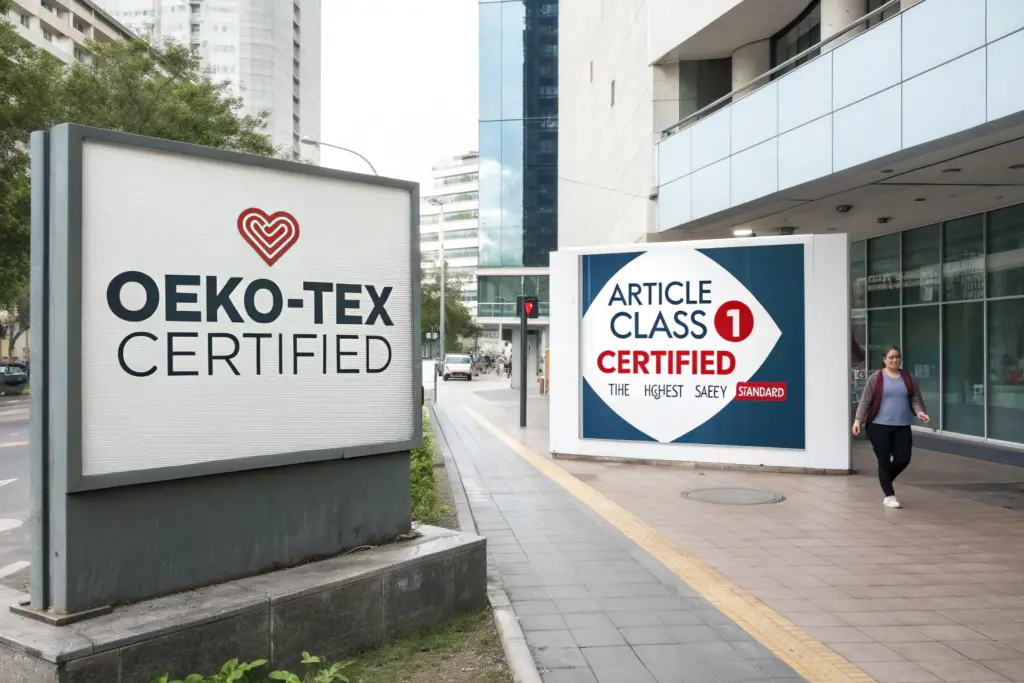
Move beyond the certificate. Ask these operational questions:
- "Can you show me the OEKO-TEX test report for the specific fabric batch you will use for my order, showing Article Class 1 compliance?"
- "How do you physically and administratively separate Class 1 production from other lines in your warehouse and on the sewing floor?"
- "What is your procedure if an incoming roll of fabric fails your in-house Class 1 spot check?"
- "For trims (like elastics and labels), do you source pre-certified Class 1 components, or do you batch-test them yourself?"
A qualified partner will have ready, specific answers. For example, at Shanghai Fumao, we maintain a dedicated raw material warehouse section for Class 1 projects. Our quality management system logs every batch from receipt to shipment. This level of traceability is what you are paying for. It ensures the certification is woven into the process, not just slapped on at the end.
Does a Lower Price for Class 1 Signal a Red Flag?
Often, yes. Achieving Class 1 compliance has real, embedded costs. If a supplier's quote for a Class 1 order is only marginally higher than their standard price—or worse, the same—it should raise serious questions. They may be planning to use cheaper, non-compliant materials and hope the product is never tested. They might be misrepresenting a Class II certificate as Class 1. Or, they may lack understanding of the standard altogether.
The financial risk of accepting a too-good-to-be-true price is massive. If you market a product as Class 1 and a random test by a consumer watchdog finds non-compliance, the fallout includes forced recalls, destroyed inventory, and irreversible brand damage. In 2025, with social media amplifying such stories, this risk is greater than ever. Investing in a genuinely qualified, if slightly more expensive, partner like Shanghai Fumao is the cost of true security.
The 2025 Retail Landscape: When Buyers Mandate Class 1
The decision is increasingly being made for brands. Major retailers and marketplaces, driven by their own liability concerns and consumer demand, are starting to mandate stricter certifications for specific categories. While not yet universal, this trend is accelerating in 2025. For brand buyers, this shifts Class 1 from a "nice-to-have" to a non-negotiable sourcing requirement for certain products.
We are seeing this firsthand. Several of our U.S. brand partners have shared new vendor manuals from large retailers. These manuals now explicitly require OEKO-TEX STANDARD 100 Class 1 for all infant wear and, notably, for "intimate apparel" and "premium sleepwear" categories. This is a clear signal. Sourcing with Class 1 in mind future-proofs your brand for wholesale opportunities. It removes a last-minute barrier to getting your product on those shelves.
Furthermore, platforms like Amazon and specialty eco-marketplaces are enhancing their product listing attributes. Having a verifiable Class 1 certification can improve your product's visibility in filtered searches for "highest safety standard" or "baby-safe materials," even if your product is for adults. This directly impacts sales velocity. Aligning your production with Shanghai Fumao's Class 1 expertise means we can generate the precise documentation these platforms require for verification.
How Does This Affect Sourcing from Developing Countries?
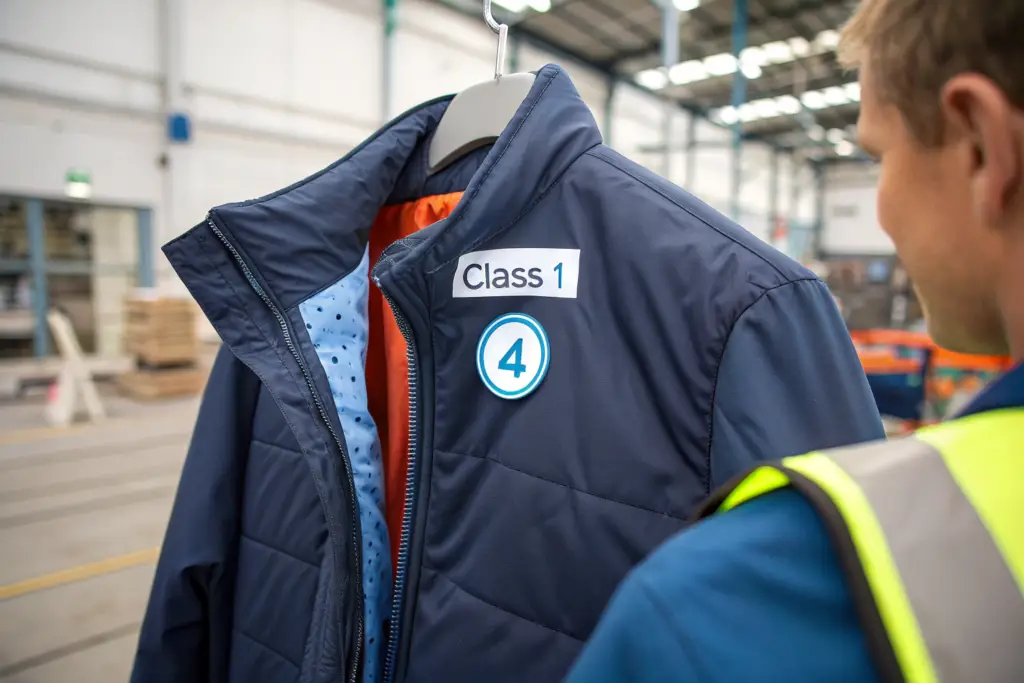
The requirement for Class 1 creates a significant divide between apparel manufacturers in developing countries. Many factories in China, Vietnam, and India can produce to a basic standard. Far fewer have the technical expertise and supply chain connections to consistently achieve Class 1. This concentration of capability allows qualified factories to command a premium and build longer-term partnerships with discerning brands.
For buyers, this simplifies the search. Instead of evaluating dozens of suppliers, you can quickly shortlist those who proactively demonstrate Class 1 competence. It reduces sourcing risk. Last quarter, a European brand urgently needed a re-order of best-selling organic cotton leggings for a key retailer audit. Their previous Vietnamese supplier could not provide the required Class 1 documentation for the new fabric lot. They came to us. Because our systems were already set up for such compliance, we mobilized the re-production and provided the full audit trail within their tight deadline.
Is Class 1 the New Benchmark for "Ethical Manufacturing"?
Increasingly, yes. The conversation around ethics is expanding beyond fair labor (like SA8000 certification) to include environmental and consumer health. Class 1 certification speaks directly to the product's human ecological safety—its safety for the person wearing it. In 2025, a truly ethical brand is expected to care for both its workers and its end-users. Class 1 provides the framework for the latter.
Therefore, brand buyers looking to build a comprehensive ethical sourcing strategy will see Class 1 as a critical component. It complements other certifications for organic materials (GOTS) or recycled content (GRS). When a factory like ours invests in maintaining Class 1 capability, it signals a deeper commitment to responsible manufacturing that covers the entire product lifecycle, from the chemical inputs to the consumer's skin.
Implementing Class 1: A Practical Guide for 2025 Sourcing
Deciding that Class 1 is right for your brand is the first step. Implementing it successfully requires a clear strategy and the right partner. The goal is to integrate this standard into your development process smoothly, without causing delays or unexpected cost overruns.
Begin at the design and fabric sourcing stage. Specify "Must achieve OEKO-TEX STANDARD 100 Article Class 1" in your initial tech pack brief to your manufacturer. This allows them to source appropriate materials from the start. Do not assume a fabric is Class 1 compliant because it is organic or recycled—it must be specifically tested and certified. Work with your manufacturer to select from their library of pre-certified fabrics and trims to control costs and lead times. At Shanghai Fumao, we guide our clients through this curated selection process to balance aesthetics, cost, and compliance.
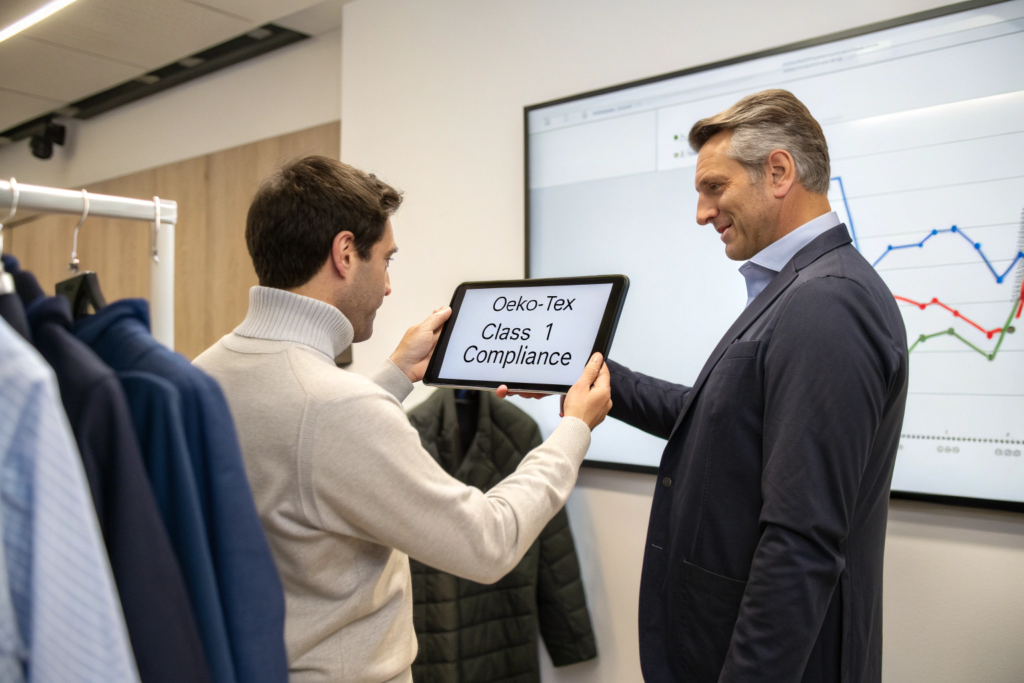
Next, build certification into your timeline and budget. Factor in the extra time for testing. While we maintain a bank of certified materials, new components may require 2-4 weeks for laboratory testing. Plan for this in your critical path. On the cost side, understand the breakdown. A clear partner will explain the added cost per unit, which includes the fabric premium, the testing fee (amortized), and the internal quality control overhead. Transparency here prevents surprises later.
How to Communicate This Value to Your End Consumer?
The story is key. Don't just add a label; explain it. Use your packaging, website, and social media to educate.
- Website: Create a simple guide: "What Article Class 1 Means for You."
- Hangtags: Feature the Class 1 label prominently and include a short, clear explanation.
- Social Media: Share short videos or infographics about the rigorous testing process.
Make it about their benefit: "We chose the highest safety standard so you can wear our loungewear with absolute confidence, from your first wear to your hundredth wash." This turns a technical specification into an emotional brand promise. We helped a client develop this exact messaging, which they now use across all channels, reinforcing their position as a leader in safe apparel.
What's the First Step with a New Manufacturing Partner?
Start with a pilot project. Before committing your entire 2025 collection, run a single, high-potential style as a Class 1 order. This could be your signature loungewear set or best-selling kids' item. Use this project to audit the factory's actual performance:
- Did they deliver the correct documentation?
- Was the final product quality consistent?
- Was communication about the process clear?
This low-risk test provides concrete evidence of the factory's capability and the real market response to the product. Based on the success of such a pilot, you can then confidently scale the standard across more lines. Our most successful brand partnerships often start with this focused, proof-of-concept approach, building trust one certified order at a time.
Conclusion
So, is OEKO-TEX 100 Article Class 1 a deciding factor for brand buyers in 2025? The evidence points to a definitive yes. It has transcended its baby product origins to become a benchmark for supply chain excellence, a potent marketing tool, and a growing requirement from conscious consumers and major retailers alike. In a market where trust is the ultimate currency, Class 1 certification offers a verifiable, science-backed way to earn it.
The decision to source with Class 1 standards is a strategic investment in your brand's resilience and reputation. It filters for high-caliber manufacturing partners, justifies premium positioning, and future-proofs your products against evolving regulations. While it may not be necessary for every single item in your catalog, for core products where safety and trust are paramount, it is becoming the differentiating factor that wins shelf space and customer loyalty.
Are you ready to make Article Class 1 a deciding factor in your 2025 sourcing strategy? Partner with a manufacturer that doesn't just offer certification, but has embedded it into their operational DNA. Let Shanghai Fumao be your guide and production partner in achieving this highest standard. Contact our Business Director, Elaine, at elaine@fumaoclothing.com to discuss launching your first OEKO-TEX Class 1 certified collection. Visit our website at Shanghai Fumao to explore how our commitment to exemplary manufacturing can elevate your brand.