Last season, a client in Florida launched a line of premium moisture-wicking golf polos. They had focused on technical features: four-way stretch, UPF 50+, and a proprietary "dry-fast" fabric. Sales were strong until a customer, a dermatologist, posted a detailed review. He praised the performance but raised a concern: after a long, sweaty round, he experienced unexpected skin irritation. He questioned the chemical safety of the dyes and finishes, speculating about allergens. The post gained traction in golf forums. Suddenly, the brand's high-performance narrative was overshadowed by a safety doubt. The root cause? Their fabric was tested for general safety (Class II), but the intense, prolonged sweat interaction under the sun demanded the stricter OEKO-TEX Product Class I – the standard for babywear. This wasn't about children's clothing; it was about the severe conditions of adult sportswear.
OEKO-TEX Grade 1 (Product Class I) certification is crucial for moisture-wicking golf polos because it provides the highest level of safety assurance for textiles in intense, prolonged skin contact. Golf polos are worn for hours in direct sun, where sweat can leach chemicals from dyes and performance finishes. Grade 1's ultra-strict limits on harmful substances—including allergens, heavy metals, and formaldehyde—ensure the fabric remains safe even under these extreme "wear conditions," protecting the wearer and the brand's reputation.
It's a common misconception that Grade 1 is only for infants. For any product where skin safety is paramount under stress, it is the only appropriate standard. Let's dive into the specific chemistry of performance wear and why Grade 1 is the non-negotiable benchmark.
How Does Sweat Interaction Change the Chemical Risk Profile?
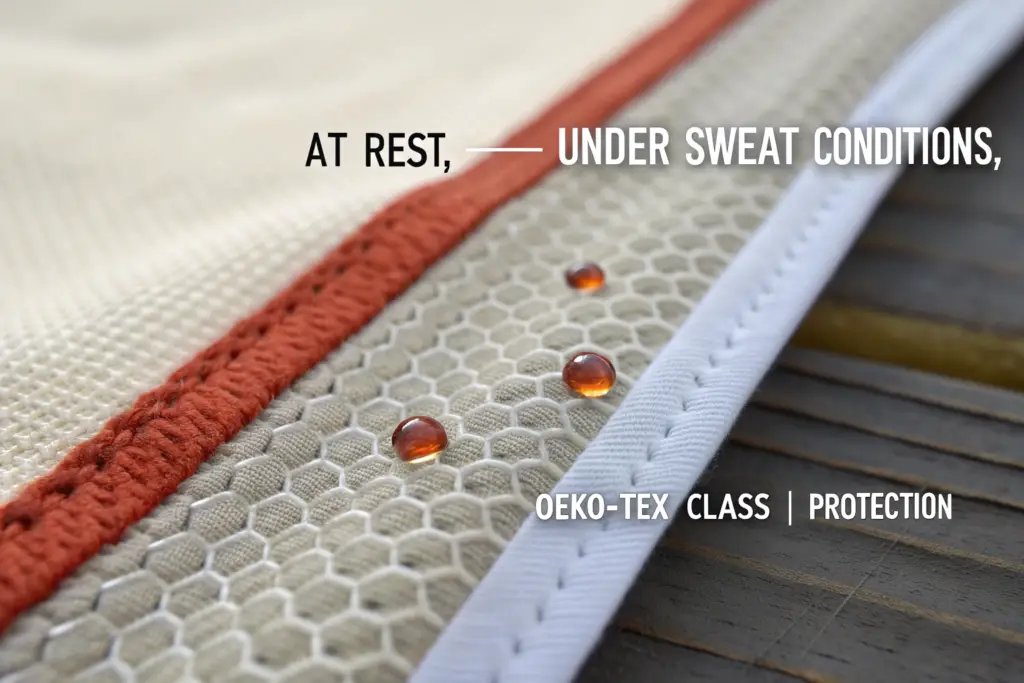
A golf polo isn't a casual shirt. During a four-hour round in high heat and humidity, it becomes a chemical interaction zone. Sweat is not just water; it's a slightly acidic to alkaline solution containing salts, urea, and lactic acid. This mixture acts as a solvent, potentially drawing out (leaching) residual chemicals from the textile that would otherwise remain inert.
Sweat interaction significantly elevates chemical risk by creating a medium for substance migration from fabric to skin. OEKO-TEX Grade 1 certification mandates specific "perspiration" tests (both acidic and alkaline) that simulate this exact scenario. It sets the strictest permissible limits for extractable substances like heavy metals, dyes, and phenols, ensuring nothing harmful is released into sweat, even after hours of wear and repeated washing.
What specific chemicals are of concern in performance finishes?
Moisture-wicking, anti-odor, and stretch properties often rely on chemical treatments. Durable Press finishes may use formaldehyde-based resins. Anti-Odor Treatments can use regulated silver ions or triclosan. Brightening agents & dyes may contain heavy metals like nickel or cobalt. Elastane (Spandex) production can involve catalysts and solvents. Grade 1's limits for these substances are up to 90% stricter than for Class II (standard apparel). For a golf polo, where these performance features are marketing essentials, Grade 1 certification is your proof that they were achieved safely.
We developed a polo for a brand that required a specific vibrant, colorfast blue. The dye house achieved it using a metal-complex dye. When we tested the fabric for Grade 1, it failed for nickel release. The dye was perfect for a casual shirt (Class II) but unsafe for prolonged sweat contact. We worked with the mill to reformulate using alternative, compliant dyes. The resulting polo passed Grade 1, and the brand could market it with a "skin-safe color" story. This level of scrutiny is integral to our product development at Shanghai Fumao.
Why is "Skin-Friendly" a Stronger Claim Than "Performance-Only" in Today's Market?
The market for premium golf apparel is saturated with technical claims about "wicking," "breathability," and "stretch." These have become table stakes. The emerging differentiator is holistic wellness: performance that also cares for the body. Consumers, especially affluent, health-conscious golfers, are increasingly aware of transdermal chemical exposure.
"Skin-friendly" is a stronger claim because it addresses a growing consumer health anxiety that "performance-only" marketing ignores. An OEKO-TEX Grade 1 certification provides an authoritative, third-party validation of this claim. It allows a brand to confidently state that their high-performance polo is also the safest choice for your skin, adding a layer of value that competitors without it cannot match.
How does this align with broader wellness trends?
The boom in "clean" skincare, non-toxic home products, and organic foods has trained consumers to scrutinize ingredients. This mindset now extends to the clothes they wear for hours during a health-focused activity like golf. A Grade 1 certified polo fits seamlessly into this lifestyle, allowing the consumer to feel they are making a safe choice for their entire well-being, not just their game.
What is the marketing advantage for direct-to-consumer (DTC) brands?
DTC brands thrive on storytelling and deep customer trust. A Grade 1 certification offers a concrete chapter in that story. Brands can create content explaining "why our fabric safety matters," showing the certificate, and contrasting it with vague "safe" claims from others. This transparency builds immense loyalty and justifies a premium price point. For our DTC clients, we provide marketing kits that clearly explain the Grade 1 difference.
How Does Grade 1 Certification Future-Proof Your Product Against Regulations?
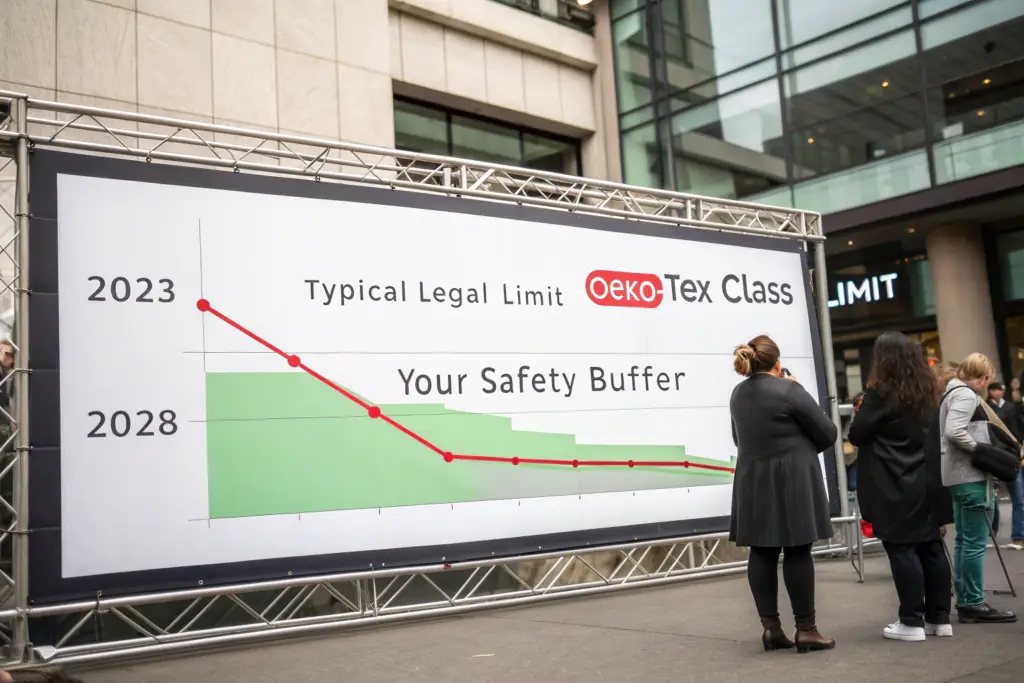
Textile chemical regulations are becoming stricter globally. California's Proposition 65, EU's REACH SVHC list, and potential U.S. federal restrictions on PFAS and formaldehyde are constantly evolving. Designing to the lowest common denominator is a risky strategy.
OEKO-TEX Grade 1 future-proofs your product by setting a safety benchmark that is already more stringent than most current national regulations. By complying with Grade 1 today, you significantly reduce the risk of your product falling foul of tomorrow's tighter laws. This provides long-term supply chain stability and protects against costly reformulations or market withdrawals.
Can you give a specific example of regulatory alignment?
Consider formaldehyde. While many countries have limits, they vary. OEKO-TEX Grade 1 sets a limit of 16 mg/kg for babies (and by adoption, for products certified to it). This is far stricter than many general apparel standards. By designing to this limit, a brand ensures its product can be sold in the most sensitive markets (like Japan or Germany) without issue, and will easily comply if other markets lower their limits.
How does this simplify DDP (Delivered Duty Paid) shipping to multiple countries?
Under a DDP model, the exporter (us) is responsible for ensuring the goods meet the import regulations of the destination country. A Grade 1 certificate is a powerful document that demonstrates due diligence and a high standard of safety. It greatly simplifies the customs and compliance process when shipping to the U.S., EU, Canada, and other regions, as it is a recognized and respected standard worldwide. This makes the logistics for our clients at Shanghai Fumao smoother and more predictable.
What Should Buyers Look for to Verify Authentic Grade 1 Compliance?
As demand grows, so does the potential for misleading claims. "Made with OEKO-TEX certified fabrics" is not the same as a finished product certified to Grade 1. Buyers must be forensic in their verification.
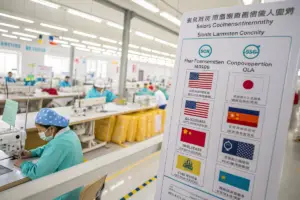
Buyers must verify: 1) The certificate is for "OEKO-TEX STANDARD 100" and explicitly lists "Product Class I." 2) The "Applicant" or "Holder" is the final garment manufacturer (e.g., Fumao Clothing), not just a fabric mill. 3) The "Article Description" matches the finished polo, not a fabric component. 4) The certificate is valid and can be verified on the official OEKO-TEX database with the unique number.
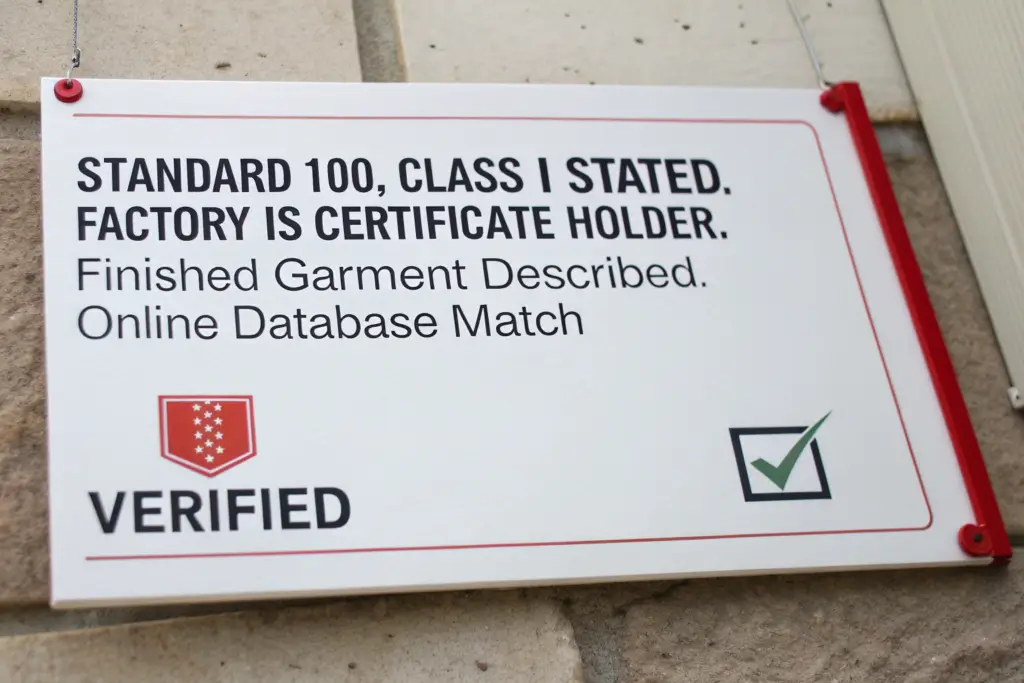
Why is the factory as the holder critical?
If the certificate holder is a fabric mill, it only certifies the fabric roll. The sewing thread, buttons, branding prints, and labels added during garment manufacturing are not covered. Only when the final assembler (like us) is the holder, and the article is the finished polo, is the entire product certified. This is the core of our full-package production value proposition.
How does Fumao Clothing facilitate this verification?
We provide full transparency. Clients receive the digital certificate at the prototyping stage. We give them the unique number and a direct link to the OEKO-TEX verification page. We encourage them to check it themselves. Furthermore, our quality assurance documentation traces the certified fabric and trim lots to specific production runs, providing an audit trail from certificate to carton.
Conclusion
For moisture-wicking golf polos, OEKO-TEX Grade 1 certification is not an extra cost; it is a core component of product integrity. It addresses the real-world chemistry of sport, meets the evolving demands of the health-conscious consumer, future-proofs against regulatory shifts, and provides a verifiable marketing advantage that purely technical features cannot.
In a competitive market where trust is the ultimate currency, Grade 1 certification is your most credible banknote. It signals a brand that cares deeply about its customers' well-being, down to the molecular level. If you are ready to elevate your golf apparel line beyond performance to encompass proven skin safety and market-leading trust, the journey begins with a manufacturing partner committed to this highest standard. At Shanghai Fumao, Grade 1 certification is a cornerstone of our technical sportswear full-package production. Contact our Business Director, Elaine, at elaine@fumaoclothing.com to develop polos that perform brilliantly and protect impeccably.