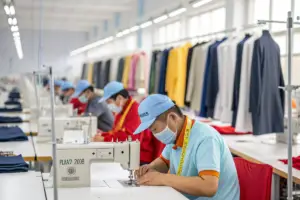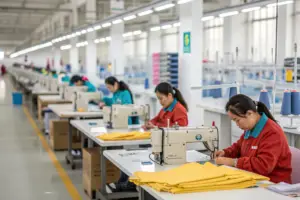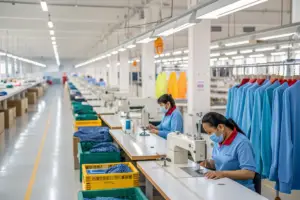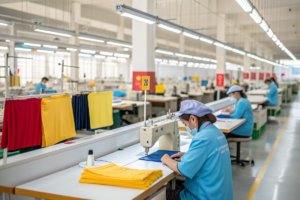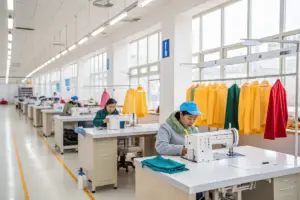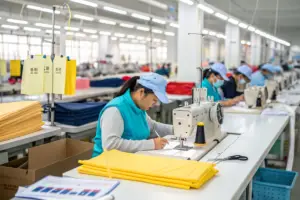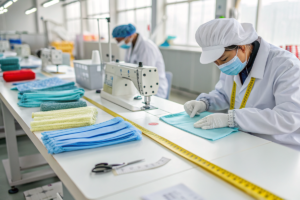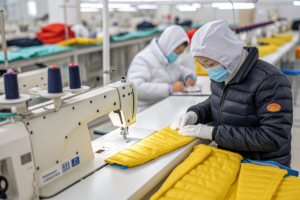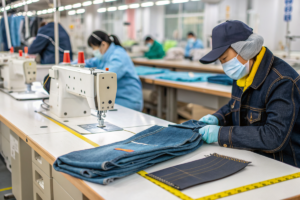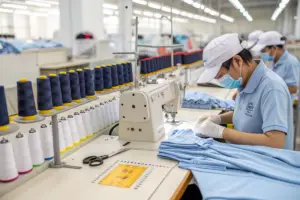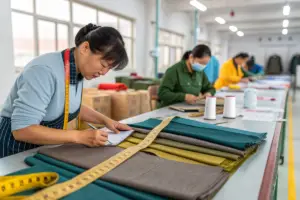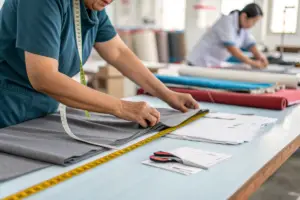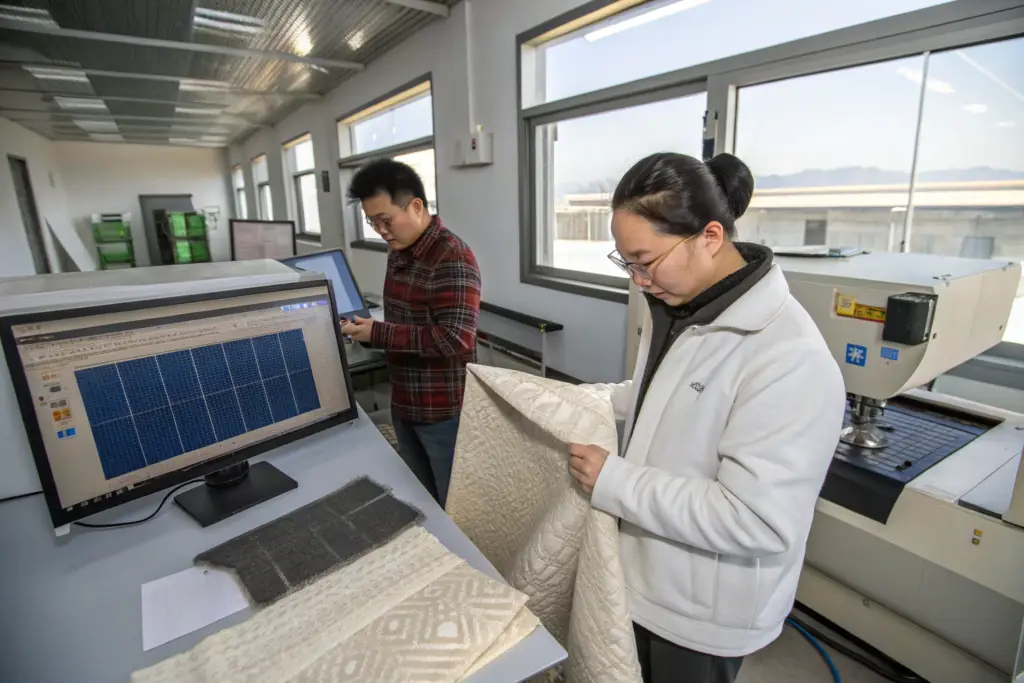
From my factory floor in China, I've watched the ski apparel industry's focus shift dramatically. Five years ago, a brand's main question was about cost per unit. Today, the first question from a California-based outdoor brand was: "How do your processes and materials reduce environmental impact?" They were launching a "climate-conscious" ski line and believed that an OEKO-TEX tag alone was enough. We had to explain a crucial distinction: OEKO-TEX is a vital pillar for human ecology—ensuring products are free from harmful substances—but it is not a standalone certification for climate or broad environmental impact. It does not measure carbon footprint, water usage, or energy consumption in production.
OEKO-TEX is a critical, foundational component of responsible manufacturing, but it is not the complete answer to climate-conscious ski apparel production. It addresses chemical safety and restricted substances, which is essential for consumer health and environmental protection from toxins. However, true climate consciousness requires a holistic approach that also encompasses carbon footprint reduction, sustainable material sourcing, circular design principles, and verifiable supply chain transparency.
For a ski jacket to be truly climate-conscious, it needs to be safe for the wearer and the planet. This means looking at the entire lifecycle. Let’s dissect what OEKO-TEX does brilliantly, where it falls short for climate goals, and what else you must demand from your manufacturing partner.
What Does OEKO-TEX Actually Certify in an Environmental Context?
It's essential to understand the specific scope. The most common certificate, OEKO-TEX STANDARD 100, is a product certification. It tests the final product for a defined set of harmful substances—things like heavy metals, pesticides, chlorinated phenols, and allergenic dyes. Its primary goal is to protect human health. Some of these substances, if released into waterways during production or at end-of-life, are also environmental pollutants. So, by restricting them, OEKO-TEX provides a significant indirect environmental benefit.
In an environmental context, OEKO-TEX STANDARD 100 certifies that a textile product meets strict limits for substances harmful to human health, which in turn prevents these regulated chemicals from entering the ecosystem through washing, wear, or disposal. It is a pollution prevention tool, not a climate metric tool.
How does this relate to ski wear specifically?
Ski apparel relies on complex chemistry: durable water repellent (DWR) finishes, waterproof lamination, dyeing, and printing. Historically, these processes used per- and polyfluoroalkyl substances (PFAS), known as "forever chemicals," which are now strictly regulated. OEKO-TEX STANDARD 100 includes strict limits for many PFAS compounds. Therefore, for a ski jacket to be certified, it virtually guarantees the use of a PFAS-free DWR, which is a major win for preventing long-term environmental contamination. This is a direct and critical environmental impact.
What about other OEKO-TEX labels?
OEKO-TEX offers other labels that get closer to climate issues. STeP (Sustainable Textile & Leather Production) audits production facilities on environmental performance, social responsibility, and safety. It's a site-specific, process-oriented certification. MADE IN GREEN is a product label that combines STANDARD 100 with STeP and requires traceability. While STeP addresses operational environmental metrics, it is still not a dedicated carbon footprint or Life Cycle Assessment (LCA) tool. A factory like Shanghai Fumao can pursue STeP to demonstrate systematic environmental management, but it's one part of the puzzle.
Where Does OEKO-TEX Fall Short for Climate-Conscious Goals?
Climate consciousness is fundamentally about greenhouse gas emissions and resource depletion. OEKO-TEX certifications do not set thresholds or require reporting on carbon emissions, energy source, water consumption, or material origin. STANDARD 100 does not distinguish between virgin polyester from fossil fuels and recycled polyester from plastic bottles, though both could pass the chemical test.
OEKO-TEX falls short as a standalone climate solution because it does not quantify or restrict the carbon footprint of a product. A ski jacket made from virgin fossil-based materials in a coal-powered factory can be OEKO-TEX certified, yet have a devastating climate impact. Climate consciousness requires tracking emissions from cradle to gate (or grave).
Can you provide a concrete example from production?
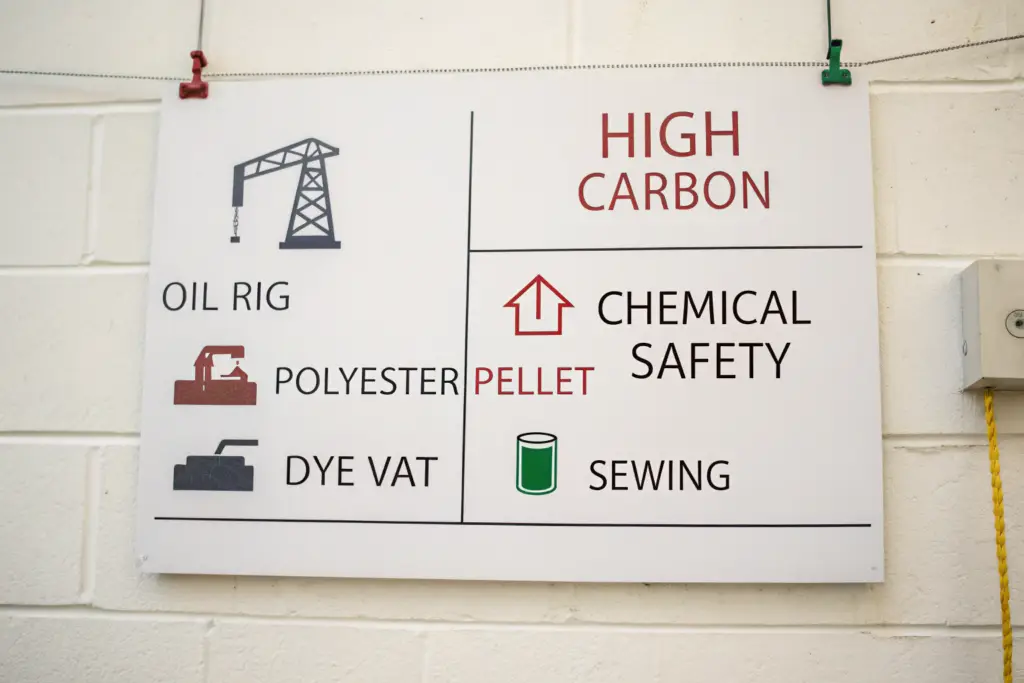
Last year, we developed a ski shell for a European brand. They provided a fabric that was OEKO-TEX STANDARD 100 certified. However, our inquiry revealed it was 100% virgin nylon derived from petroleum. The certification ensured it was free of harmful residues, but its production was incredibly energy-intensive. We proposed an alternative: a bluesign® approved fabric made from recycled nylon. The bluesign® system audits the chemical inputs and the environmental impact of the fabric mill, including resource productivity. This choice addressed chemical safety and reduced the carbon footprint by using recycled content—a true step toward climate-conscious manufacturing.
What certifications or metrics should complement OEKO-TEX?
For climate focus, you need to look for materials with recycled content certified by Global Recycled Standard (GRS), lower impact material production through systems like bluesign®, carbon footprint measurement via Life Cycle Assessment (LCA) reports, and evidence of renewable energy in manufacturing. This multi-layered approach is what brands now need.
How Can a Manufacturer Integrate OEKO-TEX into a Broader Climate Strategy?
The smart approach is to use OEKO-TEX as the non-negotiable baseline for chemical safety and then layer on climate-focused practices. This integrated strategy is what forward-thinking factories are adopting. It starts with material selection and permeates the entire full-package production process.
A manufacturer integrates OEKO-TEX by making it the mandatory hygiene factor for all production, while simultaneously implementing a parallel system for climate accountability. This involves sourcing certified, low-impact materials, optimizing production for energy efficiency, choosing green logistics, and providing the data to prove it. OEKO-TEX becomes the "floor," not the "ceiling."
What does this look like in practice at the factory level?
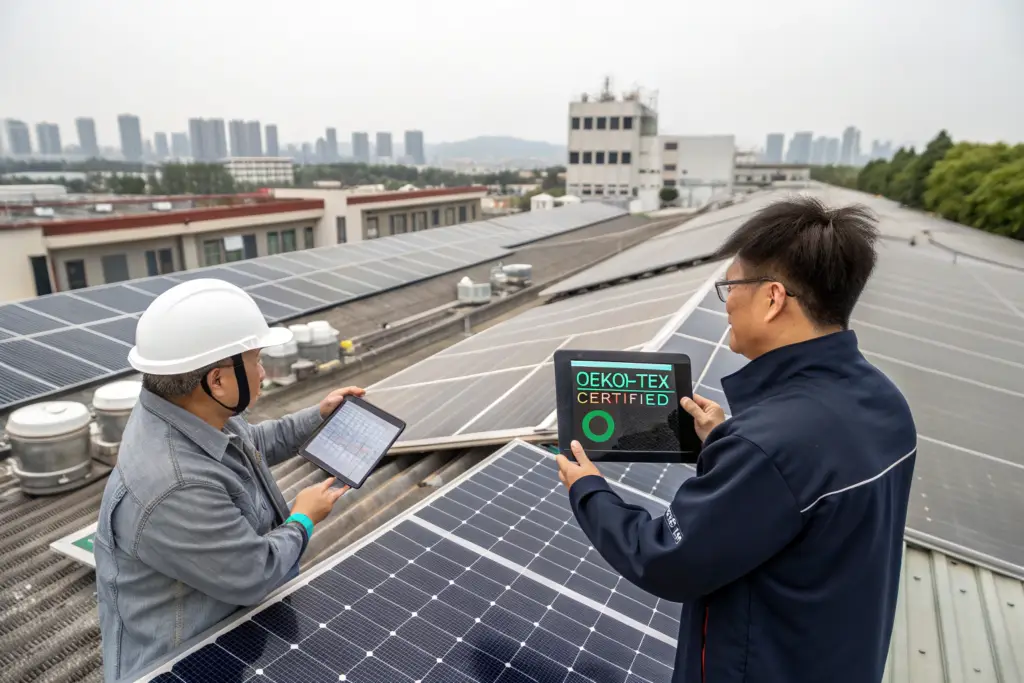
At Shanghai Fumao, our approach has evolved. For any "climate-conscious" line, we start with a material matrix: fabric must be OEKO-TEX STANDARD 100 certified and have either GRS or bluesign® approval; we prefer recycled or plant-based insulation; and we use trims like zippers from recycled polyester. We then apply for a MADE IN GREEN label for the finished garment, which links product safety to our factory's environmental management. Finally, we work with partners to calculate a basic cradle-to-gate LCA for the product, focusing on carbon emissions.
How does this affect logistics and DDP terms?
The climate strategy extends to shipping. For a brand that prioritized a low-carbon supply chain, we optimized their DDP (Delivered Duty Paid) shipment by consolidating orders to reduce total voyages, choosing sea freight over air where possible, and providing the carbon emission data for the transportation leg. This end-to-end view transforms a simple garment order into a managed climate-aware project.
What Should Brands Truly Ask For to Ensure Climate-Conscious Manufacturing?
Moving beyond labels to tangible outcomes requires specific inquiries. Instead of asking "Are you OEKO-TEX certified?" the climate-conscious brand must ask a new set of questions that target the entire system.
Brands should ask for a transparent portfolio of evidence: 1) OEKO-TEX STANDARD 100 for product safety; 2) Material-specific certifications (GRS, bluesign®) for low-impact inputs; 3) Factory-level environmental performance data (Higg FEM, STeP, or energy mix reports); and 4) Efforts towards circularity, such as take-back programs or mono-material design for recyclability.

Can you provide a specific supplier questionnaire?
Here are critical questions to add to your sourcing checklist: "What percentage of the materials are recycled or bio-based?", "Can you share the mill's environmental certification for the key fabrics?", "What is your factory's primary energy source?", "Do you measure the carbon footprint of your key products?", "How is chemical wastewater treated?", and "Is this garment designed for end-of-life recyclability?" A factory invested in this transition, like Shanghai Fumao, will have answers and data ready.
What is a realistic outcome of this holistic approach?
The outcome is a product with a verified lower environmental impact and a compelling story. For instance, we helped a brand market a ski jacket as: "Made with 100% recycled shell and lining (GRS certified), PFC-free DWR (verified by OEKO-TEX), in a STeP-certified factory using 30% solar power. Carbon footprint: 18 kg CO2e, 40% lower than our baseline model." This level of detail builds authentic brand equity and meets the growing demand for transparency.
Conclusion
OEKO-TEX is an indispensable answer to the question of chemical safety in ski apparel manufacturing, but it is not the singular answer to climate-consciousness. It is the essential first chapter in a much longer book on environmental responsibility. The true path forward lies in a hybrid strategy: leveraging OEKO-TEX to ensure no harmful substances are used, while aggressively pursuing carbon footprint reduction, circular material flows, and renewable energy in production.
As a manufacturer, we see this not as a constraint, but as the future of our industry. The brands that will lead are those that partner with factories capable of delivering on this comprehensive vision. If your goal is to create ski apparel that performs on the slopes and protects the planet, your sourcing dialogue must expand. Let's build that future together. At Shanghai Fumao, we are integrating these very principles into our full-package production service. Contact our Business Director, Elaine, at elaine@fumaoclothing.com to discuss how we can engineer your next ski line to be both safe and truly climate-conscious.