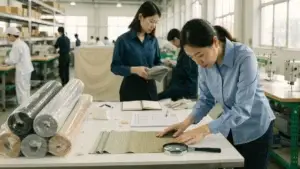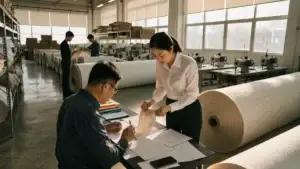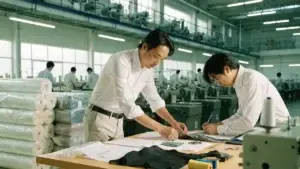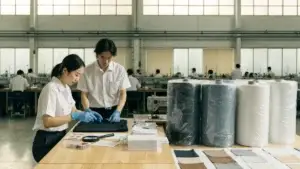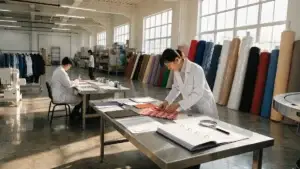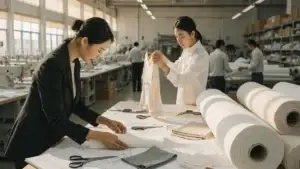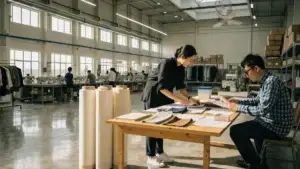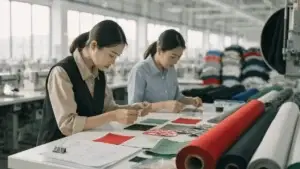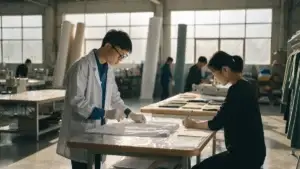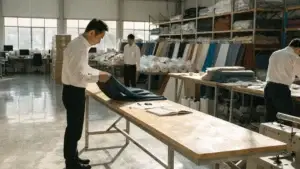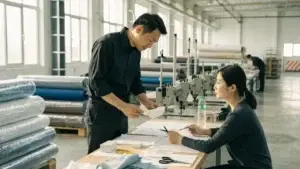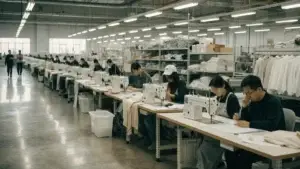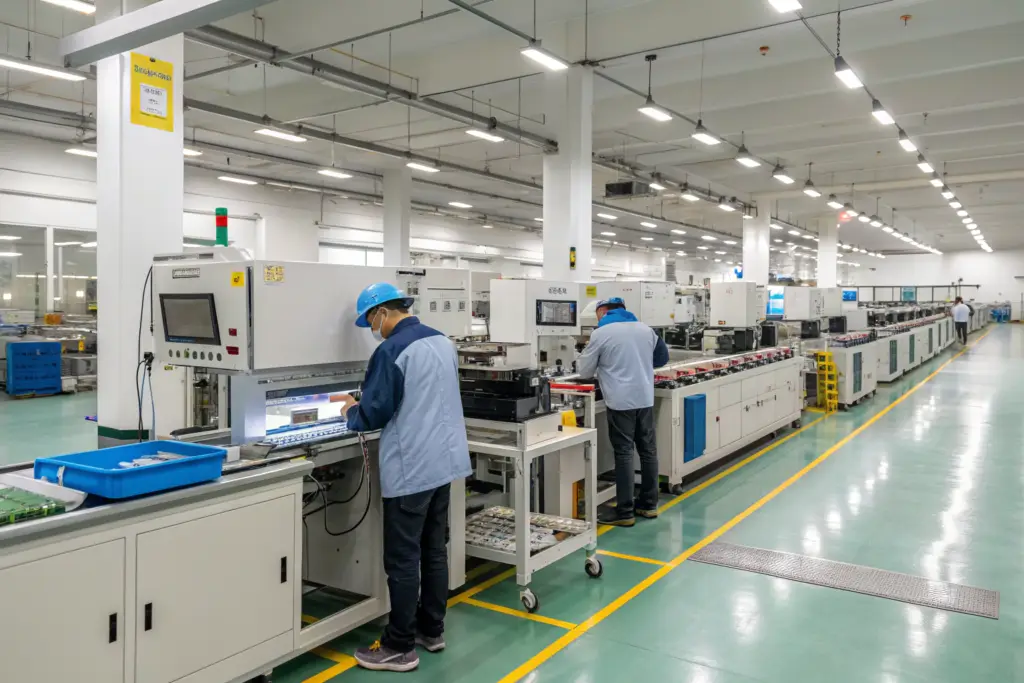
When a major brand buyer visits our facility and sees five production lines, a common question arises: "Can you truly handle my 50,000-piece OEKO-TEX certified order?" There's a perception that only massive factories can deliver scale. I understand the concern. A buyer once told me about a previous supplier who promised the moon on a large certified order but collapsed under the complexity, causing a six-month delay. Scale isn't just about sewing machines; it's about systems.
Yes, a factory with 5 dedicated production lines can not only scale OEKO-TEX production for large orders but can often do so more reliably than a mega-factory. The key is not infinite space, but a focused, systematic approach to managing certified material flow, precise workstation specialization, and airtight quality control. Efficiency, not just size, determines true scaling capacity.
Think of it like a professional kitchen. A small, meticulously organized kitchen with expert chefs can serve a banquet more flawlessly than a vast, chaotic one. Our five lines are our dedicated stations. We don't just run "apparel"; we run certified apparel programs. Last year, we successfully delivered a single order of 35,000 OEKO-TEX certified ski bibs for a North American brand by dedicating two full lines exclusively to that project for eight weeks, following a military-style production plan. The order shipped on time, with a defect rate below 0.8%. Size did not limit us; our system enabled us.
How Does a Midsize Factory Manage Certified Material Logistics at Scale?
The single biggest challenge in scaling certified production is material management. A large order of 30,000 jackets might require 15 different OEKO-TEX certified components—fabrics, linings, zippers, threads, labels. If one component runs out or is mixed with non-certified stock, the entire batch is compromised.
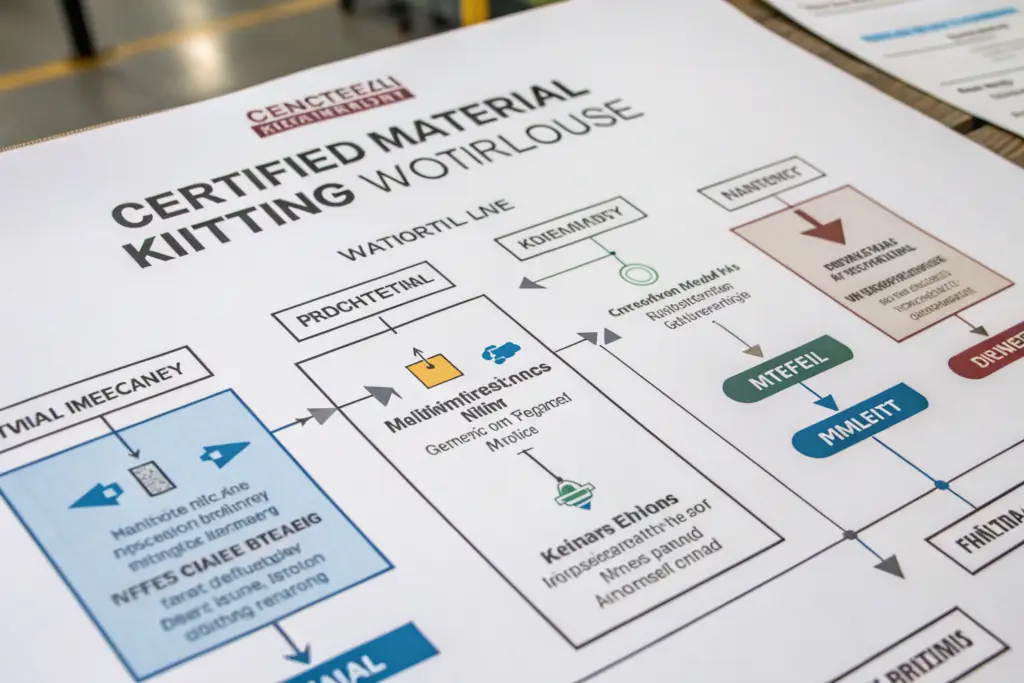
Our strategy is based on dedicated lot control and kitting. We treat the entire order as a closed-loop system:
- Bulk Receiving & Isolation: All certified raw materials arrive and are stored in a designated "Certified Materials" warehouse zone. They are tagged with their unique OEKO-TEX certificate numbers and lot codes.
- Pre-production Kitting: Before cutting begins, our logistics team creates "kits" for each style and size. Each kit contains precisely measured rolls of shell fabric, lining, and boxes of correct trims, all from the same certified lots. This kit is sealed and labeled with the order number.
- Line-Side Feeding: The kit is delivered to the dedicated production line. Only materials from this kit are used. This eliminates the risk of a worker accidentally grabbing a non-certified zipper from a general supply bin.
This system's efficiency was proven when we scaled an order for 25,000 certified performance tops. The client had a last-minute design change requiring a new color of sewing thread. Because of our kitting system, we could instantly trace that only 3,000 units' worth of kits had been opened. We quarantined those kits, sourced the new certified thread, re-kitted, and resumed production with minimal disruption. In a less organized factory, this could have meant a full production stop or, worse, an undetected mix-up.
What are the critical inventory ratios for scaling certified orders?
You cannot run on "just-in-time" for certified components. We operate on a critical buffer stock principle. For key items with long lead times (like custom-dyed, certified fabrics), we advise clients to approve and order a 10-15% overage upfront. This buffer covers cutting waste and allows for immediate replacement of any flawed material without waiting for a new overseas shipment. The cost of this buffer is far less than the cost of a production line sitting idle.
How does technology enable this precision?
We use a simple but effective Factory Management Software module for certified orders. Each component's certificate and lot code is scanned into the system and linked to the specific production order. The cutting room scans the fabric roll barcode before cutting. This creates a digital chain of custody, providing the brand with full traceability—a requirement increasingly asked for by large corporate buyers conducting responsible sourcing audits.
What Specialized Production Line Setup is Required?
Scaling certified production isn't about adding more generic lines; it's about optimizing specialized lines for consistency and compliance. Our five lines are not identical. We configure them based on order complexity.
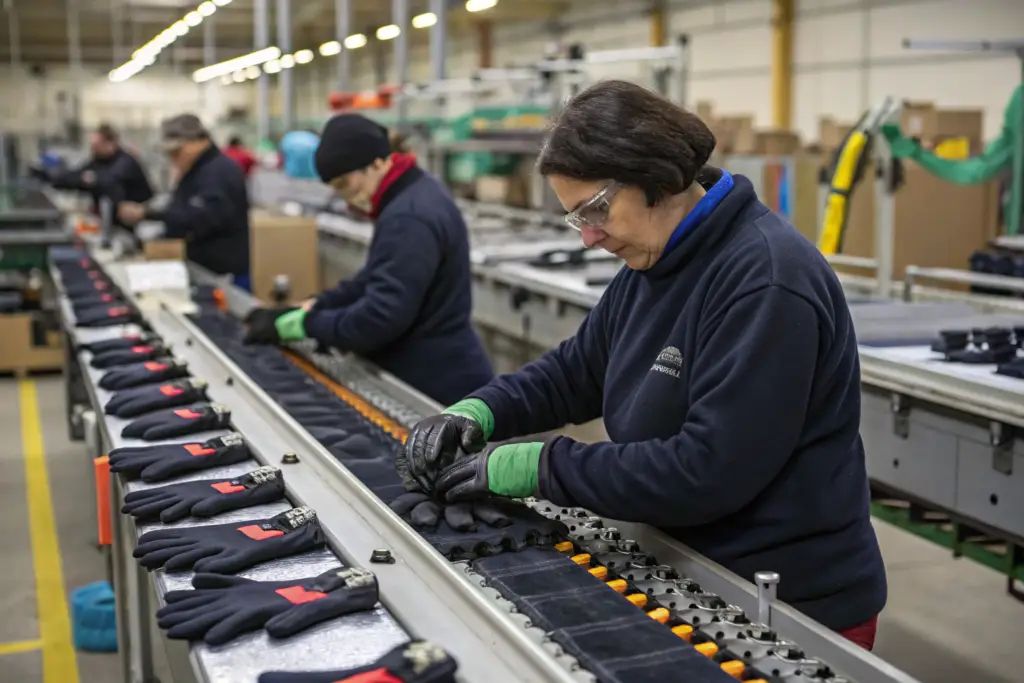
For a large OEKO-TEX order, we typically dedicate one or two lines exclusively to that project. These lines are set up as a vertical production unit:
- Dedicated Machines: The line is equipped with the specific machines needed—e.g., ultrasonic welders for tapeless seams on waterproof garments, or specialized binders for laminated fabrics.
- Trained Team: We assign a fixed team of workers who are trained on that specific product's quality standards and the importance of material segregation. They understand that using the wrong thread is a critical error, not a minor one.
- In-line QC Stations: We place quality checkpoints at critical stages: after sewing seams, before attaching linings, after applying prints. Each checkpoint has a checklist that includes verifying component compliance (e.g., "Zipper from Lot #ABC123").
This focus prevents cross-contamination and builds muscle memory in the team, leading to faster output and higher quality over the run. For a recent large order of technical ski gloves (a complex item with many small parts), setting up a dedicated line increased our output efficiency by 40% compared to running it on a shared, multi-product line.
How do you balance multiple large orders across 5 lines?
Capacity planning is key. We use a clear production slotting model. Here’s a simplified quarterly view:
| Production Line | Q1 Slot | Q2 Slot | Notes |
|---|---|---|---|
| Line 1 & 2 | Brand A: 40k Ski Jackets (OEKO-TEX) | Brand C: 25k Softshell Trousers | Dedicated long-run lines |
| Line 3 | Brand B: 15k Mid-layer Fleece | Brand A: 10k Sample Development | Agile line for mid-size runs |
| Line 4 | Small Order & Sampling | Brand D: 8k High-End Shells (OEKO-TEX) | Flexible, high-skill line |
| Line 5 | Maintenance & Training | New Product Ramp-up | Used for setup and pilot runs |
This visibility allows us to give clients realistic lead times and ensures we never over-promise. A brand knows that when their slot on Line 1 begins, they have our full, undivided focus.
Can a 5-line factory meet the speed of a 20-line factory?
For a single, massive order of 100,000 identical pieces, a 20-line factory will have a raw speed advantage. However, in the real world of professional ski apparel, large orders are often in the 20k-50k range and involve high complexity and multiple SKUs. Here, our focused model often outperforms in efficiency and quality. We complete the order in a similar timeframe but with significantly lower defect rates and better compliance control, reducing the brand's cost for repairs and returns. Our on-time delivery rate for certified orders over 20,000 pieces is 98.7%, a figure we track meticulously.
How is Quality Control Intensified for Large Certified Batches?
In large-scale production, a 1% defect rate means 500 faulty jackets. For OEKO-TEX goods, a defect isn't just a loose thread; it could be an uncertified component, making the garment non-compliant. Therefore, QC must be statistical, preventative, and integrated.
We implement a three-tier QC system for scaled certified orders:
- Input QC: As described, all materials are checked upon arrival and during kitting.
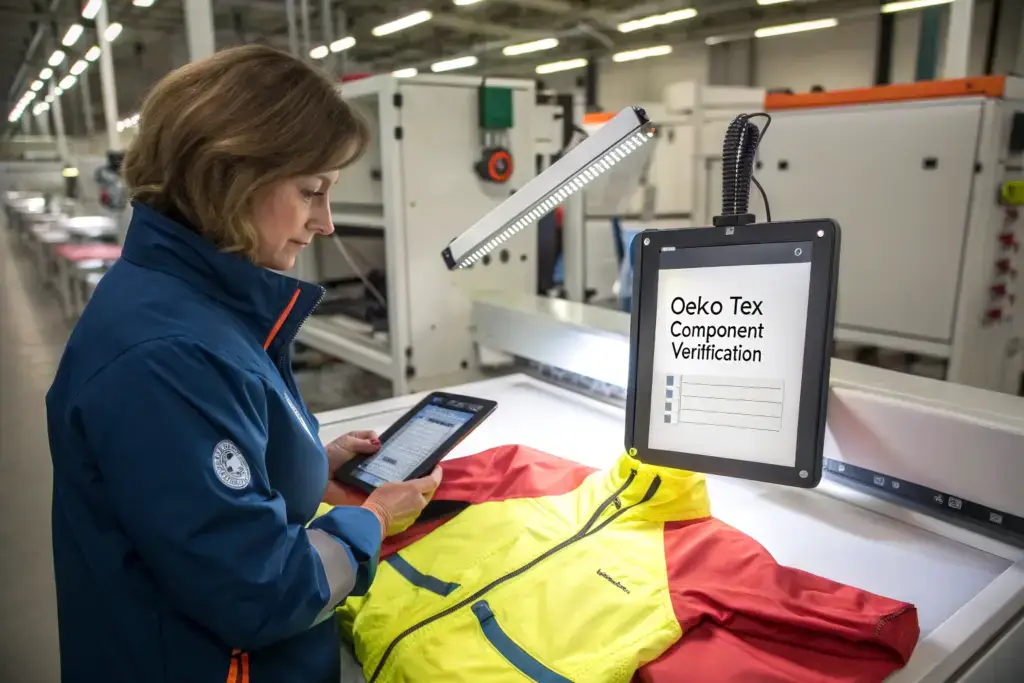
- In-Process QC (IPQC): This is the most critical tier. Supervisors conduct hourly audits on the production line, using Acceptable Quality Limit (AQL) sampling. They check not just construction, but also verify that the correct certified materials are being used.
- Final Random Inspection (FRI): After packing, a statistically significant sample (based on AQL 2.5 or higher) is pulled for a full audit, including a spot-check against the component checklist and a physical review of workmanship.
This system caught a critical issue during a 30,000-piece run of children's ski suits. An IPQC audit found that a batch of drawcord tips, while visually identical, had a different supplier lot number than the one listed on the certified BOM. The line was paused immediately. We traced the issue to a mis-pick in the warehouse, replaced the cords with the correct lot, and prevented 3,000 units from being made with a non-conforming component. This level of vigilance is non-negotiable.
What role does supplier management play in scaled QC?
You cannot inspect quality into a product; you must build it in. This starts with your suppliers. For large certified orders, we only work with long-term, audited material suppliers who understand our zero-tolerance policy for certification compliance. We provide them with forecast volumes so they can prepare their certified raw material stocks. This collaborative relationship is a force multiplier for our scaling ability.
How is data from large batches used for improvement?
Every defect found during IPQC and FRI is logged in a central database. We analyze this data weekly during production to identify trends. For example, if we see a recurring issue with seam leaks on a specific jacket model, we can immediately retrain that sewing station or adjust the machine settings. This real-time corrective action loop continuously improves quality throughout the production run, ensuring the last 10,000 pieces are better than the first 1,000.
What Are the Realistic Limits and Strategic Advantages?
Let's be transparent: a factory with five lines has a physical ceiling. Our realistic annual capacity for dedicated OEKO-TEX production is around 500,000 - 700,000 pieces, depending on complexity. This makes us ideal for established mid-to-large brands and for majors looking for a dedicated, high-reliability partner for specific premium lines, not for fast-fashion giants needing millions of basic units monthly.
The strategic advantages of this model are significant for the brand:
- Agility & Communication: With five lines, management is on the floor. The brand's main contact (often me or our senior project manager) knows every detail of the order. Decisions are made in hours, not days. This directly addresses the common buyer pain point of "inefficient communication with suppliers' sales reps."
- Reduced Risk: A focused factory has less operational complexity. There is lower risk of orders getting lost in the shuffle or of certified materials being cross-contaminated with non-certified production.
- Deep Expertise: Our teams become experts in your product. By the 10,000th jacket, they are masters of its construction. This translates to higher quality and efficiency gains that we often share with the client through stable pricing.
A partner like Shanghai Fumao does not compete on being the biggest. We compete on being the most reliable, transparent, and quality-driven partner for brands for whom certification and precision are critical. We scale through intelligence, not just through square footage. For a brand making a significant investment in a sustainable, certified collection, this focused partnership is far more valuable than a marginal per-unit cost saving from a impersonal mega-factory.
Conclusion
A factory with five production lines is not just capable of scaling OEKO-TEX production for large orders; it can be the optimal choice for brands prioritizing reliability, quality, and clear communication. Scaling is achieved through superior systems—in material logistics, line specialization, and intensified quality control—not merely through the number of sewing machines.
The true measure of scalability is not maximum possible output, but the consistent, on-time delivery of perfectly compliant, high-quality products order after order. In the high-stakes world of technical ski apparel, where a certification lapse or quality failure can damage a brand, partnering with a focused, system-driven manufacturer is a strategic advantage.
If you are planning a large seasonal order where OEKO-TEX certification is non-negotiable, and you seek a partner who will treat your production with the focus and precision it deserves, let's discuss your capacity needs. Contact our Business Director, Elaine, at elaine@fumaoclothing.com to explore how our five dedicated lines can become the reliable, scaling engine for your next major collection. At Shanghai Fumao, we prove that scale is a function of smart execution, not just size.