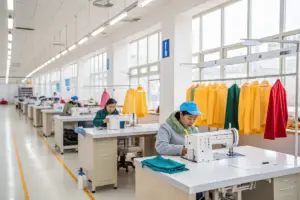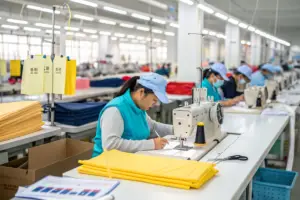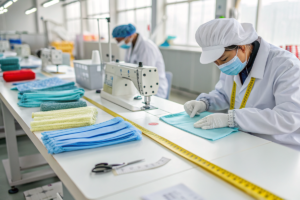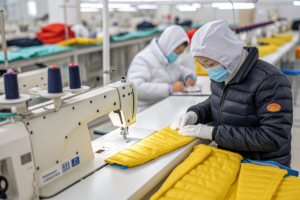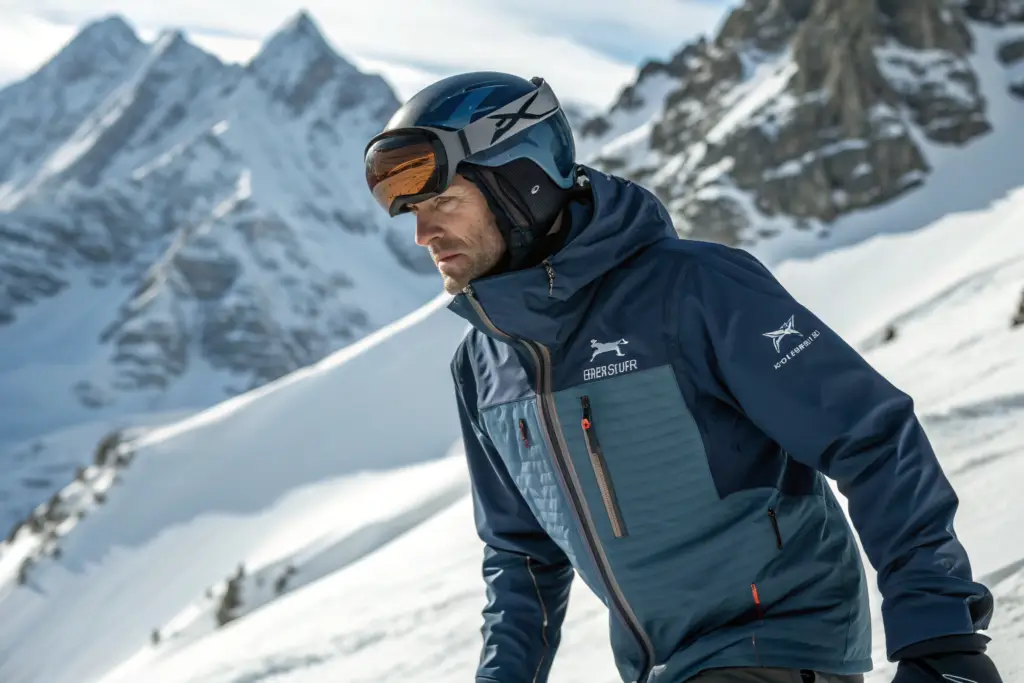
When you're on a mountain slope at freezing temperatures, your gear is your lifeline. As a factory owner, I've seen firsthand how brands evolve from just making "clothing" to engineering survival systems. A client once told me, "My customers don't just wear our jackets; they trust them with their safety." This is why professional ski brands, led by pioneers like Arc’teryx, treat fabric safety not as a feature, but as the absolute foundation of their product.
Professional ski brands like Arc’teryx prioritize fabric safety because their users' lives depend on it. In extreme environments, fabric is the primary barrier against hypothermia, moisture, and injury. Any compromise in material integrity or chemical safety can lead directly to equipment failure, physical harm, and irreparable brand damage. For these brands, fabric safety is synonymous with user safety and brand survival.
Think about it. A fashion jacket might fail with a popped seam. A ski jacket failing in a storm can be catastrophic. This isn't hyperbole. Last season, we worked with a brand that recalled a batch of gloves because the water-repellent (DWR) coating wore off 30% faster than their standard, causing dangerous heat loss in wet conditions. The cost of that recall was immense, but the cost to their reputation would have been far greater. This relentless focus is what separates professional brands from the rest.
How Do Extreme Conditions Redefine Fabric Safety Standards?
The definition of "safe fabric" changes completely in the professional skiing context. It's no longer just about softness or colorfastness. It becomes a multi-layered engineering challenge involving physics, chemistry, and biology.
First, consider the physical demands. Fabrics face abrasion from ice, equipment, and falls. They undergo extreme stress from dynamic movement. They must maintain their protective properties after repeated compression in a backpack. A high-performance outerwear fabric isn't just strong; it's consistently strong under variable, punishing conditions. Arc’teryx is famous for its obsessive construction, like using reinforced GORE-TEX panels in high-wear areas, a direct response to physical safety needs.
Second, chemical safety is critical. Ski apparel is a complex sandwich: outer fabric, waterproof membrane, insulation, and lining. Each layer involves chemical treatments—DWR, dyes, flame retardants (for some applications), and adhesives. In a heated, enclosed space like a ski lift or a backcountry hut, these materials off-gas close to the user's face and skin. Using fabrics certified to standards like the OEKO-TEX Standard 100 ensures no harmful substances are present, preventing long-term health risks and immediate allergic reactions during intense, sweaty activity.
What are the specific failure points in ski apparel fabrics?
The danger often lies in the details, not the main material.
- Seam Tape Delamination: This is a major one. If the tape sealing the stitch lines loses its bond in cold, flexing conditions, water ingress is immediate and total. We conduct freeze-flex tests on all our seam tapes for mountain sports gear.
- Zipper Burst: A zipper on a powder skirt or pit vent failing under stress can funnel snow into the core layers. We source heavy-duty, waterproof zippers like YKK Vislon and test their cyclic durability.
- Insulation Collapse: When synthetic insulation like PrimaLoft gets wet and loses its loft, its thermal protection plummets. Brands combat this with hydrophobic treatments and baffle construction that prevents migration and cold spots.
How do brands like Arc’teryx test for these extreme scenarios?
They go far beyond standard lab tests. They employ "destructive testing" in real-world simulations. This means:
- Abrasion Testing: Rubbing fabric over artificial ice and rock surfaces for thousands of cycles.
- Cold Chamber Flex Tests: Cycling garments through sub-zero temperatures while repeatedly flexing elbows and knees.
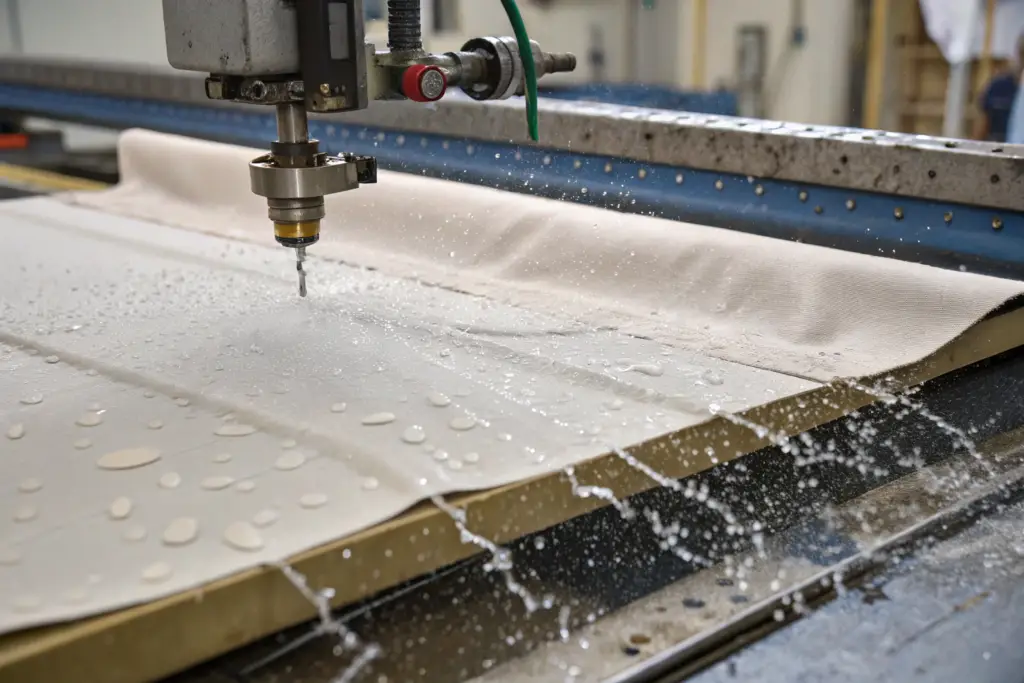
- Hydrostatic Head Tests Under Pressure: Testing waterproofness not just statically, but while the fabric is stretched over a mock knee or elbow joint.
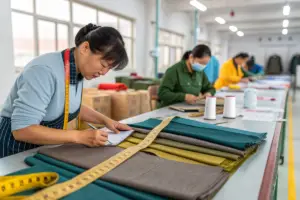
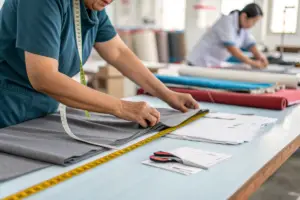
At Shanghai Fumao, we've invested in a climate-controlled test lab because our brand partners demand this data. For instance, we helped a client validate a new recycled nylon face fabric by showing it maintained a 20,000mm hydrostatic head rating even after 50 cold-flex cycles, a key spec for their pro-level ski bibs.
What Role Does Fabric Safety Play in Brand Trust and Liability?
For professional ski brands, their label is a promise etched in frost. Trust is their currency, and it is frighteningly fragile. One widely publicized product failure on a mountain can undo decades of brand building.
The liability is both reputational and legal. If a garment is marketed as "weatherproof" or "storm-ready" and fails, leading to injury, the brand faces lawsuits and regulatory scrutiny. This is why their quality assurance protocols are militaristic. Fabric safety is the first and most critical checkpoint. They don't just ask for a mill's test report; they conduct their own blind tests, often sending our fabric samples to third-party labs like SGS or Intertek for verification before production even begins.
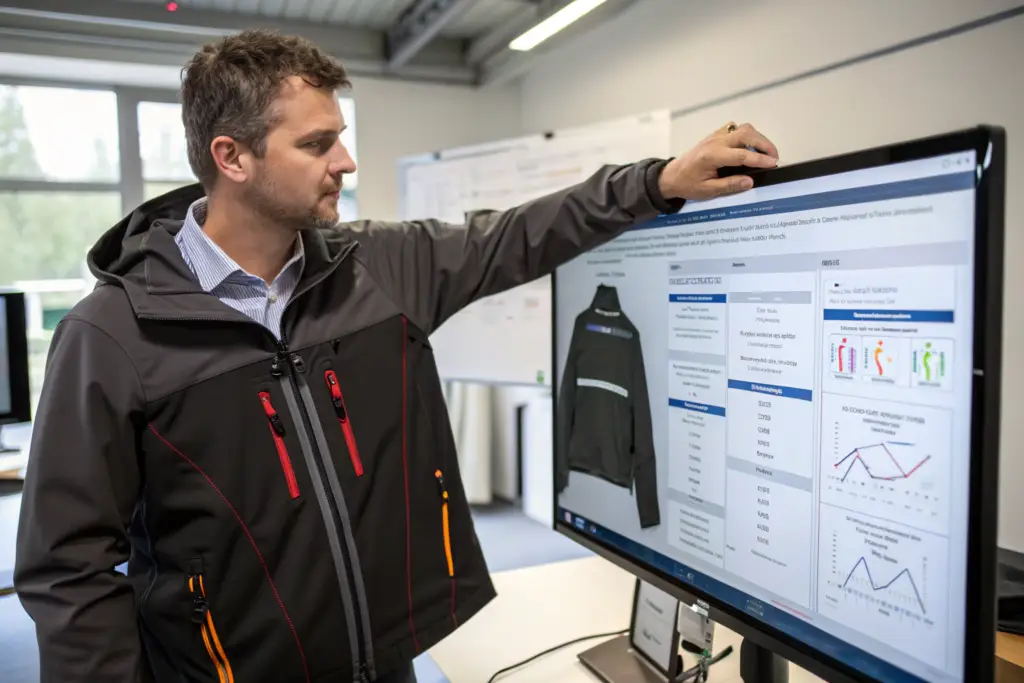
This diligence builds a trust ecosystem. When a professional skier or guide sees the Arc’teryx logo, they trust that every stitch, seam, and fiber has been vetted for this specific use. This trust allows the brand to command premium prices. Consumers aren't just buying a jacket; they're buying peace of mind on the mountain. A customer of ours, a brand making avalanche safety gear, told us their sales spiked after they started publishing detailed fabric test results and certification badges (like Bluesign) on their product pages. Transparency became their best marketing tool.
How does this focus impact the supply chain relationship?
It forces a deep, collaborative partnership. The brand-factory relationship shifts from transactional to co-developmental. We are not just "order takers"; we are problem-solving partners. For example, a brand came to us with a problem: their insulated gloves were too bulky, reducing dexterity for beacon use. Our fabric sourcing team worked with a specialized mill to develop a new, thinner yet higher-loft synthetic insulation. We then managed the entire testing cycle for this new material composite, ensuring it met their safety and performance benchmarks before scaling production.
Can smaller brands compete on this level of safety?
Absolutely, but they must be strategic. They don't need a multi-million dollar lab. They need a manufacturing partner who already has that infrastructure and expertise. By partnering with a factory like Shanghai Fumao, a smaller brand gains immediate access to certified material libraries, in-house testing protocols, and technical knowledge. Their path to market-safe products becomes faster and less risky. We help them focus their budget on validating the few key fabrics for their core collection, rather than spreading it thin.
How Do Safety Certifications Like Bluesign Support Professional Brands?
In the complex world of textile chemistry, brands like Arc’teryx cannot be experts in everything. This is where third-party safety and environmental certifications become indispensable tools, not just marketing badges.
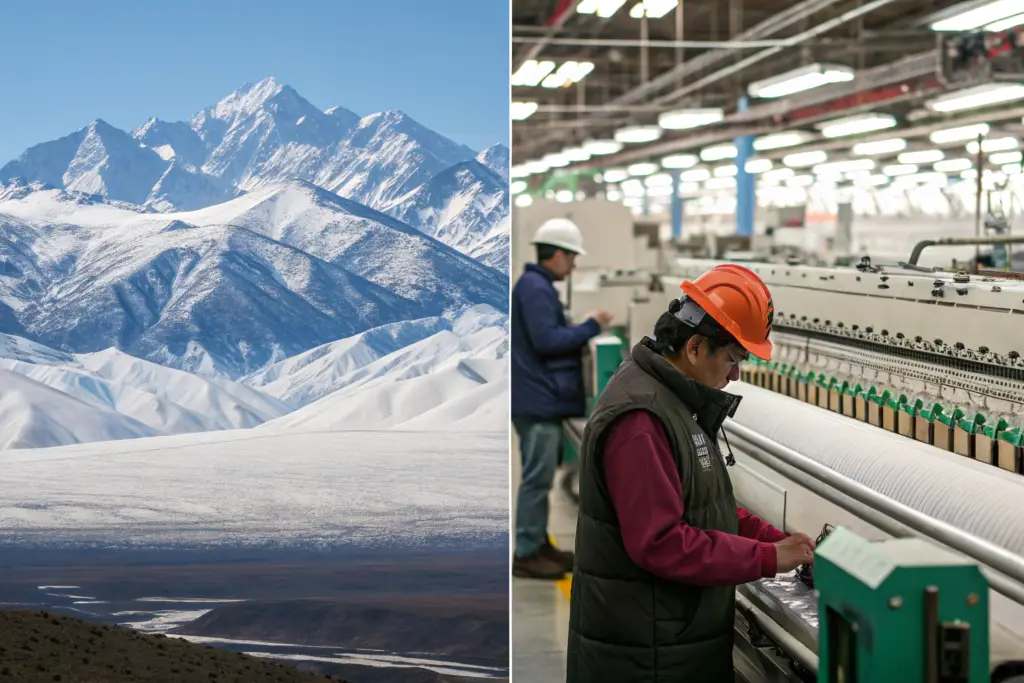
Bluesign is a prime example. While OEKO-TEX focuses on the final product's human-ecological safety, Bluesign looks at the entire production process. It approves the chemicals, dyes, and processes used from the very beginning of the supply chain. For a brand, this is a powerful risk management system. By sourcing Bluesign approved fabrics, they know the materials were produced with the safest available chemicals, minimizing environmental impact and ensuring no toxic residues remain. This is crucial for a brand whose identity is tied to the pristine mountain environments its customers play in.
The certification provides a clear, auditable framework. It answers critical questions: Is this dye carcinogenic? Does this finishing process release volatile organic compounds (VOCs)? Is the water from the dye house treated properly? For a brand outsourcing production to countries like China or Vietnam, this independent verification is invaluable. It bridges the geographic and knowledge gap, giving them control over processes happening thousands of miles away.
What is the practical benefit during manufacturing?
When we at Shanghai Fumao work with Bluesign-approved materials and chemicals, the entire production run becomes more predictable and safer.
- Consistent Color Results: Approved dyes have high fixation rates, leading to better colorfastness and less rework.
- Worker Safety: Using safer chemicals improves conditions in our own cutting and sewing rooms, aligning with our corporate social responsibility goals.
- Streamlined Compliance: It simplifies the process of meeting strict international regulations like REACH for the European market, making customs clearance smoother.
We recently produced a line of shell jackets for a Scandinavian brand using a Bluesign-approved GORE-TEX variant. The pre-approved chemical list from Bluesign drastically reduced our fabric approval time, and the brand could confidently use the Bluesign logo in their marketing, which resonated strongly with their eco-conscious customer base.
How do certifications interplay with performance?
Certifications ensure a baseline of safety and responsibility but do not directly dictate performance attributes like breathability or tensile strength. A brand must select the right certified fabric for the job. The table below illustrates how a brand might choose:
| Application | Primary Safety Concern | Relevant Certification | Performance Need |
|---|---|---|---|
| Base Layer | Skin contact, allergen-free | OEKO-TEX STANDARD 100 | Moisture-wicking, odor resistance |
| Insulation Layer | Fire retardancy (for some uses), filler safety | Oeko-Tex / Downpass (for down) | Thermal efficiency, compressibility |
| Hard Shell | Environmental toxicity, durability | Bluesign, GORE-TEX Guaranteed | Waterproofness, breathability, abrasion resistance |
A professional brand will layer certifications to build a complete safety profile for each garment system.
What Should Brands Look for in a Manufacturing Partner for Safety-Critical Apparel?
Choosing the wrong factory for technical ski wear isn't a business mistake; it's a safety hazard. Brands must look beyond per-unit cost and evaluate a partner's ingrained culture of safety and precision.
First, look for proactive transparency. Can the factory provide detailed General Certificate of Conformity documentation for materials? Do they have photographic or video evidence of their production and quality control processes? After a past issue where a supplier used uncertified insulation, we now implement a batch-level material tracking system. Each roll of fabric and bag of insulation has a unique ID that links to its test reports, which we share with our brand partners in real-time through a portal.
Second, assess technical capability and investment. Do they have the right equipment? For ski wear, this includes:
- High-frequency welding machines for creating waterproof seams without needle holes.
- Specialized binding machines for working with stiff, laminated fabrics.
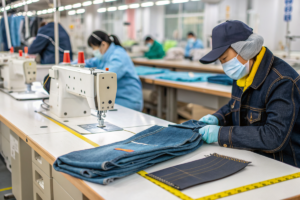
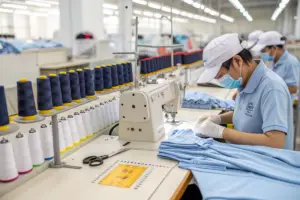
- On-site testing equipment for basic water resistance, seam strength, and zipper durability.
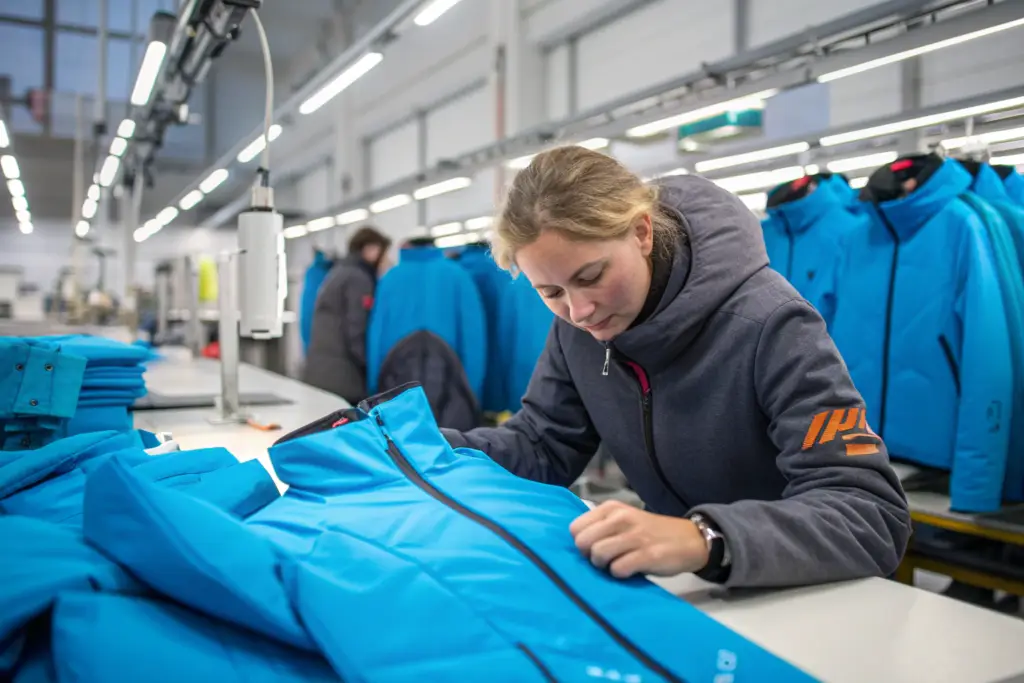
Finally, evaluate communication and problem-solving ethos. When a problem arises—and it will—does the factory hide it or present it with a solution? Two years ago, during a final inspection for a large ski pant order, we noticed the leg gaiters' elastic had a slightly lower recovery rate in cold tests than specified. We immediately paused shipping, informed the client, presented data from three alternative elastic suppliers we had pre-vetted, and covered the cost of the replacement and rework. This saved the brand a potential field failure and cemented a long-term partnership.
How can a brand audit a potential factory's safety commitment?
Ask these specific questions:
- "Can you walk me through your quality control process for sealing waterproof seams?"
- "What is your protocol when an incoming fabric fails your in-house test?"
- "Can you show me examples of how you've solved a fabric or construction safety problem for a past client?"
The answers will reveal whether safety is a checklist item or a core philosophy.
Why is a partner like Shanghai Fumao positioned for this market?
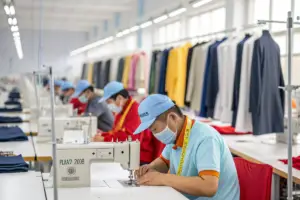
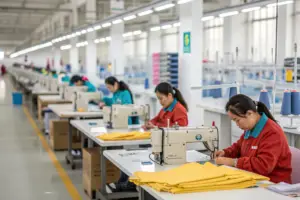
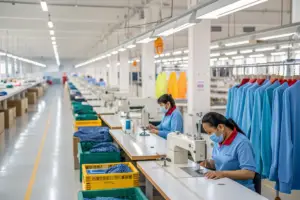
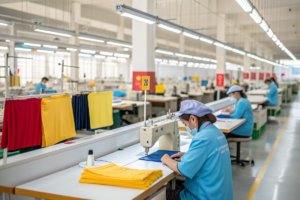
Because we have built our full-package manufacturing service around these exact demands. We don't just sew; we engineer. We have dedicated technicians who understand the physics of a ski jacket and the chemistry of its fabrics. We manage the entire supply chain for safety, from sourcing certified raw materials to conducting pre-shipment audits. For brands that prioritize safety as Arc’teryx does, we become an extension of their own R&D and quality departments, ensuring that every garment leaving our facility is built not just to order, but to survive the mountain.
Conclusion
For professional ski brands, fabric safety is the non-negotiable core of their existence. It is a complex equation balancing extreme performance, chemical hygiene, ethical production, and ultimate user trust. Brands like Arc’teryx have shown that leading with safety isn't a cost center; it's the very engine of brand equity, customer loyalty, and market leadership.
This level of commitment cannot be achieved alone. It requires a symbiotic partnership with a manufacturer who shares the same reverence for detail, evidence, and responsibility. The mountain leaves no room for error, and neither should your supply chain.
If you are building a brand where performance and safety cannot be separated, you need a manufacturing partner who speaks that language fluently. Let's discuss how we can integrate rigorous fabric safety protocols, certified materials, and precision engineering into your next collection. Contact our Business Director, Elaine, at elaine@fumaoclothing.com to begin a partnership where safety is always the first point on the agenda. Let Shanghai Fumao help you build gear that is trusted on the most demanding slopes in the world.