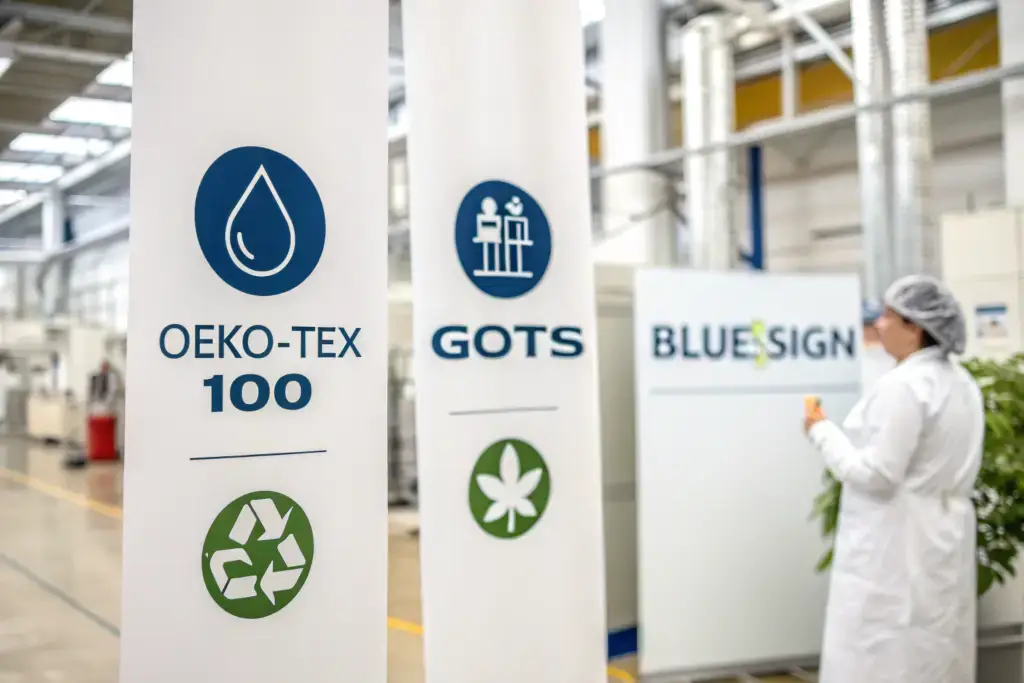
In the complex world of textile certifications, brands, retailers, and consumers are often left confused by a sea of acronyms and labels. GOTS, OEKO-TEX, GRS, BCI, Bluesign—each promises a different aspect of sustainability or safety, but understanding their distinct purposes is critical for making informed sourcing decisions and credible marketing claims. Using the wrong certification can lead to accusations of greenwashing, while leveraging the right one can build powerful trust.
The fundamental difference between OEKO-TEX STANDARD 100 and other major fabric certifications lies in its exclusive, product-specific focus on human-ecological safety. While standards like GOTS (Global Organic Textile Standard) take a holistic approach covering organic content, environmental, and social criteria, OEKO-TEX 100 is a rigorous, scientific testing system that certifies the final product is free from harmful levels of regulated substances. It answers the singular question: "Is this textile product safe for human use?"
This distinction is not about one being "better" than the other, but about their complementary and sometimes overlapping roles. Let’s decode the landscape to clarify where OEKO-TEX 100 fits and how to use it strategically.
What is the Core Purpose and Scope of Each Major Certification?
To avoid confusion, it's essential to start with the primary objective of each standard. Think of them as specialized tools: you wouldn't use a voltmeter to measure length.
| Certification | Primary Focus & Scope | Key Question It Answers |
|---|---|---|
| OEKO-TEX STANDARD 100 | Human-Ecological Product Safety. Tests finished articles for harmful substances. | Is this specific textile product free from harmful levels of chemicals for its intended use? |
| GOTS (Global Organic Textile Standard) | Organic Integrity + Environmental & Social Responsibility. Covers processing, manufacturing, packaging, labeling, trading. | Is this product made from organic fibers in an environmentally and socially responsible way? |
| GRS (Global Recycled Standard) | Recycled Content & Chain of Custody. Tracks recycled raw materials through the supply chain. | How much recycled content does this product contain, and is the claim verifiable? |
| Bluesign® SYSTEM | Sustainable Textile Production (Input Stream Focus). Approves chemicals, processes, and components for manufacturers. | Were the materials and processes used to make this product environmentally friendly from the start? |
| BCI (Better Cotton Initiative) | Sustainable Farming Practices. Focuses on cotton cultivation at the farm level. | Was the cotton grown using more sustainable agricultural practices? |
As this comparison shows, OEKO-TEX 100 is unique in its laser focus on the safety of the end product for the user. A fabric can be GOTS certified (organic and responsibly processed) but still need OEKO-TEX 100 certification to prove it is free from specific residual processing chemicals that fall outside GOTS's scope.
How Does OEKO-TEX 100's Testing Methodology Differ?
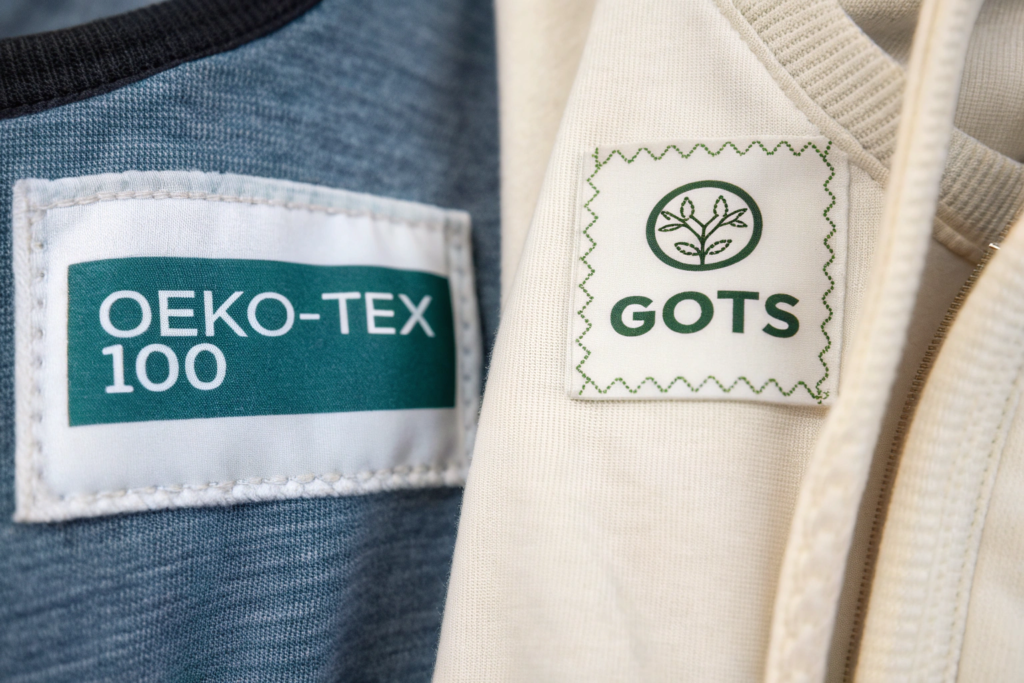
OEKO-TEX 100 is fundamentally a testing and certification scheme based on laboratory analysis. Its credibility stems from:
- Product-Specific Certification: The certificate is issued for a defined article (e.g., "Baby Romper, Style XYZ"), not for a factory or a generic material.
- Comprehensive Substance List: It tests for over 100 regulated substances across categories like banned carcinogenic dyes, pesticides, heavy metals, formaldehyde, and phthalates.
- Strict Product Classes: It has four product classes with varying strictness (Class I for babies being the strictest). This allows for precise safety claims tailored to the product's use.
- Independent, Accredited Labs: Testing is performed by independent member institutes (e.g., TESTEX, Hohenstein), not by the manufacturer.
This makes it an exceptionally powerful and clear tool for brands making safety claims to consumers, especially in regulated markets like North America and Europe.
Where Do These Certifications Overlap and Complement Each Other?
The most robust and credible products often combine multiple certifications, each addressing a different part of the value chain. Understanding how they fit together is key to building a comprehensive sustainability and safety story.
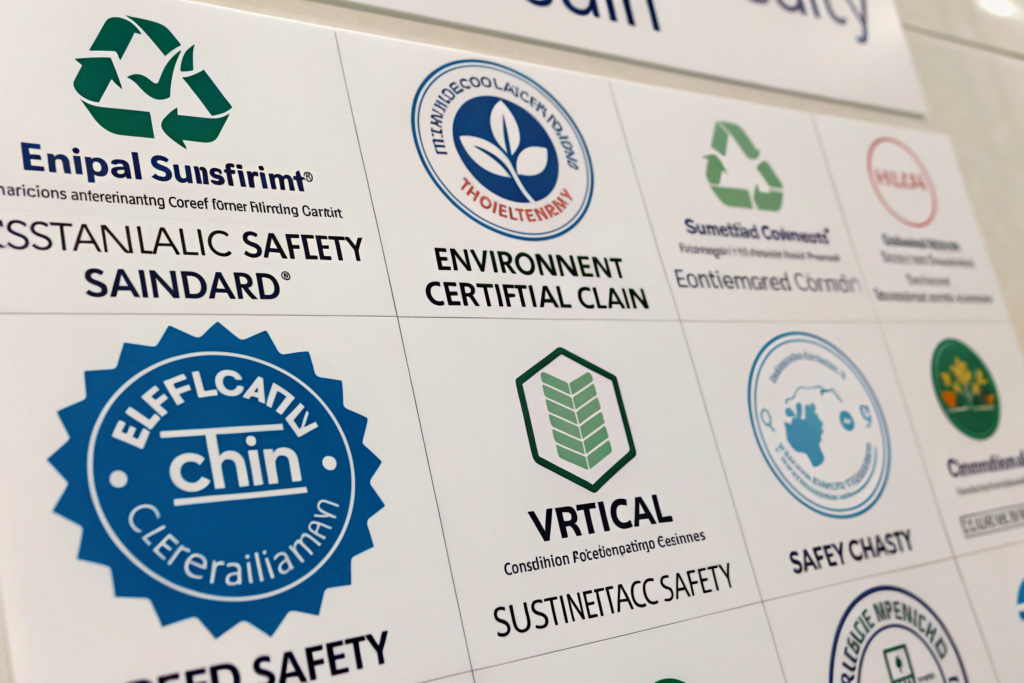
Can a Product Have Both GOTS and OEKO-TEX 100?
Yes, and this is a very powerful combination, particularly for the organic children's wear market. Here’s how they work together:
- GOTS certifies that the cotton is organically grown and that all wet-processing (dyeing, finishing) meets strict environmental and social criteria.
- OEKO-TEX STANDARD 100 then provides the additional, consumer-facing guarantee that the final organic garment is tested and free from harmful substance residues beyond the GOTS requirements.
For example, a client sourcing organic cotton hoodie sets from Shanghai Fumao might choose a GOTS-certified fabric. To provide an extra layer of safety assurance for marketing, they then have the finished garment OEKO-TEX 100 certified. This covers both the "responsible process" and "safe product" narratives comprehensively.
How Do Bluesign and OEKO-TEX 100 Relate?
They operate at different points in the chain but aim for a similar goal of cleaner production.
- Bluesign is a system certification for manufacturers. It approves the chemicals and processes used before production begins, focusing on reducing environmental impact at the source.
- OEKO-TEX 100 is a product certification that tests the output of production.
A factory with Bluesign certification is likely to produce fabrics that easily pass OEKO-TEX 100, as the harmful inputs have been eliminated upstream. However, the OEKO-TEX 100 label on the finished garment remains crucial for consumer communication, as it is far more widely recognized by end-buyers.
What Are the Strategic Implications for Sourcing and Marketing?
Choosing which certification(s) to pursue is a strategic business decision with implications for cost, supply chain management, and brand positioning.

When Should You Prioritize OEKO-TEX 100?
Prioritize OEKO-TEX 100 when your primary need is to:
- Address Consumer Safety Concerns Directly: Especially for products for babies, children, or items with intimate skin contact.
- Ensure Regulatory Compliance: It is an excellent tool for demonstrating compliance with laws like CPSIA (USA) or REACH (EU), especially when sourcing from complex global supply chains.
- Gain a Competitive Trust Mark: In markets where consumers are familiar with the label (e.g., Europe, North America), it provides an immediate trust signal that can justify a premium.
- Verify a Specific Product's Safety: When you need definitive proof about a particular garment's chemical safety, not the broader system that produced it.
For high-volume basics like hoodie sets or French Terry rompers where safety is a key purchase driver, OEKO-TEX 100 is often the most direct and effective certification.
When Might Other Certifications Be More Appropriate?
- If Your Core Story is Organic: Then GOTS is non-negotiable as the gold standard for organic textile claims.
- If Your Core Story is Recycled Content: Then GRS or RCS (Recycled Claim Standard) is essential to validate the recycled material percentage.
- If You Are a Manufacturer Seeking Systemic Improvement: Then investing in a system certification like Bluesign or OEKO-TEX STeP (which focuses on sustainable production facilities) can improve efficiency and attract brand partners.
How Does This Impact Your Relationship with Your Manufacturer?
Your manufacturer's expertise and infrastructure will determine which certifications are feasible and cost-effective. A factory specializing in fast, low-cost fashion may struggle with any certification. A partner like Shanghai Fumao, however, is structured to facilitate certified production.
What Capabilities Should Your Manufacturer Have for OEKO-TEX 100?
To reliably deliver OEKO-TEX 100 certified goods, a manufacturer needs:
- Supply Chain Control: Relationships with fabric and trim suppliers who can provide compliant, testable materials.
- Technical Understanding: Knowledge of RSLs (Restricted Substances Lists) and how processing (dyeing, printing, finishing) affects test results.
- Process Segregation: Ability to run certified batches separately to prevent contamination.
- Documentation Management: Systems to track material lots and compile test reports.
At Shanghai Fumao, our full-package manufacturing model is built for this. We maintain libraries of pre-vetted materials and manage the entire certification process for our clients, from sample submission to providing the final certificate. This turns a complex technical task into a streamlined service.
A sophisticated manufacturer can be a guide. For instance, if you want a GOTS + OEKO-TEX 100 product, they should be able to:
- Source GOTS-certified fabrics.
- Ensure all wet-processing units in the chain are GOTS-compliant.
- Then, using those approved materials and processes, produce the final garment and submit it for OEKO-TEX 100 testing.
This integrated approach is how we help brands build bulletproof, multi-layered product stories.
Conclusion
OEKO-TEX STANDARD 100 occupies a unique and critical niche in the certification ecosystem: definitive product safety verification. It is not a broader sustainability or organic standard, but its focused, scientific rigor makes it arguably the most potent tool for building consumer trust in the chemical safety of a textile product.
For brands in the children's wear, intimate apparel, or home textiles sectors, it is often the most relevant and impactful certification. Understanding its distinction from—and synergy with—standards like GOTS, GRS, and Bluesign allows you to craft a precise, credible, and compelling narrative for your products and supply chain.
Making the right choice empowers you to source with confidence, market with authority, and build a brand that stands for genuine, verifiable values.
Ready to integrate precise safety certification into your product line? Partner with a manufacturer that understands the distinctions and delivers on the promises. At Shanghai Fumao, we provide the expertise and controlled production environment to achieve OEKO-TEX 100 and other key certifications reliably. Contact our Business Director, Elaine, to develop a certification strategy that strengthens your brand. Email her at: elaine@fumaoclothing.com.