As a buyer sourcing apparel, questions about chemical safety are no longer niche concerns—they are central to purchase decisions. When a retailer, brand owner, or distributor asks, "Is this garment safe?" they are not seeking a simple "yes." They are asking for evidence, transparency, and reassurance that your supply chain is managed responsibly. A vague or defensive answer can break trust instantly, while a confident, informed response can solidify a partnership.
Effectively answering questions about chemical safety requires a three-part strategy: Proactive Education, Verifiable Proof, and Transparent Process. You must move beyond assurance to providing tangible, third-party documentation like OEKO-TEX or GOTS certification, explain the controlled manufacturing steps that ensure compliance, and frame safety as a shared value, not just a compliance cost.
This approach directly addresses the core pain points of modern buyers: distrust of supplier claims, fear of hidden risks, and the logistical nightmare of managing compliance themselves. Let's build a framework for turning these challenging questions into your strongest selling point.
Why Are Buyers Asking These Questions Now?
Understanding the motivation behind the question is the first step to a good answer. Today's buyer is under immense pressure from multiple directions. They are not just being cautious; they are managing concrete business risks that you, as their potential manufacturing partner, can either amplify or alleviate.
The driving forces are consumer demand, regulatory complexity, and brand reputation. A single incident can cause devastating recalls, social media backlash, and lost retail partnerships. Therefore, their questions are a form of due diligence, testing whether you are a risk or a solution to their supply chain.
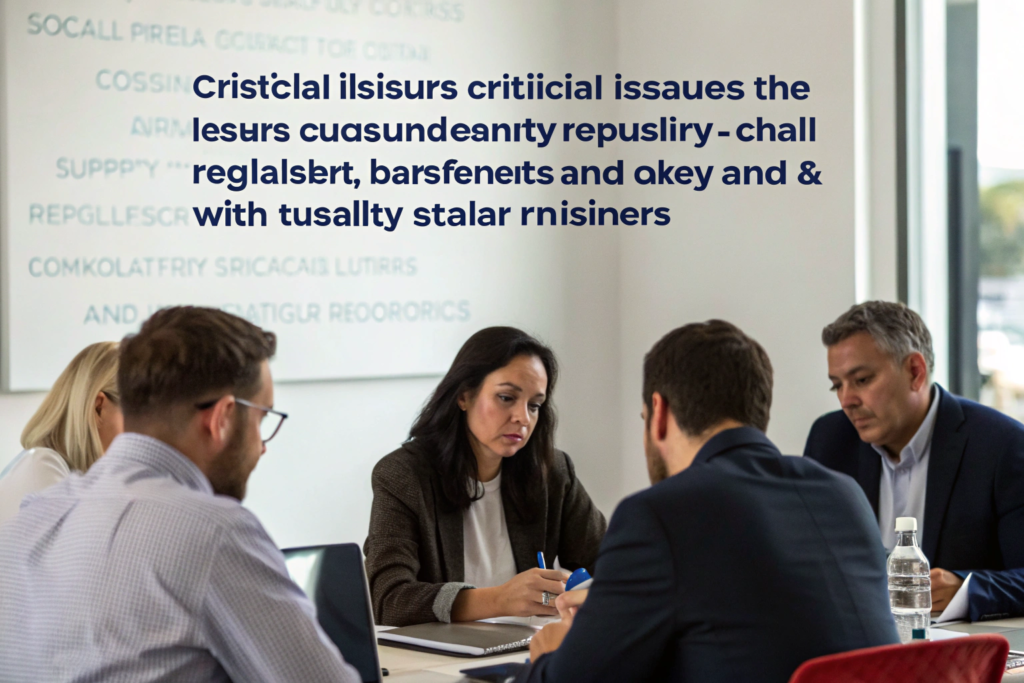
What Are the Unspoken Fears Behind the Questions?
Buyers often have specific, unspoken fears stemming from past negative experiences:
- "Will this cause skin reactions or a product recall?" This is the direct liability fear.
- "Will my shipment be held at customs for non-compliance?" This is the logistics and cash flow fear.
- "Can I market this product with confidence to my customers?" This is the brand equity fear.
- "Are you showing me a real certificate, or is it falsified?" This is the fundamental trust fear, a common pain point mentioned in many buyer profiles.
A client from a sustainable brand in Oregon once told us their previous supplier for organic cotton kids' wear provided a fake GOTS transaction certificate. The entire shipment was rejected by their retailer, costing them the season. When they audit new partners now, they don't just ask for certificates; they demand to see the supporting system.
How Have Regulations and Consumer Awareness Changed the Game?
The regulatory landscape is a moving target. Laws like CPSIA (Consumer Product Safety Improvement Act) in the U.S. and REACH in Europe set strict limits. More importantly, educated consumers, especially parents, research online. They look for trust marks like OEKO-TEX. This means the buyer’s end-customer is now auditing them. Your ability to provide clear, marketable proof of safety (like an OEKO-TEX label) directly enables their sales and marketing. Framing your answer in this context—"Here is the documentation that will help you sell with confidence"—immediately aligns your interests.
What is Your First Line of Defense: Proactive Documentation?
The best way to answer a question is before it's asked. Your communication toolkit—from your website line sheets to initial emails—should proactively address chemical safety. This demonstrates professionalism and establishes credibility from the first interaction.
This proactive stance transforms you from a vendor reacting to scrutiny into an expert partner guiding the buyer through a complex landscape.

Which Certifications Should You Lead With and Why?
Not all certifications are equal in the buyer's eyes. Lead with the most recognized, relevant, and rigorous standards for your product category.
- For General Chemical Safety: OEKO-TEX STANDARD 100 is the gold standard. It is globally recognized, product-specific, and has clear product classes (I for babies, II for apparel). It is your strongest, most understandable answer to "Is this safe?"
- For Organic Claims: GOTS (Global Organic Textile Standard) covers organic fiber content plus environmental and social criteria. It's essential for marketing organic products.
- For Restricted Substances: A RSC (Restricted Substances Certificate) from a reputable lab like SGS or BV shows compliance with a specific brand's or region's RSL (Restricted Substances List).
At Shanghai Fumao, we lead with our active OEKO-TEX certifications for relevant product lines. For instance, when presenting our French Terry for babywear, we immediately share the Product Class I certificate. This pre-emptively answers the most critical safety question for that product.
How to Present Certificates Credibly?
Simply attaching a PDF is not enough. To combat distrust, present certificates with verification instructions:
- Provide the Certificate Number: Always include it in your documentation.
- Guide Verification: Say, "You can verify this certificate's authenticity in real-time by entering certificate number [ABC123] and our company name 'Shanghai Fumao' into the official OEKO-TEX 'Check Your Label' online database."
- Explain the Scope: Clarify what the certificate covers. E.g., "This certificate covers the complete garment: the knitted fabric, sewing thread, elastic, and print, all tested to OEKO-TEX Class II standards."
This transparent, educational approach builds immense trust. It shows you have nothing to hide.
How to Explain Your Safety-Assured Production Process?
Certificates are the output; your controlled manufacturing process is the engine that creates them. Buyers need to understand how you achieve consistent safety. This is where you demonstrate that safety is ingrained in your operations, not just a test done at the end.
Explaining this process showcases your capability as a full-package manufacturer with integrated quality assurance.
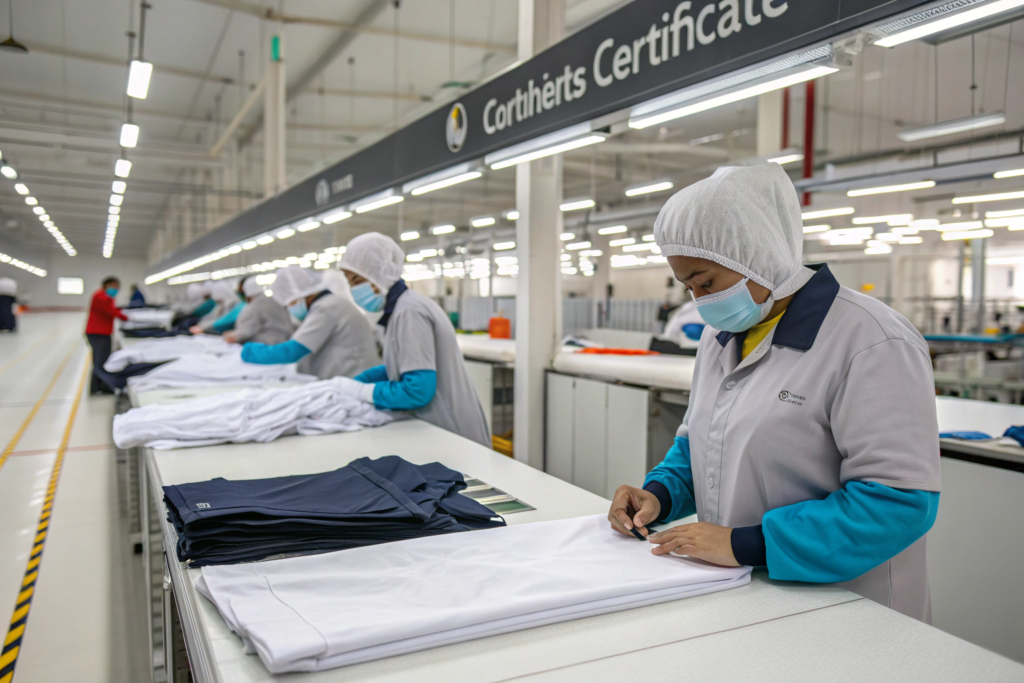
Can You Map Your Supply Chain Control Points?
A compelling answer outlines control at each stage. Use a simple, clear framework:
| Production Stage | Safety Control Activity | How It Prevents Risk |
|---|---|---|
| Fabric & Trim Sourcing | Working with OEKO-TEX certified mills; maintaining an approved vendor list for trims. | Ensures raw materials meet safety standards before they enter our factory. |
| In-House Lab Testing | Preliminary testing of fabric lots and dye approvals for parameters like pH and formaldehyde. | Catches potential non-compliance early, before bulk production and costly external testing. |
| Production Management | Using dedicated lines for certified orders; controlled inventory of approved chemicals (e.g., softening agents). | Prevents cross-contamination with non-compliant materials or processes. |
| Final Verification | Sending finished garment samples to accredited third-party labs (e.g., TESTEX) for official certification. | Provides the independent, authoritative certificate for the buyer. |
Walking a buyer through this map shows systemic competence. It answers the question, "How do I know every batch is safe?"
What Role Does Your In-House Quality Team Play?
Highlight your human infrastructure. Mention your quality control team's training and protocols. For example: "Our QC managers are trained on RSls and conduct random audits during production. They ensure that only approved, batch-tracked materials are used on certified orders." This detail assures the buyer that real people are actively managing their order's safety, not just a machine stamping a certificate.
How to Handle Specific, Technical Buyer Queries?
Sometimes buyers will ask highly technical questions, often because a previous supplier failed them or their own compliance team is demanding details. Your goal here is not to bluff but to demonstrate knowledgeable access to information.
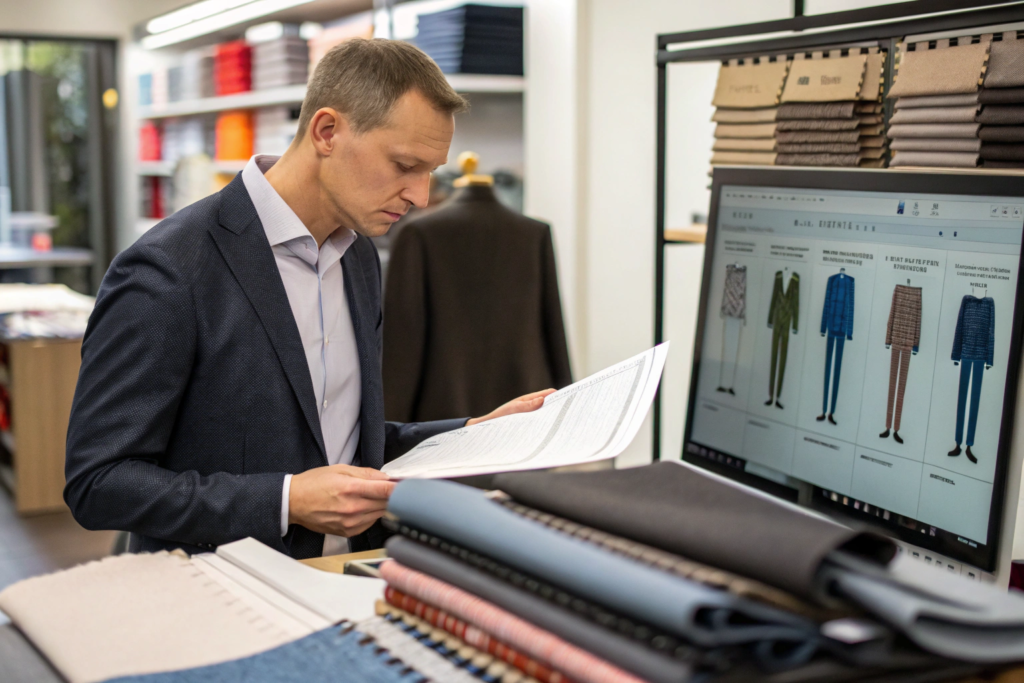
How to Respond to Questions About Specific Substances?
If asked about substances like formaldehyde, azo dyes, or PFAS, follow this structure:
- Acknowledge & Relate: "That's an important question. Many of our buyers for the U.S. market are focused on formaldehyde levels due to CPSIA regulations."
- Provide the Proof: "Our OEKO-TEX certification specifically tests for and restricts formaldehyde to levels far below the U.S. legal limit. I can share the test summary for that parameter from the full report."
- Explain the Control: "We achieve this by sourcing pre-approved fabrics and using formaldehyde-free finishing agents in our production."
This shows you understand the regulation, have the test data, and control the process.
What If a Buyer Requests a Custom RSL Test?
This is common with larger brands. Your response should be cooperative and systematic:
- Agree and Clarify: "We can absolutely arrange testing against your RSL. To provide an accurate quote and timeline, we will need the full list of substances and their limits from you."
- Propose a Process: "We typically proceed by first testing our standard fabric with your list. If it passes, we proceed with production and conduct a final audit test on the finished garment from the same batch. We can use an accredited lab of your choice or our regular partner, Intertek."
- Manage Expectations: "This process adds approximately 2-3 weeks to the timeline and a cost of [estimated range]. This ensures we deliver exactly to your specification."
This professional, structured response positions you as a capable and transparent partner for complex orders.
Conclusion
Answering questions about chemical safety is not a defensive maneuver—it is your prime opportunity to demonstrate superior capability, build trust, and differentiate your factory. By shifting from reactive assurances to proactive education, verifiable proof, and transparent process explanation, you address the buyer's deepest fears and business needs.
You transform the conversation from "Can you prove it's safe?" to "I trust you to manage safety for us." This trust is the foundation of long-term, successful partnerships in today's market.
Ready to partner with a manufacturer that has the answers, the proofs, and the processes already in place? At Shanghai Fumao, we equip our partners with the documentation, knowledge, and controlled production systems to confidently address any safety inquiry. Contact our Business Director, Elaine, to start a conversation where transparency is the first step. Email her at: elaine@fumaoclothing.com.