In the competitive world of children’s apparel distribution, product differentiation is key. Yet, while design and price are primary factors, there exists an unseen layer of criteria that modern retailers and, ultimately, parents increasingly demand: verifiable safety assurance. For distributors sourcing plush, sought-after items like velour jumpers, this demand translates into a critical sourcing decision. Stocking products that merely look and feel good is no longer sufficient; they must be provably safe for the most vulnerable users.
Prioritizing OEKO-TEX STANDARD 100 with Product Class I (Grade 1) certification for velour jumpers is a strategic decision that directly addresses the highest market safety standard, mitigates business risk, and creates a powerful competitive edge for distributors. It guarantees that every component of the jumper is tested and certified safe for babies and young children up to 3 years old, offering the strongest possible product integrity claim.
For distributors navigating complex supply chains, this certification acts as a streamlined risk management tool, shifting the burden of safety verification to an independent, globally recognized authority. Let’s examine why this specific grade is non-negotiable for premium children’s velour.
What Does OEKO-TEX Grade 1 Mean for Product Safety?
Understanding the grading system is fundamental to making informed sourcing decisions. OEKO-TEX Product Class I, often referred to as “Grade 1” in sourcing terminology, represents the most stringent set of limits within the STANDARD 100 framework. While all classes restrict harmful substances, Class I is specifically designed for articles intended for babies and toddlers up to 36 months.
This distinction is critical because infants have the most sensitive skin, lower body weight, and a tendency to put fabrics in their mouths. The certification tests for over 100 substances—including formaldehyde, pesticides, allergenic dyes, and heavy metals—but enforces the strictest permissible limits for this category. For a velour jumper, this means the fluffy pile fabric, the backing, the thread, the elastic, any prints, and even the care label have all passed this rigorous baby-specific standard.
How Do the Limits Differ From Other Product Classes?
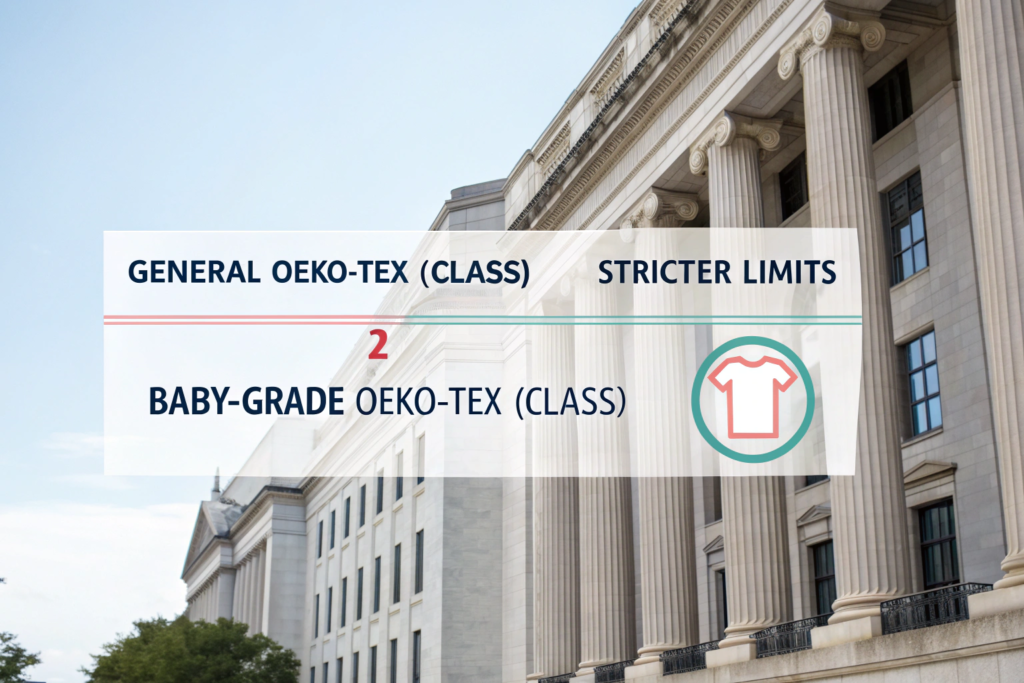
The difference between Class I and other classes (like Class II for general apparel) is not binary but quantitative and significant. For many substances, the allowed limits are a fraction of those permitted for adult clothing.
- Formaldehyde: The limit is nearly undetectable, far below what might be allowed in a woven shirt for adults.
- Heavy Metals (e.g., Lead, Cadmium): Tolerances are set at or near the detection limits of advanced equipment.
- pH Value: The skin-friendly pH range is tightly controlled to match an infant’s delicate skin.
- Azo Dyes & Allergens: The list of prohibited allergenic and carcinogenic dyes is comprehensive for all classes, but the testing sensitivity for Class I is extreme.
Sourcing a jumper with only a generic “OEKO-TEX” claim is insufficient. A distributor must confirm it is certified for Product Class I. Last quarter, a distributor client discovered their previous supplier’s velour was certified only for Class II (general wear). While legally sellable, it immediately disqualified them from several high-value boutique and organic retail accounts that explicitly required baby-grade certification. Switching their core velour jumper program to our Shanghai Fumao production, which is certified to Class I, reopened those channels.
Why is Velour a Particular Focus for High-Level Certification?
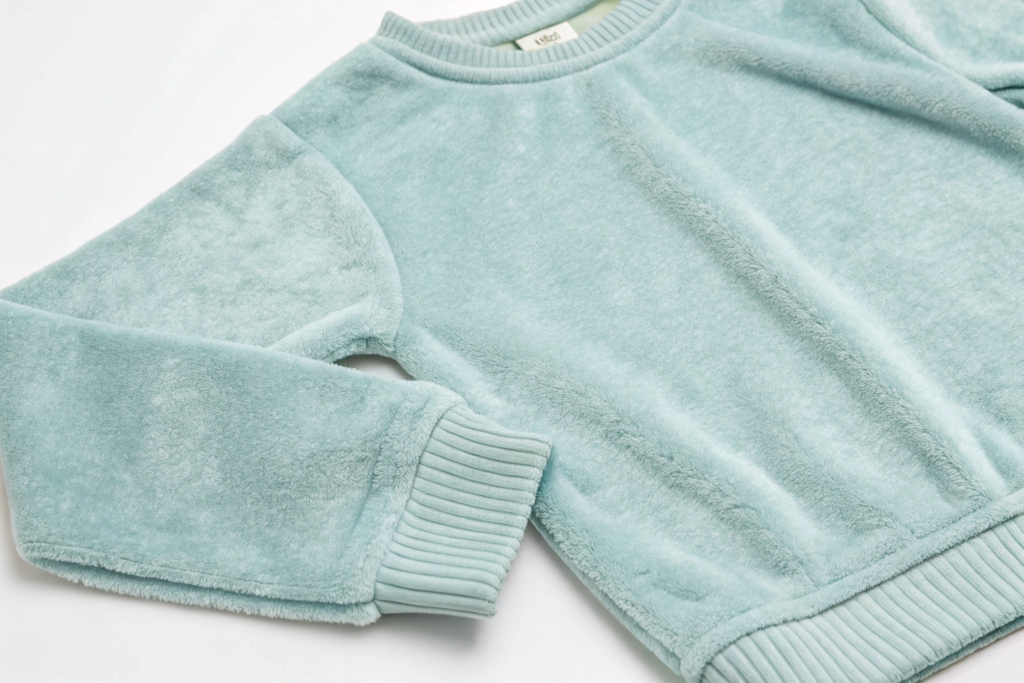
Velour’s luxurious, high-pile texture is what makes it desirable, but this same structure increases potential risk. The greater surface area can retain more chemical residues from dyeing and finishing if not properly processed. Furthermore, the soft pile is more likely to come into contact with a baby’s mouth. Certification ensures that the processes used to achieve that softness—such as brushing and shearing—do not introduce or leave behind harmful agents. It verifies that the fabric sourcing and finishing were managed with infant safety as the paramount concern.
How Does This Prioritization De-risk a Distributor’s Business?
Distributors operate on thin margins and scale; a single product recall or retail partner rejection can erase the profitability of an entire container. OEKO-TEX Class I certification is a proactive investment in supply chain integrity that mitigates multiple layers of business risk.
It functions as an insurance policy, not just against regulatory non-compliance, but against reputational damage and lost sales opportunities. In an era where retailers audit their suppliers rigorously, presenting this certification simplifies the onboarding process dramatically.
Does It Protect Against Regulatory and Retailer Rejection?
Yes, comprehensively. In major markets like North America and Europe, children’s products are governed by strict regulations (e.g., CPSIA in the U.S., REACH in the EU). OEKO-TEX Class I often meets or exceeds these base legal requirements. For a distributor, this means:
- Smoother Customs Clearance: Having readily available, authoritative test certificates reduces the risk of shipment holds for random safety checks.
- Retailer Compliance: Large chains and conscientious boutiques increasingly mandate such certifications. A Class I certificate is a pre-qualification ticket for these lucrative accounts.
- Future-Proofing: As regulations tighten, certified products are already aligned with higher standards.
Our full-package manufacturing service includes managing this compliance documentation. For a distributor using our DDP (Delivered Duty Paid) service, we ensure the complete technical file, including the OEKO-TEX certificate, travels with the shipment, providing turnkey compliance.
How Does It Minimize Liability and Brand Damage?
The greatest cost of a safety incident is often not the recall itself, but the erosion of trust with retailers and end consumers. If a non-certified product causes even minor skin irritation, the distributor—not the anonymous factory—will face the backlash from retail partners and negative reviews. OEKO-TEX Class I certification transfers the burden of proof to an independent, respected third party. It demonstrates due diligence. In the event of a challenge, the distributor can point to the certificate as evidence of having sourced to the highest available safety standard. This layer of protection is invaluable for safeguarding your business’s reputation.
What is the Tangible Market Advantage for Distributors?
Beyond risk mitigation, prioritizing Class I certification creates active commercial opportunities. It allows distributors to segment their product offerings, target higher-margin retail channels, and build a brand as a trusted, quality-focused supplier in a crowded marketplace.
In essence, it moves the velour jumper from being a commodity item to a specialty, value-added product.

Can It Justify Higher Margins and Access Premium Channels?
Absolutely. Retailers serving the premium baby and organic markets are not just selling clothing; they are selling a promise of safety and care. They seek distributors who can reliably fulfill that promise. By offering OEKO-TEX Class I certified velour jumpers, you:
- Command a Higher Price Point: The certification provides a clear, defensible reason for a premium, which both you and the retailer can benefit from.
- Access Exclusive Retailers: Many high-end boutiques, premium department stores, and eco-conscious online platforms have procurement policies that explicitly require this level of certification.
- Reduce Sales Friction: Your sales team can lead with this credential, quickly establishing credibility and addressing a key buyer concern before it’s even raised.
A distributor partner of ours in the Midwest used our Class I certified jumpers to successfully pitch a major regional department store chain’s baby department. The certification was the decisive factor that won them the shelf space over two other competitors.
How Does It Streamline Sales and Marketing Efforts?
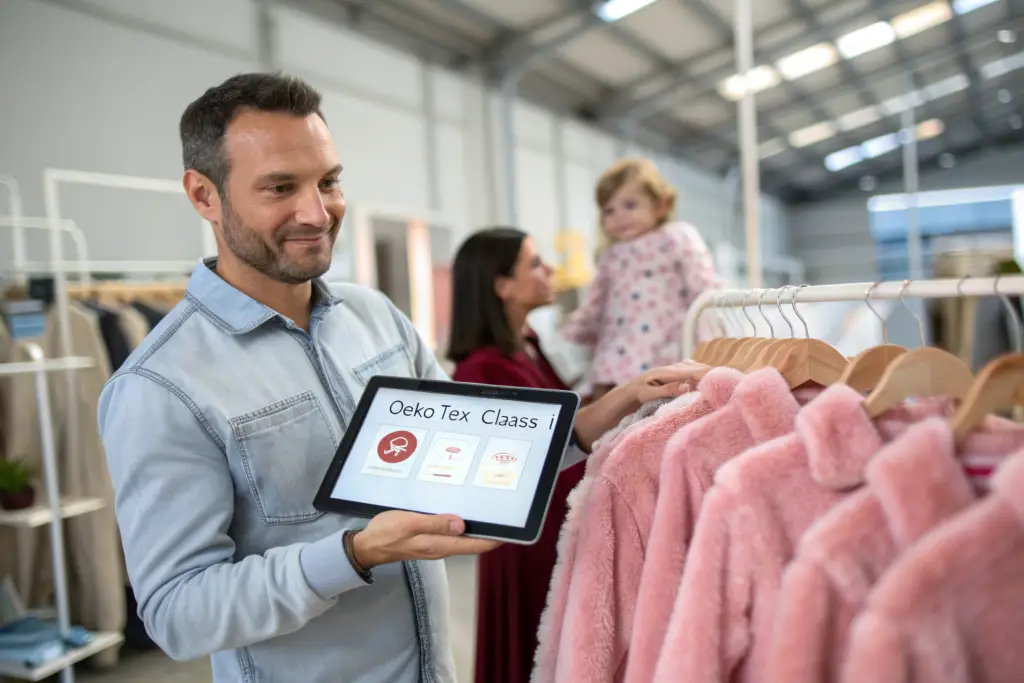
The certification provides a powerful, simplified marketing message. Instead of complex technical jargon, distributors can use the recognizable OEKO-TEX label and the clear “Baby-Grade Safety” claim.
- Marketing Materials: The label can be prominently featured in catalogs, line sheets, and on your e-commerce platform.
- Sales Narrative: It creates a compelling story: “We source only velour that meets the strictest international baby safety standard, so you can stock with confidence.”
- Consumer Trust: It empowers your retail clients with a trust mark they can, in turn, use to market to parents, creating a virtuous cycle of confidence.
Providing retailers with high-quality images of the label and simple explanatory text is part of the support we offer at Shanghai Fumao, making it easy for distributors to effectively merchandise the product.
What Should Distributors Verify with Their Manufacturer?
Securing the advantage of Class I certification depends entirely on the integrity of the manufacturing partner. Distributors must move beyond simply requesting a certificate to engaging in a verification dialogue that ensures the certification is robust and integrated into the production process.
The goal is to establish a partnership with a factory that views certification as a fundamental component of quality assurance, not as a marketing accessory.
What Are the Key Questions to Ask During Supplier Sourcing?
To avoid the pain point of falsified or irrelevant certificates, due diligence is required. Essential questions include:
- “Can you provide the official OEKO-TEX STANDARD 100 certificate specifically for the velour jumper in Product Class I?”
- “Is the certification for the complete garment (fabric + all components), or just the base fabric?”
- “What is the certificate number, and can we verify it live on the OEKO-TEX database together?”
- “How do you control and document that every production batch conforms to the certified sample?”
- “Are your dyeing and finishing subcontractors also audited for compliance?”
Asking these detailed questions separates committed manufacturers from casual ones. At Shanghai Fumao, we welcome such audits. We provide full transparency, from mill test reports for our velour fabric to the final lot-specific certificate from institutes like Hohenstein.
Why is a Full-Package Manufacturer Ideal for Certified Goods?
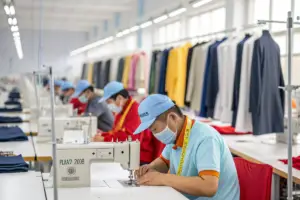
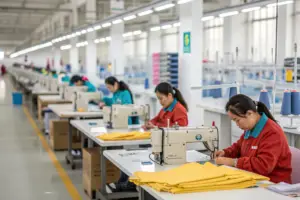
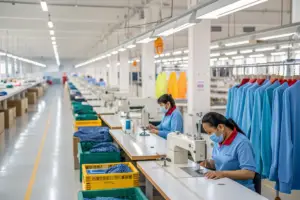
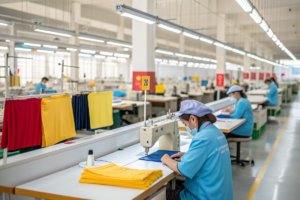
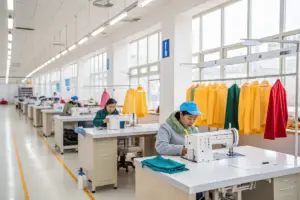
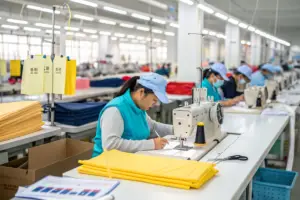
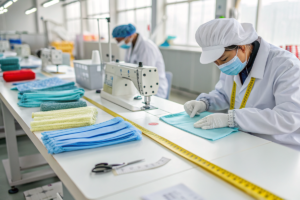
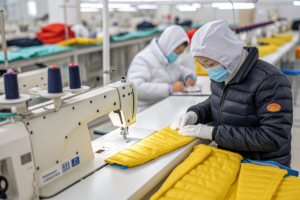
For certification integrity, control is everything. A full-package manufacturing partner like ours manages the entire process: sourcing certified velour fabric, using approved threads and trims, and conducting production in controlled batches. This vertical control is the only way to guarantee that the finished jumper matches the tested sample. It eliminates the risk of a component from an uncertified sub-supplier invalidating the entire product’s safety claim. For distributors, this means a single point of accountability and a vastly simplified quality control process.
Conclusion
For distributors, the decision to prioritize OEKO-TEX STANDARD 100 Product Class I for velour jumpers is a clear-cut strategy for growth and stability. It is a direct response to market evolution, where verified safety is a primary purchasing driver for both retailers and end consumers.
This priority de-risks your supply chain, protects your brand reputation, opens doors to premium retail channels, and provides a formidable competitive narrative. It transforms a basic apparel item into a trusted, high-integrity product that supports stronger margins and lasting partnerships.
In a landscape where trust is the ultimate currency, offering the highest standard of verified safety is the smartest business move.
If you are a distributor looking to elevate your children’s wear line with reliably certified, high-quality products, partner with a manufacturer built for this standard. At Shanghai Fumao, we specialize in producing OEKO-TEX Class I certified garments with the consistency and transparency distributors require. Contact our Business Director, Elaine, to discuss how our velour jumper program can become a cornerstone of your trusted product portfolio. Email her at: elaine@fumaoclothing.com.