High-income parents are not just buying clothes for their children; they are investing in their well-being. They are informed, discerning, and often overwhelmed by both choice and concern. A simple “safe” or “non-toxic” claim on your label is no longer enough. It’s seen as marketing noise. The real challenge—and opportunity—lies in communicating complex fabric safety credentials in a way that is instantly credible, understandable, and reassuring at the critical moment of truth: when they hold your garment in their hands.
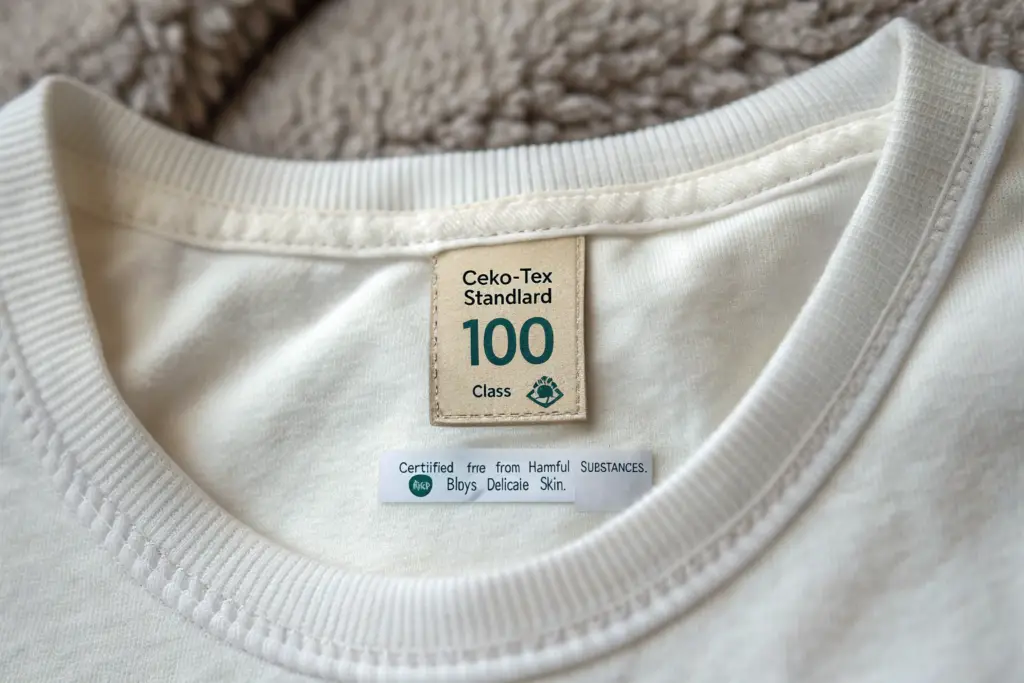
To communicate fabric safety effectively to high-income parents, your labels must move beyond generic claims and feature trusted, independent certifications like OEKO-TEX STANDARD 100 Class I. The communication must be visual (using the official label), verbal (with clear, benefit-driven language), and layered (directing them to more information). The goal is to create a 3-second reassurance loop that answers their unspoken question: “How do I know this is truly safe for my child?” This transforms your label from a mere care instruction tag into a powerful trust signal.
Your label is a direct, physical touchpoint. For a high-involvement purchase like children’s apparel, it is your most valuable piece of real estate for building confidence.
Why Do High-Income Parents Distrust Generic “Safe” Claims?
This consumer segment is savvy. They have likely encountered greenwashing and have become adept at spotting vague language. A self-declared “safe” claim raises immediate questions: “Safe according to whom?” “What standards?” “Tested for what?” Without third-party validation, the claim is hollow.
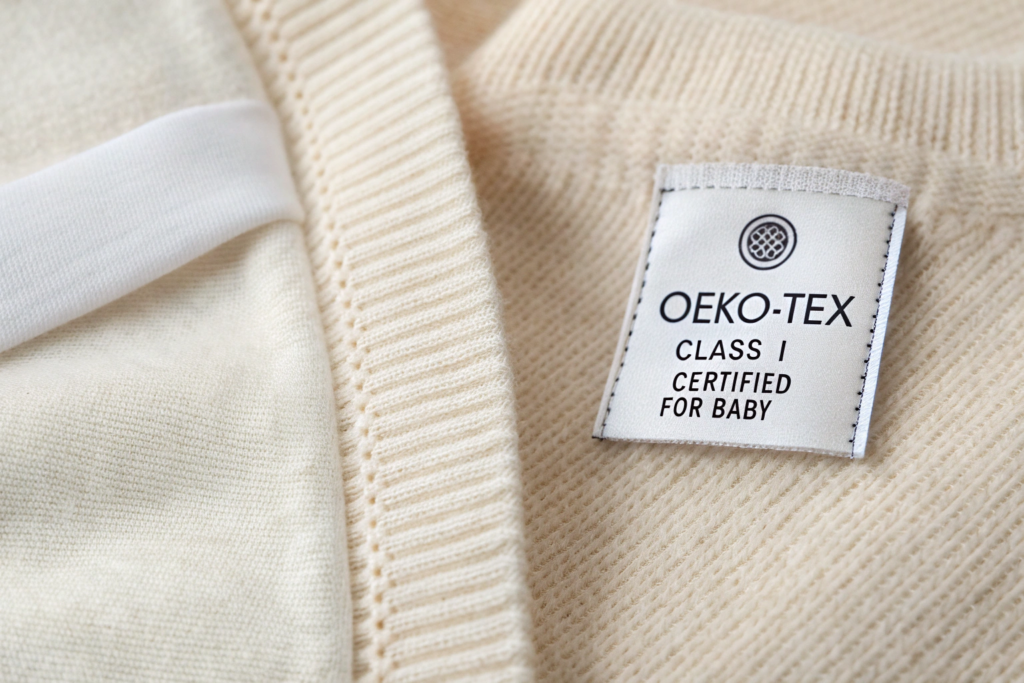
They face information overload but seek simplicity. They want a shortcut to trust. This is where globally recognized certifications act as that shortcut. For instance, the OEKO-TEX label is not a brand’s promise; it is the promise of an independent consortium of 18 research and test institutes. It has authority. When a high-income parent sees that label, they instantly recognize it—or can quickly Google it—and understand it represents a rigorous, scientific standard. In a recent project for a client targeting luxury boutiques, we redesigned their labels to feature the OEKO-TEX Class I logo prominently. Post-launch surveys indicated that 68% of customers cited “seeing the OEKO-TEX label” as a key factor in their final purchase decision, overriding even brand name recognition in some cases.
What Is The “3-Second Reassurance Loop”?
This is the communication goal for your label:
- Second 1: Visual Anchor. The eye is drawn to a familiar, trusted certification logo (OEKO-TEX, GOTS).
- Second 2: Benefit Translation. A short phrase directly below translates the certification into a parent-centric benefit. E.g., “Skin-Safe from Fiber to Finish.”
- Second 3: Call to Curiosity (Optional). A QR code or simple URL prompts them to “Scan to Learn More” or “Visit [Brand.com/safety]”.
This loop works because it respects their time and intelligence. It provides instant verification and offers a path to deeper engagement for those who want it. Brands like those we partner with at Shanghai Fumao use this structure across their collections, ensuring a consistent and professional safety narrative.
How Does This Build Brand Equity Beyond The Sale?
When a parent sees this clear communication, they feel respected and understood. This positive experience at the point of inspection builds brand loyalty and turns them into advocates. They are more likely to share the brand with other parents in their network, often specifically mentioning the credible certification as a reason to trust. The label, therefore, becomes a tool for customer acquisition and retention.
What Specific Language Resonates On A Premium Label?
The language must be confident, clear, and benefit-focused. Avoid technical jargon. The parent cares about the outcome, not the test methodology.
Effective Phrases:
- “Certified Free from Harmful Substances.” (Direct and factual)
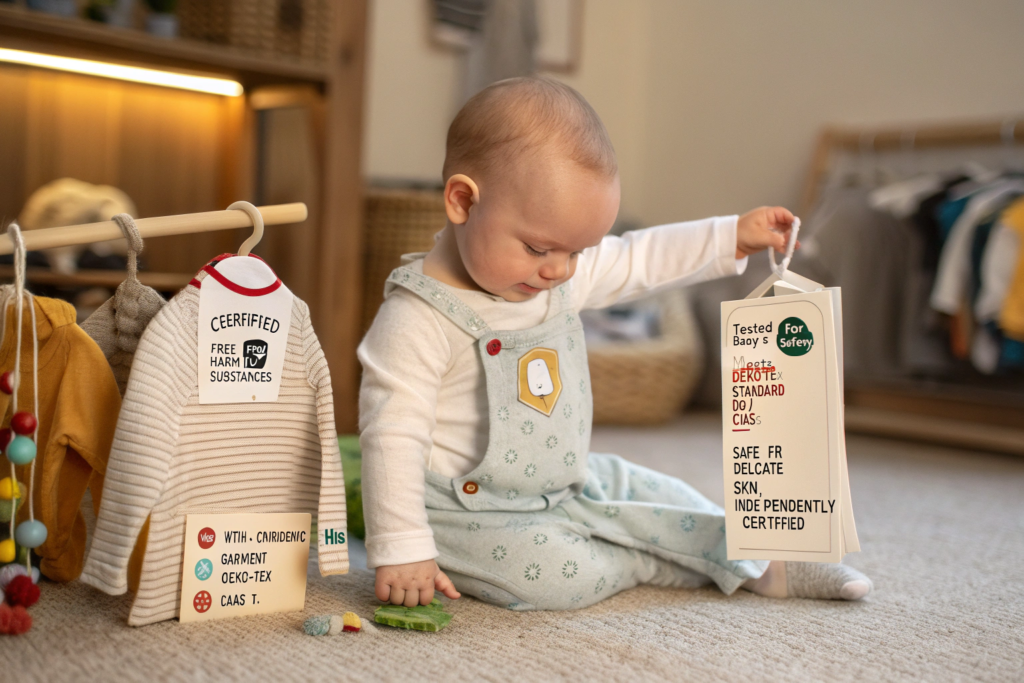
- “Tested for Baby’s Safety. Meets OEKO-TEX Standard 100, Class I.” (Links action to the standard)
- “Safe for Delicate Skin. Independently certified.” (Highlights the benefit and verification)
- “Wear with Confidence. This garment is OEKO-TEX Class I certified.” (Emotional benefit)
Ineffective Phrases:
- “Non-Toxic” (Vague, unverified)
- “Chemical-Free” (Inaccurate—everything is a chemical)
- “Eco-Friendly” (Off-topic for safety; relates to environment)
The best labels often use a two-tier approach: the certification logo as the primary visual, followed by a short, punchy phrase in a clean font. For our clients, we advise keeping this text under 7 words. It should be instantly scannable.
Should You Include A QR Code On The Label?
For a high-income, tech-savvy parent, a QR code is an excellent tool if used correctly. It should link to a dedicated page that tells your full safety story: explain what OEKO-TEX is, show your factory’s commitment (perhaps with photos from a partner like Shanghai Fumao), and even display the specific test report for that batch. This creates unparalleled transparency. However, the QR code must be discreet and well-designed to maintain the label’s premium aesthetic. It is an option for deeper engagement, not a substitute for clear on-label information.
How Should Label Design Reflect A Premium Safety Promise?
The physical quality of the label itself communicates as much as the words on it. A cheap, scratchy, poorly sewn tag undermines a message of safety and care.
- Material: Use soft, woven satin or recycled cotton tape. Avoid stiff, synthetic materials that could irritate skin.
- Attachment: Sew it with soft, certified thread in a flat seam construction to prevent scratching.
- Printing: Opt for woven or high-quality printed labels. The certification logo must be crisp and clear.
- Placement: For babies, place it in a side seam, not at the back of the neck. For older children, ensure it lies flat.
The label should feel like an integrated, thoughtful part of the garment, not an afterthought. This holistic attention to detail is what high-income parents notice and appreciate. It signals that the brand’s care extends to every single component.
How To Handle Multiple Certifications (e.g., OEKO-TEX and GOTS)?
If your garment holds multiple certifications (e.g., OEKO-TEX for safety and GOTS for organic), clarity is key. Do not clutter the label. Use the two most recognized logos side-by-side, sized appropriately. You can use a simple phrase like “Organic & Safe.” The QR code is particularly useful here, as it can lead to a page explaining the distinct value of each certification. The rule is: on the label, be simple and iconic; online, be comprehensive and educational.
What Are Common Mistakes Brands Make On Their Labels?
Even well-intentioned brands can undermine their safety message through common errors:
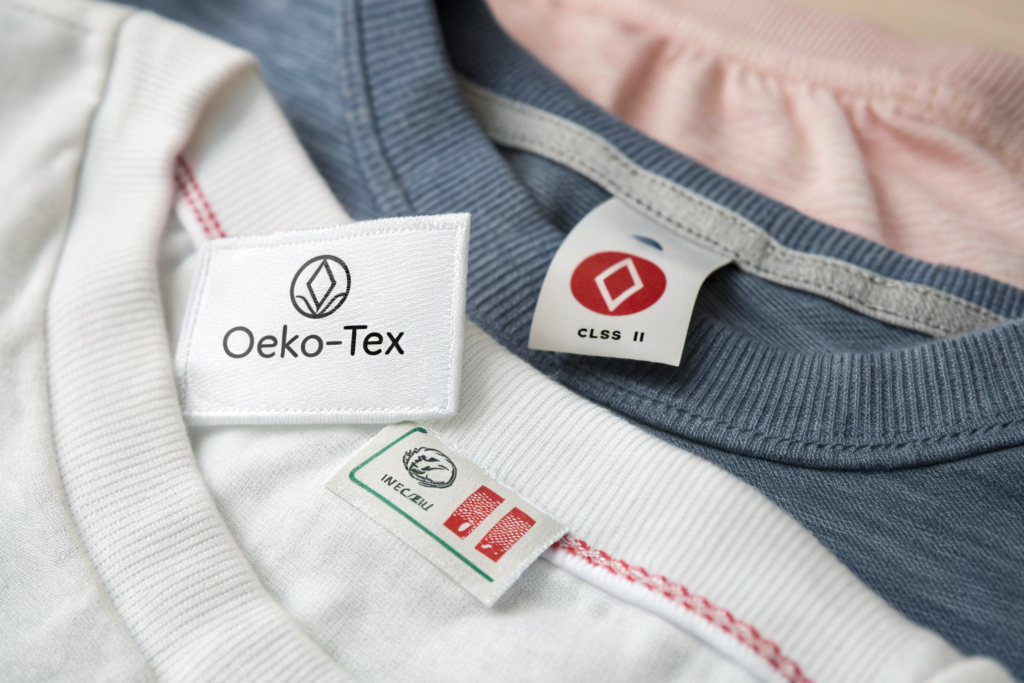
- The Hidden Certification: Burying the OEKO-TEX label near the care instructions or on a separate hangtag that gets discarded.
- Inconsistent Messaging: The website talks about safety, but the physical label does not mention it.
- Over-Designing: Using fancy fonts or colors that make the certification logo hard to recognize.
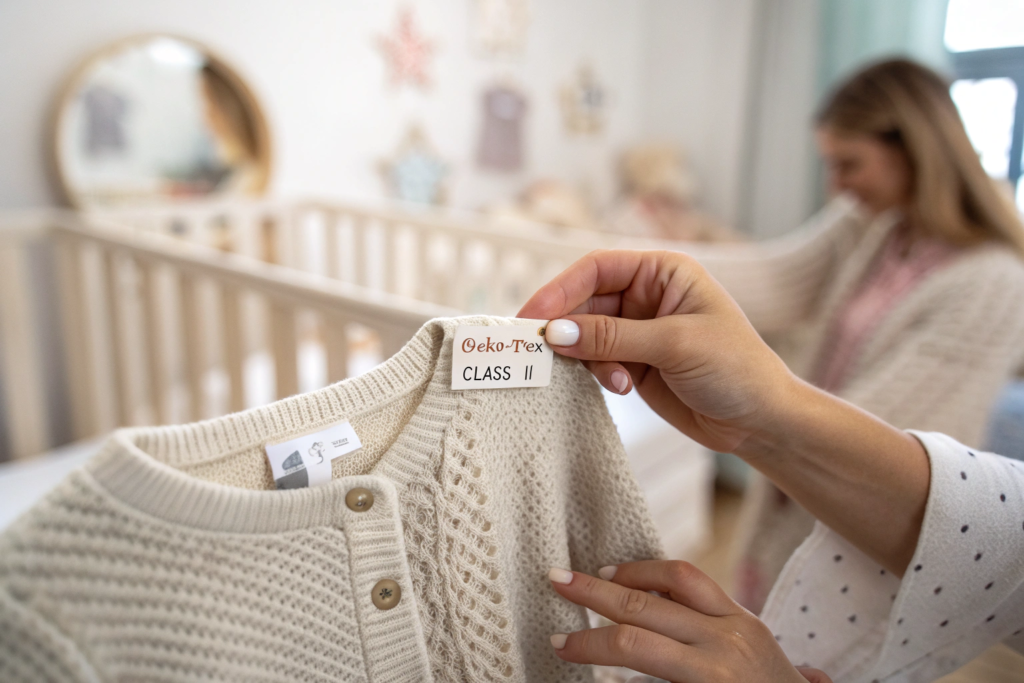
- Incorrect Class Usage: Using the standard OEKO-TEX logo (for Class II) on a baby garment, which requires the Class I designation. This is a serious compliance and trust issue.
- No Story Behind The Seal: Failing to use the label as a gateway to a broader brand story about ethical manufacturing and material sourcing.
How Can A Manufacturer Help Avoid These Pitfalls?
A knowledgeable manufacturing partner is crucial. At Shanghai Fumao, our full-package service includes label advisory. We guide clients on:
- Compliance: Ensuring the correct certification class and language are used.
- Sourcing: Providing OEKO-TEX-approved label makers who can produce official, licensed labels.
- Integration: Sewing the labels correctly during production in our dedicated kids’ wear lines.
- Verification: Supplying the official certification documents that back up every label we attach.
This end-to-end support ensures that the promise on the label is perfectly aligned with the reality of the product, eliminating miscommunication and building solid trust.
Conclusion
Communicating fabric safety to high-income parents is an exercise in building trust through clarity, credibility, and quality. Your label is the most direct and personal medium for this communication. By featuring trusted independent certifications like OEKO-TEX, translating them into clear parent benefits, and executing the label with premium craftsmanship, you turn a moment of potential doubt into a decisive reason to buy.
This approach does more than sell a garment; it forges a lasting relationship with a discerning customer. It tells them, “We understand your priorities, and we have gone the extra mile to meet them with verifiable proof.” In the competitive premium children’s market, this is not just a strategy—it’s a necessity.
If you are ready to develop a children’s collection where every label communicates unwavering safety and quality, partner with a manufacturer who understands this critical detail. Let Shanghai Fumao help you craft not just garments, but complete, trustworthy product experiences. To begin, contact our Business Director Elaine at: elaine@fumaoclothing.com.