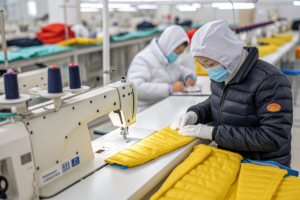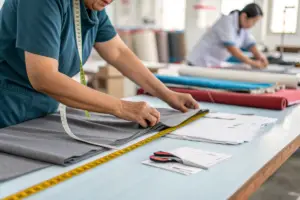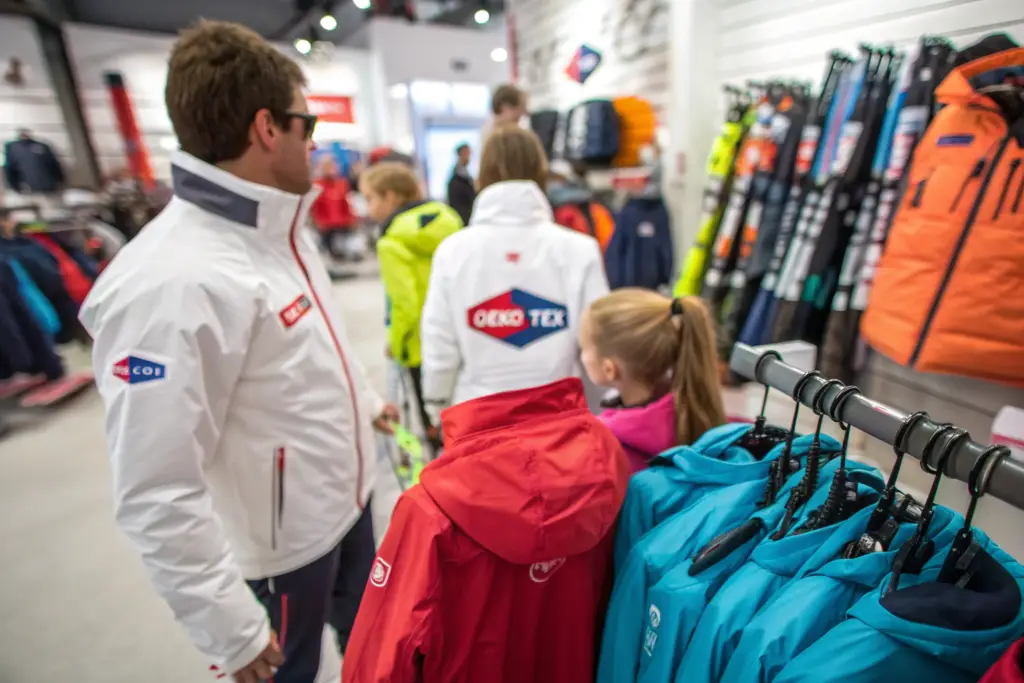
In the high-volume, high-turnover world of ski rental shops and resort operations, managers aren't just buying apparel—they're managing a durable asset and a walking billboard. I've supplied thousands of uniforms and rental sets, and the single most common pain point isn't price; it's the unexpected cost of premature wear, skin complaints from guests, and the logistical nightmare of a failed bulk shipment. OEKO-TEX certification isn't a luxury here; it's the operational backbone for profitability and brand protection in this demanding sector.
OEKO-TEX certification directly supports the ski rental and resort uniform market by solving its core commercial challenges: ensuring long-term garment durability under extreme use, guaranteeing chemical safety for continuous public skin contact, and providing the compliance documentation required for bulk import and corporate risk management. It transforms apparel from a disposable cost into a reliable, high-ROI operational asset. For a resort buying 5,000 jackets, this difference defines seasonal profitability.
A major Colorado resort group came to us in 2023 after a disastrous season with a previous supplier. Their rental ski pants, sourced without certification, began showing severe color fading and pilling after just 20 rental cycles. Worse, several guests reported minor skin irritation from the inner lining. The resort faced refunds, negative reviews, and an unplanned mid-season repurchase. We supplied them with OEKO-TEX STANDARD 100 and ISO-certified durable pants. After a full season of 100+ cycles per pair, the color retention was above 90% and they had zero guest health complaints. The certification delivered the durability and safety their business model depends on.
Durability Under Extreme Conditions: The Rental Cycle ROI Multiplier
Rental gear must withstand what retail clothing never will: hundreds of different users, harsh chemical detergents, industrial drying, and constant adjustment stress. The financial model depends on maximizing the number of rental cycles per garment. OEKO-TEX certification, particularly when paired with performance tests, is a predictive indicator of a garment's ability to survive this punishing lifecycle.
OEKO-TEX supports durability in two key ways: 1) Material Integrity: Fabrics that pass OEKO-TEX testing for parameters like pH value and extractable heavy metals are less likely to degrade chemically from sweat and cleaning agents, which preserves fiber strength. 2) Performance Synergy: Factories that pursue OEKO-TEX are typically those that also invest in and understand complementary ISO performance tests for abrasion (ISO 12947), colorfastness to washing (ISO 105-C06), and seam strength. This creates a garment built for endurance. The certification is a marker of a quality-conscious supply chain.
For a Swiss rental chain, we developed a proprietary rental-specific jumpsuit. The specification mandated:
- OEKO-TEX STANDARD 100 certification (Class II: direct skin contact).
- ISO 105-C06:2016 test result of Grade 4+ for colorfastness after 30 industrial washes.
- Martindale abrasion test result of >40,000 cycles on high-wear areas (knees, seat).
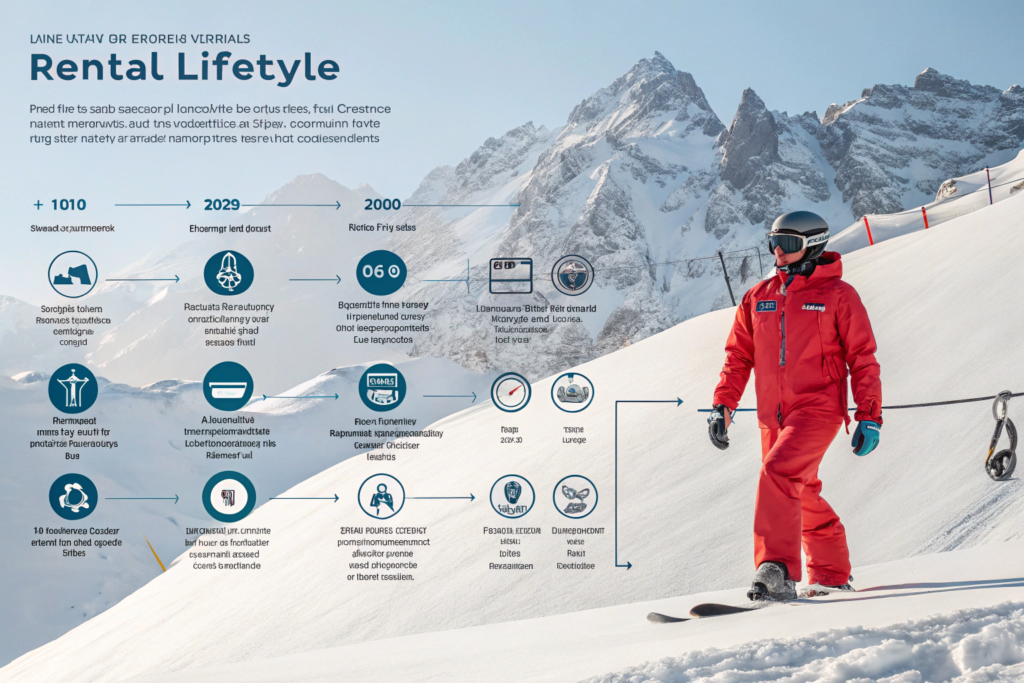
After two full seasons, their data showed these certified suits achieved an average of 180 rental cycles before retirement, compared to 65 cycles for their previous non-certified stock. The higher upfront cost was offset three times over by the reduced replacement rate and lower per-cycle cost. This is a core principle of asset management in retail operations.
How do OEKO-TEX tests predict rental longevity?
Specific OEKO-TEX parameters are proxies for long-term durability:
- pH Value Test: Ensures the fabric is skin-neutral. Fabrics with extreme pH can degrade over repeated washings and cause fiber weakening.
- Colorfastness to Perspiration & Water: Predicts whether dyes will bleed during guest use or cleaning, which is both an aesthetic and potential skin-safety issue.
- Absence of Harmful Substances: Residual chemicals (like certain chlorinated phenols) can accelerate fabric degradation when exposed to heat and moisture in industrial dryers.
A factory that controls its chemistry to meet OEKO-TEX standards is inherently producing more stable and durable textiles.
What is the total cost-per-rental calculation?
Smart resort buyers calculate Cost Per Wear (CPW). The formula is:
CPW = (Garment Cost + Lifetime Maintenance) / Total Number of Rental Cycles.
OEKO-TEX/ISO-certified gear has a higher Garment Cost but dramatically increases the Total Number of Rental Cycles and can reduce Lifetime Maintenance (e.g., fewer spot-cleaning attempts for stains). The result is a lower, more profitable CPW. Non-certified gear has a low upfront cost but a high, unpredictable CPW due to premature failure.
Chemical Safety for Public Health & Liability Management
This is the non-negotiable pillar. Rental suits and staff uniforms are worn in direct, prolonged contact with the skin by a diverse public—including children, the elderly, and individuals with sensitive skin or allergies. The resort assumes a significant duty of care and liability for any adverse reaction. OEKO-TEX provides the independently verified proof that this duty has been fulfilled.
OEKO-TEX certification acts as a resort's primary liability shield. It offers documented, scientific evidence that the apparel is free from levels of harmful substances known to cause irritation or allergic reactions. In the event of a guest complaint, the resort can produce this certification as demonstrable proof of due diligence, significantly strengthening its legal and customer service position. It turns a subjective claim of "safe" into an objective defense.
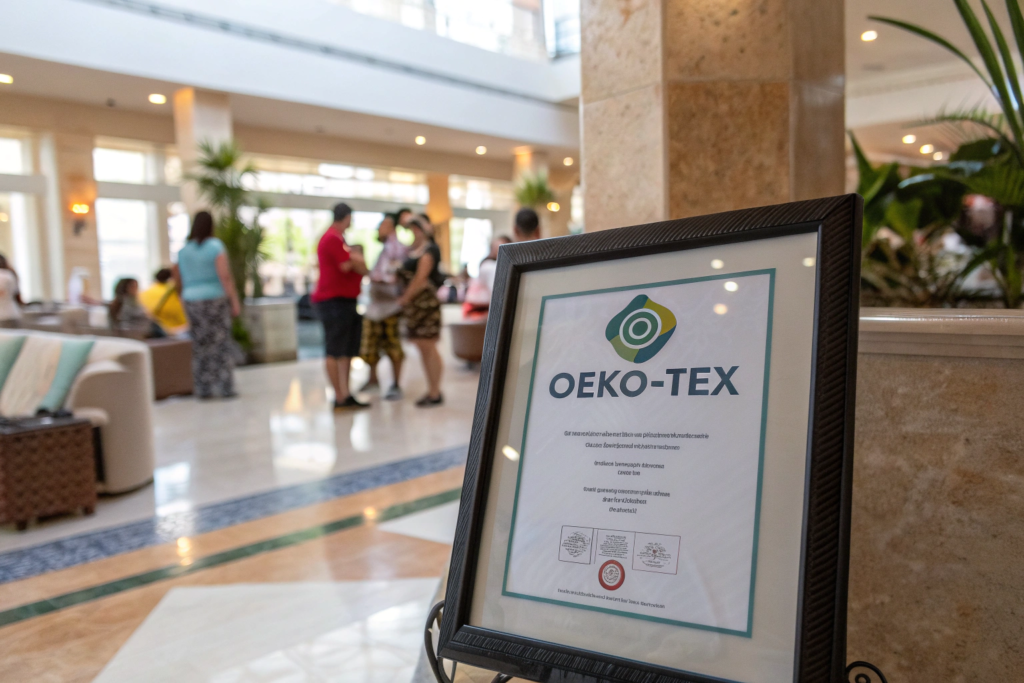
We supplied uniforms to a large Japanese ski school where all instructors' baselayers required OEKO-TEX STANDARD 100 Class I certification—the strictest grade for baby products. Their rationale was impeccable: instructors wear these layers for 8-10 hours daily in sweaty conditions, and the school's insurance provider required the highest possible safety standard to mitigate occupational health risks. The certification was not a marketing choice but a mandatory risk-management policy. This aligns with increasing scrutiny from industry insurance providers.
How does this mitigate specific risks for resorts?
- Guest Allergy/Reaction Claims: A guest claims a rash from a rental suit. The resort's OEKO-TEX certificate shows the garment met stringent, independent safety criteria, shifting the burden of proof and often resolving the complaint amicably.
- Employee Health & Safety: Protecting staff from long-term exposure to harmful substances in uniforms is both an ethical and regulatory obligation (e.g., under OSHA guidelines or their international equivalents).
- Public Health Compliance: Resorts, especially in the EU and Japan, can be subject to broader product safety regulations for goods provided as part of a service. OEKO-TEX is a recognized compliance tool.
Why is skin contact more critical in rentals?
Unlike a retail purchase, a rental user has no break-in period and no prior familiarity with the garment. The suit is applied directly to their skin, often over bare skin or thin layers, for an entire day of intense activity. This creates a perfect scenario for any unstable chemical (from dyes, water repellents, or antimicrobial treatments) to transfer. OEKO-TEX testing simulates this exact condition of prolonged skin contact.
Streamlined Bulk Logistics & Corporate Compliance
Procurement managers for resort chains aren't buying one jacket; they're coordinating the import of hundreds of identical items across multiple shipments and port entries. Any hiccup in customs clearance for one shipment can paralyze an entire season's rollout. OEKO-TEX certification provides a universal, standardized document that smooths this process and satisfies corporate compliance mandates.
For bulk importers, OEKO-TEX certification is a logistical facilitator. Customs authorities worldwide recognize it as a credible indicator of product safety. Having this certificate readily available with each shipment dramatically reduces the risk of random physical testing and delays. Internally, it satisfies procurement policies that require verified quality and safety standards from all vendors, especially for large CAPEX purchases like uniform fleets. It turns a potential bottleneck into a pass-through.
A case study involves a French resort company that orders 10,000 instructor jackets every three years. Their procurement contract with us, at Shanghai Fumao, stipulates that each production batch must be accompanied by a new OEKO-TEX certificate linked to that batch's lot numbers. This allows their logistics team to pre-clear shipments with EU customs by submitting the certificate digitally. Over the past three orders, they have experienced zero customs holds, saving an estimated €50,000 in potential delay and storage costs. This reliability is invaluable for seasonal planning.

How does this simplify corporate procurement?
Large resort groups have centralized procurement with strict vendor onboarding checklists. The OEKO-TEX certificate is a single document that checks multiple boxes:
- Product Safety Compliance: ✓
- Quality Assurance: ✓ (implies a controlled manufacturing process)
- Environmental/Social Due Diligence: ✓ (if using OEKO-TEX STeP or MADE IN GREEN)
This streamlines the vendor approval process, often allowing a factory to become a pre-approved supplier for the entire corporation.
What about batch-to-batch consistency?
Rental operators need absolute consistency. A jumpsuit from the 2022 order must match the 2024 order in fit, color, and performance. Factories that maintain OEKO-TEX certification are typically those with robust quality management systems (often aligned with ISO 9001) to ensure this consistency. The certification process requires strict control over material sources and production methods, which inherently promotes batch-to-batch uniformity—a critical factor for garment inventory management in rental operations.
The Branding & Sustainability Advantage for Resorts
Beyond operations, resorts are fiercely competitive destinations. Their staff uniforms and rental fleets are visible branding tools seen in thousands of guest photos and social media posts. OEKO-TEX certification, particularly the consumer-facing MADE IN GREEN label, allows resorts to embed a powerful sustainability and safety narrative into their brand experience, appealing to the modern, values-driven traveler.
Integrating OEKO-TEX into a resort's brand story is a strategic differentiator. It allows marketing to communicate a commitment to guest well-being and environmental responsibility in a tangible, certified way. This can enhance guest perception, support premium pricing for rental packages, and align with corporate sustainability goals reported to investors. It turns a uniform from a cost into a brand ambassador.
An alpine resort in Canada used this strategy brilliantly. They launched a "Green Mountain Rental" package featuring OEKO-TEX MADE IN GREEN certified suits. The hangtag included a QR code linking to the story of the garment's sustainable production at our facility. They marketed this as the "clean, safe choice for your family." The package commanded a 15% premium and had a 30% higher uptake than their standard rental option. The certification provided the authentic story they needed to connect with their eco-conscious clientele.

How can resorts communicate this value?
- In-Rental Shop Signage: "All our rental gear is OEKO-TEX certified for your safety and comfort."
- Online Marketing: Highlight the certification in rental booking pages and sustainability sections of the resort website.
- Staff Training: Empower front-line staff to briefly explain what the label means to inquiring guests.
- Corporate Reporting: Include the shift to certified apparel in annual sustainability or ESG (Environmental, Social, and Governance) reports.
What is the role of OEKO-TEX STeP and MADE IN GREEN?
For resorts with strong sustainability mandates, these are game-changers:
- OEKO-TEX STeP: Certifies the environmental performance of the manufacturing facility. A resort can claim its uniforms are "made in a sustainably certified factory."
- OEKO-TEX MADE IN GREEN: Adds traceability. A guest can scan a code to see the production journey, adding a layer of transparency that builds deep trust.
This level of storytelling is increasingly expected in the experience economy, where every touchpoint, including rental gear, contributes to the overall brand perception.
Conclusion
For the ski rental and resort uniform market, OEKO-TEX certification is far more than a textile standard. It is a comprehensive operational tool that drives durability, manages liability, streamlines logistics, and enhances branding. In a sector where margins are fought over in cost-per-wear calculations and reputations are built on guest trust, it provides the measurable, verifiable foundation for long-term success and risk mitigation.
The most forward-thinking resorts and rental operators are making OEKO-TEX a cornerstone of their procurement policy. They partner with manufacturers who provide not just the certificate, but the expertise to apply it to the unique demands of high-cycle, public-use apparel.
If you manage a rental operation, a resort uniform program, or a procurement chain for seasonal sports and are looking to build a more resilient, reputable, and profitable apparel asset base, the conversation starts with certified sourcing. At Shanghai Fumao, we specialize in developing and producing high-cycle, certified apparel for the rental and corporate uniform sector. We understand that your needs go beyond fashion to focus on forensic-level durability, safety, and documentation. Contact our Business Director, Elaine, to discuss creating a rental or uniform program built on certified quality. Reach her at: elaine@fumaoclothing.com.