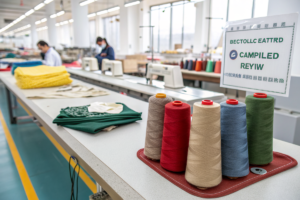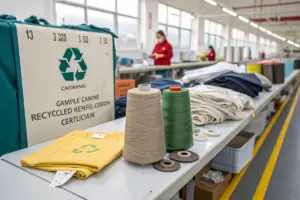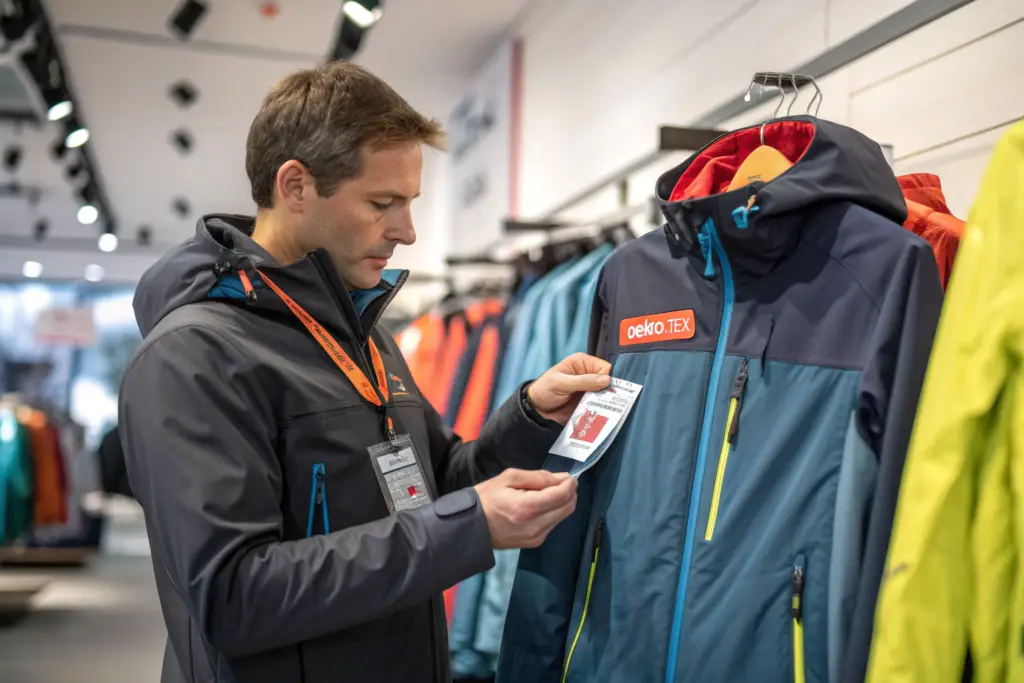
As an apparel manufacturer working with American brands for over a decade, I see a major shift happening. Buyers are no longer just checking boxes for compliance. In 2025, the right certifications are a strategic toolkit. They de-risk your supply chain, build undeniable brand value, and directly answer the sophisticated questions of today's consumers. But with so many labels, which ones truly move the needle for your ski wear business?
For 2025, ski apparel buyers must prioritize a core trio of certifications that cover product safety, functional performance, and ethical production. The non-negotiable leaders are OEKO-TEX® STANDARD 100 for chemical safety, ISO 3759 for colorfastness to washing specifically for performance fabrics, and a recognized social accountability audit like BSCI or SMETA. Together, they address the critical pain points of regulatory clearance, product durability, and supply chain transparency that determine market success.
Let me explain why this specific combination is your new baseline. Last season, a brand faced a massive recall because their bright blue ski jackets bled dye onto base layers after one wash—a failure not caught by basic inspection but that would have been flagged by proper colorfastness testing. The cost was far greater than the investment in the right certification.
Why Are Certifications More Critical for 2025 Ski Wear Sourcing?
The landscape has changed. It’s not just about avoiding problems; it’s about gaining a competitive advantage. Retailers are tightening their mandatory compliance lists, and end-consumers are using certification logos as quick trust signals. For a factory owner, I see this daily: brands that come to us with clear certification requirements close deals faster and scale their orders more confidently.
Certifications have evolved from passive documents to active brand assets. In 2025, they serve three core functions for a buyer: mitigating financial risk (avoiding recalls and customs holds), justifying premium price points through verified quality claims, and future-proofing the brand against tightening global regulations on sustainability and due diligence. Ski wear, with its technical complexity and high price tag, is under particular scrutiny.
In early 2024, we worked with a brand launching a sustainable ski line. They initially resisted the cost of a full social audit. We shared data showing that 70% of their target retailers' vendor manuals now required it. They proceeded, and that BSCI report became the key that unlocked orders from two major outdoor specialty chains. The certification wasn't an expense; it was the ticket to a larger market.
How do 2025 consumer trends drive certification demand?
Today's consumers, especially in the premium outdoor market, are "label literate." They associate specific certifications with specific values. A 2024 industry report by the Outdoor Industry Association showed that "independently verified" claims influenced purchase decisions for over 65% of frequent gear buyers. For ski wear, the demand breaks down into:
- Safety & Health: Parents buying kids' ski suits actively look for OEKO-TEX or bluesign®.
- Durability & Value: Performance-minded skiers look for ISO wash and abrasion test certifications, expecting their investment to last.
- Ethics: A growing segment chooses brands with credible labor fairness proofs.
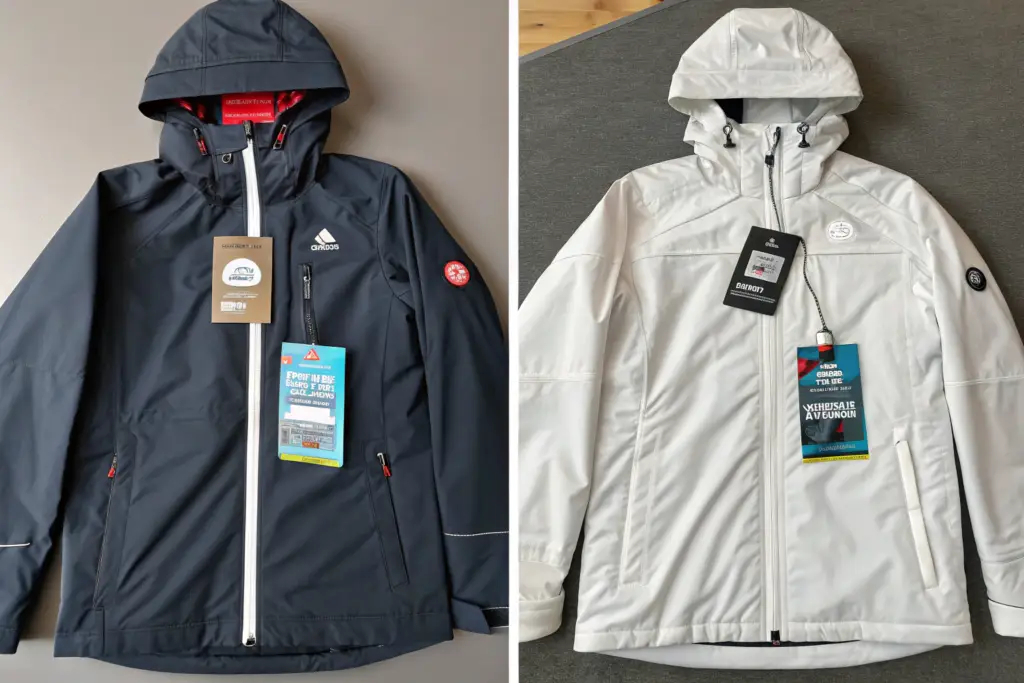
This means your product's hangtag is a silent salesperson. By securing the right certifications, you equip your product to speak directly to these segmented consumer concerns, which is a core part of modern brand strategy.
What is the direct business risk of ignoring key certifications?
The risk is financial, operational, and reputational. Consider this real scenario from our experience: A client sourced non-certified waterproof membranes for a budget line. The garments passed initial water spray tests but failed after five simulated washes according to ISO 4920 standard. The batches already shipped to retailers started getting returns for leaking during a wet spring season. The cost included:
- Full refunds to retailers.
- Logistics for returns.
- A tarnished brand reputation that took seasons to rebuild.
Without the certification framework that mandates longitudinal testing, the failure wasn't caught in time. This is why at Shanghai Fumao, we build compliance testing into our production timeline, not as an afterthought.
The #1 Safety Certification: Beyond OEKO-TEX STANDARD 100
While OEKO-TEX STANDARD 100 is the essential baseline for chemical safety, leading buyers in 2025 are looking deeper. The most informed ones are asking for OEKO-TEX® MADE IN GREEN or bluesign® APPROVED. These go beyond testing the final product; they track and approve chemicals used throughout the entire manufacturing process, offering a higher level of supply chain control and storytelling potential.
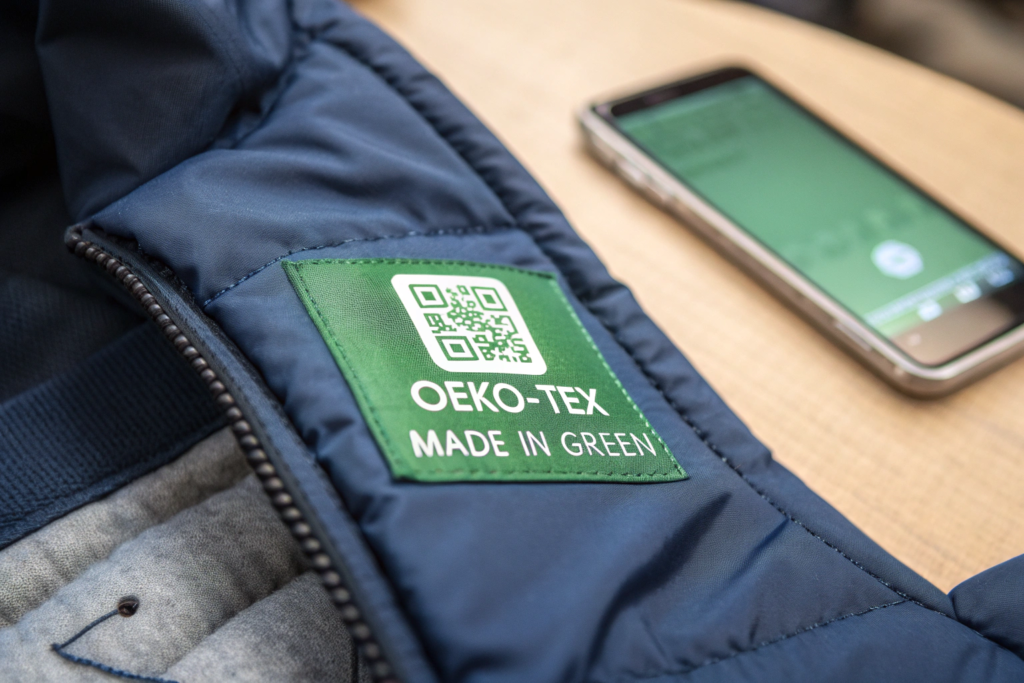
For 2025, OEKO-TEX MADE IN GREEN is becoming a key differentiator. It combines STANDARD 100 testing with STeP (Sustainable Textile & Leather Production) assessment for environmentally friendly manufacturing sites, and it provides a traceable ID for consumers to see the product's journey. This directly answers the demand for radical transparency. It tells a complete story of safety and responsibility.
We recently assisted a brand in achieving MADE IN GREEN certification for their flagship gilet line. The process required documenting our dyeing auxiliaries and energy consumption, but the result was powerful. They used the unique product ID in their marketing, allowing customers to scan and see the garment was made in our certified facility. This level of proof supported a 20% price premium and significantly boosted online engagement. It turned our factory's investment in sustainable practices into their direct marketing advantage.
How does bluesign® APPROVED differ and who needs it?
bluesign® APPROVED is often considered the gold standard for performance textiles. It is a system approach that audits the chemical suppliers, the fabric mill, and the garment manufacturer. For ski wear brands targeting the core outdoor enthusiast or partnering with retailers like REI that prioritize bluesign®, this certification is critical.
- Focus: It starts at the chemical level, approving only safe inputs.
- Scope: Covers environmental impact, worker safety, and product safety.
- Best For: High-performance shells, insulated layers, and brands with a strong environmental mission.
Securing bluesign® approval for a fabric is a commitment, but it future-proofs your product against evolving regulatory bans on specific chemistries (like certain PFC-based water repellents). For a factory, holding a bluesign® system certificate, as we do at Shanghai Fumao for designated production lines, is a major trust signal to top-tier brands.
What about REACH and CPSIA compliance?
REACH (EU) and CPSIA (US) are regulations, not certifications. A factory cannot be "REACH certified." They must provide evidence, often through test reports from accredited labs like SGS or Intertek, proving their products comply with these legal limits. In 2025, savvy buyers are asking for more than a generic statement. They request:
- Specific Test Reports: Against the latest substance restriction lists (e.g., REACH SVHCs).
- Evidence of Management Systems: How the factory controls and restricts regulated substances from entering production.
We provide our clients with a detailed compliance dossier for each order, including dated test reports linked to the specific material batches used. This documented due diligence is your best defense against regulatory action.
The Performance Durability Certifications That Prevent Returns
A beautiful ski jacket that fades, pills, or loses its waterproofness after one season is a brand killer. Performance certifications are your objective proof of durability. They translate technical fabric claims into reliable, test-backed promises that reduce costly returns and protect your brand's reputation for quality.
The most impactful performance certifications for 2025 ski wear are ISO 3759 for colorfastness to washing (using tests specific to synthetic fabrics), ISO 12947-2 for abrasion resistance (Martindale test) for high-friction areas, and a certified water resistance test like ISO 4920 (spray test) paired with ISO 811 (hydrostatic pressure test). These tests simulate real-world wear and wash cycles, providing data that goes far beyond a supplier's verbal promise.
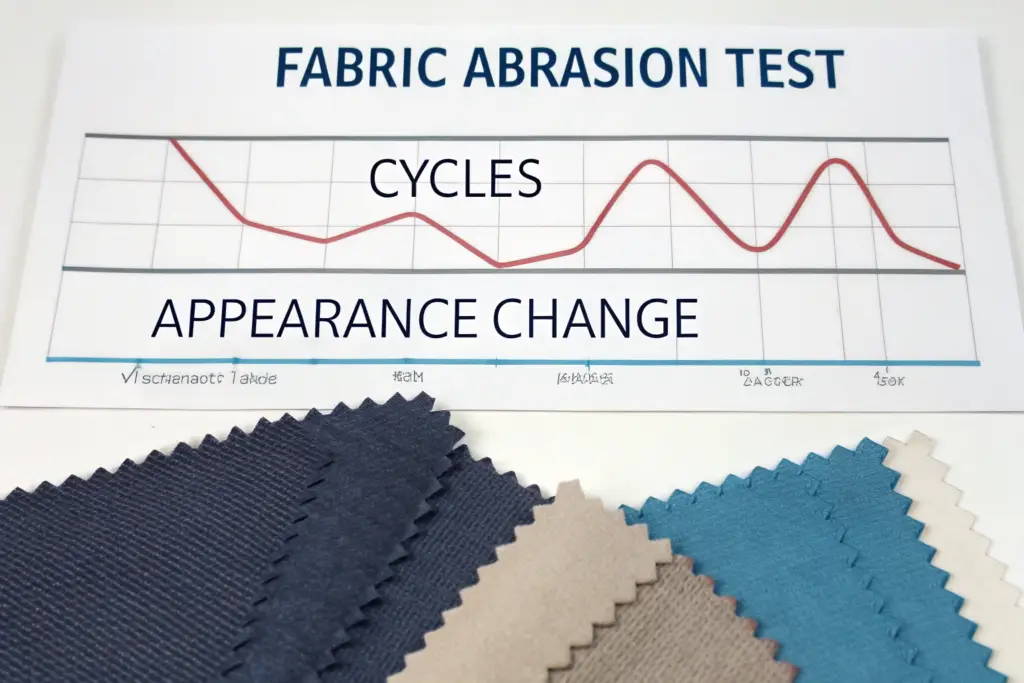
Last winter, a client was deciding between two similar-looking softshell fabrics at a $0.50/yard difference. We conducted Martindale abrasion tests on both. The cheaper fabric showed noticeable pilling at 20,000 cycles, while the other passed 50,000 cycles with minimal change. We presented the actual test graphs. The client chose the more durable fabric, used the test data in their product copy, and successfully marketed the jacket as "built for the long run," justifying a higher retail price. This is the power of certified performance data.
Which specific ISO tests matter for different ski wear components?
Ski wear is a system. Different parts face different stresses. Here’s a breakdown:
| Component | Key Stress | Relevant ISO Test | What It Measures |
|---|---|---|---|
| Outer Shell | Abrasion (lifts, falls), Water Pressure | ISO 12947-2 (Martindale), ISO 811 | Fabric durability against rubbing, waterproofness under snow pressure. |
| Insulation (Down) | Fill Power Retention, Ethical Sourcing | IDFL Down Standard, RDS | Loft and warmth over time, ethical down sourcing. |
| Zippers & Trims | Low-Temperature Function, Durability | ISO 6006 (cold flex test) | Can the zipper function after exposure to extreme cold? |
| Prints & Laminates | Washing & Cracking | ISO 6330 (wash testing), ISO 5470-2 (rubber abrasion) | Will the design peel or crack after washing or use? |
How can I verify a factory's in-house testing capability?
Ask for their Quality Control (QC) Manual and lab audit reports. A proficient factory will have:
- On-Site Lab: Basic equipment for colorfastness to rubbing (crockmeter), zipper strength, and seam slippage tests.
- Calibration Records: Proof that their testing equipment is regularly calibrated for accuracy.
- Partner Lab Relationships: Agreements with third-party accredited labs (e.g., SGS, Bureau Veritas) for more complex tests like formal colorfastness to washing or waterproofness.
During a virtual tour of our Shanghai Fumao facility, we always show our QC lab. We demonstrate how we conduct pre-production tests on all incoming materials. This transparency shows we invest in preventing defects, not just inspecting them out at the end. It aligns with best practices in garment manufacturing quality assurance.
The Ethical Compliance Certifications That Unlock Retailers
Social accountability is no longer optional. Major retailers and discerning consumers demand proof of ethical production. In 2025, a credible social audit report is as important as a quality test report for securing orders from reputable channels. It protects your brand from the catastrophic reputational damage of being linked to labor abuses.
The most widely accepted social compliance certifications for 2025 are the amfori BSCI (Business Social Compliance Initiative) audit and the SMETA (Sedex Members Ethical Trade Audit) report. These are audit methodologies, not "pass/fail" certificates. They provide a transparent snapshot of a factory's working conditions, management systems, and compliance with local laws and international standards. Buyers use them to conduct due diligence.
A brand approached us last year after a negative audit failed at their previous supplier. They needed a factory that could pass a stringent BSCI audit with a Grade A or B rating within 90 days. Because we maintain ongoing BSCI compliance with regular internal reviews, we were able to schedule and pass an audit within 60 days. The audit report became the foundation of our partnership, giving the brand the confidence to move their entire production line to us. This trust is built on verifiable systems, not promises.

What is the difference between BSCI and SMETA?
- amfori BSCI: A leading initiative with a specific Code of Conduct. It results in a grade (A, B, C, etc.) and corrective action plan. It's very common for European brands and retailers.
- SMETA: An audit methodology that uses the ETI Base Code. It results in a detailed report (often called a "SMETA report") without a grade. It's widely used by UK and US-based members of Sedex.
For a buyer, the choice often depends on their specific retail partners' requirements. The most forward-thinking factories, like ours, are prepared for both. The key is to ask for the most recent audit report and review the corrective action plans to see how the factory addresses findings.
Are SA8000 and WRAP certifications still relevant?
SA8000 is a full certification to a specific standard (like ISO 9001 for quality), requiring a deep, long-term management system commitment. It is highly respected but less common for general cut-and-sew factories due to its cost and complexity. WRAP (Worldwide Responsible Accredited Production) is popular with factories supplying the US market. It is a valuable certification, but its global recognition, especially in Europe, is not as broad as BSCI or SMETA. In 2025, the trend is toward the audit methodologies (BSCI/SMETA) because they offer more frequent and detailed transparency.
Conclusion
Don't view certifications as a checklist. View them as a layered strategy to build a resilient, premium, and trustworthy brand. Start with the non-negotiable foundation of chemical safety (OEKO-TEX), layer on the performance proofs that guarantee customer satisfaction (key ISO tests), and cap it with the ethical verification that unlocks major retailers and aligns with modern values (BSCI/SMETA).
This strategic approach requires a manufacturing partner who understands this landscape and has invested in the systems, not just the certificates. The right partner will help you navigate which certifications deliver the highest ROI for your specific market segment and brand positioning.
If your goal for 2025 is to source ski apparel that stands out in a crowded market, reduces your operational risks, and commands a strong margin, you need a factory built for this new era. At Shanghai Fumao, we don't just meet standards; we integrate them into our production DNA. From our bluesign® approved lines to our BSCI-audited social management systems, we provide the verified foundation your brand needs to succeed. Let's build your next collection on a foundation of proven quality and integrity. Contact our Business Director, Elaine, to discuss a sourcing strategy tailored to your 2025 goals. Reach her at: elaine@fumaoclothing.com.