You’ve found a promising new supplier for your golf apparel line. Their pricing is competitive, their samples look good, and they claim to be “OEKO-TEX certified.” This is where most buyers stop their due diligence—and where costly mistakes begin. In today’s market, a vague claim of certification is meaningless. Your job is to peel back the layers and verify the depth, scope, and integrity of their certification system. Asking the right questions separates true partners from risky vendors.
When vetting a new supplier, you must ask specific, probing questions about the scope of their OEKO-TEX certification (which components are covered), their verification processes (how they ensure compliance), and their operational controls (how they prevent contamination in production). The goal is to uncover whether certification is a core part of their quality system or merely a marketing line on their website.
Here is the essential interrogation blueprint to protect your brand and ensure genuine compliance.
“Can You Provide the Actual OEKO-TEX Certificate for This Specific Product?”
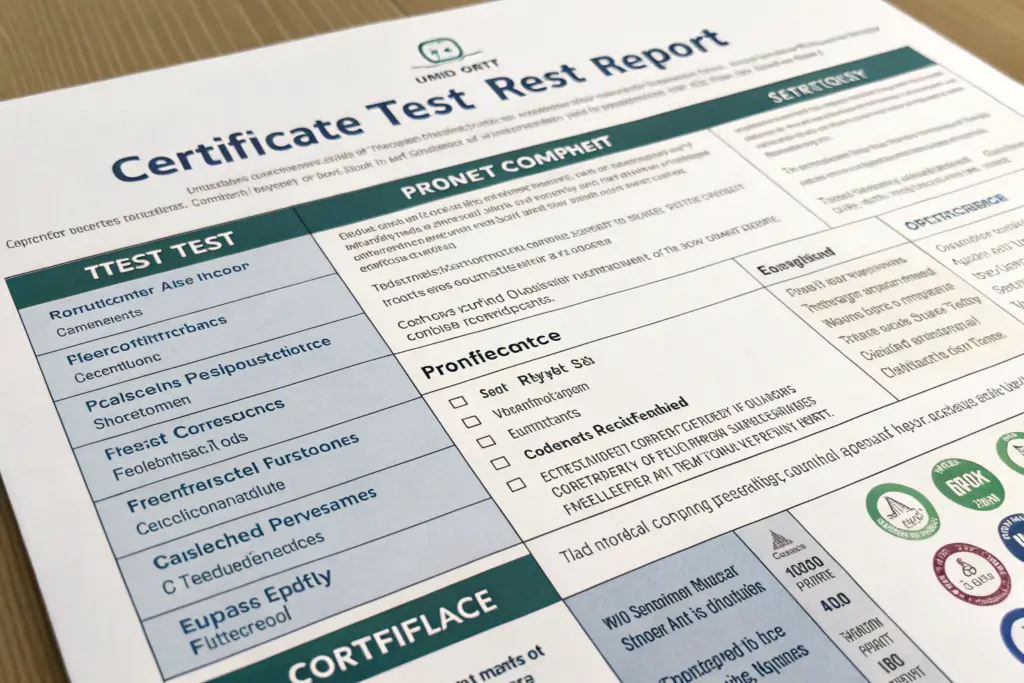
This is your foundational, non-negotiable first question. Do not accept a generic company certificate or a logo on a brochure. You need the specific test report/certificate for the product you are sourcing or one materially identical to it.
When they provide it, you must perform a 5-point check:
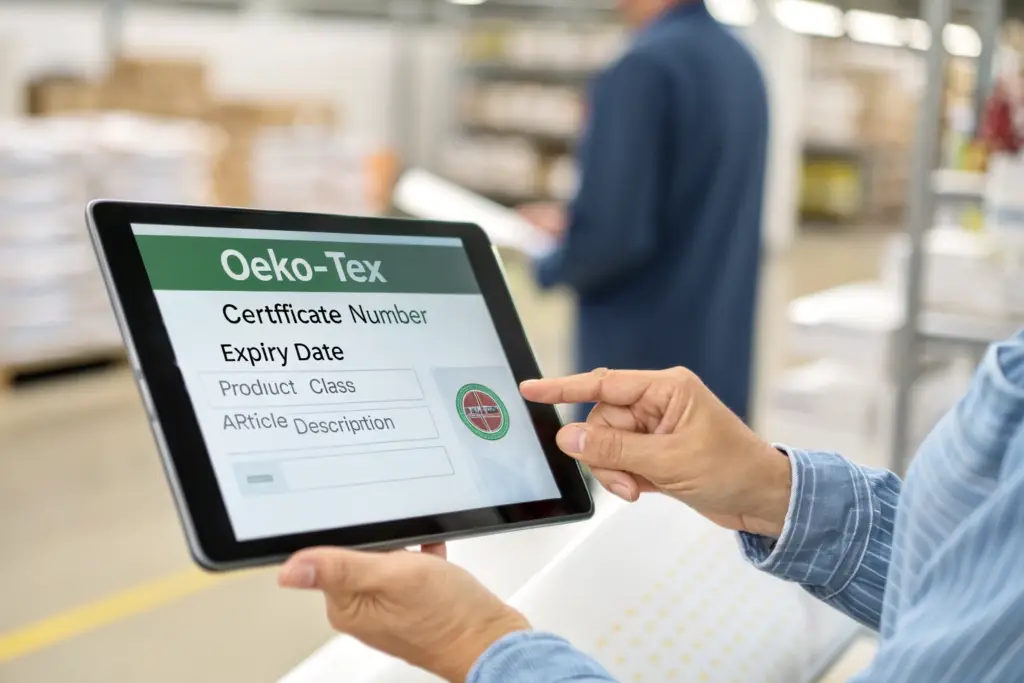
- Issuing Institute & Validity: Is it from a recognized body (e.g., Hohenstein, TESTEX)? Is the expiry date in the future?
- Certified Company Name: Does it exactly match the legal name of the supplier you are dealing with? A mismatch may indicate they are using a factory’s certificate.
- Product Class: Is it the correct class for your product? (Class I for babies/kids, Class II for adult skin contact like golf shirts).
- Article Description: Does it precisely describe your product (e.g., “100% polyester knitted fabric, dyed, for shirts”)? A certificate for “fabric” is not the same as for a “finished garment.”
- License Number: This unique number is crucial. It is what legally allows the use of the OEKO-TEX label on your hangtags.
If they hesitate, provide a blurry copy, or the details don’t align, consider it a major red flag. A transparent supplier like Shanghai Fumao will have these documents organized and readily shareable.
What If They Only Have a Fabric Certificate?
This is a critical follow-up. Many suppliers have certification only for the base fabric. You must ask: “Does this certification cover all components: the sewing thread, interlining, labels, buttons, zippers, and any prints?” If not, the finished garment is not fully certified. The liability for uncertified components then falls on you. Insist on seeing certificates for each discrete component or a Finished Article certificate for the assembled product.
How to Verify the Certificate’s Authenticity?
You can cross-check the certificate number and company name on the official OEKO-TEX public database. A legitimate certificate will be listed there. This simple, 2-minute verification step can expose falsified documents.
“What Is Your Process for Verifying Incoming Certified Materials?”
A certificate from a fabric mill is a promise. The supplier’s job is to verify that promise is kept with every shipment. Their answer here reveals their operational maturity.
A trustworthy supplier will have a defined quality control protocol for incoming goods. They should describe:
- Visual & Document Check: Matching the physical material to its certificate.
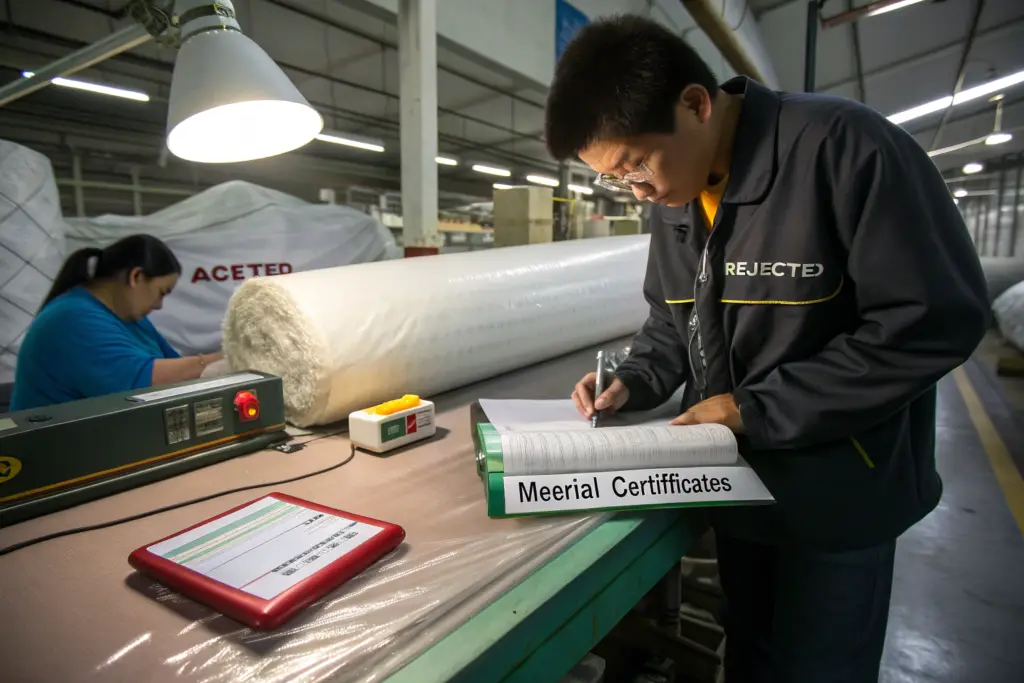
- In-House Spot Testing: Using simple test kits for parameters like pH value and formaldehyde on random samples from each batch. This is a low-cost, high-impact practice that catches failures early.
- Quarantine Procedure: What they do if a material fails their check—it should be rejected and separated immediately.
For example, in our process, every roll of certified fabric is spot-tested before it’s allowed into our segregated certified storage area. This procedure, established after a non-compliant batch slipped through in 2021, has ensured a 100% pass rate for our clients’ final shipments since.
How Do They Manage Their Certified Trim Supply Chain?
This question targets a common weakness. Ask: “Do you maintain an Approved Vendor List for OEKO-TEX certified trims (thread, labels, etc.), and can you share those component certificates?” A supplier with a system has pre-vetted trim suppliers and collects their certificates as part of the sourcing process. An unprepared supplier will scramble.
“How Do You Physically Separate Certified from Non-Certified Production?”
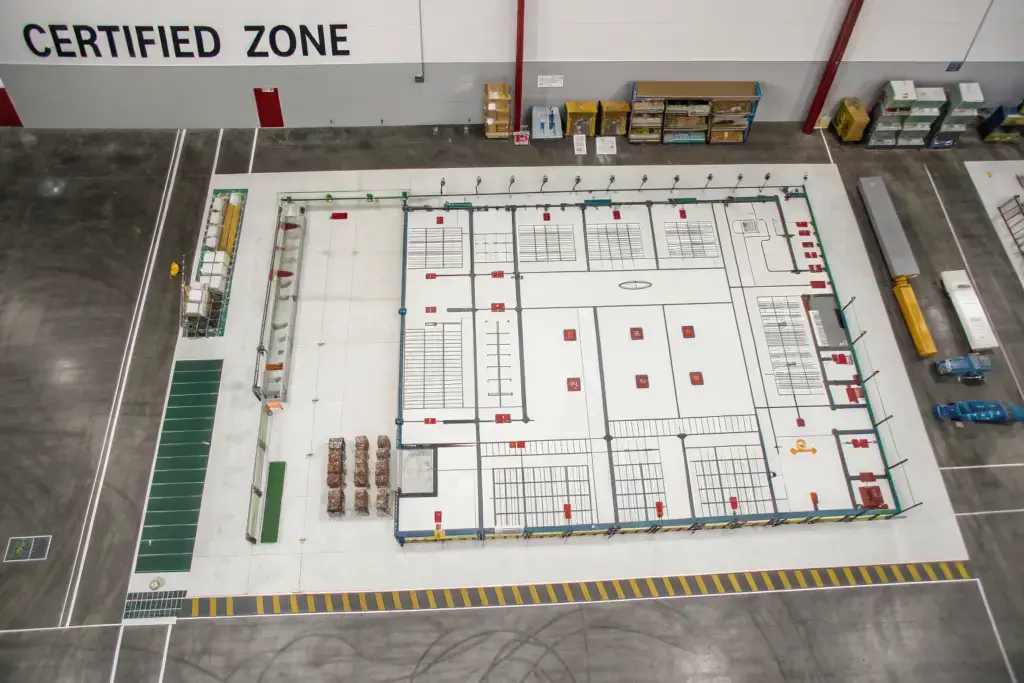
This is perhaps the most important operational question. Certification is voided if certified materials are contaminated during production. You need to understand their factory layout and workflow controls.
Listen for concrete details about:
- Segregated Storage: Is there a dedicated, labeled area in the warehouse for certified fabrics and trims?
- Dedicated Production Lines: Do they have specific lines or time blocks reserved for certified orders?
- Line Clearance Procedures: What steps do they take to clean lines and remove all non-certified materials before starting a certified batch?
- Bundle Tracking: How do they ensure the certified bundles from cutting are sewn together and not mixed with other orders?
A vague answer like “our workers are careful” is insufficient. A systematic answer will describe physical barriers, signage, and documented checks. Our 5-line factory, for instance, designates Line 1 as the primary certified line and maintains a clean-room protocol for it, which we can demonstrate to clients via virtual tour.
What Happens If There Is a Production Mix-Up?
Ask about their contingency plan. “If a non-certified component was accidentally used in a certified batch, how would you identify it and what would you do?” A professional supplier will have a traceability system (like bundle tickets with order codes) that allows them to isolate affected goods and will prioritize rework or scrapping to protect certification integrity.
“Can You Support a Finished Article Certification for Our Private Label?”
This question tests their commitment to highest-level compliance and their capability to be a true brand partner. Finished Article certification is when the final, sewn garment (in your private label) is submitted and certified. It’s the gold standard.
Their response is telling:
- “Yes, we have done it before and here’s the process.” (Ideal - indicates experience).
- “We can facilitate it through our lab partners.” (Good - shows willingness and network).
- “That’s very complicated and expensive.” (Caution - may indicate lack of experience or desire to avoid scrutiny).
A factory that is confident in its systems will support this. We actively recommend it for our key clients’ flagship products because it provides the strongest marketable proof of safety.
What Are Your Costs and Lead Times for Certified vs. Non-Certified?
This practical question brings the conversation to business realities. The answer should reflect the added value and cost of certified materials and processes. Be wary if the price difference is negligible—it may indicate they are not actually using certified materials. A credible supplier will explain the cost drivers: premium for certified fabrics, cost of mandatory testing, and value of their controlled production system.
Conclusion
Vetting a new supplier on OEKO-TEX is a forensic exercise, not a casual chat. By moving beyond “Are you certified?” to drilling down on certificates, verification processes, physical controls, and partnership capabilities, you build a complete picture of their commitment. The supplier’s depth of answers—and their willingness to provide evidence—will clearly separate those who use certification as a sales tactic from those who have embedded it as a quality religion.
This due diligence is your primary defense against the nightmares of rejected shipments, recalled products, and brand damage. The time invested in asking these questions pays exponential returns in supply chain security and peace of mind.
When you are ready to partner with a supplier whose answers are backed by transparent systems and verified processes, we are ready for your most rigorous audit. Contact Shanghai Fumao’s Business Director Elaine today. Let us provide our certification dossiers, walk you through our control systems on a virtual tour, and demonstrate how we turn certification claims into guaranteed outcomes. Reach her at elaine@fumaoclothing.com. Let's build a partnership founded on proven integrity.