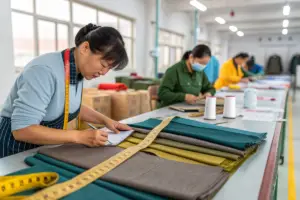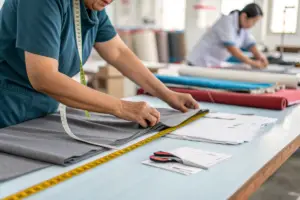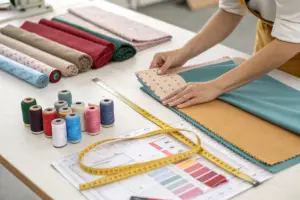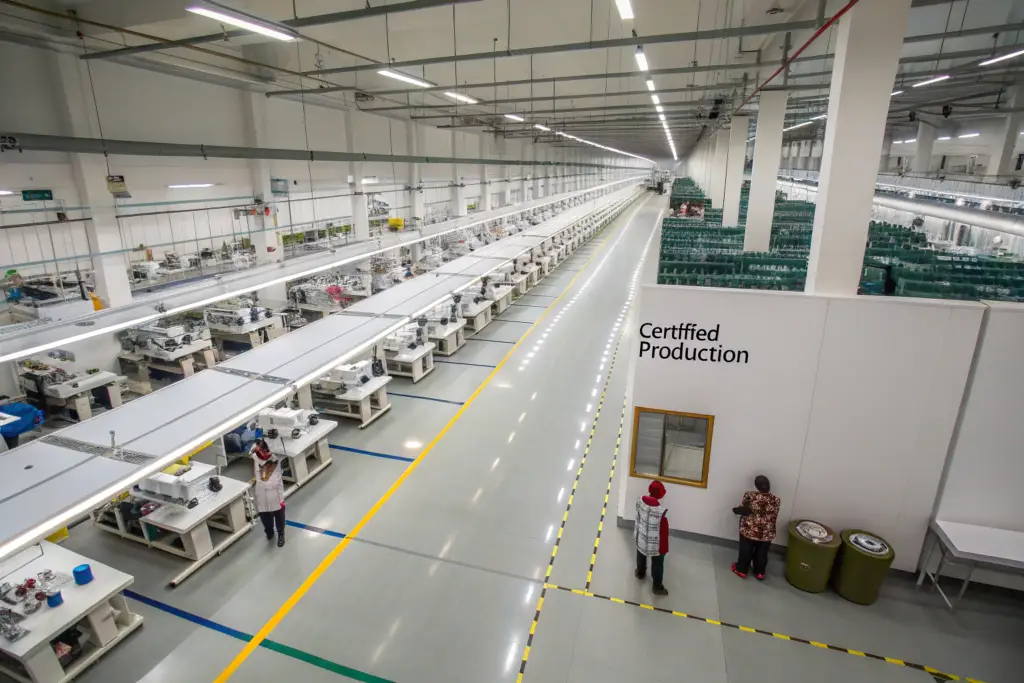
You’re a growing brand, or perhaps a distributor looking to secure a reliable source for OEKO-TEX certified golf wear. You see the huge factories with 50+ lines and wonder: can a focused, agile factory with just 5 production lines really handle my scaling order volumes while maintaining the rigorous standards required for certification? The instinct might be to think bigger is better, but in the world of certified quality apparel, precision often trumps sheer size.
Yes, a factory with 5 dedicated production lines can not only scale OEKO-TEX golf wear production effectively but can often do so with greater consistency, control, and flexibility than a mega-factory. The key to scaling is not the number of lines, but the sophistication of the factory’s system for managing certified materials, production segregation, and quality control across those lines. For mid-sized brands, such a factory is often the ideal partner.
Let’s break down why this scale can be a strategic advantage and how to identify a factory that’s built to scale with quality intact.
Why Isn’t “More Lines” Always Better for Certified Production?
The challenge with certified production isn’t sewing speed; it’s system integrity. A mega-factory running hundreds of orders simultaneously faces immense complexity in preventing cross-contamination between certified and non-certified materials. A single mix-up can invalidate an entire batch.
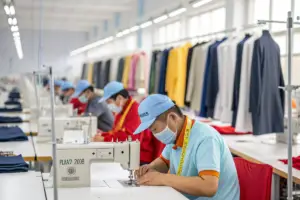
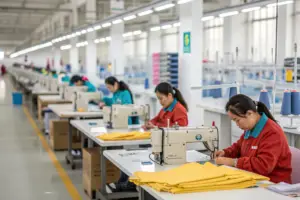
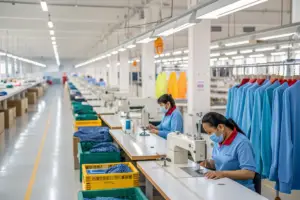
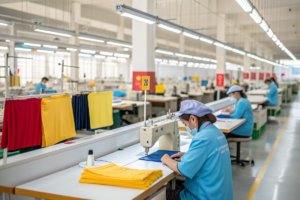
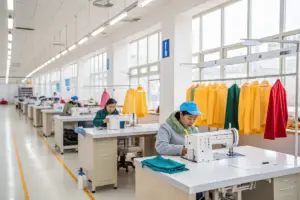
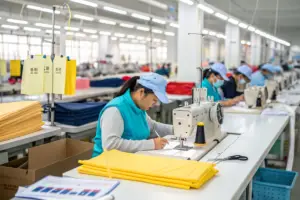
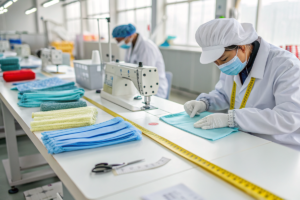
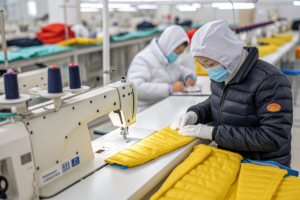
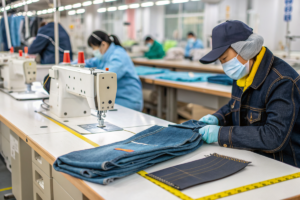
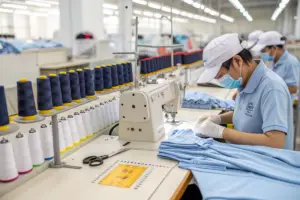
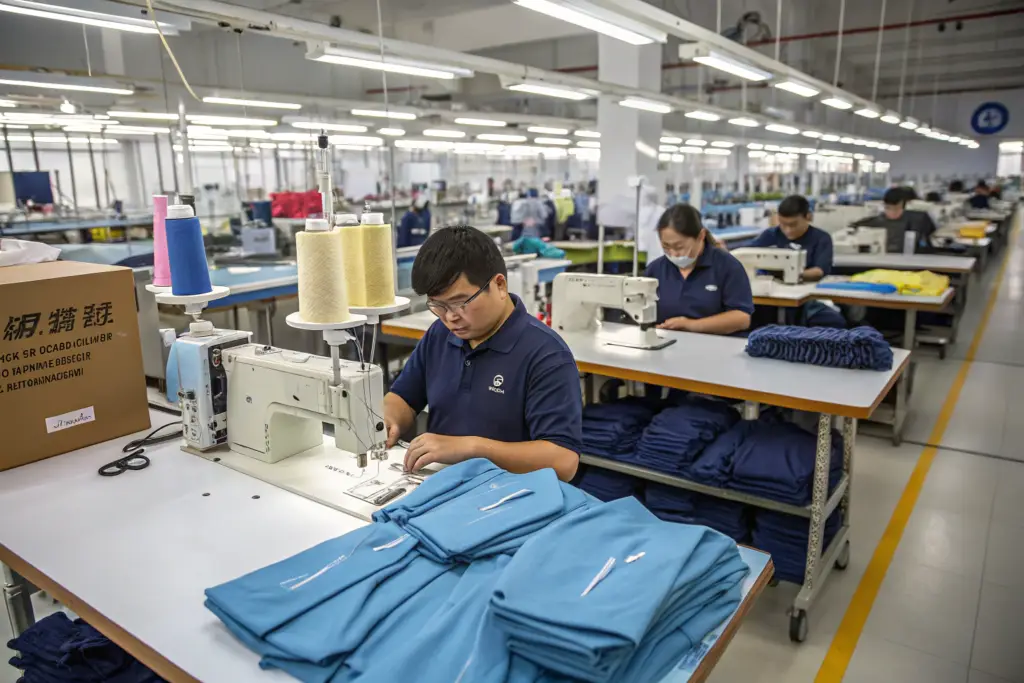
A factory with 5 lines operates with inherent advantages for certified work:
- Simplified Material Flow: Fewer lines mean easier tracking of certified fabric rolls and trim from the warehouse to the specific line.
- Enhanced Oversight: Management and QC supervisors can have a direct, visible connection to every line, ensuring protocols are followed.
- Agile Scheduling: They can dedicate one or two lines exclusively to certified orders, creating a permanent “clean room” environment within the factory. This is far harder to manage in a vast facility.
Last year, we worked with a brand that moved production from a 30-line factory to our 5-line setup at Shanghai Fumao. Their defect rate on certified polos dropped by 60%, and on-time delivery improved dramatically, precisely because our smaller scale allowed for tighter control over the entire certified workflow.
How Does a Focused Factory Avoid Bottlenecks?
The perceived bottleneck is capacity. However, scaling output in a controlled factory is a matter of planning, not just adding lines. A proficient 5-line factory scales through:
- Extended Shifts/Overtime: Temporarily increasing hours on dedicated certified lines for a large order.
- Strategic Line Dedication: Permanently allocating 2 lines to certified work and 3 to standard work, then flexing this ratio based on order book.
- Efficiency through Specialization: Becoming experts in golf wear construction, which increases speed and quality on those specific garments over time.
Their capacity is predictable and manageable, which is more valuable than a theoretically larger but unreliable capacity.
What’s the Real Capacity of a 5-Line Factory?
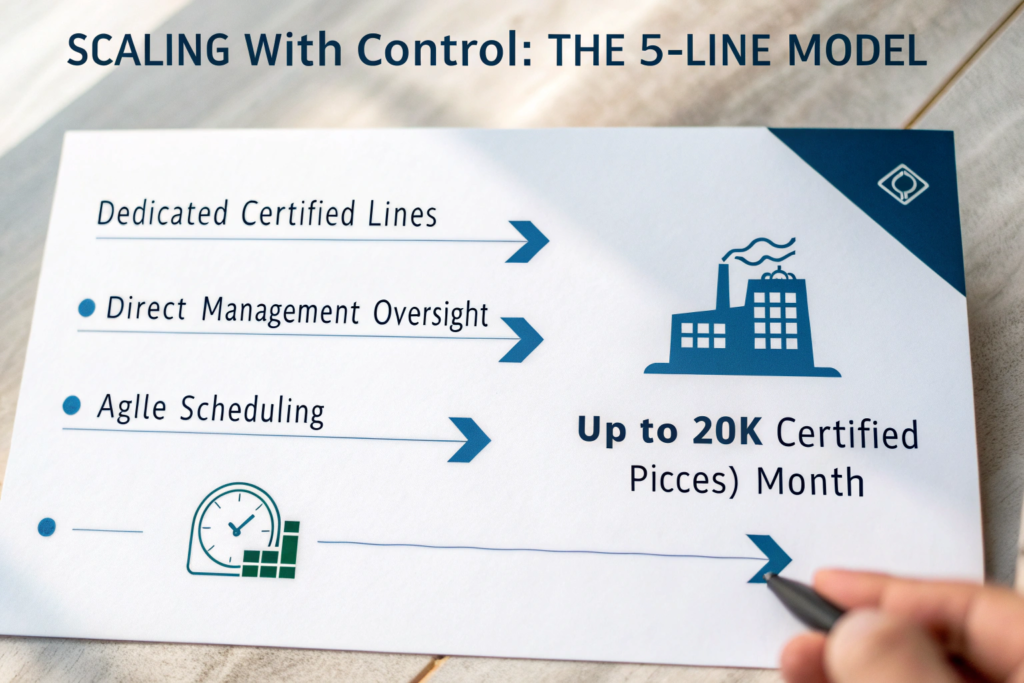
Let’s quantify it. Assuming a standard line produces 300-500 pieces per day (depending on complexity), a 5-line factory has a daily output of 1,500 to 2,500 pieces. If 2 lines are dedicated to certified production, that’s 600-1,000 certified pieces per day.
- Monthly Capacity (20 days): 12,000 to 20,000 certified pieces.
- Annual Capacity (10 months): 120,000 to 200,000 certified pieces.
This scale is perfect for brands doing runs of 3,000 to 50,000 pieces per style—which covers the vast majority of premium and mid-market golf apparel brands. It allows for meaningful volume without getting lost in a behemoth’s system.
How Does a Factory Systematically Manage Certified Scaling?
Scaling certified production is about replicating a controlled system, not just sewing faster. The factory must have a blueprint that works for 1,000 pieces and can be faithfully executed for 10,000 pieces. This hinges on two core systems: Material Control and Production Tracking.
The system must be designed to prevent error at every step, especially as order volume increases. A mistake in a 100-piece sample order is small; the same mistake in a 10,000-piece order is a disaster.
What Does "Certified Material Control" Look Like at Scale?
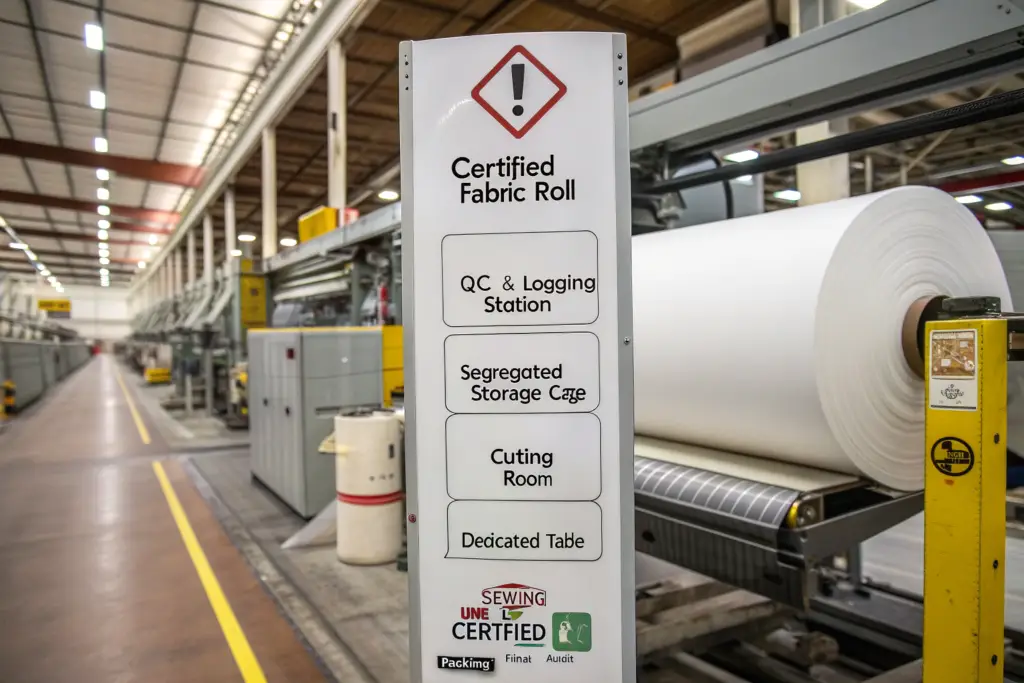
This is the most critical system. It must ensure that every square inch of fabric and every component used in a certified order is traceably certified.
- Approved Vendor List (AVL): The factory works with a curated list of fabric and trim mills that guarantee OEKO-TEX certified supply. This relationship ensures material availability for scaling orders.
- Batch Tracking: Every incoming roll of certified fabric gets a unique batch ID logged in a system. This ID follows the fabric through cutting, sewing, and packing.
- Segregated Warehouse: Certified materials are stored in a physically separate, locked cage or area. Only authorized personnel for certified orders have access.
At our facility, we use a digital quality control platform. When a fabric roll arrives, its certificate is scanned and linked to its batch ID in our system. This record is then attached to the client’s order, creating an unbreakable digital thread.
How is Production Segregation Maintained with Multiple Orders?
With multiple certified orders running, how does the factory prevent mixing? The answer is in disciplined process design:
- Visual Management: Each order bundle has brightly colored tickets specifying “OEKO-TEX Order #12345”.
- Line Clearance: Between different certified orders, the line is cleared, and a supervisor signs off before the next order’s bundles are loaded.
- Dedicated Tooling: Where possible, certified lines use specific thread cones and tools that stay within that zone.
This level of control is more consistently achievable in a 5-line setup than in a chaotic, high-volume mass-production environment.
What Are the Practical Limits and How to Plan Around Them?
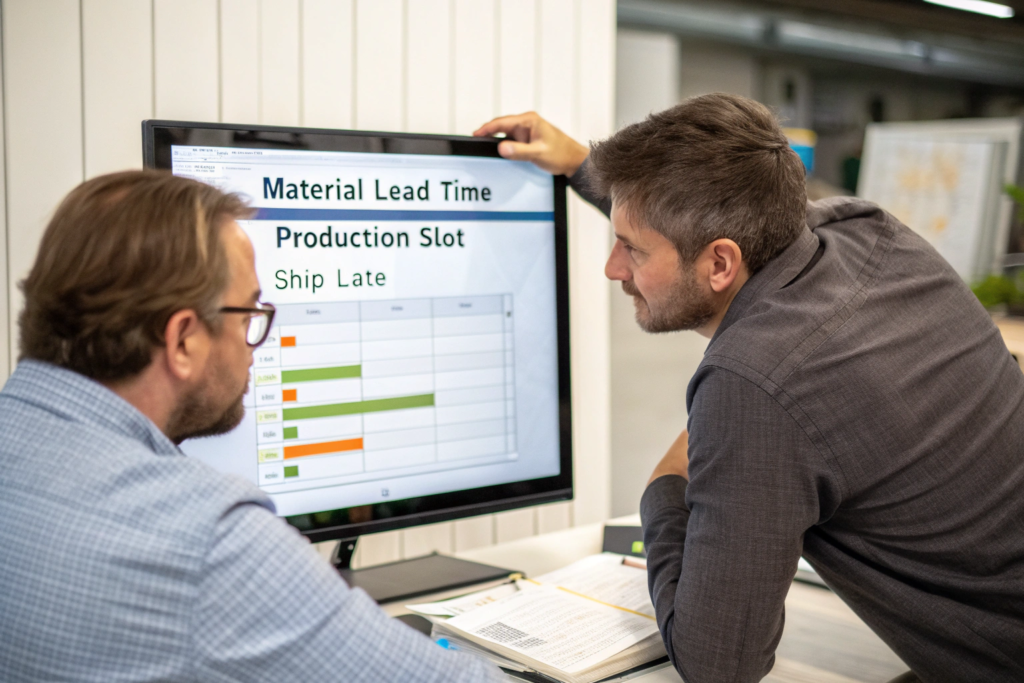
Even the best 5-line factory has limits. Smart scaling is about recognizing those limits and planning collaboratively. The primary constraints are lead time for certified materials and production slot availability.
Certified fabrics and trims often have longer lead times than standard materials. A factory scaling your order needs to place material orders far in advance. Their ability to do this depends on their relationships with mills and their forecasting accuracy.
How to Collaborate on a Realistic Scaling Plan?
Transparency is key. Work with the factory to build a rolling production forecast. A professional factory will want this data to secure material for you.
- Share Your Forecast: Provide 3-month, 6-month, and 12-month order estimates (with reasonable flexibility).
- Lock in Production Slots: Agree on quarterly production slots based on the forecast. This allows the factory to reserve line time and order bulk materials.
- Understand Material MOQs: Know the minimum order quantities for your chosen certified fabrics. Scaling often means hitting higher fabric MOQ tiers, which can reduce your cost per unit.
A factory like Shanghai Fumao thrives on this kind of partnership. We use client forecasts to make strategic commitments to our fabric mills, ensuring we have priority access to certified materials when our clients need to scale.
When Should a Brand Consider a Larger Factory?
A 5-line factory is ideal up to a point. Consider a larger partner when:
- Your single-style order quantities consistently exceed 30,000-50,000 units and need to be produced in a very short window.
- You require a vastly diverse product range (e.g., golf, swim, outerwear) that exceeds the factory’s specialization.
- Your volume demands dedicated, 24/7 production lines for your brand alone.
For most growing golf apparel brands, hitting these thresholds is a sign of great success, and the transition to a larger factory is a future-phase decision.
How to Vet a 5-Line Factory’s True Scalability?
Due diligence is crucial. You must look beyond the certificate and audit their systems for scalability. Ask for evidence, not just assurances.
Tour the facility (virtually or in person). Ask to see the certified material storage, the tracking system, and the dedicated lines. Ask for references from other brands that have scaled with them.
What Evidence of a Mature System Should You Look For?
- Digital Tracking: Do they use a simple spreadsheet or a more robust system to track material batches and order progress?
- Supplier Contracts: Can they show long-term agreements with certified material suppliers, proving stable access?
- Past Performance: Request a case study or contact a reference who increased their order volume by 300-500% with the factory. Ask about challenges and how they were solved.
- Internal QC Data: A professional factory monitors its own defect rates and on-time delivery. Ask to see trends for certified production.
What Questions Expose a Factory That Can’t Scale?
- “If I need to double my order next quarter, what is your process for securing the additional certified fabric, and how much extra lead time do you need?”
- “Can you show me your system for preventing material mix-ups if you’re running two different certified orders on adjacent lines next week?”
- “What was your largest single certified order delivered on time, and what was the piece count?”
A factory that has scaled successfully will have detailed, confident answers. One that hasn’t will be vague.
Conclusion
A factory with 5 production lines is not a limitation for scaling OEKO-TEX golf wear production; it is a potential catalyst for superior quality and reliable partnership. The success of scaling hinges entirely on the factory’s systems—its mastery of certified material control, production segregation, and agile planning. For brands seeking a partner that offers direct oversight, flexibility, and a relentless focus on integrity over impersonal volume, this scale is ideal.
Your journey to scale should be built on a foundation of control, not just capacity. By choosing a partner whose systems are designed for certified excellence at a manageable scale, you ensure that growth enhances your brand’s reputation for quality, rather than putting it at risk.
If you are looking for a manufacturing partner that combines the agility of a focused operation with the rigorous systems needed to scale your certified golf apparel line with confidence, we are built for this challenge. Contact Shanghai Fumao’s Business Director Elaine today. Let us walk you through our scaling playbook, show you our systems in action, and build a growth plan that protects your quality every step of the way. Reach her at elaine@fumaoclothing.com. Let's scale with integrity.