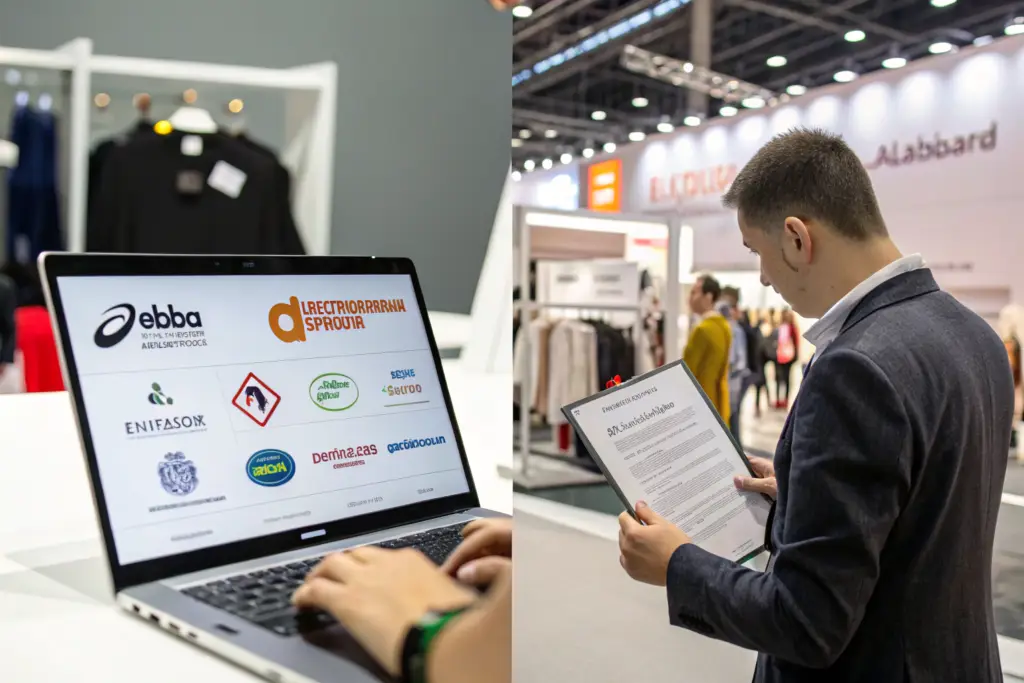
You know you need OEKO-TEX certified apparel to compete. You’ve seen the demand. But when you search on Alibaba or walk the endless aisles of a trade show, every other supplier claims to be “OEKO-TEX certified.” How do you separate the genuine, reliable partners from the ones just using the label as a sales pitch? As a manufacturer who both holds certifications and sources certified materials, I see this confusion cost buyers time, money, and trust every single day.
Finding a reliable OEKO-TEX supplier requires moving beyond the claim and into verification. It involves asking for specific certificate details, understanding the scope of certification, and conducting due diligence on the supplier’s internal quality management systems, whether you're evaluating an online storefront or a booth at a show. The goal is not just to find a supplier with a certificate, but to find one whose entire process ensures that certification means something real for your order.
This process can feel overwhelming, but it’s a systematic filter that will save you from catastrophic failures. Let’s break down the actionable steps you can take in both digital and physical sourcing environments.
How to Decode an OEKO-TEX Claim on Alibaba or a Supplier Website?
Seeing an OEKO-TEX logo on a supplier’s profile is only the starting point, not the finish line. Your first job is to decode what that claim actually covers. Many suppliers display the logo for a single product or fabric type but imply it applies to all their capabilities.
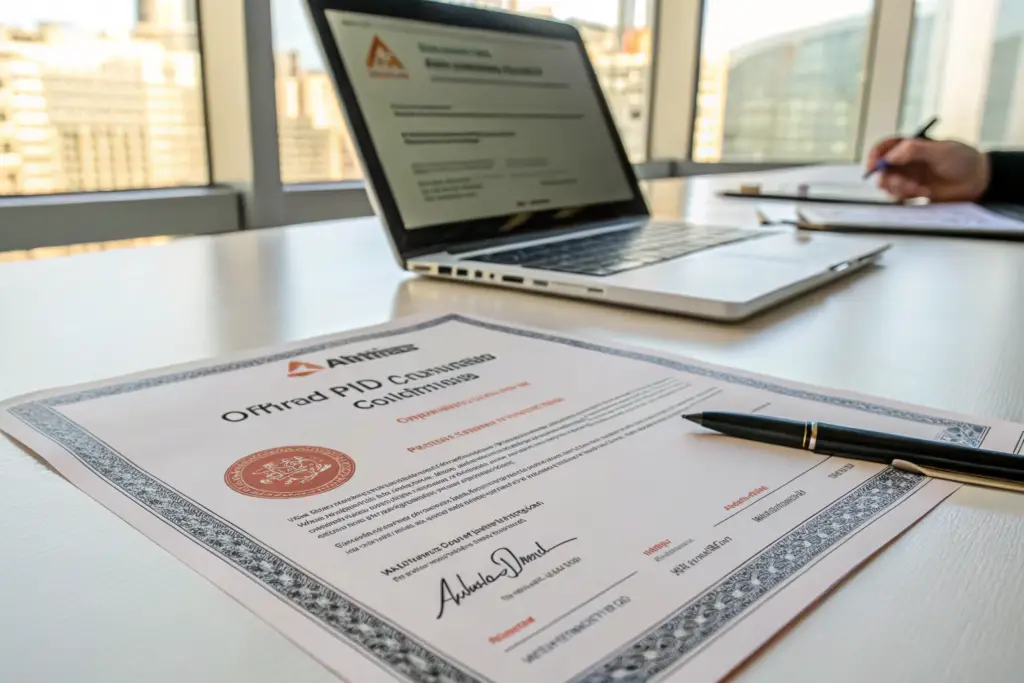
Immediately, you must look for the certificate itself. A reliable supplier will have downloadable PDFs of their valid certificates readily available on their Alibaba store or company website. If they don’t, ask. Once you have it, your investigation begins. Last year, a client came to us after a bad experience where their “certified” supplier could only produce a blurry image of a certificate for cotton knit, but was trying to sell them certified polyester woven jackets. The mismatch was obvious only after they asked for proof.
Focus your analysis on two critical elements of the certificate document.
What are the Key Details You Must Check on the OEKO-TEX Certificate?
A real OEKO-TEX STANDARD 100 certificate is a detailed document. Don’t just glance at it; scrutinize it. Here are the non-negotiable checkpoints:
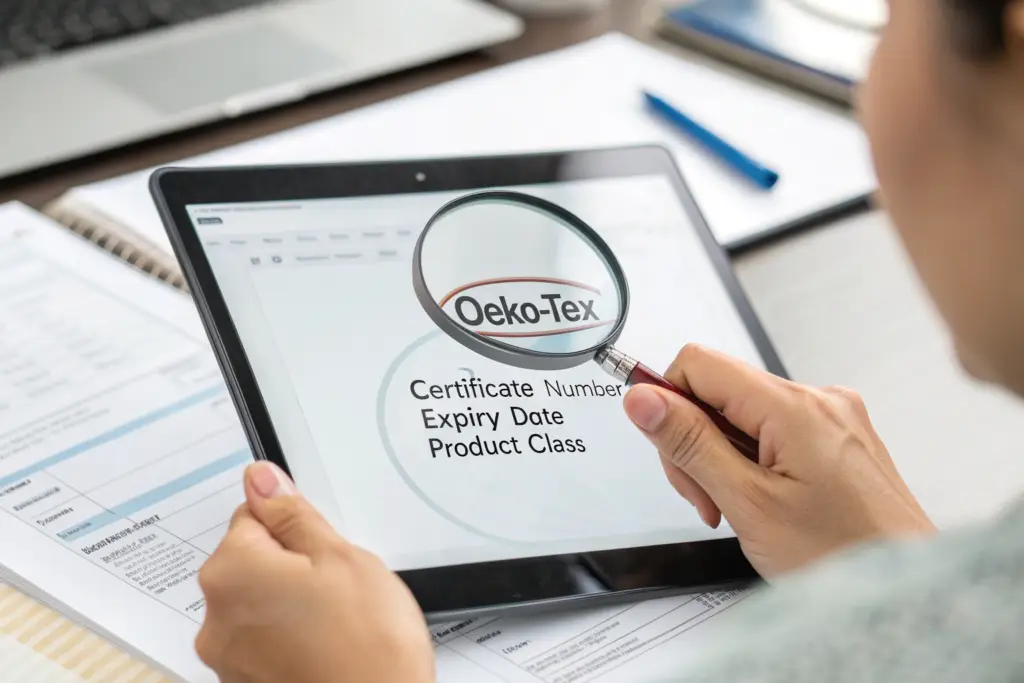
- Certificate Number & Validity: Every certificate has a unique number and an expiry date (valid for one year). Verify it is current.
- Certified Company Name: Does the name on the certificate exactly match the name of the Alibaba store or the exhibiting company? Mismatches can indicate a reseller using a factory’s certificate.
- Product Class: OEKO-TEX has four classes. Class I is for babywear (most stringent), Class II for direct skin contact (like most golf apparel), Class III for no direct skin contact, and Class IV for decoration materials. Your product must fall under the correct class on their certificate.
- Article Description: This section lists the specific products or materials certified (e.g., “100% polyester knitted fabric, dyed”). Is your desired product explicitly listed? A certificate for “fabric” is not the same as one for “finished garment.”
If any of these details are vague or don’t align, consider it a major red flag.
How to Ask the Right Questions Before Placing a Sample Order?
Your initial communication is a test. Use it to gauge transparency. Move past “Are you certified?” to these precise questions:
- “Can you send me the OEKO-TEX certificate PDF for the exact product I’m inquiring about?”
- “Is your certification for the fabric only, or for the full garment manufacturing process (including sewing, trims, and printing)?”
- “What is your process for ensuring that every production batch matches the certified standard?”
A supplier like Shanghai Fumao will answer these immediately and may even walk you through the certificate details on a video call. An evasive or generic answer signals potential trouble. This pre-qualification step filters out 80% of unreliable partners before you spend a dime on samples.
What Are the Must-Do Verification Steps at an Apparel Trade Show?
Trade shows offer a unique advantage: face-to-face interaction and the ability to see, touch, and judge quality firsthand. However, the pressure and excitement of the event can lead to rushed decisions. Your strategy must be disciplined.
Before the show, research exhibiting suppliers who list OEKO-TEX certification. Prepare a shortlist. At the booth, your goal is to gather tangible evidence and assess the people, not just the product. In my experience attending shows like MAGIC and Texworld, the most professional suppliers have their certification documents ready and are proud to explain them.
Your on-site verification should follow a two-step track: document review and operational questioning.
How to Physically Inspect Certification Documents at a Booth?
When a sales rep claims certification, ask to see the physical certificate. A serious exhibitor will have a copy in their booth folder. When they present it, repeat the same checks as for an online certificate (number, name, product scope). Then, go further:
- Ask for Supporting Test Reports: Inquire if they have recent test reports from an independent lab for the materials on display. This shows ongoing compliance, not just a once-a-year audit.
- Check the “Licensee Number”: This number, often on the certificate, is what should be on your product’s label if you use the OEKO-TEX label. Confirm they are authorized to use it.
We always have our full certification dossier at our trade show booths because we know informed buyers like you will ask. It builds immediate credibility and separates us from competitors.
What Operational Questions Reveal a Supplier’s True Commitment?
Certificates can be bought, but a ingrained quality culture cannot be faked. Use the conversation to probe deeper into their systems. Ask scenario-based questions:
- “If I provide my own branded zippers, how do you ensure they are OEKO-TEX compliant before putting them into production?”
- “Can you describe your procedure if a batch of incoming fabric fails your in-house chemical screening test?”
- “For a complex garment with multiple fabric layers, how do you manage and document certification for each component?”
Listen not just for the “right” answer, but for the depth and specificity of the answer. A supplier who talks about their in-house quality control lab, their approved trim supplier list, and their batch-testing protocol is demonstrating a system. One who says, “Yes, we can do that,” without explanation is likely winging it.
What Are the Hidden Red Flags in Online and Offline Supplier Communications?
Both on Alibaba and at trade shows, certain patterns of behavior reliably predict future problems. Recognizing these red flags early can save you from a costly partnership.
A common thread among unreliable suppliers is vagueness. They prefer to talk in generalities about quality and certification, but avoid concrete, verifiable details. They might also pressure you to make quick decisions, especially at a trade show with “show specials.” Remember, a truly professional supplier is interested in a long-term partnership, not just a one-time order.
Let’s categorize the warning signs you should never ignore.
When Should You Be Wary of Pricing That Seems Too Good?
Be extremely cautious if a supplier’s price is significantly lower than the market average for OEKO-TEX certified products. High-quality, tested materials and rigorous production controls cost more. A rock-bottom price often means one of three things: the certificate is fake or borrowed, they are using non-certified materials, or their social compliance and environmental standards are poor, which introduces other risks.
A useful tactic is to ask for a cost breakdown. A transparent supplier can explain the cost drivers. For example, at Shanghai Fumao, we can show clients how the cost of certified organic cotton versus standard cotton, or the premium for AZO-free dyes, impacts the final price. If a supplier cannot provide any breakdown, it’s a sign their quote is not based on the real specifications.
How Does a Supplier’s Responsiveness to Technical Queries Signal Reliability?
This is a critical filter. After your initial contact, send a follow-up email with a few technical questions related to certification. For example:
- “For the OEKO-TEX Class II polo shirt, what is the acceptable pH range in the finished product according to the standard?”
- “Can your factory conduct a pH test and show me the result for my sample?”
Observe the response time and quality. A reliable supplier will have a technical team to answer accurately and promptly (within 24-48 hours). An unreliable one may delay, give a wrong answer, or ignore the question entirely and just reply, “Yes, we are certified.” This test reveals their technical competence and commitment to communication—directly addressing the common buyer pain point of inefficient communication.
How to Finalize Your Decision with a Smart Sampling & Audit Plan?
Once you’ve shortlisted 2-3 suppliers that pass your document and communication checks, it’s time to move to the verification phase. This is where you move from assessing promises to testing reality. Your sample order is not just to check style and fit; it’s a audit of their claims.
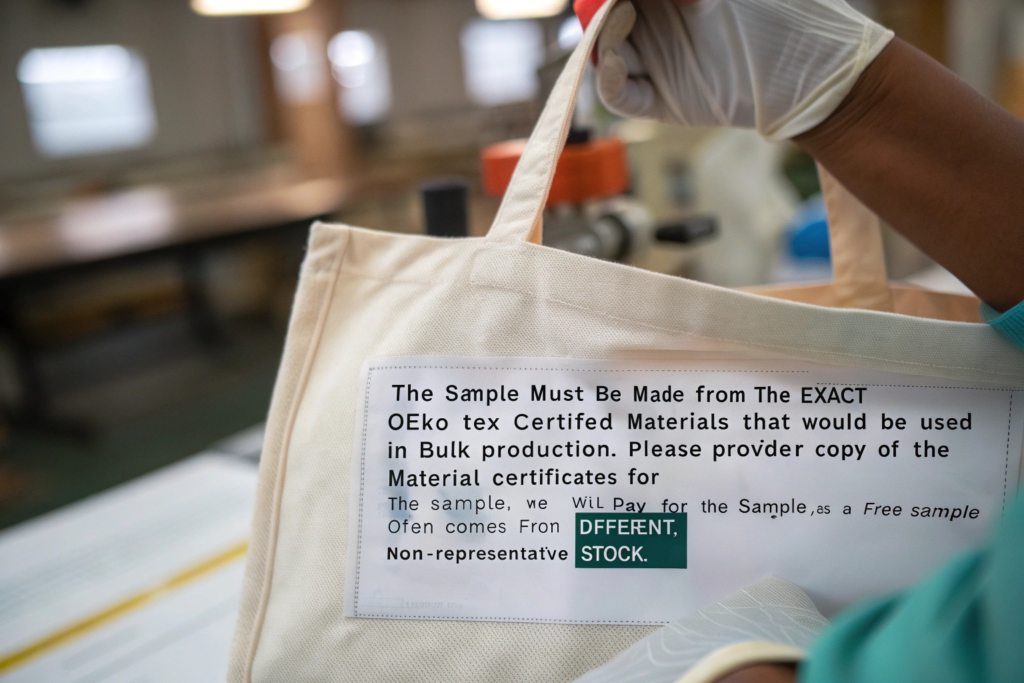
Be explicit in your sampling instructions. State that the sample must be made from the exact OEKO-TEX certified materials that would be used in bulk production, and that you require a copy of the material certificates for the sample. Pay for the sample; a free sample often comes from a different, non-representative stock.
This final stage has two critical components: testing the sample and verifying production readiness.
Why Should You Independently Test the Sample You Receive?
Even if the sample arrives with certificates, you must conduct your own due diligence. Here is a smart plan:
- Visual/Document Check: Match the sample’s material composition to the provided certificates.
- Independent Lab Test: Send the sample to a third-party lab like SGS or Bureau Veritas for a targeted OEKO-TEX test. This is the ultimate verification. The cost is a few hundred dollars—a tiny investment compared to the risk of a non-compliant bulk order.
- Compare Results: If your independent test passes, you have strong validation. If it fails, you have just avoided a massive problem.
We encourage this practice. In fact, we proactively provide test reports from international labs for our clients’ samples to build trust from the start.
What Questions to Ask When Auditing the Factory (Virtually or In-Person)?
Before committing to a bulk order, you need to audit the factory’s systems. If you can’t visit, request a detailed virtual tour via video call. Focus your questions on the management of certified materials:
- “Can you show me how you store and label OEKO-TEX certified fabrics separately from non-certified ones in your warehouse?”
- “How do you track the certificate number from a specific fabric roll to the production batch it’s used in?”
- “What is your in-house testing capability? Can you show me your pH meter or your test for formaldehyde?”
The answers and visual evidence will tell you if certification is a wall plaque or a working system. A factory like ours has a documented full-package manufacturing process where material tracking is integral, and we are happy to demonstrate it. This final step ensures your reliable supplier search concludes with a truly dependable partner in Shanghai Fumao.
Conclusion
Finding a reliable OEKO-TEX supplier on platforms like Alibaba or at trade shows is a process of diligent verification, not just keyword search. It requires you to move from passive acceptance of marketing claims to active investigation of certificates, systematic questioning of processes, and final validation through sample testing and factory audits. The suppliers who pass this rigorous filter are the ones who view certification as a core part of their quality identity, not just a sales tool.
This investment of time upfront is your strongest insurance against the nightmares of failed shipments, recalled products, and damaged brand reputation. It transforms your sourcing from a transactional gamble into a strategic partnership built on transparency and proven standards.
You now have a clear, actionable blueprint to navigate the noisy marketplace. Implement these steps, and you will confidently identify partners who can deliver on their promises. When you are ready to work with a supplier whose systems are built for this level of scrutiny from the ground up, we are here. Contact Shanghai Fumao’s Business Director Elaine to discuss your next OEKO-TEX certified apparel project. See how our transparent processes and verifiable quality systems can give you peace of mind. Reach her at elaine@fumaoclothing.com. Let's build a compliant and successful collection together.