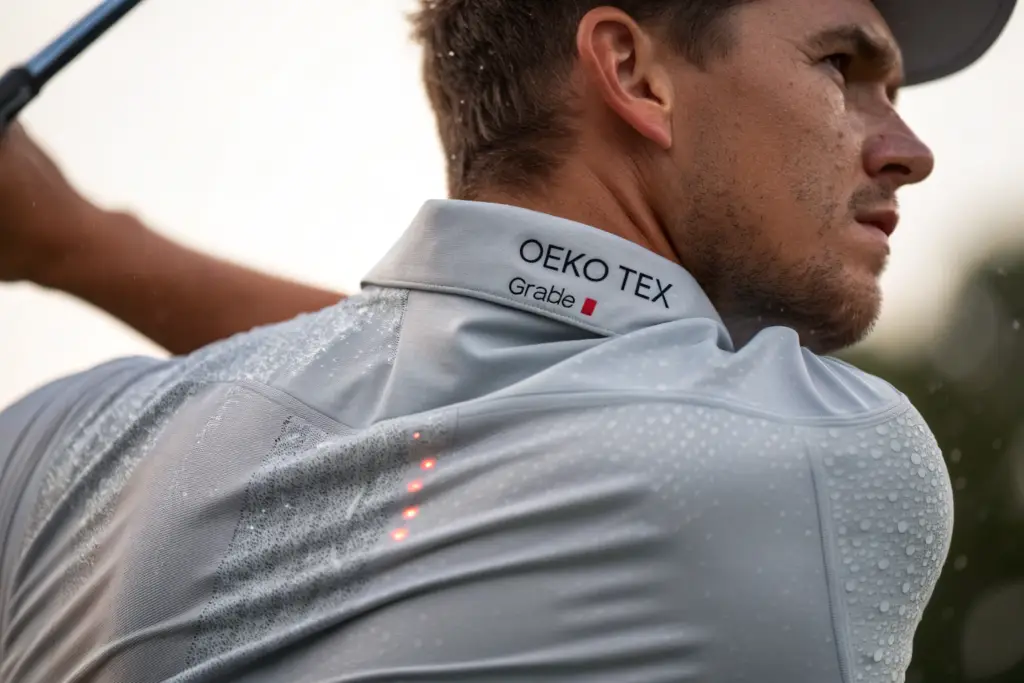
As a manufacturer who develops technical apparel for elite athletes and weekend golfers alike, I've seen a crucial misconception: that "performance" is only about moisture-wicking and stretch. True performance must include safety, especially when the garment is your second skin for hours under physical and environmental stress. OEKO-TEX Grade 1 (Article Class I) isn't just for babies—it's the new benchmark for high-performance gear.
Performance wear like golf gear needs OEKO-TEX Grade 1 because its stringent chemical safety limits, designed for an infant's vulnerable system, provide the highest possible assurance that no harmful substances will leach from the fabric during intense, prolonged wear—where sweat, friction, and body heat create a perfect storm for chemical transfer and skin irritation. It's the ultimate safeguard for the active body.
This isn't a marketing upgrade; it's a functional necessity for gear that pushes limits. Let's dissect why the strictest standard is becoming essential for serious sportswear.
How Does Intense Activity Increase Chemical Exposure Risk?
Golf may seem low-impact, but a four-hour round in the sun involves significant physiological stress: sustained sweating, increased skin temperature, and constant fabric-skin friction. This dynamic environment changes how a garment interacts with the body.
Intense activity increases chemical exposure risk by using sweat as a solvent that can extract residual chemicals from fabric, elevating skin temperature to open pores and enhance absorption, and creating mechanical friction that can break down fabric finishes and release particles. The conditions of use demand the highest safety standard.
Why is Sweat More Than Just Water?
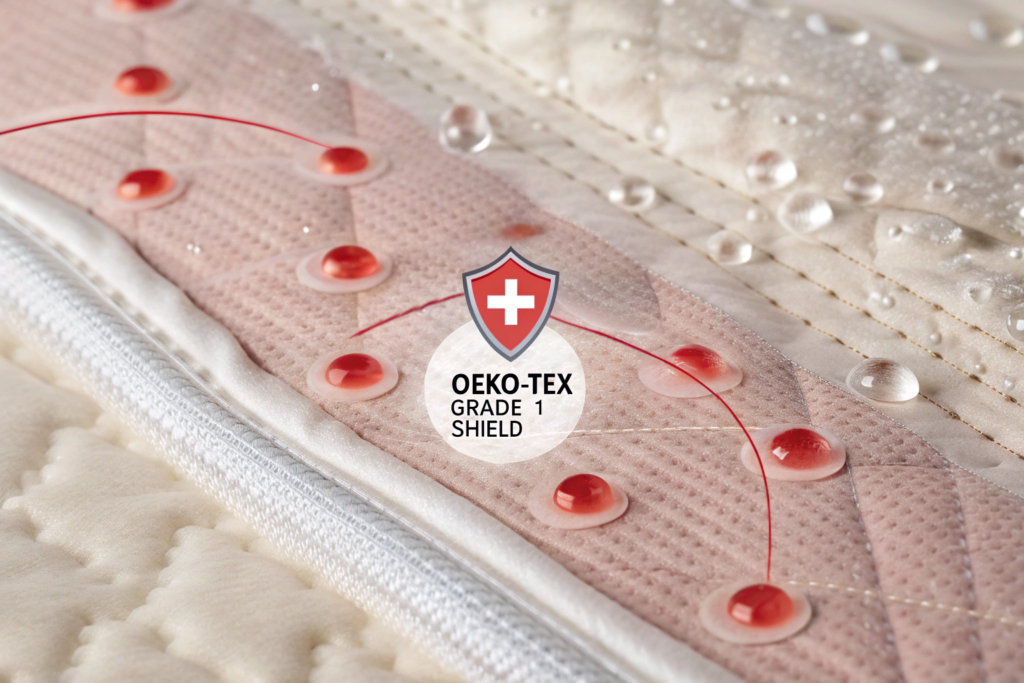
Sweat is a slightly acidic, complex fluid containing salts, urea, and lactic acid. This composition makes it a more effective solvent for drawing out substances than pure water. OEKO-TEX Grade 1 includes mandatory color fastness to acid perspiration tests. This simulates whether dyes or finishes will dissolve in sweat and transfer to the skin. A standard polo might pass a basic water test but fail this more realistic, aggressive test. We tested this in our lab: a non-certified "moisture-wicking" fabric showed significant dye transfer in a simulated perspiration test, while its Grade 1 certified counterpart showed none. For a golfer, this means no risk of dye stains on the skin or inner layers.
How Do Heat and Friction Act as Accelerants?
Body heat increases the kinetic energy of molecules, potentially speeding up the release of volatile substances from fabric. Friction from a repeated golf swing—especially in areas like underarms, collar, and inner thighs—mechanically abrades the fabric surface. This can break down chemical finishes or coatings, potentially releasing them. Grade 1's restrictions on formaldehyde and other volatile compounds ensure that even under heat and friction, no significant levels of these irritants are present to be released into the air or onto the skin.
What Specific Grade 1 Tests Are Critical for Golf?
The Grade 1 standard includes tests that are uniquely relevant to the golfing environment, going beyond basic substance lists to evaluate performance under real-world conditions.
Critical Grade 1 tests for golf gear include saliva and perspiration fastness (for towel-wiping and sweating), pH value verification for skin compatibility during prolonged contact, and specific bans on allergenic disperse dyes commonly used in synthetic performance fabrics. These tests address the specific use case of a round of golf.
Why is Saliva Fastness Relevant to Golfers?
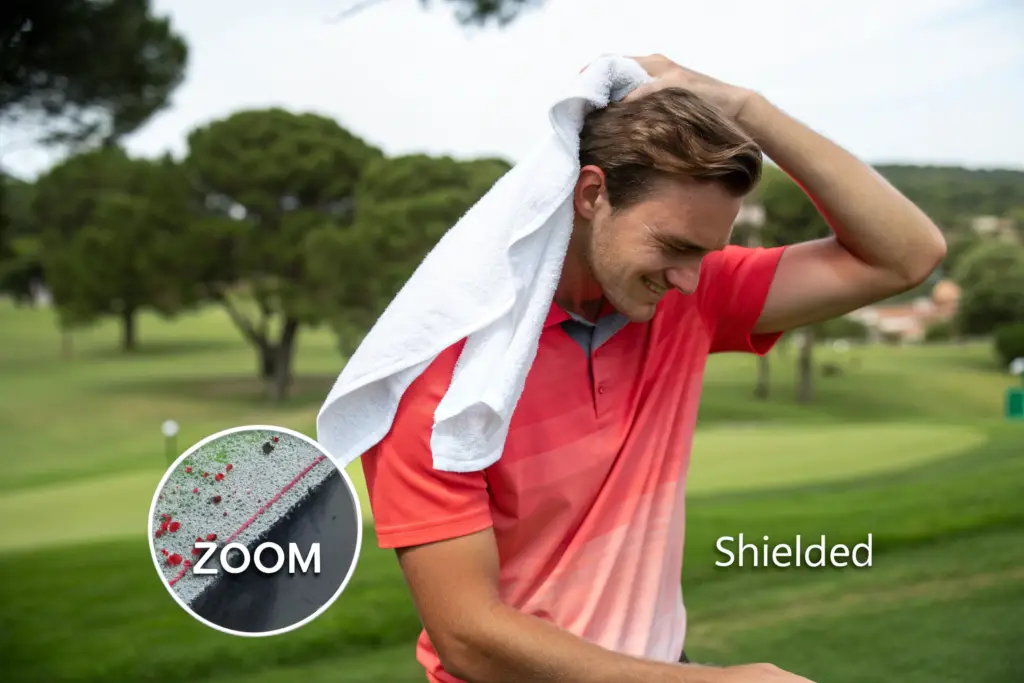
It may seem odd, but saliva fastness is crucial. Golfers constantly use towels—hung on bags or carried—to wipe hands, faces, and clubs. That towel often brushes against the collar. If a golfer bites their glove or towel, or if sweat drips to the mouth area, there's potential for fabric-to-saliva contact. Grade 1 ensures that no harmful dyes leach in this scenario. This is a direct safety feature that generic sportswear certifications ignore. It exemplifies the "infant-safe" mindset applied to an adult sport: expecting the unexpected in terms of product use.
How Does pH Balance Prevent "Golf Rash"?
The skin's natural pH is slightly acidic (~5.5). Residual alkalinity from improper fabric rinsing after dyeing can disrupt this balance, leading to dryness, itching, and "golf rash"—skin irritation exacerbated by sweat and friction. Grade 1 mandates a strict, skin-friendly pH range for the fabric extract. This is not just about immediate comfort; it's about maintaining the skin's protective barrier over 18 holes. A major brand we partnered with switched to Grade 1 base fabrics for their premium line after customer feedback cited "neck rash" with their old polos. The issue disappeared post-switch.
Does Grade 1 Certification Conflict with Technical Functionality?
A major buyer concern is that ultra-strict chemical rules might force mills to forgo the advanced finishes needed for moisture-wicking, UV protection, or odor control. This is a false trade-off.
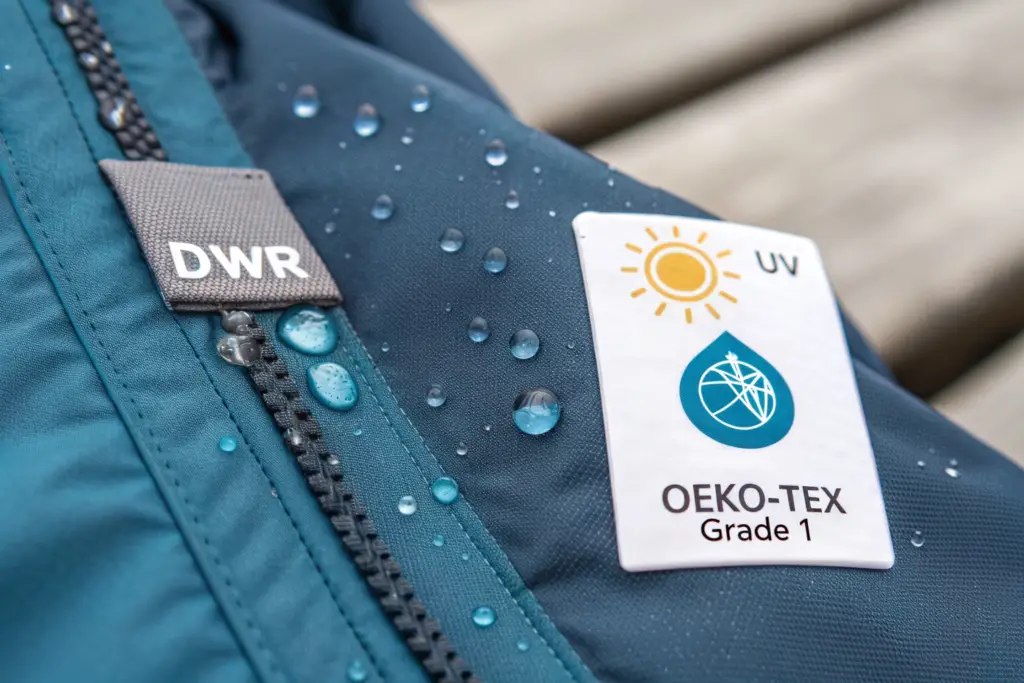
Grade 1 certification does not conflict with technical functionality; instead, it mandates that the chemicals used to achieve performance features—such as fluorine-free DWR (Durable Water Repellency), UV absorbers, or odor-control agents—must themselves be screened and approved under the strictest safety limits, driving innovation towards safer chemistry. It elevates the entire formulation.
How are Modern Performance Finishes Compliant?
Chemical suppliers have innovated to meet dual demands. For example:
- Moisture-Wicking: Achieved through fabric construction (yarn type, knitting) and hydrophilic finishes that are now available in OEKO-TEX approved formulations.
- Odor Control: Silver-ion or plant-based antimicrobial treatments can be certified. The key is the specific compound used.
- UV Protection: Mineral-based (e.g., titanium dioxide) blockers are inherently compliant and can be embedded in the yarn.
The process requires closer collaboration with mills. At Shanghai Fumao, we work with designated "Performance Fabric Mills" that have OEKO-TEX approved libraries of functional finishes. We recently developed a golf shirt with a cooling finish where the finishing agent's OEKO-TEX compliance certificate was as important to us as its technical data sheet.
What About Water Resistance and Environmental Concerns?
Traditional DWR often used PFCs (perfluorinated chemicals), which are environmentally persistent and restricted. Grade 1 encourages (and often necessitates) the use of newer, PFC-free DWR technologies. This aligns perfectly with the values of many golfers who are outdoors enthusiasts and environmental stewards. Thus, Grade 1 pushes performance wear toward a more sustainable future without sacrificing utility.
What is the Market Advantage for Brands Using Grade 1?
In a crowded marketplace, brands need a definitive edge. OEKO-TEX Grade 1 provides a powerful, scientifically backed story that resonates with a growing segment of health-conscious consumers.
The market advantage for brands using Grade 1 is the ability to claim "The Highest Safety Standard in Sport," which commands premium pricing, fosters extreme customer loyalty among sensitive or high-performance users, and future-proofs the brand against tightening global chemical regulations. It's a leadership position.

How to Communicate This to the Golf Consumer?
The messaging must bridge the technical and the personal. Avoid jargon.
- For Marketing: "Skin-Safe Performance. Certified free from harmful substances, even under sweat and friction."
- For Product Tags: Include the Grade 1 label and a short explanation: "This garment meets the most stringent global safety standard for harmful substances."
- For Retail Staff: "This line is made to the same safety standard as premium baby clothing, so you can focus on your game without worry."
This communication elevates the product from a "shirt" to a piece of "certified equipment." It addresses the parent-golfer, the sensitive-skin golfer, and the performance-purist golfer all at once.
Does This Impact B2B Sales and Distribution?
Absolutely. When selling to pro shops, resorts, or corporate gift buyers, the Grade 1 certification is a powerful B2B tool. It demonstrates a commitment to quality that reduces the buyer's risk of returns or complaints. It can be the deciding factor for a resort choosing a uniform supplier for its staff and guest merchandise. It shows thoroughness and care, making your brand a lower-risk, higher-value partner. Distributors report that certified lines have an easier path onto the shelves of better retailers.
Conclusion
For performance wear like golf gear, OEKO-TEX Grade 1 is not an over-engineering; it is essential engineering. It directly addresses the heightened chemical exposure risks inherent in intense, prolonged athletic activity. By mandating the strictest safety thresholds, it ensures that the very fabrics engineered to enhance performance do not inadvertently undermine the wearer's health and comfort.
Adopting Grade 1 is a strategic decision that aligns with the highest ideals of sport: purity, excellence, and respect for the body. It requires a manufacturing partner with the technical expertise to source compliant performance materials and the systematic rigor to maintain integrity through production. If you are ready to define the next standard in golf performance wear, let's discuss how to build Grade 1 certification into your line. Contact our Business Director Elaine at elaine@fumaoclothing.com to explore how Shanghai Fumao can be your partner in achieving this pinnacle of safe, high-performance apparel.