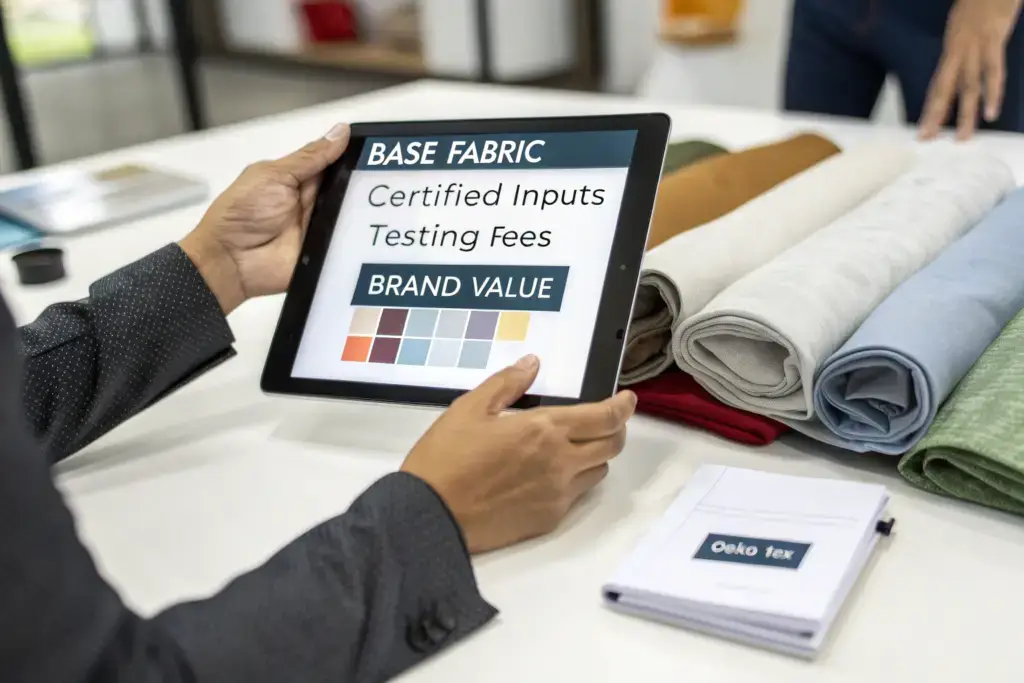
As a factory owner who negotiates with brand buyers and wholesalers daily, I hear this question constantly. The price conversation is always front and center, but the smartest buyers know to ask why a price is what it is. Certification isn't a free add-on; it's a foundational cost built into the product's DNA, and understanding its impact is key to making profitable sourcing decisions.
OEKO-TEX certification directly increases the upfront cost of wholesale golf collections by 8-20%, driven by premium raw materials, stringent chemical management, and third-party auditing fees. However, this investment strategically justifies higher retail margins, reduces financial risk from non-compliance, and builds brand equity that can command consumer loyalty and repeat business. It's a cost that creates value.
Let's break down exactly where these costs come from and, more importantly, how they translate into tangible business benefits for your wholesale operation.
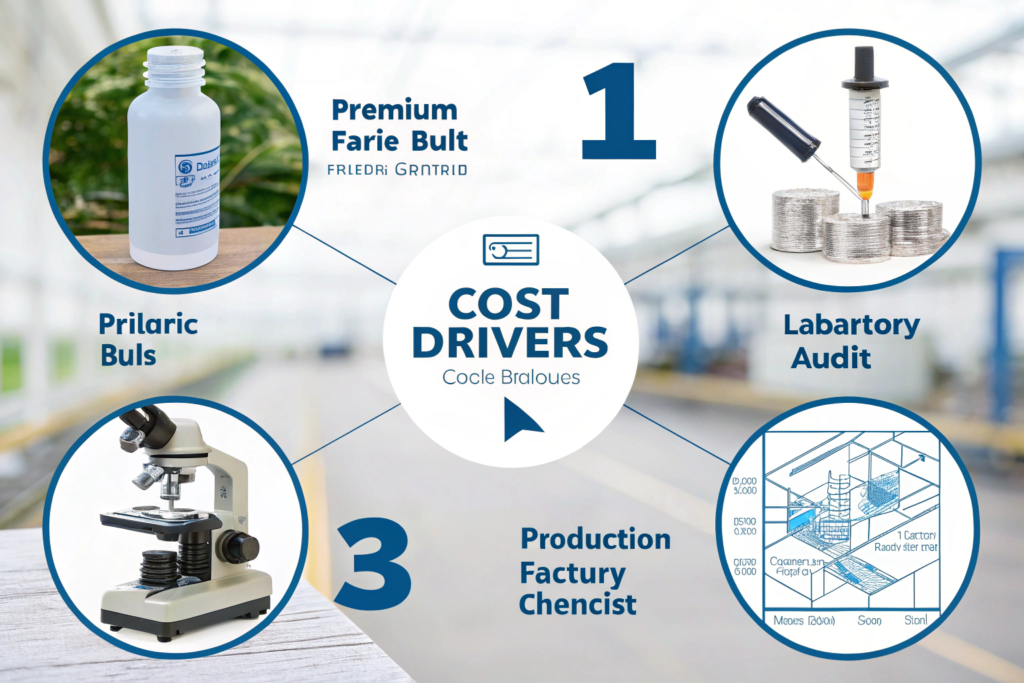
What Are the Direct Cost Drivers of OEKO-TEX Certification?
The price premium isn't arbitrary. It's the sum of specific, verifiable investments made at every stage of production to meet a rigorous global standard. You're paying for a system, not just a label.
The direct cost drivers include higher-priced certified fabrics and trims, fees for laboratory testing and annual factory audits, and the operational cost of maintaining segregated, controlled production processes to prevent contamination. These are non-negotiable inputs for a compliant product.
How Much More Do Certified Raw Materials Cost?
This is the largest contributor. OEKO-TEX compliant:
- Fabrics: Yarn spinning, dyeing, and finishing must use approved chemicals. Mills charge a premium of 5-15% for this controlled production. For example, a high-performance polyester microfiber with moisture-wicking finish will cost more in its certified form.
- Threads, Trims & Inks: Every component—from sewing thread and interlining to zippers and print inks—must be sourced from certified suppliers, who also charge a premium. Sourcing these in bulk for a full collection adds cost. A common issue we solve at Shanghai Fumao is the "hidden trim" problem: a buyer sources certified fabric but uses cheap, non-certified thread, risking the entire order's compliance. Our full-package model uses only certified trims, which is reflected in our upfront quote but eliminates this risk.
What are the Testing and Administrative Fees?
Certification is not a one-time event. Costs include:
- Initial Article Testing: Each distinct article (e.g., a men's polo, a women's skort) requires laboratory testing, which can cost several hundred dollars per SKU.
- Annual Audit Fee: The certified factory pays for an annual on-site audit to renew its license.
- Extension Fees: Adding new articles or materials under an existing certificate incurs fees.
For a wholesale collection with 10 SKUs, the initial testing investment can be substantial. However, this cost is amortized over the volume of the order. This is why per-unit cost decreases with larger order quantities, making certification more cost-effective for established wholesalers.
Does the Higher Cost Translate to Higher Wholesale Prices?
Absolutely. A factory cannot absorb these direct costs and remain profitable. Therefore, the FOB price you receive will be higher. The critical question is not if the price is higher, but how much higher and whether the value justifies it.
Yes, the higher cost of production directly translates to a higher wholesale price. However, a strategic wholesaler can leverage this higher price point to target premium market segments, negotiate better terms with retailers by offering a differentiated product, and ultimately achieve stronger gross margins by competing on value rather than competing on cost alone. It changes your positioning.
How Should a Wholesaler Calculate Their New Margin Structure?
The goal is to maintain or even improve dollar-profit per unit, even if the percentage margin fluctuates. Consider this simplified model:
| Cost Component | Standard Polo (Example) | OEKO-TEX Certified Polo (Example) | Notes |
|---|---|---|---|
| FOB Cost per Unit | $10.00 | $11.50 | Includes material & certification premium. |
| Wholesale Selling Price | $20.00 | $25.00 | Value-based price increase. |
| Gross Profit (per unit) | $10.00 | $13.50 | $3.50 increase in absolute profit. |
| Gross Margin % | 50% | 54% | Margin percentage also improves. |
This model shows that by confidently pricing the certified product higher, the wholesaler gains more profit per shirt sold. This is crucial for businesses with sensitive buyers looking for competitive prices but who understand value.
Can Certification Help in Negotiations with Retailers?
Yes. When presenting to a golf pro shop or boutique, the certification provides a concrete reason for the higher price that benefits the retailer: fewer returns, a safer product for their members, and a compelling story to tell customers. It shifts the negotiation from "Your price is too high" to "Here is the demonstrable value that supports this price." You're not just selling a shirt; you're selling reduced risk and enhanced sell-through for the retailer.
What is the Long-Term Financial Impact vs. Short-Term Cost?
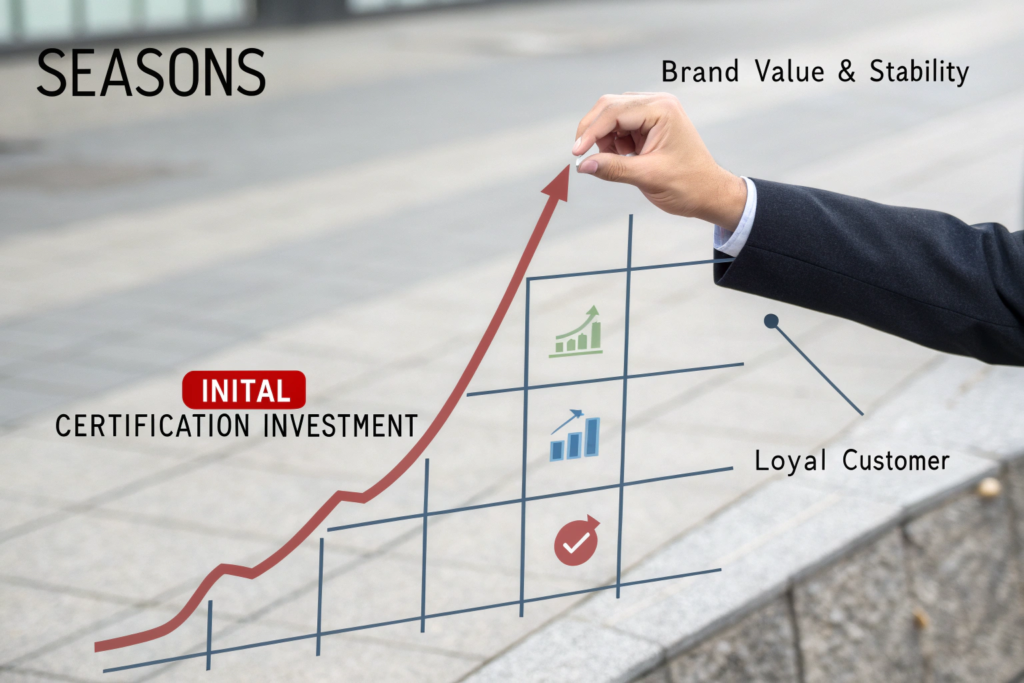
Viewing the certification premium only as a short-term cost increase is a mistake. The true financial analysis must account for risk mitigation and brand building over multiple seasons.
The long-term financial impact of certification is overwhelmingly positive, as it protects against catastrophic costs like recalls and rejected shipments, builds a brand reputation that supports pricing power, and creates customer loyalty that drives repeat orders—far outweighing the short-term cost increase. It's an investment in business durability.
How Does Certification Mitigate Financial Risk?
The cost of not being certified can be existential:
- Recall Costs: If a batch fails a retailer's or regulatory body's test, the costs for logistics, destruction, and fines can be massive.
- Lost Shipments & Delays: Goods held at customs for non-compliance lead to missed selling seasons, which is a direct revenue loss.
- Brand Damage: Rebuilding a reputation after a quality or safety scandal is incredibly expensive, if possible at all.
The certification premium is a predictable, controlled cost that acts as insurance against these unpredictable, potentially devastating expenses. For a wholesaler, this stability is priceless. It ensures your supply chain is reliable, which is a core part of your value proposition to retailers.
Does It Lead to Customer Loyalty and Repeat Business?
In the wholesale business, retaining a retail customer is more profitable than constantly acquiring new ones. Providing a certified product that performs well, doesn't generate complaints, and sells through quickly makes you a valuable, trusted partner. Retailers will come back to you season after season because you reduce their operational headaches. This loyalty translates to predictable, recurring revenue and lowers your customer acquisition costs. A client of ours, a distributor for resort pro shops, reported that after switching to our certified collection, their account retention rate increased by 30% over two years.
How Can Wholesalers Strategically Source Certified Collections?
To maximize the return on this investment, wholesalers need a smart sourcing strategy that aligns with their brand positioning and customer base.
Wholesalers can strategically source certified collections by partnering with a limited number of full-package, certified factories to consolidate volume and improve pricing, focusing certification on core, high-margin SKUs first, and using the certification as a central pillar in their marketing and sales materials to educate retailers and end-consumers. Targeted implementation is key.
Should You Certify the Entire Collection or Key Pieces?
For most wholesalers, a phased approach is wise. Start by certifying your hero products—the best-selling polos, performance jackets, or base layers. These items have the highest volume and margin potential to absorb and justify the cost. You can then market a "Certified Core" line. This is more cost-effective than certifying every single SKU, including low-volume items. It allows you to test the market response and measure the impact on sales and margins before expanding.
Why is Factory Choice Critical for Cost Control?
Your factory partner makes all the difference. A factory like Shanghai Fumao that is already certified and has an established network of certified material suppliers can offer far better pricing and reliability than a factory attempting certification for the first time. We achieve economies of scale by pooling the testing and material costs across multiple clients. Furthermore, our expertise prevents costly mistakes in the certification process that could lead to failed tests and re-production. Choosing the right partner is the single most important factor in managing the cost impact effectively.
Conclusion
The effect of OEKO-TEX certification on wholesale golf collection pricing is significant but fundamentally strategic. The upfront cost increase is an investment in product integrity, supply chain resilience, and brand equity. For the forward-thinking wholesaler, this investment creates a defensible competitive advantage: the ability to offer retailers a product that minimizes their risk and maximizes their customer satisfaction, all while securing healthier, more sustainable margins.
The key is to work with a manufacturing partner who can provide transparency on these costs and guide you in implementing certification where it delivers the highest return. If you are evaluating how to integrate certified products into your wholesale lineup to drive long-term growth and stability, let's discuss a data-backed strategy. Contact our Business Director Elaine at elaine@fumaoclothing.com to analyze how Shanghai Fumao can be your partner in building a more profitable and reputable collection.