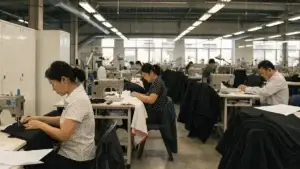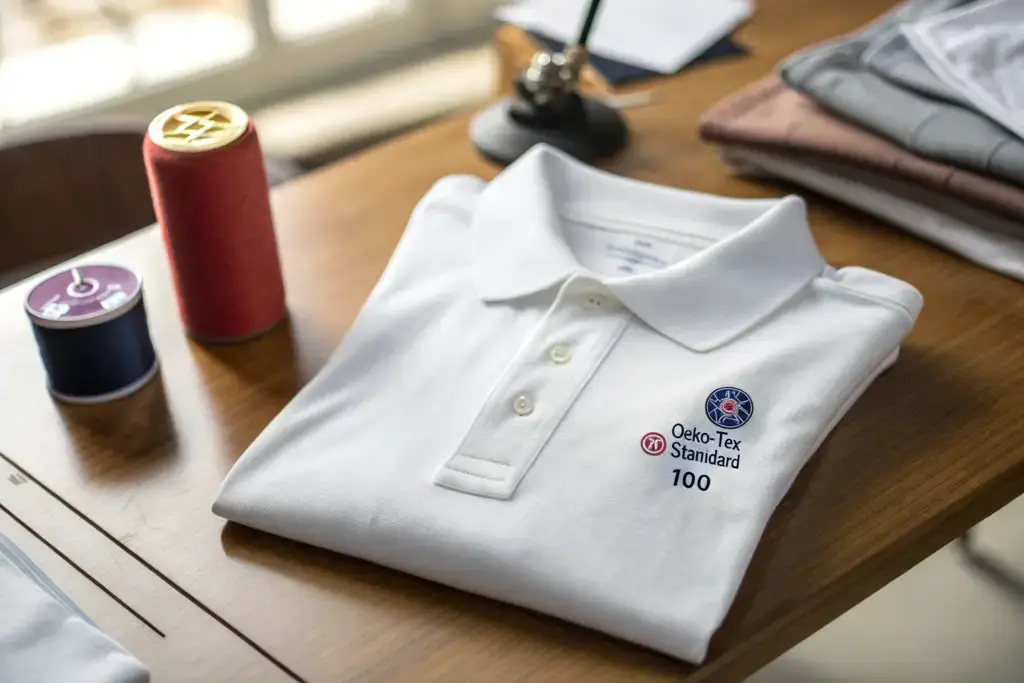
As a manufacturer who's answered this question countless times for corporate buyers and club managers, I can tell you the answer is an absolute yes—but with crucial technical considerations. Many brands assume that adding a logo will void a garment's certification, but that's a common misconception. The real challenge isn't if you can, but how you do it correctly.
You can absolutely get custom logos on OEKO-TEX certified golf polos by using specific, approved decoration methods with certified inks and materials, ensuring the final decorated garment is either sourced from a fully certified factory or undergoes post-decoration verification to maintain the integrity of the certification from collar to logo. It is a controlled, systematic process.
This capability opens a major market for branded merchandise, team uniforms, and corporate gifts that demand both professional appearance and responsible manufacturing. Let's detail how to achieve this without compromising the certification that gives your polo its premium value.
What Are the Approved Methods for Logo Application?
The certification follows the final product, so any decoration becomes part of the tested article. Not all common logo methods are automatically compliant; they must use certified inputs and often require verification.
Approved methods for logo application on certified polos primarily include embroidery using certified threads, and printing (specifically screen printing or digital printing) using OEKO-TEX certified inks and binders. Heat-transfer vinyl (HTV) and plastisol prints require extra scrutiny, as the vinyl or plastic film itself must be certified, which is less common.
Is Embroidery a Safe Choice for Certified Polos?
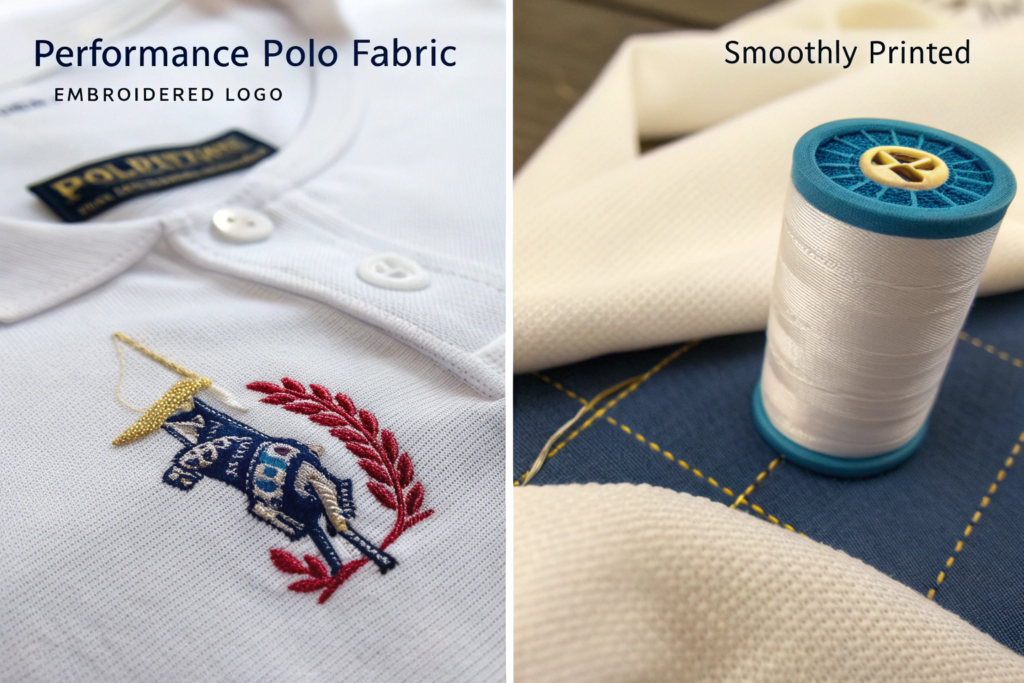
Embroidery is often the safest and most straightforward route. The key is that the embroidery thread must be OEKO-TEX certified. Most major thread manufacturers produce certified polyester threads in a wide color range. The backing or stabilizer used behind the embroidery should also be verified, though it is often included in the thread supplier's certification scope. The process itself—puncturing the fabric with a needle—does not introduce chemicals. For a large university athletic order we handled at Shanghai Fumao, we used certified thread for their intricate crest embroidery. The final step was submitting a finished, embroidered polo to the certifying body for testing, which it passed, granting a new certificate covering the specific logo design.
What Are the Rules for Printed Logos?
Printing is permissible but has stricter chemical controls. The entire ink system must be certified. This includes:
- Pigments/Colorants: Must be free of restricted substances.
- Binder/Resin: The vehicle that fixes the pigment to the fabric.
- Additives: Such as thickeners or softeners.
Water-based inks and certain plastisol inks can be certified, but you must obtain the ink supplier's OEKO-TEX certificate. A critical test for printed logos is color fastness to rubbing and perspiration. The certification ensures the printed logo won't crack, fade quickly, or transfer harmful substances. We recommend a "test print and certify" approach for new logo designs, especially if using special inks like metallics or high-density prints.
How Does Logo Addition Affect the Certification Status?
This is the core concern for buyers. Adding a logo transforms the product, so its certified status is not automatically inherited; it must be validated.
Adding a logo affects the certification status by creating a new, composite article that must be evaluated. The final decorated garment can remain certified through one of two pathways: 1) Production in a fully certified factory where all processes (including decoration) are controlled under the factory's scope, or 2) Sending finished, decorated samples to an OEKO-TEX laboratory for verification, resulting in a new certificate for the specific SKU. Documentation is key.
What is the "Article Extension" Process?
If you are working with a factory that holds certification for its manufacturing and decoration processes (which is a significant advantage), adding a new logo may be covered under an "article extension." This means the factory's existing certification system is deemed to control the new decoration, provided they use their standard, pre-approved materials (threads, inks). They will internally document the new design and may need to inform their certifying body. This is the fastest and most cost-effective route. For example, our factory's certification covers embroidery and printing workshops, allowing clients to add logos without costly delays, as long as they choose from our palette of certified inks and threads.
When is Separate Testing Required?
Separate testing is required if:
- The decoration is done by a third-party facility not under the garment factory's certification.
- A new, uncertified material is introduced (e.g., a special fluorescent ink).
- The brand or retailer requires a separate certificate for the exact final product.
In this case, samples of the finalized, decorated polo must be sent to an accredited lab. They will test the entire article, focusing on the logo area for substance release and fastness. While this incurs a fee and takes a few weeks, it provides the highest level of legal and marketing security. It directly addresses a major buyer pain point: suppliers falsifying certificates. A verifiable, product-specific certificate is undeniable proof.
What Are the Best Practices for Branded Orders?
Managing a bulk order of certified, branded polos requires meticulous planning to ensure consistency, compliance, and timely delivery from the factory floor to the clubhouse.
Best practices for branded orders include finalizing logo artwork early, selecting decoration method and position in consultation with the factory, conducting a pre-production sample (PP Sample) for approval and testing, and ensuring all certification documents are specified in the purchase order and provided before shipment. Communication and clarity are paramount.
How to Prepare Artwork for Certified Production?
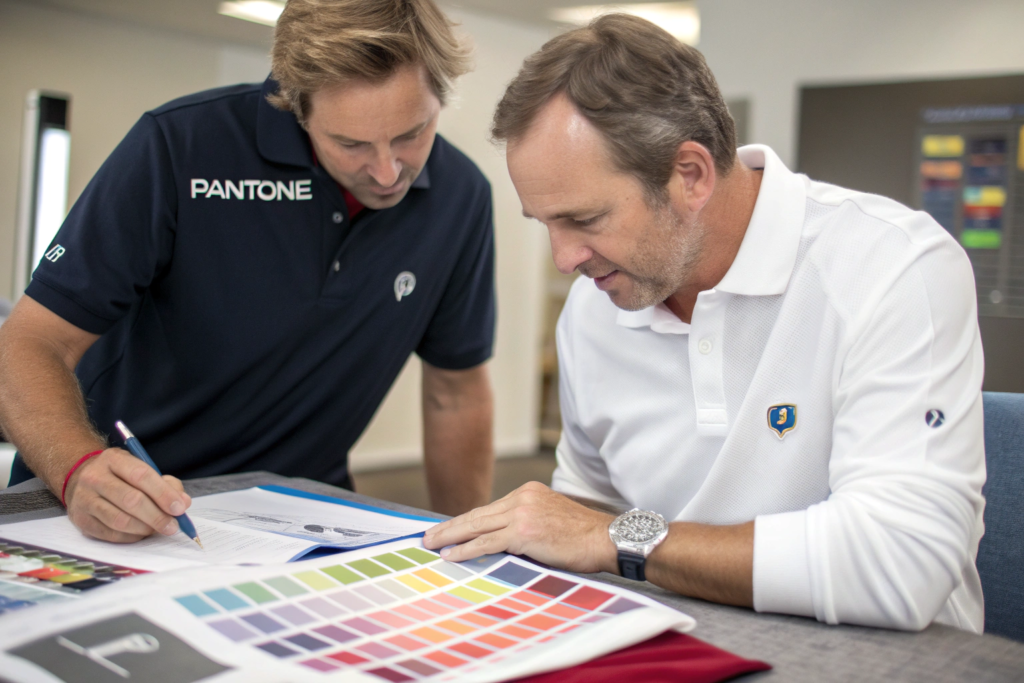
Provide your manufacturer with high-resolution, vector-based artwork (AI, EPS, or PDF). Specify exact Pantone (PMS) colors. This allows the factory to accurately match colors with their certified ink or thread library. Discuss logo size and placement. For example, a large, solid chest print may require more ink and thus a more thorough curing process to ensure compliance. Simpler, smaller logos often have an easier path to certification. One of our clients, a corporate wellness brand, simplified their multi-color logo to a elegant two-color design for embroidery, which reduced complexity, cost, and streamlined the certification verification process significantly.
What Should Be Included in the Purchase Order?
Your PO should be detailed to avoid misunderstandings. Key inclusions:
- Product Description: Mention OEKO-TEX certified base garment (specify certificate number if possible).
- Decoration Specs: Method (e.g., Left Chest Embroidery), thread/ink type (must be certified), logo position, and Pantone colors.
- Certification Deliverable: State that the final shipment must be accompanied by a valid OEKO-TEX STANDARD 100 certificate for the finished, decorated garment. This is non-negotiable.
- Sample Approval: Require a PP sample with the actual logo for approval before mass production begins.
This level of detail protects you. It ensures that a supplier cannot substitute non-certified base polos or use non-compliant decoration at the last minute. A clear PO is your first line of defense for quality control.
How to Communicate This Value to Your End-Customer?
For a buyer sourcing for a corporate client or golf club, the ability to offer a certified, customized product is a powerful selling tool. It’s your job to translate the technical achievement into customer benefits.
Communicate the value by positioning the certified, customized polo as the premium choice: "Brand Your Team with Confidence." Highlight that the certification guarantees the logo itself is safe and durable, not just the fabric, offering complete garment integrity and a responsible brand image. Provide the tools for your sales team.

What Are the Key Selling Points?
- Complete Safety: "From the fabric to the stitches in your logo, every component is tested for harmful substances."
- Professional Durability: "The certified inks and threads ensure your logo looks crisp and vibrant, season after season, wash after wash."
- Brand Integrity: "Your logo represents your values. Place it on a product that reflects a commitment to quality and responsibility."
- Risk Mitigation: "Eliminate concerns about skin irritation or chemical odors from printed logos, especially important for all-day wear."
Use these points in proposals and marketing materials. For a distributor client, we helped them create a one-page sell sheet titled "The Anatomy of a Certified Custom Polo," which visually broke down the certified components (fabric, thread, ink). This tool helped their sales team win a major contract with a health-conscious resort chain.
How Should Certification Be Displayed on the Final Product?
The OEKO-TEX label should remain on the garment, typically sewn into the side seam. This is non-negotiable. For the end-customer, you can also provide a hangtag that explains what OEKO-TEX means in the context of their custom item. A simple line like, "This garment, including its custom decoration, is OEKO-TEX STANDARD 100 certified. Product ID: XXXXXX" adds tremendous credibility. The certificate number allows for online verification, a powerful transparency tool you can share with your client.
Conclusion
Custom logos and OEKO-TEX certification are not only compatible but are a potent combination for the modern branded apparel market. The process demands a knowledgeable manufacturer, clear specifications, and a commitment to verified materials. When executed correctly, it results in a product that carries your brand identity with unwavering integrity, satisfying the most discerning buyers who are sensitive to both quality and ethical production.
Choosing a manufacturing partner like Shanghai Fumao that controls the entire process—from certified fabric sourcing to in-house decoration facilities—simplifies this journey immensely. It ensures your branded golf polos are delivered on time, to spec, and with the authentic certification documents that protect your business and please your end-customer. If you're looking to place a custom order that meets the highest standards of safety and professionalism, let's discuss your requirements. Contact our Business Director Elaine at elaine@fumaoclothing.com to start your certified custom project.