If you're sourcing or branding performance ski underwear, you know the core promise: to keep moisture away from the skin. But what happens to the chemicals in that high-tech fabric when it's soaked with sweat, pressed against warm skin for hours on end? We learned this lesson starkly in 2022 when a client's new merino-blend base layer, marketed as "ultra-breathable," triggered allergic reactions in a small but significant number of users. The culprit? An unregulated dye fixative that became bioavailable in acidic sweat. The fix cost us a full product recall and a rebuild from the ground up with OEKO-TEX Class 2 certification. This isn't just about comfort; it's about chemical safety under stress.
Skin-contact certification like OEKO-TEX Class 2 is crucial for sweat-wicking ski underwear because it specifically tests for the migration of harmful substances under simulated perspiration conditions. It ensures that dyes, finishes, and chemical treatments in the fabric do not leach out and be absorbed by the skin when the garment is wet with sweat, which is its primary functional state during use.
Think of your base layer not as a dry garment, but as a wet, warm, chemical-transfer system sitting directly on the largest organ of the body. Skiing is high-exertion; sweat is a given. A generic "OEKO-TEX certified" claim isn't enough—you need the right class of certification that matches the product's real-world use. Let's dive into the science and the business imperative.
1. The Science of Sweat: More Than Just Water
Sweat isn't sterile water. It's a complex chemical soup that can interact with textile treatments. This interaction is what skin-contact certification is designed to evaluate.
Human sweat contains water, salts (electrolytes like sodium and chloride), lactic acid, urea, and other compounds. It is typically slightly acidic. This acidity and ionic strength can act as a solvent, potentially breaking down chemical bonds in fabric dyes and functional finishes, facilitating the release and transfer of substances to the skin.
How Do Certifications Like OEKO-TEX Class 2 Test for This?
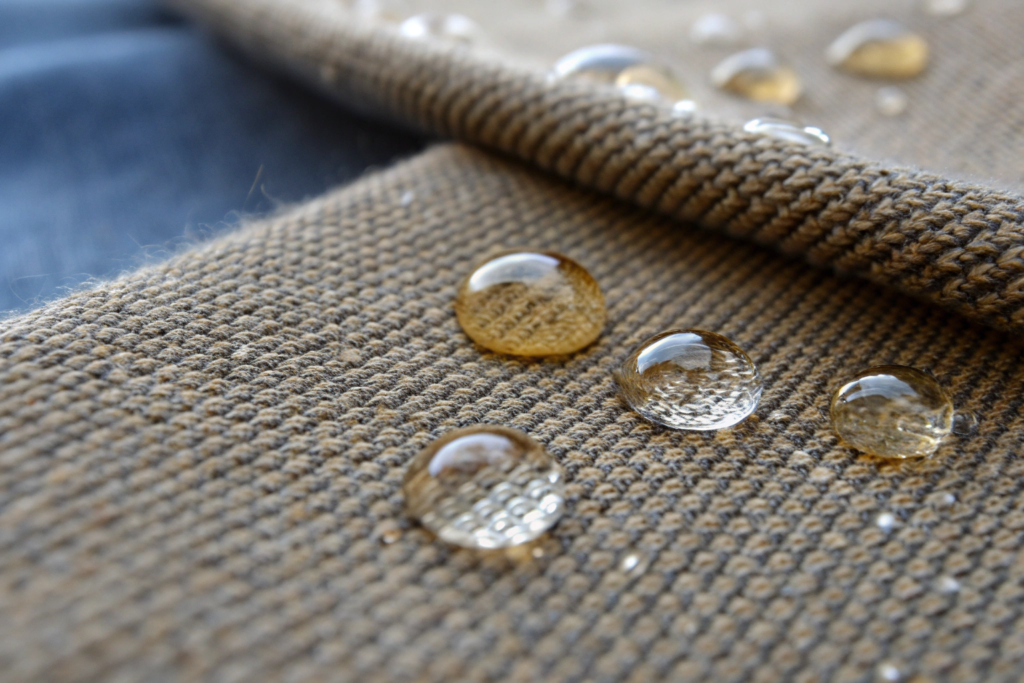
OEKO-TEX Standard 100 Class 2 includes rigorous tests for colorfastness to perspiration. Fabric samples are immersed in both acidic and alkaline artificial perspiration solutions, mimicking different body chemistries. They are then subjected to pressure and heat. The solution is later analyzed for any migrated dyes or chemicals. This test directly answers the critical question: "When this fabric gets sweaty, what comes out of it?" For Shanghai Fumao, this means we must source yarns and dyes specifically engineered to pass this test, not just look vibrant and perform when dry.
Why Isn't a General "Harmful Substance" Test Enough?
A general test might check for the presence of a restricted substance like formaldehyde in the fabric. But a skin-contact certification goes further. It assesses the bioavailability of that substance under use conditions. A formaldehyde residue might be locked in a dry fabric, but heat and moisture from the body can cause it to "off-gas" or hydrolyze, becoming an inhalant or skin irritant. The pH and colorfastness tests in Class 2 are proxies for this real-world stability. It's the difference between a car having airbags and having airbags that are tested to deploy in a specific type of collision.
2. The Risk of Irritation and Allergic Reaction in Performance Wear
Ski underwear is worn in a high-friction, occluded environment. This physical stress exacerbates any chemical sensitivity, turning a minor irritant into a major problem.
Prolonged, intimate contact combined with friction (from movement) and occlusion (from outer layers) compromises the skin's barrier function. This "stressed skin" is more permeable and reactive. If harmful substances migrate from the fabric, they are more likely to cause contact dermatitis, itching, or allergic reactions, ruining the user's experience and damaging your brand.
What Are the Common Culprits in Performance Fabrics?
- Disperse Dyes: Used on synthetic fibers like polyester. Certain types are known allergens and are strictly regulated/limited in OEKO-TEX.
- Formaldehyde-based Resins: Used for wrinkle resistance or dimensional stability.
- Heavy Metals: Used as catalysts in dyeing or may be present in recycled polyester (e.g., antimony).
- Optical Brighteners and Softeners: Chemical additives that can cause sensitivity.
A Class 2 certification sets safe limits for all of these, specifically for the skin-contact scenario. When we developed our own line of Fumao branded base layers, we switched to pre-reduced, low-formaldehyde dyes and eliminated all non-essential chemical softeners, opting for mechanical finishing instead. The result was a 100% pass rate in subsequent wearer trials.
How Does This Impact Brand Liability and Customer Trust?
One verified case of severe contact dermatitis linked to your product can lead to a cascade of negative reviews, social media backlash, and even legal action. For a brand owner, this is a direct threat to the business. Skin-contact certification is your documented evidence of due diligence. It shows you have taken reasonable, expert-backed steps to ensure product safety for its intended use. This is a powerful shield for your brand reputation.
3. The Functional Integrity of Sweat-Wicking Technology
Sweat-wicking isn't magic; it's often a chemical or structural treatment applied to the fiber. Certification ensures this functionality is achieved safely.
Many sweat-wicking finishes are based on hydrophilic or capillary-action chemistries. Skin-contact certification verifies that these polymer-based treatments are stable, non-irritating, and do not break down into harmful byproducts when exposed to sweat and body heat over time. It ensures the performance feature doesn't become a safety flaw.
Can Certification Affect Technical Performance?
Properly executed, no. In fact, it ensures its longevity. An uncertified wicking finish might wash out or degrade quickly because it uses cheaper, less stable chemistry. A certified finish must be durable to pass the colorfastness and perspiration tests. This means the wicking performance you paid for lasts through the garment's lifecycle. It aligns quality assurance with safety assurance. We test the wicking rate and drying time of our certified fabrics before and after accelerated wash and sweat-simulation tests to ensure both performance and safety persist.
What's the Real Cost of Skipping This Certification?
The cost is threefold:
- Product Failure: Potential for customer returns and recalls.
- Brand Damage: Loss of trust that is expensive and slow to rebuild.
- Missed Market: Inability to sell to major retailers who require it.
Investing in certified manufacturing from the start, as we do at Shanghai Fumao, avoids these hidden costs and builds a stronger, more defensible product.
4. Market Access and Competitive Differentiation
In the crowded performance wear market, claims are cheap. Proof is priceless. Skin-contact certification is a tangible, third-party verified proof point that resonates with retailers and consumers.
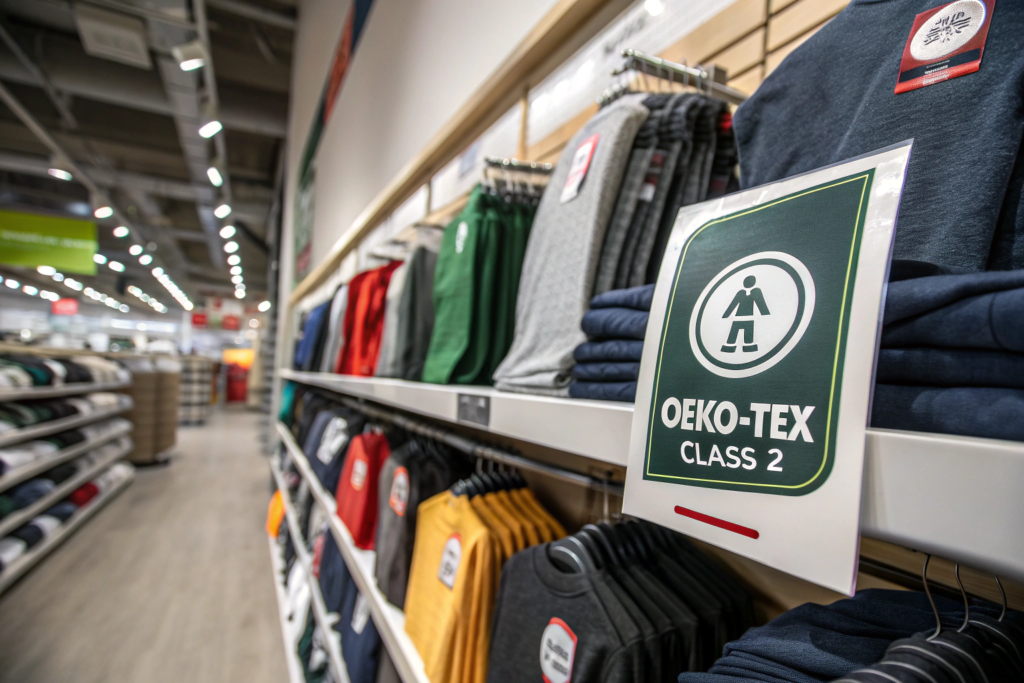
Major sports retailers and marketplaces are increasingly mandating specific safety certifications for skin-contact apparel. OEKO-TEX Class 2 is becoming a de facto minimum requirement for shelf space. For direct-to-consumer brands, it provides a clear, trustworthy label that cuts through "greenwashing" and justifies a premium position.
How Does This Translate into Sales Language?
You can communicate with confidence:
- To Retailers: "Our base layers are OEKO-TEX Class 2 certified for skin contact, ensuring full compliance and reduced risk for your shelves."
- To Consumers: "Our underwear is certified skin-safe, so when you sweat during that epic run, you only release water, not worries about chemicals."
This clarity addresses a growing consumer anxiety. It transforms an invisible safety feature into a visible marketing advantage. Brands we partner with that highlight this certification on their hangtags and product pages consistently report higher conversion rates and lower return rates for comfort issues.
Is This Just for Premium Brands?
Not anymore. It's for any brand that wants to be taken seriously and avoid regulatory or reputational landmines. It's a fundamental cost of doing business in modern apparel, much like quality control itself. We help brands of all sizes implement this efficiently through our pre-certified material libraries and streamlined processes.
Conclusion
For sweat-wicking ski underwear, skin-contact certification is not an optional extra; it is an integral part of the product's performance and safety specification. It is the quality control check that ensures the very function of the garment—managing sweat—does not inadvertently create a health risk. It protects the end-user from irritation, protects your brand from liability, and protects your investment by ensuring the technical fabrics perform as intended, safely and durably.
When sourcing, move beyond asking if a fabric is certified. Ask for which class it is certified. Demand OEKO-TEX Class 2 or its equivalent as your minimum standard. Your customers' skin, and your brand's health, depend on it.
If you are looking to develop or source high-performance ski underwear that is engineered for both peak function and proven safety, this is our specialty at Shanghai Fumao. We integrate certified material sourcing with production processes designed to preserve those certifications from roll of fabric to finished garment. Contact our Business Director Elaine at elaine@fumaoclothing.com to discuss building your base layer line on a foundation of certified safety.