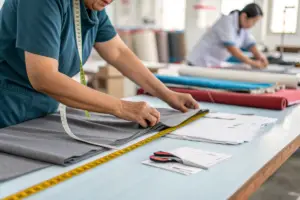
This is the question that keeps many American and European brand owners awake at night. You've heard the stories: shipments rejected at customs, products failing compliance tests, and the nagging fear that a supplier might cut corners. Just last year, we onboarded a client whose previous factory in Southeast Asia had provided falsified REACH compliance reports. The client only discovered the truth when their goods were held in Rotterdam, costing them over $80,000 in delays and penalties. Their question to us was the same: "Can you truly meet the standards?" The short answer is not only can we meet them, but for professional manufacturers, it's the baseline for doing business today.
Yes, a professional Chinese manufacturer like Fumao Clothing can not only meet but often exceed EU and US chemical standards. This is achieved through a multi-layered system of certified raw material sourcing, in-house laboratory testing, third-party verification via global certifications like OEKO-TEX, and maintaining a transparent, documented supply chain that is auditable by clients and authorities.
The capability gap isn't between "Chinese" and "Western" factories; it's between professional, invested manufacturers and low-cost, short-term operators. The former build systems to guarantee compliance as a core service; the latter view it as an optional barrier. Let's dismantle the myth and show you the concrete systems that make compliance a deliverable, not a promise.
The Compliance Framework: More Than Just a Test Report
Meeting complex regulations like EU REACH, US CPSIA, or California Prop 65 isn't about running a single test. It's about building a management system. At Shanghai Fumao, this system is built on four pillars, which we call our Compliance Core.
Our compliance framework is proactive, not reactive. It starts with Design-for-Compliance in product development, flows into Restricted Substance List (RSL) management for sourcing, is enforced through integrated quality control checkpoints, and is validated by third-party certification and client-accessible documentation.

Pillar 1: Design-for-Compliance and RSL Management
Before a single thread is sourced, our design and development team works with a dynamically updated Restricted Substance List (RSL). This master list consolidates the strictest limits from REACH, CPSIA, Prop 65, OEKO-TEX, and major brand RSLs. When we develop a tech pack for a ski jacket, the approved material list is pre-vetted against this RSL. We source fabrics, zippers, and coatings only from our vetted supplier network who provide full material composition sheets and their own compliance certificates. This is the first filter.
Pillar 2: The Role of In-House and Third-Party Lab Testing
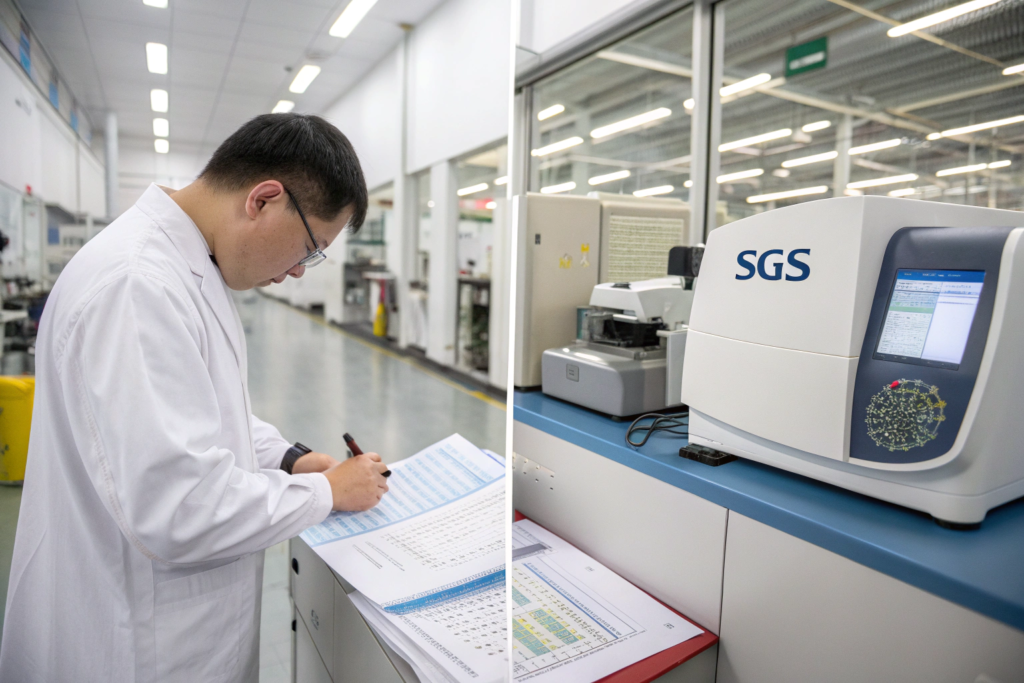
We operate a certified in-house lab for preliminary screening tests (like pH, formaldehyde, and colorfastness). This allows for rapid iteration during sampling. However, we never rely solely on in-house results. For final production validation, we use internationally accredited third-party labs such as SGS, Bureau Veritas, or TÜV. The test reports from these labs are the gold-standard documents you receive with your shipment. For example, every batch of our waterproof laminate is tested for PFCs (per- and polyfluoroalkyl substances) to ensure compliance with evolving state-level bans in the US.
The Proof is in the Certifications: OEKO-TEX, BSCI, and More
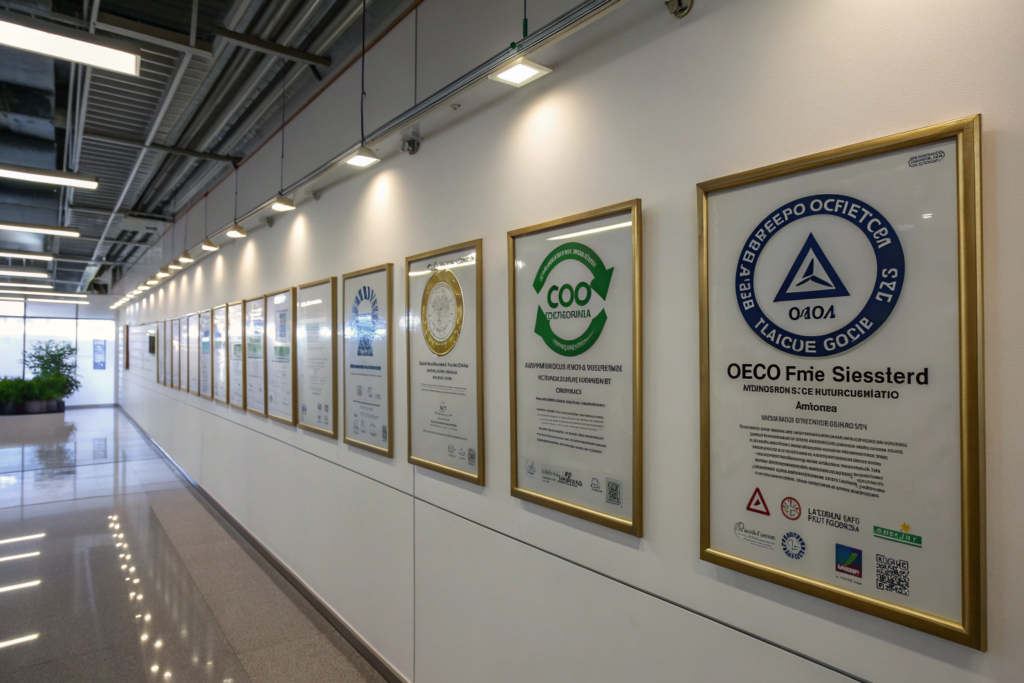
Anyone can claim compliance. Trust is built through verifiable, third-party audits. These certifications are not just badges on our website; they are active management systems with annual audits.
We hold OEKO-TEX STANDARD 100 for product safety, OEKO-TEX STeP for sustainable production, and BSCI (amfori) for social compliance. These are not Chinese standards; they are globally recognized benchmarks administered by European and international bodies. Their auditors inspect our facility, processes, and records to ensure alignment with the highest international expectations.
How Do These Certifications Directly Map to EU/US Laws?
- OEKO-TEX STANDARD 100: Its limit values are often stricter than legal minimums in REACH or CPSIA. A product with this certification is de facto compliant with the substance restrictions of those regulations for the parameters tested. It's your strongest pre-emptive defense.
- BSCI (amfori): While focused on social compliance, it demonstrates a factory's commitment to transparent, ethical, and well-managed operations—a strong indicator of overall professionalism and reliability, which correlates with rigorous process control in chemical management.
These certifications are publicly verifiable. You can check our status online, which directly addresses the pain point of "suppliers occasionally falsify certificates."
Can You Handle Brand-Specific or Retailer RSLs?
Absolutely. Major retailers like Decathlon, Nike, or VF Corporation have their own detailed RSLs. We treat these as additive to our master list. Our quality management system is built to administer multiple compliance protocols simultaneously. We maintain a digital library of all substance test reports for materials, which can be cross-referenced against any new client's specific RSL requirements, drastically reducing your onboarding time and risk.
Transparency as a Service: Your Access to the Supply Chain
The old model was "trust us." The new model is "see for yourself." We bridge the geographical and informational gap that causes "inefficient communication."
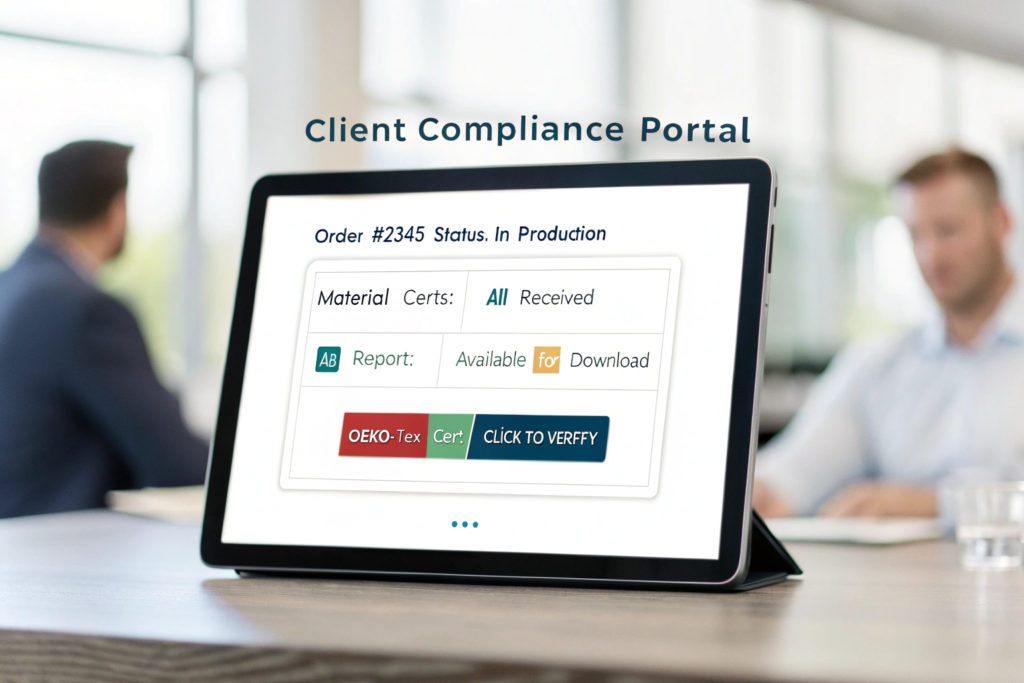
We provide clients with a compliance dossier for each order. This includes: material mill certificates, third-party lab test reports for finished goods, the OEKO-TEX certificate for the product article, and a documented chain of custody. For critical orders, we support virtual or physical factory audits where you can review these records firsthand.
How Does This Solve the "Black Box" Problem?
Many brands feel their product is made in a "black box"—materials go in, finished goods come out, but the middle is opaque. We turn the box transparent. For instance, if you are concerned about azo dyes in the lining fabric of a ski pant, we can provide you with the specific test report from the lining mill, the in-house screening test from when we received the fabric, and the final batch test from the accredited lab. This level of traceability is what transforms compliance from a claim into a fact.
What About Logistics and DDP (Delivered Duty Paid) Shipments?
Our DDP service is where compliance and logistics merge. When we handle DDP shipping to the US or EU, we take full responsibility for ensuring the commercial invoice, packing list, and compliance documentation packet meet the exact requirements of the destination country's customs authority. Our logistics partners are experts in cleared customs procedures for textiles. This integrated approach is why our on-time delivery rate exceeds 98%, directly addressing the pain point of "delayed shipments leading to missed selling seasons."
Beyond Compliance: The Strategic Advantage for Your Brand
Choosing a manufacturer with a robust compliance system is not just about avoiding problems; it's about creating opportunities. It future-proofs your brand and adds tangible value.
Partnering with a certified manufacturer like Fumao Clothing reduces your internal due diligence costs, accelerates your time-to-market by avoiding compliance-related delays, and enhances your brand's story with verifiable sustainability and safety credentials that resonate with modern consumers and retailers.
How Does This Impact Your Bottom Line and Brand Equity?
Think of it as risk transfer and value addition. You transfer the complex, costly risk of chemical compliance management to our specialized systems. The cost is built into your unit price, but it is predictable and far lower than the potential cost of a single failed shipment or recall. Simultaneously, you gain the right to use respected certification logos in your marketing, which can support a premium price point and strengthen retailer relationships. This builds brand equity on a foundation of proven responsibility.
Is This Approach Common Among Chinese Manufacturers?
It is the defining line between tier-1 manufacturers and the rest. Many factories can sew a good garment. Far fewer have invested in the integrated chemical management, certification, and transparency systems required for seamless business with top EU/US brands. We made this investment specifically to serve discerning partners who view their supply chain as an extension of their brand promise.
Conclusion
The question isn't "Can a Chinese manufacturer comply?" The real question is "Are you partnering with a professional manufacturer or just a factory?" Professional manufacturers, regardless of location, invest in systems, certifications, and transparency because their business model is built on long-term partnership and repeat orders, not on winning the lowest bid for a single job.
We have built Shanghai Fumao to be that professional partner for ambitious US and EU brands. Our entire operation is structured to turn the complex challenge of global chemical compliance into a reliable, streamlined, and transparent process for you. We don't just meet standards; we systematize them to de-risk your supply chain and protect your brand.
Stop worrying about if your supplier can comply. Start working with a partner who demonstrates how they guarantee it every day. To see our certifications, review sample compliance dossiers, and discuss how we can meet your specific standards, contact our Business Director Elaine at elaine@fumaoclothing.com. Let's build with confidence.