The moment you've paid the final 70% balance for your clothing order, a significant shift occurs: your financial leverage diminishes as the factory's primary incentive (receiving payment) has been met. A subsequent shipping delay in this scenario is not just an inconvenience; it's a critical business risk that can derail your sales season, strain customer relationships, and create complex financial disputes. Understanding the potential fallout and your recourse options is essential for every apparel importer.
If shipments are delayed after full payment, you face the immediate risk of missing your selling season, incurring extra costs for expedited shipping, and entering difficult negotiations with the factory to seek compensation, all while having reduced direct leverage due to the lack of outstanding payment.
This article will guide you through the cascading consequences of such a delay, the practical steps to mitigate the damage, and the strategies to protect yourself in future orders.
How Does a Post-Payment Delay Directly Impact Your Business?
A shipping delay after you've paid in full isn't just about late goods; it triggers a domino effect of operational and financial crises. The impact is measured in lost sales, eroded margins, and damaged brand reputation.
A post-payment delay directly impacts your business by causing missed revenue during peak selling windows, forcing costly last-minute logistics changes, and potentially violating contracts with your own retail partners or customers, leading to chargebacks and lost future business.
The financial ramifications are severe and often immediate.
What is the True Cost of Missing a Selling Season?
For seasonal apparel, timing is everything. A delay that causes you to miss a 6-week peak selling period (e.g., the holiday season or back-to-school) can have a devastating impact:
- Forced Markdowns: To sell late inventory, you may need to discount by 30-50%, destroying your planned margin.
- Carrying Costs: Warehouse storage fees accumulate for inventory you can't sell.
- Opportunity Cost: Capital is tied up in unsold goods that could have been reinvested.
A client in 2022 had their autumn knitwear shipment delayed by 3 weeks after final payment. They missed the key early-fall launch period and ultimately sold 40% of the collection at a 40% discount, turning a projected profit into a significant loss.
How Do Expedited Shipping Costs Multiply?
When goods are late, the default solution is to upgrade from sea freight to air freight. This can multiply your shipping costs by 5x to 10x. For a standard 40-foot container costing $4,000 by sea, air freight could exceed $40,000. These unplanned costs can completely erase the profit margin of the entire order. Furthermore, you may need to pay for hotshot trucking or special handling at the destination port to regain lost time, adding thousands more.
What Recourse Do You Have with the Factory?
Once the final payment is made, your direct financial leverage over the factory is low. However, you are not without recourse. Your ability to seek remedy depends almost entirely on the strength of your contract and the factory's willingness to preserve the relationship.
Your recourse with the factory is primarily contractual. You can negotiate for a discount/refund, demand they cover expedited shipping costs, or, in extreme cases, pursue legal action. The outcome heavily depends on the delay's cause and the liability clauses in your agreement.
The first step is always to refer back to the document that governs your transaction.
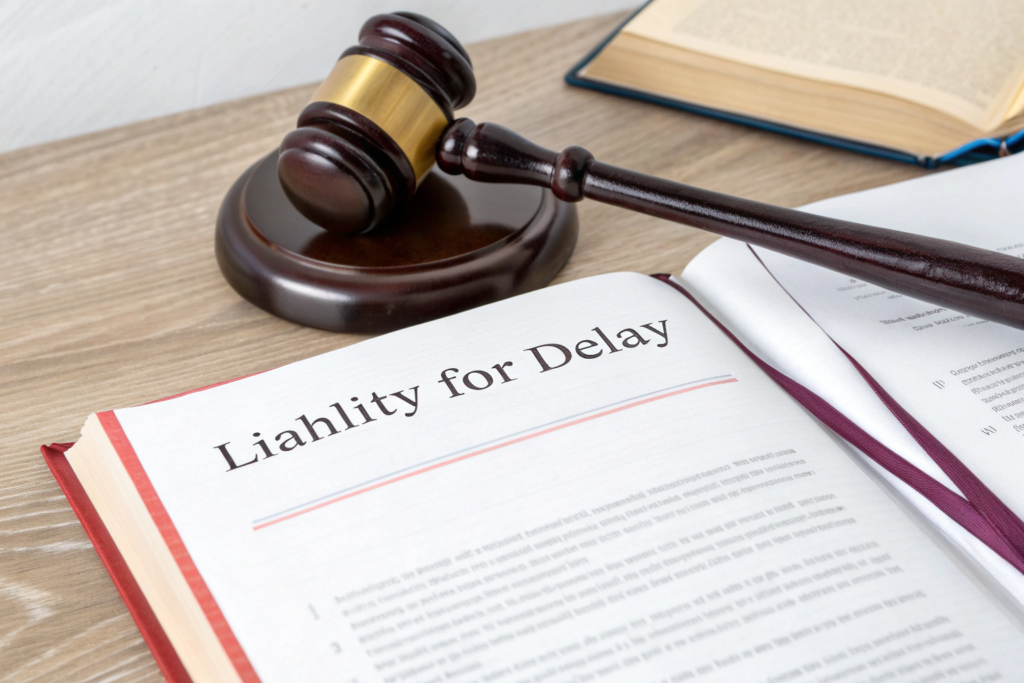
What Should Your Contract Have Included?
A robust contract should have a "Liquidated Damages" clause for delay. This clause pre-defines a financial penalty for each day or week the shipment is late beyond the agreed date (e.g., "0.5% of the order value per week, capped at 5%"). This provides a clear, agreed-upon remedy without needing to prove your actual losses in court, which is difficult. If your contract only has a vague "on-time delivery" promise with no penalty, your negotiating position is much weaker. At Shanghai Fumao, our contracts include a mutual commitment to the timeline, and we proactively communicate any potential delays the moment we foresee them, along with a plan to mitigate the impact.
How to Approach Negotiations After Payment?
- Identify the Root Cause: Was it a force majeure event (typhoon, port strike) or the factory's fault (production mismanagement, quality rework)? This determines liability.
- Calculate Your Actual Damages: Prepare a clear summary of your extra costs (air freight quotes) and estimated sales loss.
- Propose a Solution: Based on the cause and your contract, propose a fair outcome. For a factory-caused delay, you might request: "Please cover 50% of the air freight differential, or provide a 10% discount on this order and 15% on the next."
The factory's response will reveal their integrity. A reputable partner will seek a fair resolution to maintain the relationship. We once missed a deadline due to an unforeseen component shortage. Although it was a grey area, we offered the client a 5% discount on the spot to help offset their marketing rescheduling costs, which preserved a valuable partnership.
Can You File a Claim with Your Insurance?
A critical but often overlooked resource is cargo insurance or trade credit insurance. Depending on your policy and the cause of delay, you may be able to recover some of your financial losses, moving the burden from a fraught factory negotiation to a contractual claim with your insurer.
You may be able to file a claim with your marine cargo insurance or contingent business interruption insurance if the delay is caused by a covered peril (e.g., vessel breakdown, port congestion). Standard cargo insurance often does not cover financial loss from mere production delays, but specific clauses or separate policies might.
Insurance is a complex safety net with specific triggers.
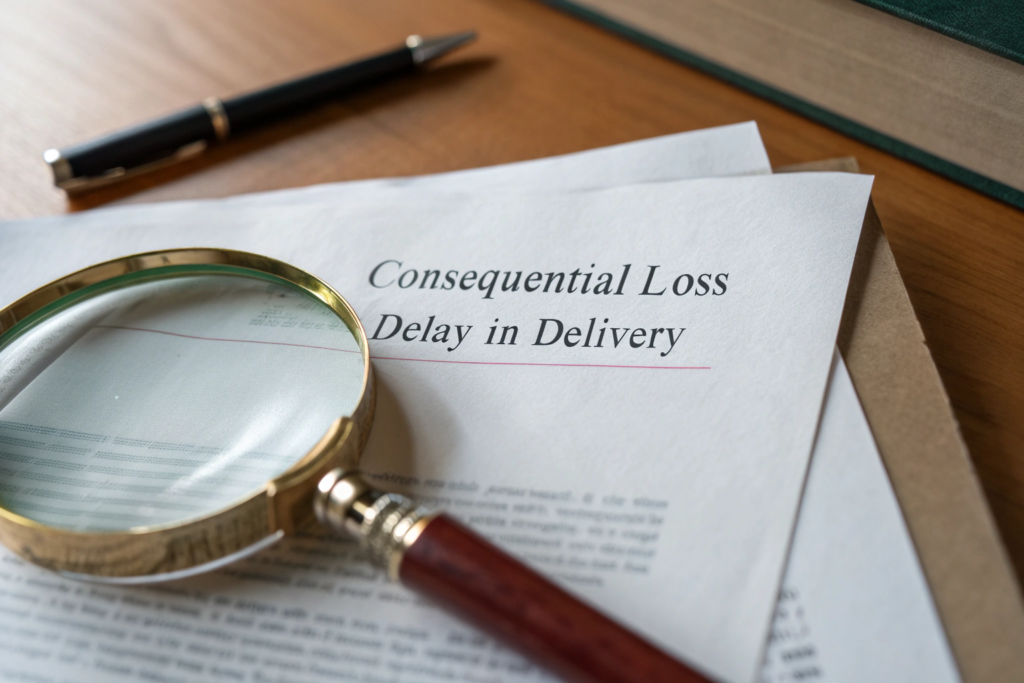
What Type of Insurance Might Cover Delay Losses?
- Marine Cargo Insurance with "Delay in Delivery" Cover: This is an add-on. It may reimburse you for lost market value or extra expenses if delay is caused by an insured event (e.g., the ship catches fire).
- Contingent Business Interruption (CBI) Insurance: This covers lost profits and extra expenses when a supplier's failure to deliver disrupts your business. It typically requires a direct physical loss at the supplier's premises (e.g., a factory fire).
- Trade Credit Insurance: If the delay is a precursor to the supplier's insolvency or default, this may trigger a claim.
Most standard All Risk marine policies do not cover pure financial loss from delay unless it stems from a covered physical damage event. You must review your policy wording carefully.
What is the Claims Process Like?
Filing a claim requires meticulous documentation:
- Proof of the Delay: The original Bill of Lading with the scheduled date vs. actual departure/arrivery dates.
- Proof of the Cause: Documentation from the carrier or factory (e.g., a notice of port congestion, a vessel breakdown report).
- Proof of Your Financial Loss: Invoices for expedited shipping, revised sales forecasts, contracts with retailers showing penalty clauses.
The process is often slow and requires proving direct causality. It is a tool for catastrophic, well-documented delays, not for routine scheduling slippages.
How to Prevent This Situation in Future Orders?
The best strategy is proactive prevention. Structuring your orders, payments, and contracts to maintain leverage and visibility throughout the entire production and shipping process is the most effective way to guard against post-payment delays.
To prevent this situation, restructure your payment terms to retain leverage, implement staged inspections and approvals, use trackable logistics, and choose partners with a proven track record of on-time delivery.
Building a system of accountability is key.
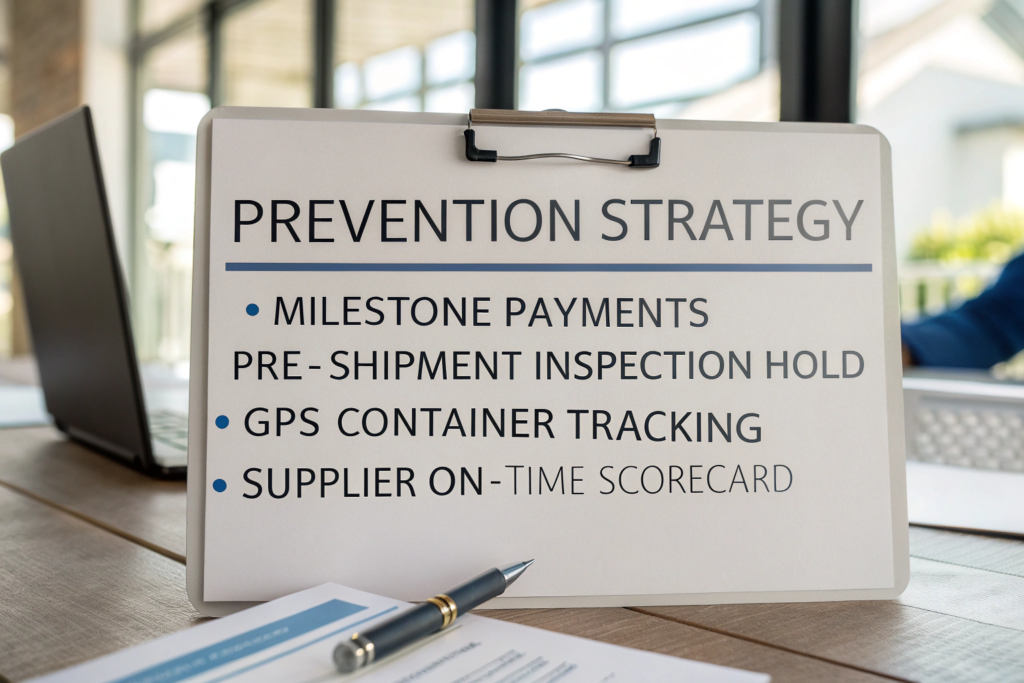
What are Safer Payment Term Structures?
Avoid terms where 100% payment is due before shipment. Instead, use:
- Split Payments: 30% deposit, 40% upon pre-shipment inspection approval, 30% against copy of Bill of Lading. This keeps 30% leverage until the goods are literally on the boat.
- Letter of Credit (L/C) with Inspection Clause: Payment is only released upon presentation of a clean Bill of Lading and an inspection certificate. The bank ensures the goods are shipped before releasing funds.
- Post-Shipment Credit: For trusted partners, consider 30% deposit, 70% Net 30 days from Bill of Lading date. This keeps the invoice open, giving you some financial leverage if the goods arrive damaged or extremely late.
Why is a Pre-Shipment Inspection (PSI) Hold Critical?
Make your final payment contingent on the successful completion and your approval of a Pre-Shipment Inspection. In your contract, state: "Final balance payment is due only after buyer receives and approves the PSI report confirming goods meet AQL 2.5 standard." This creates a contractual checkpoint. The factory cannot demand final payment until the goods are actually made, packed, and verified. This prevents you from paying for goods that are still stuck in quality rework. Our standard process at Shanghai Fumao is to share the PSI report and photos before issuing the final invoice, giving clients complete visibility and control.
Conclusion
A shipment delayed after full payment is a high-stress scenario that tests the strength of your supplier relationship and the robustness of your contracts. While the immediate focus must be on damage control—exploring recourse, negotiating compensation, and salvaging the sales opportunity—the long-term lesson is one of risk management. By restructuring payment terms to retain leverage, insisting on pre-shipment inspection holds, and meticulously defining delay penalties in your contracts, you can significantly reduce both the likelihood and impact of such disruptive events.
Ultimately, partnering with a manufacturer that values transparency and reliability is your best defense. Choose factories that communicate proactively about challenges and view on-time delivery as a core commitment, not an aspiration. At Shanghai Fumao, we structure agreements to keep our clients in the driver's seat until delivery is assured, because we believe a successful partnership is built on delivering promises, not excuses. To design a more secure sourcing framework for your next collection, contact our Business Director, Elaine, at elaine@fumaoclothing.com.