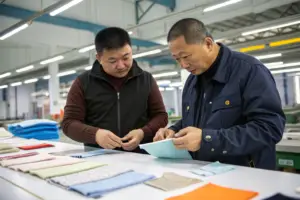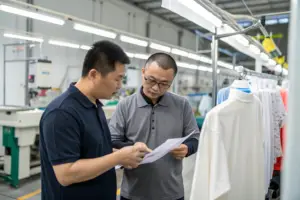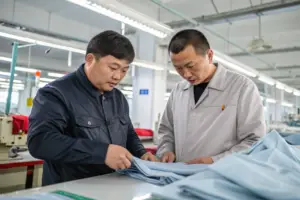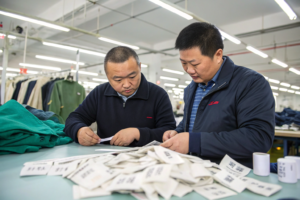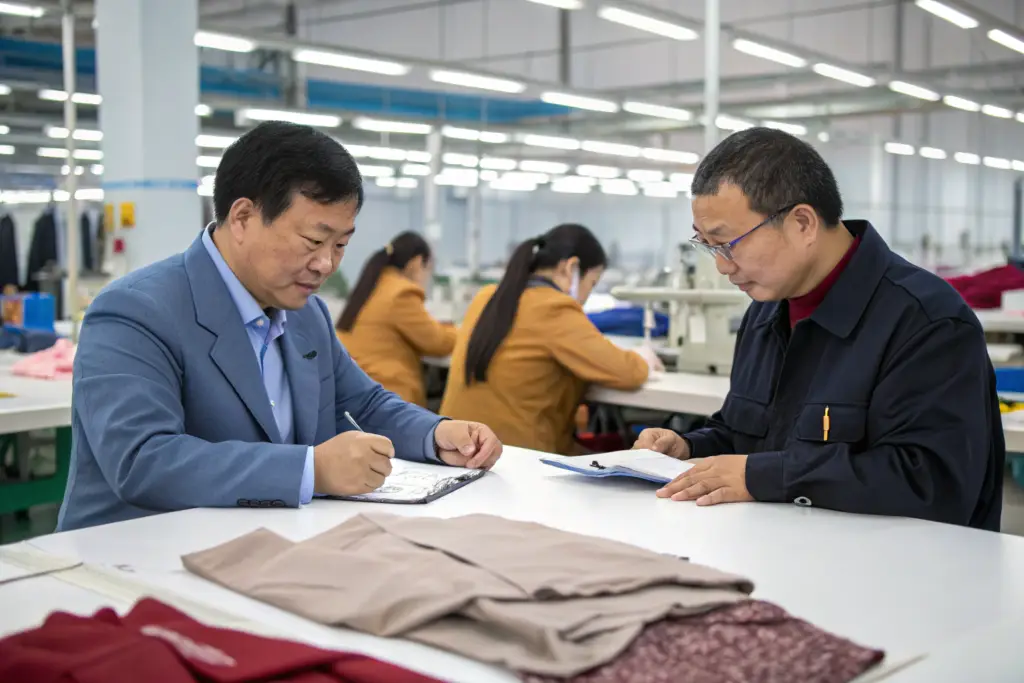
The success of your apparel brand often hinges on a relationship that spans oceans and cultures—the partnership with your Chinese garment manufacturer. Beyond contracts and price negotiations, the true competitive advantage lies in building deep, mutual trust. This trust transforms a transactional supplier into a strategic partner who is invested in your success, proactively solves problems, and guards your quality as if it were their own.
You build trust with your Chinese garment manufacturer through consistent, transparent communication, demonstrating reliability as a client, respecting their expertise, and fostering a long-term partnership mindset. Trust is earned by actions, not just words, over multiple order cycles.
This practical guide outlines the specific, actionable steps you can take—from your first inquiry to ongoing collaboration—to establish and nurture this critical business relationship.
Why is Consistent and Transparent Communication Fundamental?
In a long-distance partnership where you can't walk the factory floor daily, communication is your bridge. Inconsistent or opaque communication breeds uncertainty, errors, and frustration. For your manufacturer, clear and predictable communication from you is a primary indicator of your professionalism and reliability.
Consistent and transparent communication is fundamental because it aligns expectations, prevents costly errors, and shows respect for the factory's time and processes. It replaces assumption with clarity, which is the bedrock of trust in a cross-cultural business setting.
Effective communication is a skill that requires system and intentionality.
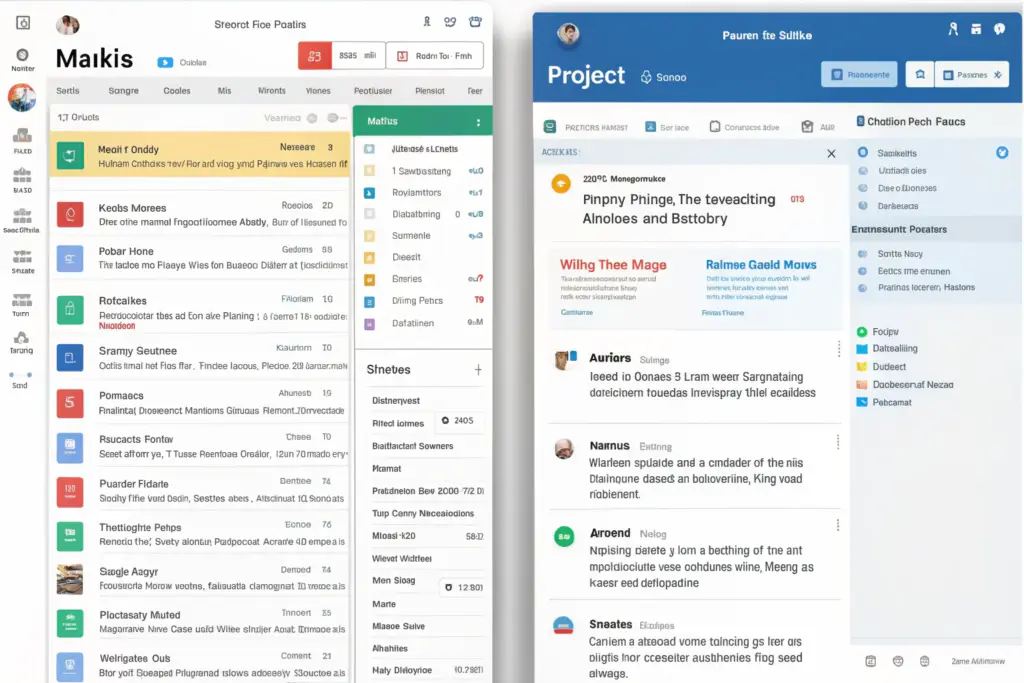
How to Structure Your Communication for Clarity?
Implement a professional communication protocol from day one:
- Use a Clear Subject Line: Always include your brand name, order number, and topic (e.g., "ABC Brand - PO#2023-101 - Fabric Swatch Approval").
- Consolidate Feedback: Never send scattered emails. Consolidate all comments on a sample or document into a single, organized email or a marked-up PDF. Use bullet points and reference photos with clear annotations.
- Designate a Single Point of Contact (SPOC): On your side, have one primary person communicate with the factory's merchandiser. Avoid having your designer, CEO, and logistics manager all sending separate, uncoordinated emails.
A client from Australia we work with at Shanghai Fumao uses a shared Google Sheet for each order. All feedback, approval statuses, and deadlines are logged there. This single source of truth has eliminated 90% of the "I didn't see that email" issues and built tremendous operational trust.
What Does "Transparent" Mean in Practice?
Transparency means sharing relevant information proactively:
- Share Your Challenges: If you're facing a sales delay that might affect your production schedule, inform the factory early. They may be able to adjust the line planning.
- Be Honest About Budget: Instead of relentlessly pushing for a lower price after quotes are set, be upfront about your target FOB and discuss value-engineering options together.
- Provide Context: Explain why a change is needed. "We need to change this seam because our customer feedback indicates discomfort" is more effective than just "change this."
This openness invites collaborative problem-solving and shows you view them as a partner, not just a vendor.
How Does Your Reliability as a Buyer Build Their Trust?
Trust is a two-way street. You expect the factory to deliver on time, to quality. The factory needs to trust that you will be a reliable, predictable, and fair client. Your actions in upholding your side of the agreements directly influence their willingness to go the extra mile for you.
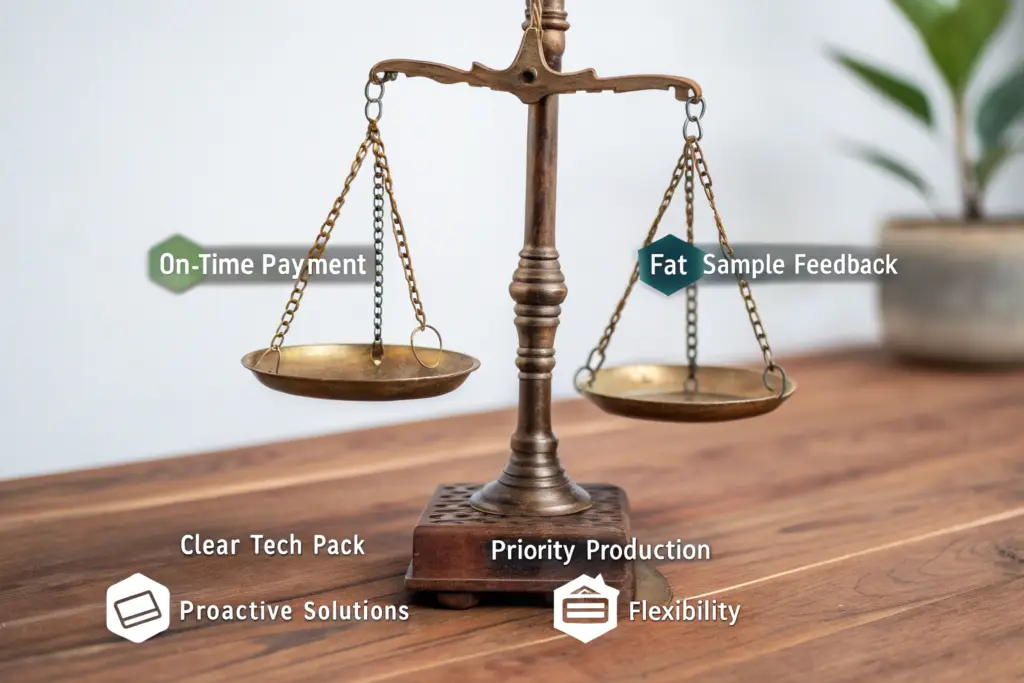
Your reliability as a buyer builds their trust by making you a lower-risk, more valuable partner. This is demonstrated through timely payments, adherence to agreed timelines (like sample feedback), and clear, decisive decision-making.
Reliability is proven in the mundane, repetitive actions of the business relationship.
Why Are On-Time Payments More Than Just Finance?
Paying deposits and balances according to the agreed payment terms is the most concrete signal of your integrity. When a factory receives payment on schedule, it secures their cash flow to pay for your materials and workers. It tells them you are organized and honorable. Delayed payments, in contrast, immediately create stress and signal disorganization or financial trouble. We remember every client who has ever paid an invoice early; they naturally receive the highest priority and goodwill from our team.
How Do Sticking to Timelines Show Respect?
The factory's production line is a meticulously planned machine. When you delay providing feedback on a proto sample or approving a lab dip by a week, you disrupt their entire schedule for multiple clients. Conversely, providing feedback within 1-2 days shows you respect their workflow and are as committed to the timeline as they are. This respect is reciprocated. A Canadian activewear brand we partner with is famous for their 24-hour sample feedback turnaround. Because of this, we always slot their projects into our fastest sampling queue.
How to Engage with Their Expertise, Not Just Dictate?
Many buyers approach manufacturers with a "here is my tech pack, execute it" mindset. This misses a huge opportunity. A good factory possesses deep technical design and production expertise that can enhance your product, save costs, and prevent failures. Engaging this expertise builds respect and trust.
You engage with their expertise by asking for their opinion, involving them early in the design process, and being open to their suggestions for manufacturability and value engineering. This collaborative approach signals that you value their knowledge.
Treat the factory's technical team as an extension of your own product development department.
What Questions Should You Ask During Development?
Move beyond issuing instructions to asking collaborative questions:
- "Based on your experience, is this seam durable enough for activewear?"
- "We're trying to hit a specific price point. Can you suggest alternative fabrics or construction methods that would maintain quality but reduce cost?"
- "This design element is important to us. What is the most efficient way to produce it without compromising the look?"
For a recent jacket order, a US brand insisted on a particular waterproof taping method that was very expensive and time-consuming. Our production manager suggested an alternative sealing method that achieved the same performance at 30% lower cost. The client was grateful, and that successful collaboration strengthened our partnership.
What is "Value Engineering" and How Does it Build Trust?
Value engineering is a collaborative process to optimize a product's cost, quality, and function. When a factory suggests a slightly different interlining that works better or a more efficient cutting pattern to reduce fabric waste, they are investing their expertise to help you. Welcoming these suggestions—and giving them credit when they work—proves you are partners, not adversaries. This builds immense goodwill and trust.
What Small Actions Demonstrate a Long-Term Partnership Mindset?
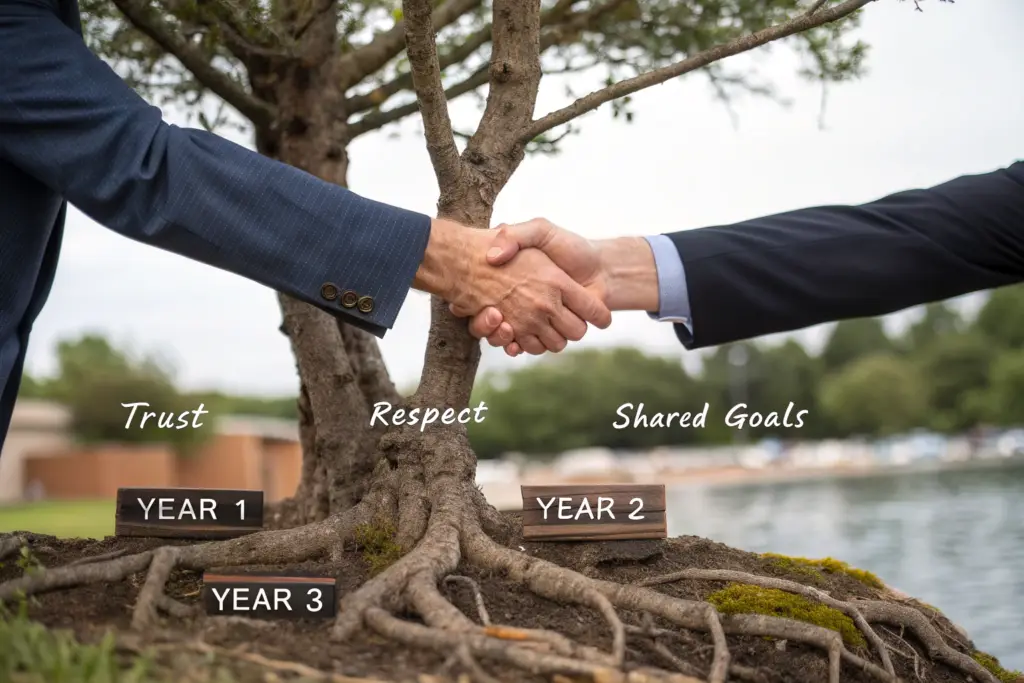
Trust is built for the long haul. Factories invest significantly in understanding a new client's standards and preferences. Demonstrating that you see this as a multi-year partnership, not a one-off transaction, encourages them to make reciprocal investments in your success.
Small actions that demonstrate a long-term mindset include providing forecasted order volumes, visiting the factory in person, offering testimonials, and dealing with issues as shared problems to solve rather than blame to assign.
These actions signal commitment beyond the current purchase order.
Why is Sharing Your Business Forecast Powerful?
Telling a factory, "We plan to order this style in 4 colors every quarter," or "This is a test order; if it sells, we forecast 10,000 units per year," changes their perspective entirely. It allows them to plan capacity, possibly reserve fabric at better rates, and assign your account to a senior merchandiser. This kind of transparency makes you a strategic account worth nurturing. At Shanghai Fumao, we allocate our best resources and offer preferential pricing to clients who share their growth roadmap with us.
How Does Handling Problems Constructively Strengthen Trust?
Mistakes and issues will occur—a delayed fabric shipment, a quality hiccup. The test of trust is how you handle it. The low-trust approach is to lead with anger and blame. The high-trust approach is to state the problem factually and focus on solutions: "We've found a stitching issue in the inspection. What is the root cause, and how can we fix this batch and prevent it in the next production?" This cooperative approach solves the immediate issue and improves the system for the future, making the partnership stronger. We once had a minor dye lot inconsistency. The client, instead of rejecting the whole order, worked with us to segregate the goods into separate selling batches. We covered the extra logistics cost, and they retained a great product. That incident cemented a 5-year partnership.
Conclusion
Building trust with your Chinese garment manufacturer is a strategic investment that pays dividends in quality, reliability, innovation, and peace of mind. It is built daily through professional communication, demonstrated reliability, respectful collaboration, and a commitment to a shared future. This process cannot be rushed, but it can be intentionally cultivated from the very first interaction.
In an industry where many relationships are transactional, becoming a trusted partner makes you a priority. You gain access to better capacity, more proactive service, and a genuine ally in navigating supply chain challenges. At Shanghai Fumao, we believe trust is our most valuable product. We are committed to earning it through every sample, every order, and every conversation. If you are looking to build a genuine partnership for your brand's manufacturing, contact our Business Director, Elaine, at elaine@fumaoclothing.com to start the conversation.