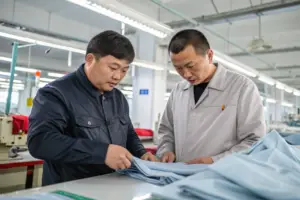
When sourcing apparel from Asia, European buyers often negotiate payment terms that reflect both a desire for security and the nuances of their specific market practices. Understanding these common terms—and the reasoning behind them—is crucial for Asian suppliers to build successful, long-term partnerships with European brands, distributors, and retailers.
The most common payment terms for European apparel buyers are a 30% deposit with a 70% balance before shipment (T/T), or open account terms like Net 30 or Net 60 days after the Bill of Lading date. Letters of Credit (L/C) are also used, particularly for large orders or with new suppliers from certain regions.
This guide breaks down the prevalence, rationale, and negotiation dynamics of these terms, providing a clear roadmap for suppliers to meet European buyer expectations while protecting their own financial interests.
Why Do European Buyers Prefer Open Account Terms?
Open account terms, where payment is made after delivery of goods (e.g., 30, 60, or 90 days post-invoice), are highly favored by established European buyers. This preference stems from their need to manage cash flow tightly, align payments with their own sales cycles, and leverage their strong creditworthiness and market position.
European buyers prefer open account terms because it optimizes their working capital, reduces their financial risk, and is a standard B2B practice within the EU. It allows them to receive, sell, and often collect revenue from the goods before paying their supplier, effectively using the supplier as a source of short-term financing.
This practice places the risk squarely on the supplier, making it a term of trust and reputation. Let's explore the commercial forces behind it.
How Does the European Retail Cycle Influence Terms?
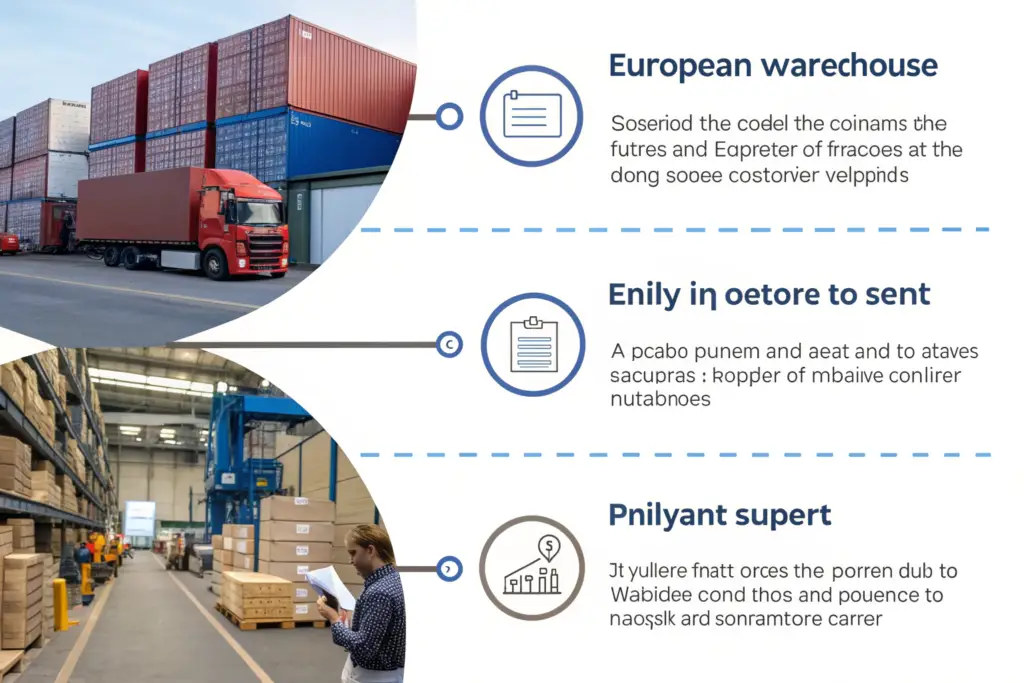
The European fashion calendar, with its distinct seasons and sale periods, dictates cash flow. A large retailer like H&M or Zara needs to stock its stores for the Spring/Summer season in Q1 but may not see peak cash inflow until Q2. Paying suppliers on Net 60 or Net 90 terms from the shipment date allows them to bridge this gap. For smaller brands, selling to wholesalers who themselves pay on credit terms (e.g., Net 30) makes open account from their manufacturer essential to avoid a cash crunch. A German outdoor brand we work with at Shanghai Fumao operates on a firm Net 45 schedule from the Bill of Lading date, which aligns perfectly with their wholesale collection cycles.
Is Open Account a Sign of Trust or Leverage?
It is both. For long-standing partners, it signifies deep trust and a mutually beneficial financial arrangement. For new buyers, especially large retailers, it is often a non-negotiable requirement that reflects their market leverage. They argue that their low credit risk and high order volume justify the supplier bearing the financing cost. Suppliers must assess this carefully: accepting open account from a blue-chip company like Inditex is low risk, whereas doing so for an unknown start-up can be perilous without credit insurance.
How Prevalent is the 30/70 T/T Structure?
Despite the preference for open account, the 30/70 Telegraphic Transfer (T/T) structure remains extremely common, especially with small to medium-sized European brands, first-time collaborations, and when sourcing from higher-risk regions or for custom goods.
The 30/70 T/T structure is prevalent as a balanced, secure baseline for business between European SMEs and Asian factories. It offers a compromise: the supplier gets an upfront commitment (the 30% deposit), while the buyer retains leverage by paying the bulk (70%) only before shipment.
This term is a workhorse of the industry because it is simple and addresses core concerns for both parties in a medium-trust scenario.

What Drives European SMEs to Use 30/70 Terms?
Small and Medium-sized Enterprises (SMEs) often lack the colossal credit lines of major retailers. They may not be able to demand open account, but they also need to protect their more limited capital. The 30/70 structure does this by ensuring they don't pay the majority until the goods are ready and have passed any agreed pre-shipment inspection. It's a familiar, bank-friendly term that doesn't require complex instruments like an L/C. Many French and Italian boutique brands we partner with start with 30/70 terms. After several successful orders, we may extend partial open account terms (e.g., 30% deposit, 70% Net 30) to support their growth, building a stronger partnership.
Are There Regional Variations Within Europe?
Yes. Buyers from Northern Europe (Germany, Benelux, Scandinavia) are known for strict adherence to agreed terms and are often very comfortable with bank transfers and L/Cs. They value precision and contractual fidelity. Buyers from Southern Europe (Italy, Spain) may place more emphasis on relationship building and can sometimes have longer payment cycles, even on agreed terms, due to their own domestic cash flow pressures. Understanding these subtle cultural nuances in payment behavior is key for suppliers when assessing risk and setting terms.
When Do European Buyers Typically Use Letters of Credit?
The use of Letters of Credit (L/C) by European buyers is specific and strategic. It is not the default but a tool deployed in situations where the risk profile of the transaction is elevated, or where corporate or banking policies mandate it.
European buyers typically use Letters of Credit for high-value first orders with new suppliers, when sourcing from countries perceived as higher risk, when their own corporate treasury policies require it, or when dealing with complex, customized products with high sunk costs.
An L/C represents a shared cost for shared security. Its use is a business decision, not a cultural preference.

Which Industries or Product Categories Often Involve L/Cs?
- Technical Outerwear and Performance Wear: High R&D, custom fabrics, and significant minimum order quantities (MOQs) make these orders risky. An L/C ensures the buyer's specs are met before payment.
- Luxury Goods: High unit value and strict quality requirements make L/Cs with stringent inspection certificate clauses common.
- Large Volume Basic Replenishment: For a retailer sourcing 100,000 units of a basic tee, an L/C might be used to guarantee delivery timing and quantity.
A UK-based premium workwear brand we worked with insisted on an L/C for their first order, which included custom fire-retardant (FR) fabric. The L/C required a certificate of compliance from SGS, which gave them bank-guaranteed quality assurance and gave us, as the supplier, payment security.
How Does EU Banking Regulation Influence L/C Use?
European banks, under strict Anti-Money Laundering (AML) and Know Your Customer (KYC) regulations, are sometimes cautious about large, direct transfers to certain jurisdictions. An L/C provides a transparent, document-tracked payment trail that satisfies regulatory scrutiny. Furthermore, some large European corporations have centralized treasuries that mandate L/Cs for all international procurements above a certain value to standardize risk management.
What Role Do Sourcing Agents Play in Payment Negotiations?
Many European buyers, especially smaller brands and retailers, utilize sourcing agents or buying offices located in Asia. These agents play a pivotal role in negotiating and sometimes guaranteeing payment terms, fundamentally altering the risk dynamics for the factory.
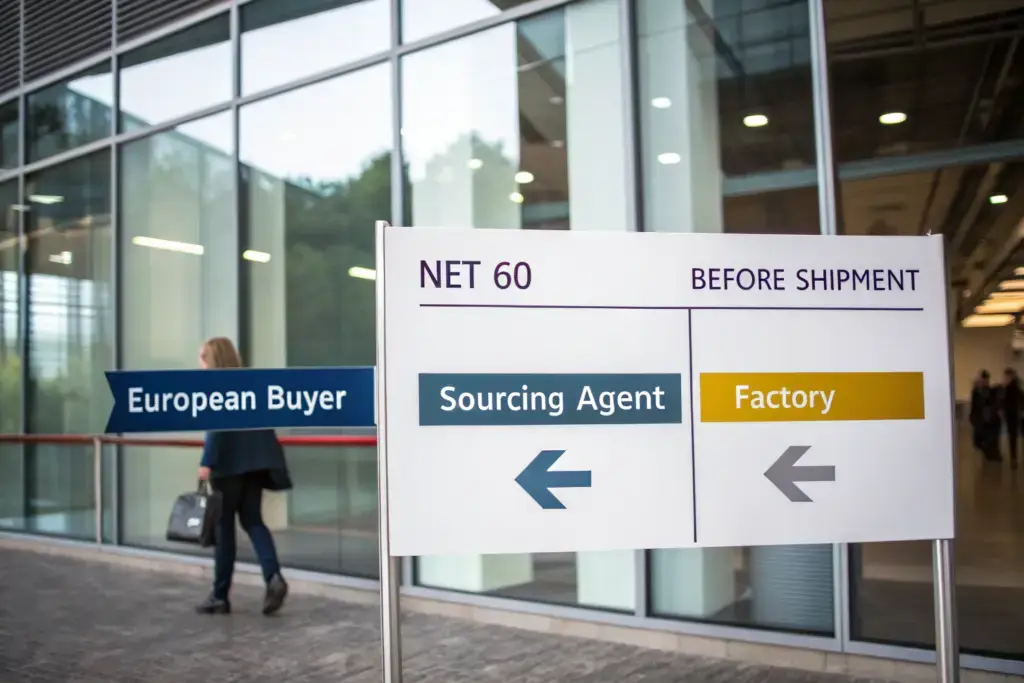
Sourcing agents often negotiate payment terms on behalf of the buyer and, in many cases, may take financial responsibility. Common structures include the agent paying the factory directly (often on shorter terms like 30/70) while extending open account credit to the European end-client.
Working with an agent can streamline the process but introduces another entity into the financial chain.
Does Using an Agent Make Payment More Secure for the Factory?
It can, but it depends on the agent's reputation and financial health. A reputable agent with a long history effectively acts as a credit intermediary. They assume the risk of the European buyer's payment delay or default. For the factory, this means dealing with a local entity (the agent) they can more easily vet and legally pursue if needed, and often receiving payment on reliable, shorter terms. We have several long-term partnerships with Dutch and Danish sourcing agents who pay us by T/T 7 days after receiving our shipping documents, while they collect from their client on Net 45 terms. This reliability is valuable.
How Should a Factory Vet a Sourcing Agent?
Treat the agent as you would any direct client. Request their business license, check their trade references with other factories, and research their online reputation. Clarify the contract: are you contracting with the agent or the end-buyer? Who is legally liable for payment? A clear proforma invoice (PI) naming the correct contracting party is essential. Be wary of agents who demand excessive commission or hidden fees, as this can pressure them to delay your payment to manage their own cash flow.
How Can Factories Negotiate Favorable Terms with European Clients?
Successfully negotiating payment terms with European buyers is not about insisting on one standard. It's about understanding their needs, demonstrating your own reliability, and using a mix of financial tools to create a win-win agreement.
Factories can negotiate favorable terms by building trust through performance, offering tiered terms based on order volume/history, utilizing trade credit insurance, and being flexible with structures that share risk, such as partial deposits combined with post-shipment credit.
Your strongest negotiating asset is your reputation as a reliable, high-quality producer.

What Concessions Can Build Towards Open Account?
Instead of jumping straight to full open account, propose progressive terms:
- Stage 1 (Orders 1-2): 30% deposit, 70% before shipment.
- Stage 3 (Orders 3+): 30% deposit, 70% Net 30 days from Bill of Lading.
This rewards loyalty and demonstrates your confidence in the partnership. Providing impeccable documentation, on-time delivery records, and transparent communication builds the trust needed for the buyer's finance department to approve open account terms.
Should You Consider Trade Credit Insurance?
For factories aiming to serve the European market extensively, trade credit insurance (e.g., from Euler Hermes, Atradius, or Coface) is a strategic tool. It insures you against the risk of non-payment by the buyer. Having this insurance in place allows you to confidently offer competitive open account terms (like Net 60) to qualified buyers, as your financial risk is mitigated. You can present this to buyers as a benefit: "We can offer you Net 60 terms supported by our credit insurance, facilitating your cash flow." This is a sophisticated approach that sets serious suppliers like Shanghai Fumao apart.
Conclusion
Navigating payment terms with European apparel buyers requires a blend of financial acumen, cultural understanding, and strategic relationship building. There is no single "European" standard, but a spectrum from secure 30/70 terms to leveraged open account and bank-secured L/Cs. The key for suppliers is to accurately assess the buyer's profile, creditworthiness, and the specific transaction's risks.
By demonstrating unwavering reliability, offering structured term progression, and utilizing financial tools like credit insurance, Asian factories can move beyond being price-based vendors to becoming valued financial partners to European brands. This evolution is critical for capturing and retaining profitable business in this sophisticated market. At Shanghai Fumao, our experience with diverse European clients allows us to tailor terms that build mutual confidence and enduring partnerships. To discuss terms that work for your next European order, contact our Business Director, Elaine, at elaine@fumaoclothing.com.