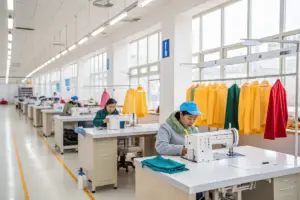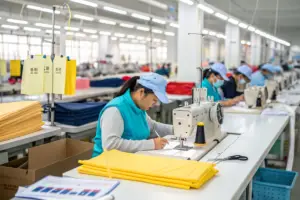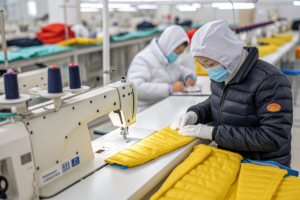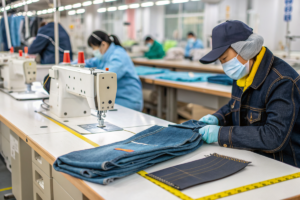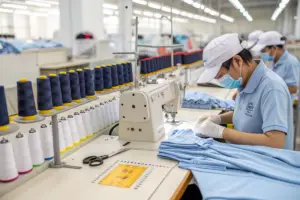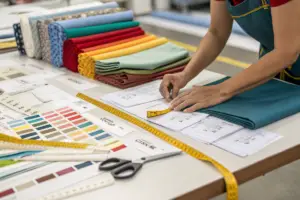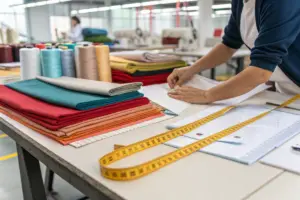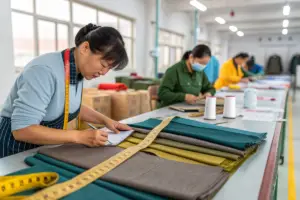
You find a garment that stops you in your tracks—a cut, a fabric, a detail you've never seen before. That feeling is the power of rarity. In a market saturated with fast-fashion clones, rarity is the ultimate differentiator for a brand. But what actually makes a clothing style rare? And more importantly, how does this rarity translate into its cost structure? Many brands assume rarity is just about a unique print, but true rarity is engineered through a combination of design, material, craftsmanship, and production philosophy, each layer adding complexity and cost.
A clothing style becomes rare through the intentional use of unique, low-yield materials; complex, artisanal construction techniques; limited production runs; and innovative design that defies easy replication. This rarity directly and significantly increases pricing due to elevated material costs, high-skill labor, lower production efficiency, and the inherent economic principle of limited supply versus demand. In essence, you are not just paying for a garment; you are paying for the creative and industrial effort required to make something that cannot be easily mass-produced.
At Shanghai Fumao, we collaborated with a avant-garde designer on a capsule collection. The signature piece was a jacket woven from a blend of silk and recycled copper fiber—a material we developed in-house with a specialist mill. The production run was 200 pieces globally. The fabric cost was 15x that of standard silk, the weaving was slow and required constant monitoring, and the sewing demanded operators trained to handle the delicate, conductive yarns. The resulting price was high, but it perfectly reflected the intersection of material innovation, craft, and extreme limitation. It sold out in days. This is rarity in action. Let's decode its components and cost implications.
What Are The Pillars of Creating a "Rare" Garment?
Rarity is not accidental; it is built. It stems from decisions that intentionally move away from the efficiencies of scale and standardization. These decisions create bottlenecks in the supply chain that few manufacturers are willing or able to navigate.
True rarity exists at the intersection of multiple constraints.
1. Material Uniqueness & Exclusivity
This is the most tangible pillar. A rare style often starts with a rare material.
- Custom-Developed Fabrics: Working with mills to create a proprietary weave, blend, or finish that does not exist on the open market. This involves R&D costs, high minimum order quantities (MOQs) for development, and long lead times.
- Low-Yield or Heritage Materials: Using fabrics like rare silks (e.g., Eri silk), specific wool from a defined flock, or deadstock vintage fabrics with finite yardage.
- Innovative or Technical Materials: Incorporating new biomaterials, phase-change fabrics, or materials with unique properties (like the copper-silk blend mentioned). Sourcing these is complex and expensive.
2. Construction Complexity & Artisan Techniques
How a garment is made can be its rarest feature.
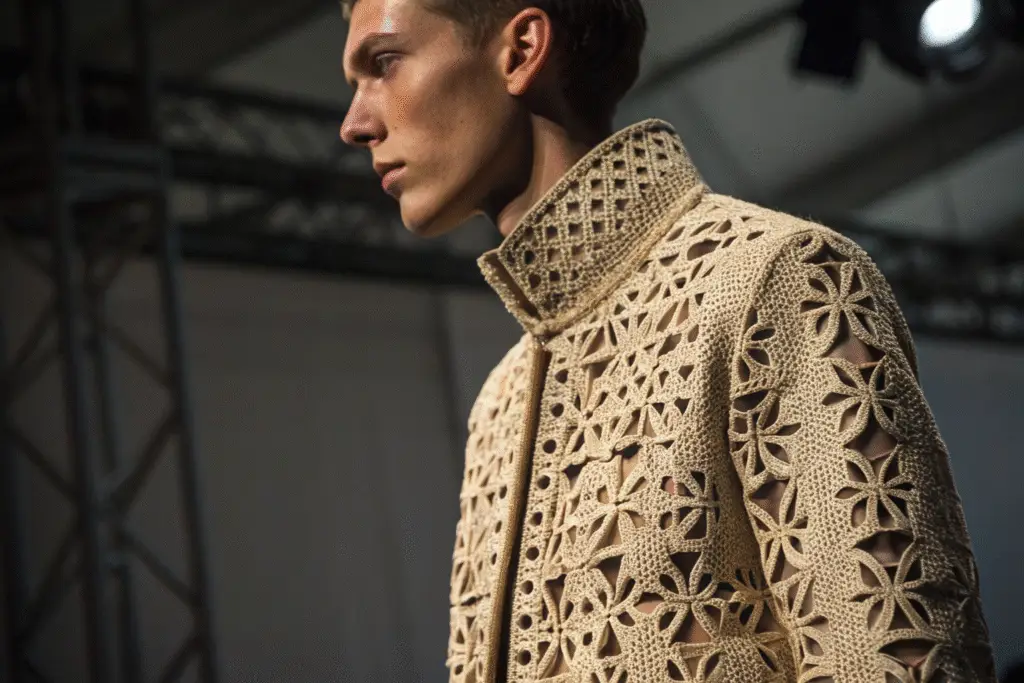
- Handwork-Intensive Processes: Hand-smocking, hand-pleating, hand-beading, or hand-embroidery. These processes are measured in hours per garment, not minutes, and rely on skilled artisans whose labor is costly.
- Traditional or Obsolete Techniques: Using tailoring methods like full canvas construction, hand-padded lapels, or lockstitch sewing that modern factories have abandoned for speed.
- Experimental Construction: Designs that challenge conventional pattern-making, such as zero-waste patterns, 3D draping, or seamless knitting with specific programmed designs.
3. Design Innovation & Intellectual Property
The design itself can be a barrier to replication.
- Protected Copyrights/Patents: A truly novel silhouette, closure system, or functional design can be patented, legally limiting its reproduction.
- Signature Architectural Shapes: Designs that require advanced understanding of drape and structure, making them difficult to copy accurately without the original pattern and know-how.
4. Production Philosophy: Limited Editions & Made-to-Order
Rarity is enforced by quantity.
- Capped Production Runs: Announcing and adhering to a strict, low number (e.g., 50, 100, 500 pieces).
- Made-to-Order Model: The garment is only cut and sewn after an order is placed, eliminating inventory but maximizing unit production time and cost.
How Does Material Rarity Directly Dictate Cost?
Material cost is the foundation of a garment's price. When materials are rare, this foundation is not just higher—it operates under a different economic logic. You are paying for scarcity, development, and handling, not just commodity pricing.
The cost equation shifts from bulk procurement to specialist commissioning.

The Cost Cascade of a Custom-Developed Fabric
Let's trace the journey of a hypothetical proprietary jacquard:
- Design & Development Fee: The mill charges for creating the jacquard design file and producing a strike-off (small sample). Cost: $500 - $2,000.
- High Minimum Order Quantity (MOQ): Because setting up the loom is complex, the mill requires a high minimum yardage. Let's say 1,000 yards minimum at $35/yard. Commitment: $35,000. For a style using 2 yards/garment, this forces a production run of at least 500 pieces just to use the fabric, or you eat the cost of unused yardage.
- Low Production Yield: Complex weaves are produced more slowly, with higher defect rates. The mill's cost is higher, passed to you.
- Special Handling & Waste: The fabric may be delicate, requiring hand-cutting or single-layer spreading, increasing labor and waste percentage in the garment factory.
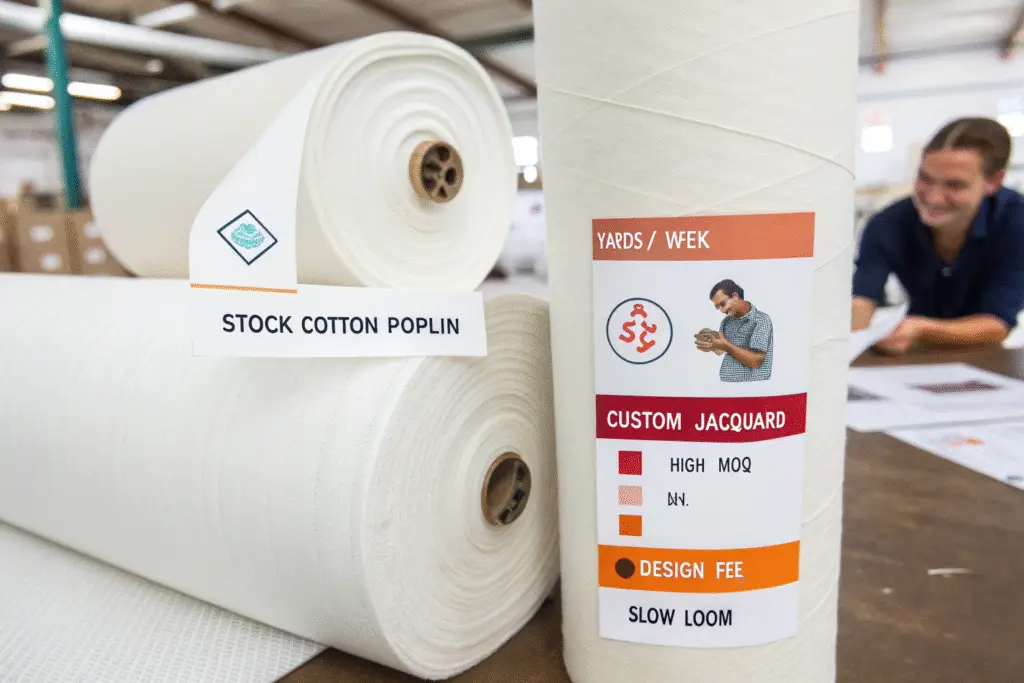
Compare this to a stock cotton poplin: No development fee, MOQ might be 100 yards at $3/yard, high yield, and fast, efficient cutting.
The "Deadstock" or Vintage Fabric Paradox
While sometimes sourced as a way to be unique, true vintage fabric in usable condition is itself rare.
- Sourcing Time & Cost: It requires hunting through specialized dealers or archives.
- Inconsistent Yardage: You may find only 30 yards of a print, limiting your style to a micro-run.
- Material Degradation Risk: Older fabrics may be brittle, requiring special handling and leading to higher waste during production.
In both cases, the material cost per garment is not just a line item; it's a driver of the entire production strategy and scale.
Why Does Construction Complexity Have an Exponential Cost Impact?
Labor is the second major cost driver, and its relationship with complexity is not linear but exponential. Adding a second intricate detail often costs more than the first because it compounds difficulty, requires more specialized operators, and increases the risk of error.
Rare styles often live in the realm of "makeability" challenges.
The High Cost of Handwork and Low Efficiency
Consider a dress with hand-guided embroidery versus machine embroidery:
- Machine Embroidery: Digitize once, hoop fabric, machine runs at 800 stitches/minute. Cost is mostly in setup and machine time.
- Hand Embroidery: An artisan follows a pattern, stitching by hand at maybe 80 stitches/minute, with consistent tension and alignment. The labor time is 10x longer, and the skill level (and wage) is much higher.
Table: Labor Multipliers for Complex Techniques
| Technique | Standard Method (Benchmark) | Rare/Complex Method | Approx. Labor Cost Multiplier |
|---|---|---|---|
| Hem Finishing | Machine blind stitch (2 min) | Hand-rolled hem (25 min) | 12.5x |
| Seam Finishing | Serged edge (1 min) | French seam (4 min) | 4x |
| Embellishment | Heat-transfer print (1 min) | Hand-applied beadwork (120+ min) | 120x+ |
| Closure | Standard zipper (3 min) | Hand-worked button loops (15 min) | 5x |
The "Inefficiency Tax" of Small, Complex Runs
Rare styles are often produced in small quantities. This means:
- No Assembly Line Efficiency: Operators cannot specialize in one task and achieve speed. They must be multi-skilled and move between tasks.
- High Setup Time Per Task: Changing thread colors, machine settings, and tools for a run of 50 pieces takes as long as for 500, but the setup cost is amortized over far fewer units.
- Increased Supervisor Attention: Complex, low-volume runs require more direct oversight from senior technicians, adding management cost.
At Shanghai Fumao, our "Couture Workshop" line is dedicated to such projects. It operates separately from our main efficiency-focused lines, with different cost structures tailored to high-complexity, low-volume work.
How Do Limited Quantities and Exclusivity Influence Pricing Strategy?
From an economic standpoint, rarity manipulates the core principle of supply and demand. By artificially restricting supply (limited edition) or inherently limiting it (complex production), a brand can command a higher price point that reflects exclusivity, not just cost-plus.
The price becomes part of the product's story and perceived value.

The Psychology of Scarcity and Perceived Value
Consumers assign higher value to items they perceive as scarce or exclusive. A high price reinforces this perception, creating a virtuous cycle: rarity justifies price, and price signals rarity. This is why a rare style's markup (the difference between cost and retail price) is often significantly higher than for a basic style. You are paying for the story, the exclusivity, and the brand equity built through limitation.
Cost Accounting for Micro-Runs: Amortizing Fixed Costs
The financial challenge of rare styles is the high fixed cost spread over few units.
- Fixed Costs: Pattern making, sample development, fabric R&D, and setup.
- Example: Total fixed costs for a rare jacket = $5,000.
- If you produce 20 pieces: Fixed cost per unit = $250.
- If you produce 500 pieces: Fixed cost per unit = $10.
To be viable, the rare jacket's retail price must cover not only the high variable costs (materials, labor) but also this enormous per-unit fixed cost burden.
The "Made-to-Order" Premium
This model eliminates inventory risk for the brand but maximizes production inefficiency. Each garment is a custom project. The pricing must reflect the total absence of economies of scale and the dedicated attention required for each order.
Thus, the final price of a rare garment is a composite of:
Price = (High Material Cost + High Labor Cost + High Fixed Cost/Unit) x (Brand Exclusivity Multiplier)
Creating rare pieces is a powerful branding tool, but it must be done strategically to be sustainable. The goal is to achieve maximum perceived rarity and value while intelligently managing the underlying cost structure.
This requires a close, transparent partnership with a manufacturer capable of this tier of work.

Making Informed Trade-Offs: The "Rarity Budget"
Decide where to invest your complexity budget for greatest impact.
- Question: Is the rarity in the material, the make, or the quantity? You may not be able to afford all three.
- Strategy 1: Rare Material, Simplified Make. Use a stunning custom fabric in a simple, efficient silhouette to let the material shine without exorbitant labor costs.
- Strategy 2: Common Material, Rare Make. Use a beautiful but accessible fabric (like organic cotton) with an incredible hand-embroidered detail. The labor becomes the rarity.
- Strategy 3: Design Innovation, Scalable Production. Create rarity through a patented, innovative cut or feature that can be produced efficiently once the pattern and process are perfected.
Collaborating with the Right Manufacturer
Not every factory can or wants to produce rare styles. You need a partner who:
- Has a Dedicated Unit: Like our Couture Workshop, with separate costing and scheduling.
- Offers Technical Design Partnership: Can help engineer your vision to be optimally rare—achieving the visual and tactile goal without unnecessary cost cul-de-sacs.
- Is Transparent About Cost Drivers: Will provide a detailed breakdown, so you understand exactly what you are paying for and can make informed decisions.
At Shanghai Fumao, we help brands walk this line. For one client, their "rare" element was a specific distressed wash on denim. We developed the wash process in-house and applied it to a well-designed but efficiently produced jean, creating a high-perceived-value product at a manageable cost point that supported their brand strategy.
Conclusion
A rare clothing style is a deliberate creation born from constraints—of material, technique, quantity, or design intellect. Its pricing is not arbitrary but a direct reflection of these constraints, resulting in elevated costs across materials, labor, and fixed overhead. The economic principle of scarcity further allows this cost to be translated into a premium price that signals exclusivity and value.
For a brand, mastering rarity is about making strategic choices: investing in the right kind of uniqueness that resonates with your audience and aligns with your production capabilities. It requires a deep, collaborative partnership with a manufacturer who understands both the poetry of design and the physics of cost.
If you are looking to create a collection that stands apart through intentional rarity and seeks a manufacturing partner with the expertise to navigate its complex cost landscape, we are equipped for that journey. At Shanghai Fumao, we blend artisan capability with technical precision to help you craft the rare styles that define your brand's legacy. Contact our Business Director Elaine to discuss how to build rarity into your next project: elaine@fumaoclothing.com.