Your men's wear collection's success hinges on great design, but its timeline lives or dies with fabric. I've seen too many brands finalize a perfect sample, only to watch their production schedule collapse because they underestimated fabric lead times. In men's wear—where fabric quality is non-negotiable and materials like premium cottons, technical wovens, and specialty wools are common—the sourcing phase isn't just a step; it's the foundation of your entire calendar.
Fabric sourcing is the single most critical and time-variable component of the men's wear production timeline, often dictating 50-70% of the total lead time. Delays in material procurement directly cascade, pushing back every subsequent stage: cutting, sewing, and final delivery. Unlike simpler garments, men's wear often requires specific weight, hand-feel, and performance characteristics that standard stock fabrics can't meet, making custom sourcing the rule rather than the exception.
A client came to us at Shanghai Fumao last fall with a line of men's performance chinos. Their previous factory had quoted an 8-week total timeline but hadn't accounted for the 6-week lead time of the custom, moisture-wicking twill they'd specified. The fabric arrived late, rushed production led to quality issues, and they missed their key retail delivery by a month. When they partnered with us for their next order, we started by mapping the fabric timeline first, building a realistic 14-week schedule that delivered flawlessly. Let's break down exactly how fabric dictates your pace.
Why Is Men's Wear Fabric Sourcing Uniquely Time-Consuming?
Men's wear fabrics are often held to higher standards of durability, consistency, and finish. A slight variation in color or hand-feel between batches is far less tolerable in a dress shirt or suit fabric than in a casual printed tee. This demand for precision requires sourcing from specialized mills, engaging in custom development, and rigorous testing—all of which add considerable time.
The journey from fiber to finished fabric is long and complex. For a premium men's wear item, you're not just buying fabric off a shelf; you're commissioning a specific product with exacting specifications.
What Are the Key Stages in the Fabric Sourcing Timeline?
The sourcing clock starts ticking the moment you finalize your fabric selection. Here’s what happens behind the scenes:
- Order Placement & Mill Scheduling (1-2 weeks): After you approve swatches and lab dips, your order is placed with the mill. They schedule the production of your yarn and fabric into their loom lines. If you're sourcing a popular fabric like Egyptian cotton poplin during peak season, you may be queued behind other orders.
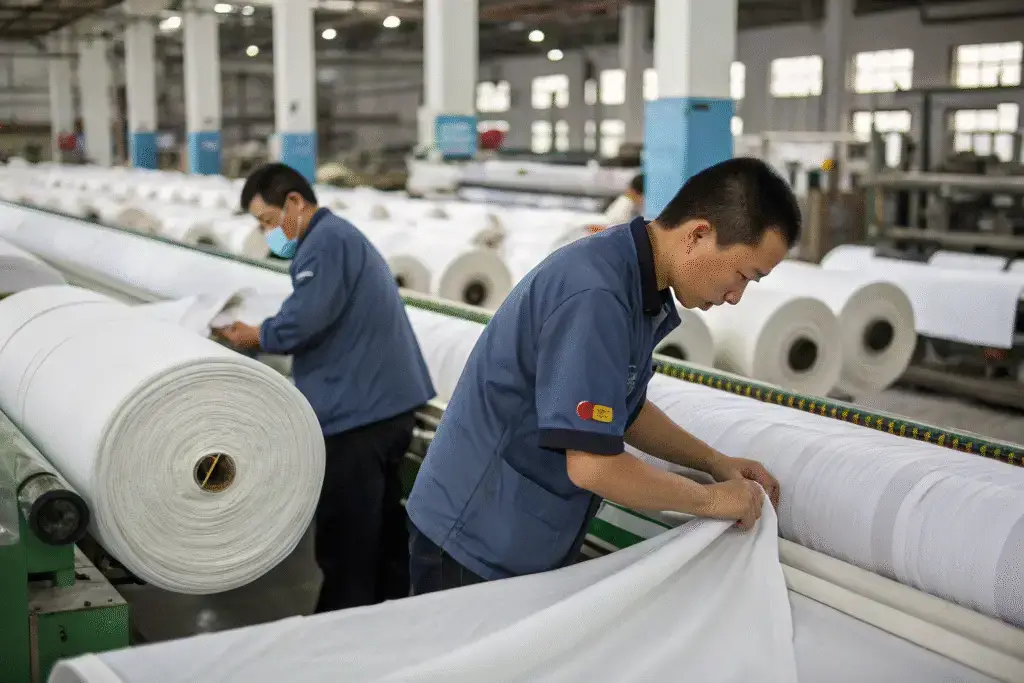
- Yarn Spinning & Fabric Weaving/Knitting (3-6 weeks): This is the core production phase at the mill. For woven shirting or suiting, this is particularly time-intensive. A complex twill or a high-thread-count fabric simply takes longer to produce on the loom.
- Dyeing & Finishing (2-4 weeks): This stage defines the fabric's final character. Men's wear often requires specific finishes: mercerization for cotton sheen, durable water repellent (DWR) treatments for outerwear, or enzyme washes for softness. Each process adds days.
- Quality Testing & Shipping to Garment Factory (1-2 weeks): Bulk fabric must pass strict fabric testing for colorfastness, shrinkage (per AATCC standards), and pilling before it leaves the mill. Then it ships, which can take 1 week domestically or 3-4 weeks if imported via sea.
How Do Different Men's Wear Fabrics Compare in Lead Time?
Not all fabrics are created equal. Your choice directly sets your minimum timeline baseline.
| Fabric Category | Common Use | Typical Sourcing Timeline | Key Time Drivers |
|---|---|---|---|
| Basic Cotton Jersey/Knit | T-shirts, Polos | 2-4 weeks | Often available from mill stock; shorter dyeing process. |
| Woven Shirting (Poplin, Twill, Oxford) | Dress Shirts, Casual Shirts | 6-10 weeks | High-thread-count, custom weaving, multiple finishing steps (mercerizing, softening). |
| Technical/Sportswear Fabrics | Performance Polos, Activewear | 5-8 weeks | Sourcing specialized synthetic yarns, functional treatments (moisture-wicking, UV protection). |
| Suiting & Trouser Fabrics (Wool/Wool Blends) | Blazers, Trousers | 8-14 weeks | Often imported (e.g., from Italy, Japan), complex weaving, and finishing like steaming and pressing. |
| Denim | Jeans, Jackets | 6-9 weeks | Custom dyeing (indigo, sulfur), heavy-weight weaving, and washing development. |
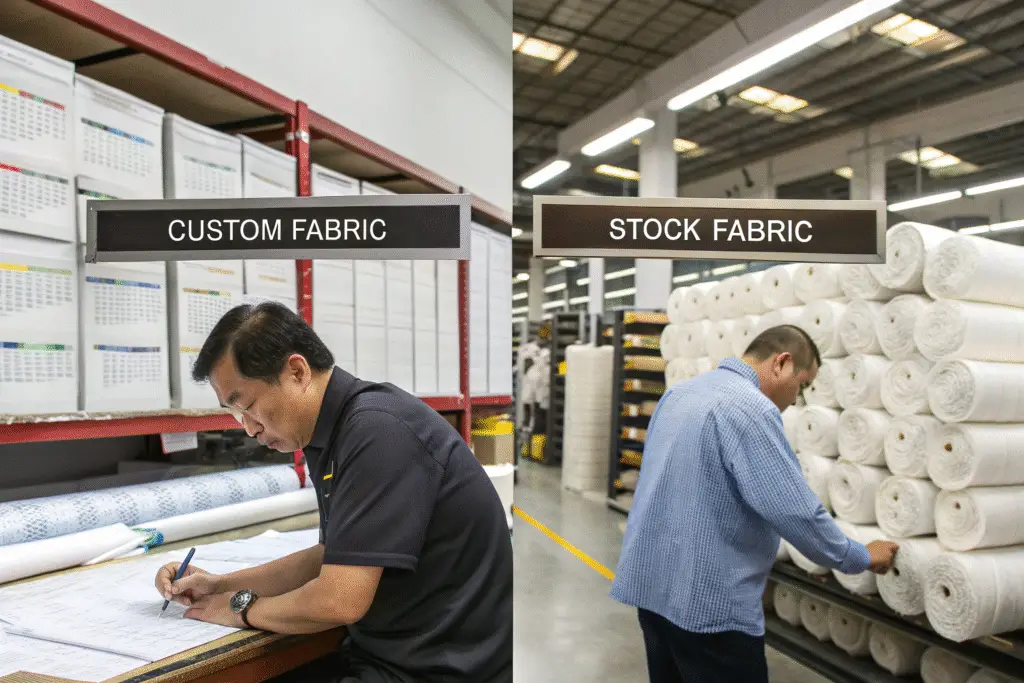
How Do "Custom Development" and "Stock Fabrics" Compare?
This is the fundamental choice that dictates your project's starting point. Using a mill's existing stock fabric can shave weeks off your timeline. Developing a custom fabric—a common requirement for brands wanting unique compositions, weaves, or finishes—is a project in itself.
The decision between stock and custom is a trade-off between speed, cost, and brand differentiation. For many established men's wear brands, a custom fabric is their signature.
What Does the Custom Fabric Development Process Entail?
If you need a specific 280gsm cotton-poly blend with a custom brush back finish, you're entering development territory. This process can add 4-8 weeks minimum before the bulk production timeline even begins:
- Brief & Initial Samples (2-3 weeks): You provide specifications to the mill. They produce initial handloom or small-loom samples.
- Sampling Rounds & Adjustments (2-4 weeks): You review, request changes (weight, hand, color), and go through 1-3 rounds of revisions.
- Bulk Approval & Production Scheduling (1 week): Once the development sample is approved, the mill schedules bulk production, entering the standard 6-10 week lead time mentioned earlier.
When Do Stock Fabrics Make Strategic Sense?
Stock fabrics are ideal for:
- Basic Program Styles: Core items like standard oxford shirts or basic chinos where unique fabric isn't a selling point.
- Test Runs or Capsule Collections: When you need to get to market quickly to test a new style's silhouette.
- Fill-in Production: To replenish best-selling styles without the lead time of a full custom run.
However, availability in the required color and quantity is never guaranteed. A professional partner like Shanghai Fumao maintains relationships with mills to reserve stock and provide accurate, real-time availability.
What Are the Hidden Timeline Risks in Fabric Sourcing?
Even with a perfect plan, risks abound. A seasoned manufacturer doesn't just quote a lead time; they identify potential bottlenecks and have mitigation strategies. These hidden risks are what turn a planned 8-week fabric lead time into a 12-week delay.
Proactive risk management in fabric sourcing is what separates reliable partners from order-takers. It involves anticipating problems before they occur.
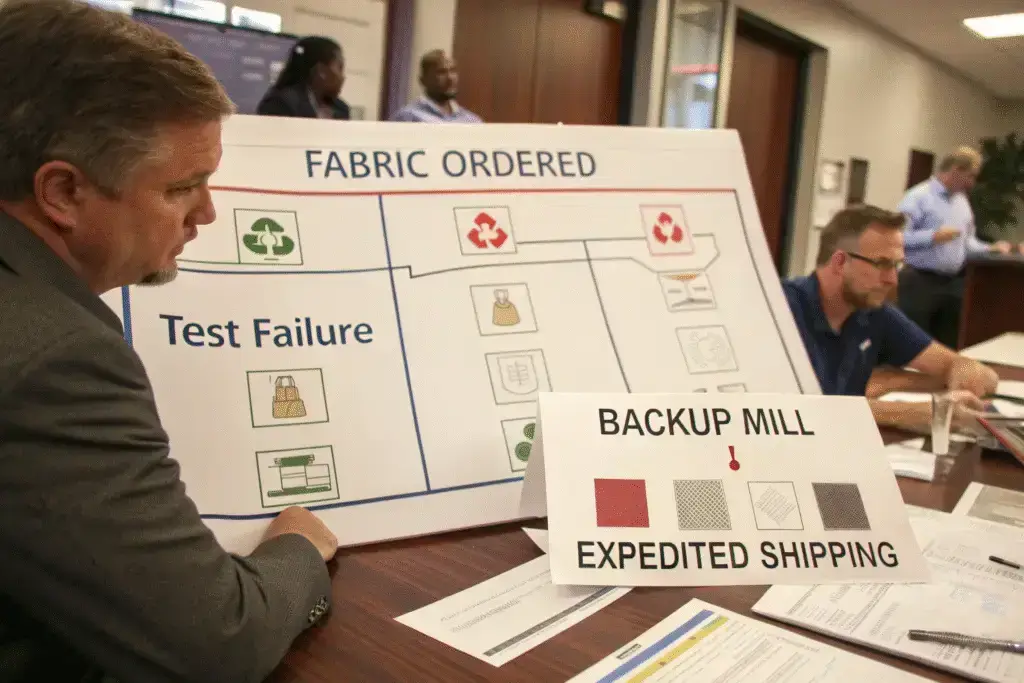
How Can Quality Rejections at the Mill or Factory Cause Delays?
Fabric quality is inspected at two critical points:
- At the Mill (Pre-shipment): Reputable mills test and hold fabric until it passes key criteria. But sometimes, issues are only caught upon arrival at the garment factory.
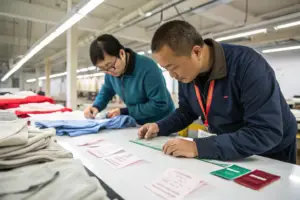
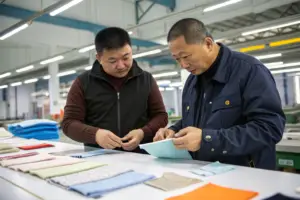
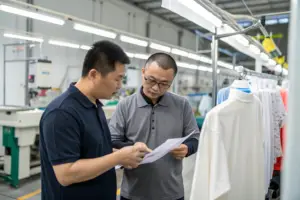
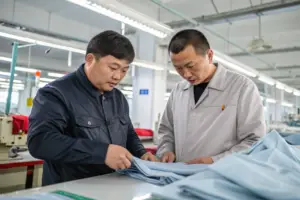
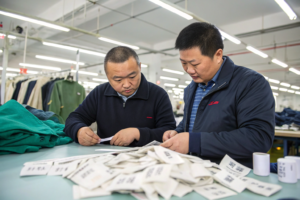
- At the Garment Factory (Arrival Inspection): This is your last line of defense. We perform rigorous fabric inspection on every roll. Last quarter, 20% of a shipment of linen-cotton blend for a client's summer shirts failed our shrinkage test. We rejected it immediately. The result? A 3-week delay while the mill reproduced the lot. While painful, this prevented a catastrophic quality failure in the finished garments.
What External Factors Can Disrupt Fabric Supply Chains?
- Raw Material Shortages: Fluctuations in the global cotton market or shortages of specialty synthetic fibers can delay yarn production.
- Mill Overcapacity: During peak production seasons (e.g., pre-holiday), mills are overloaded. Your order may be deprioritized.
- Logistics & Customs: Shipping delays, port congestion, or customs documentation hiccups can add weeks. For imported European wools, this is a constant consideration.
- Your Approval Speed: Every day you take to approve a lab dip or bulk swatch is a day added to the critical path. Establishing a fast, decisive approval protocol is essential.
Why Does a Full-Package Manufacturer Mitigate These Risks?
When you work with a full-package manufacturer like Shanghai Fumao, you transfer these risks to us. We own the supplier relationships. We conduct the testing. We manage the logistics and hold the liability for fabric quality. This integrated control is the most effective way to de-risk your timeline, even if the base lead time appears longer than a factory that just sews whatever fabric you send them.
How Can You Plan a Realistic Men's Wear Production Calendar?
The key is to work backward from your must-arrive date and build the timeline around the fabric, not the other way around. This "fabric-first" planning mentality is the hallmark of professional men's wear production.
Your production calendar should be a living document that starts with the fabric's journey. This approach brings clarity and sets achievable expectations for sales, marketing, and finance teams.
What Is the "Fabric-First" Backward Planning Method?
- Determine Final Delivery Date: When do the goods need to be in your US warehouse? (e.g., October 1st).
- Subtract Logistics Time: Subtract 4-5 weeks for ocean shipping and customs clearance (DDP). Now you have the "Latest Ship Date" from factory (e.g., August 25th).
- Subtract Garment Production Time: Subtract 3-4 weeks for cutting, sewing, finishing, and inspection. Now you have the "Fabric Must Be In-House" date (e.g., August 1st).
- Subtract Fabric Sourcing Time: This is the big one. For a custom shirting fabric with a 9-week lead time, you need to place the bulk fabric order by (e.g., June 1st).
- Subtract Development Time: If custom fabric is needed, add 4-6 weeks for development before the bulk order is placed. This means you need to start development with the mill by (e.g., Mid-April).
This simple exercise reveals that to deliver by October 1st, design and fabric development needed to start in April—a full 6 months prior.
What Questions Must You Ask Your Manufacturer About Fabric?
To build this plan, you need transparent answers from your supplier:
- "Based on my fabric selections, what is the realistic fabric lead time for each one?"
- "Do you have existing stock of similar fabrics, or is this 100% custom?"
- "What is your process for fabric testing and quality approval? What happens if the fabric fails?"
- "Can you provide a week-by-week schedule from fabric order placement to fabric arrival at your factory?"
At Shanghai Fumao, we provide this detailed scheduling upfront. We believe an informed client is a successful client, and we build our partnerships on this transparency.
Conclusion
For men's wear production, fabric sourcing isn't just an influence on the timeline—it is the timeline. The quest for quality, durability, and distinctiveness naturally leads to longer, more complex material journeys. Ignoring this reality is the fastest way to miss a selling season, compromise on quality, or both.
Embracing a "fabric-first" mentality—planning backward from your delivery date and allocating the majority of your timeline to material procurement and validation—is the only professional approach. It transforms sourcing from a stressful variable into a managed, strategic phase of your product creation.
If you are looking for a manufacturing partner who understands the pivotal role of fabric and has the systems to manage it, let's connect. At Shanghai Fumao, we specialize in navigating the complexities of men's wear fabric sourcing. We provide clear, honest timelines and the expert execution to meet them, ensuring your collection arrives on time and meets your exacting standards. Contact our Business Director Elaine to start planning your next men's wear line with clarity and confidence: elaine@fumaoclothing.com.