You have the perfect design. Your marketing is ready. But your best-selling season arrives, and your new collection is stuck in a port or, worse, still on a factory floor. It's a brand owner's nightmare. For many, the problem isn't a lack of great ideas—it's a sourcing strategy built on reactive decisions and false economies. A strategy that saves pennies on cost per unit but costs thousands in missed opportunity.
A flawed sourcing strategy that prioritizes only upfront cost over total timeline control is the primary cause of missed selling seasons. True strategic sourcing integrates lead time management, proactive risk mitigation, and partner reliability into every decision, ensuring your products hit the market at the peak of demand. Many brands focus solely on finding the lowest price, not the most predictable and collaborative partner, which leads to delays that no marketing budget can fix.
In my years leading Shanghai Fumao, I've seen this story play out repeatedly. Last year, a promising swimwear brand came to us in a panic. Their previous supplier, chosen for a 5% lower unit cost, had delayed their summer line by eight weeks. They missed the crucial pre-summer launch window, and 40% of their inventory went to clearance. The "savings" evaporated, replaced by massive losses. Their strategy was transactional, not strategic. Let's dissect how a strategic approach keeps your calendar—and cash flow—intact.
Are You Confusing "Lowest Price" with "Lowest Risk"?
This is the most common and costly error. A low price per garment on a purchase order is meaningless if the delivery is late or the quality is poor. True cost includes the financial impact of not having your product to sell when customers are ready to buy. Sourcing based solely on the lowest bid often means partnering with factories that cut corners on planning, communication, and capacity buffers, directly increasing your risk of delay.
Choosing a supplier based only on unit price is a high-risk gamble with your seasonal calendar. The factories offering the deepest discounts are often at or over capacity, may use substandard materials to cut costs, and lack robust systems to handle complications. This introduces multiple points of failure that can derail your timeline.

How Do Factory Capacity and Realistic Planning Affect Your Deadline?
When you request a quote, do you also ask for a detailed production schedule? A factory's available capacity is the single greatest determinant of your on-time delivery. A factory operating at 120% capacity will inevitably prioritize larger or more established clients when conflicts arise. We implement a transparent capacity planning system. For example, before accepting an order for a fall jacket collection, we map it against our existing commitments for our 5 lines and provide a day-by-day timeline from fabric sourcing to shipment. A client last spring wanted to add a large, complex order with a tight deadline. Our system showed a conflict, so we proposed a phased delivery—sending their core styles first to meet their launch date and the second wave two weeks later. This honesty saved their season, whereas a factory hungry for the order might have simply said "yes" and failed later.
Can You Verify Your Supplier's Track Record for On-Time Delivery?
A supplier's self-reported "95% on-time rate" is easy to claim. Verification is key. Before committing, ask for specific, verifiable references. Better yet, ask about their contingency plans. What happens if a key fabric is delayed? What if there's a production issue? In 2022, a brand asked us this directly. We didn't just give a percentage; we walked them through a real case: when a lockdown threatened a delay, we had already secured fabric early and cross-trained staff to shift production lines, ultimately delivering the order three days ahead of schedule. This level of operational detail matters more than any brochure promise. Look for evidence of supply chain resilience and proactive problem-solving, not just a low price.
Is Your Communication Style Setting You Up for Delays?
Inefficient communication is a silent timeline killer. The cycle of slow email responses, unclear instructions, and lack of visual updates adds days or weeks of invisible delay at every approval stage. A sourcing strategy must include a communication protocol. If you're constantly chasing your supplier for updates or clarifying misunderstandings, your season is already in jeopardy.
Passive, reactive communication cedes control of your timeline. Waiting for weekly email updates or only engaging when there's a problem means you discover issues too late to fix them without impacting the ship date. Proactive, structured dialogue is a non-negotiable part of modern sourcing.
Why is a Dedicated Point of Contact Non-Negotiable?
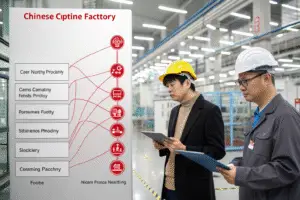
If you're communicating with a generic sales email or a rotating cast of agents, information will be lost. You need a single, empowered project manager on the supplier side who owns your order's success. At Shanghai Fumao, each client has a dedicated manager. This person provides scheduled weekly video reports from the factory floor, showing progress, not just typing "production is on track." When a potential thread-color mismatch was spotted in one of our reports, the client approved a correction within hours—a fix that, if found at final inspection, would have caused a three-week delay. This direct line prevents the "black box" effect and keeps you in the driver's seat.
Are You Using Visual Tools to Accelerate Approvals?
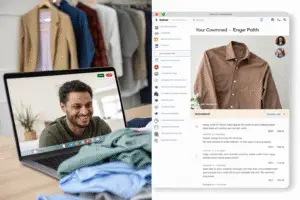
Relying on text to describe technical details is a recipe for delay. A picture—or better, a video—is worth a thousand emails and saves a week of back-and-forth. We mandate the use of visual tools for all critical approvals:
- Fabric & Trim: Photos of lab dips and trim submits under multiple light sources.
- Fits & Samples: Video clips of a model wearing the sample, showing movement and drape, not just flat photos.
- Production: Time-stamped photos from the sewing lines during in-process checks.
This creates an unambiguous digital paper trail and allows for instant decision-making. Integrating digital product lifecycle management (PLM) principles, even in simple ways, compresses your approval cycles dramatically.
Have You Mastered the Logistics and Compliance Timeline?
Your goods are made perfectly and on time at the factory. But the journey to your warehouse is a minefield of potential delays—customs holds, port congestion, documentation errors. A sourcing strategy that ends at "goods finished" ignores up to 50% of the total timeline risk. You must own or partner with someone who owns the entire door-to-door process.
Logistics is not a commodity service; it's a critical phase of production. Incorrect paperwork, choosing the wrong shipping term, or misunderstanding customs regulations can strand your shipment for weeks, making perfect factory timing irrelevant.
What is the Safest Shipping Term for Seasonal Goods?
For time-sensitive seasonal goods, DDP (Delivered Duty Paid) is often the most strategic choice. With DDP, your supplier (like us) is responsible for the entire journey, including destination customs clearance and duties. This eliminates surprises. We had a client switching from FOB to our DDP service. Previously, they were stunned by a port strike and a complex Customs and Border Protection (CBP) hold they didn't understand, causing a 4-week delay. With DDP, we manage all those risks and variables with our logistics partners, providing a single, predictable landed cost and delivery date. The cost is often marginally higher than FOB, but the value in timeline certainty is immense for hitting a selling season.
Are Your Products' Certifications in Order for Smooth Customs?
Missing or incorrect documentation is a guaranteed delay. Every market has specific requirements. For the U.S., this includes CPSIA compliance for children's wear, FTC care labels, and possibly California Prop 65 warnings. We once helped a client audit a shipment stalled in customs; their previous supplier had provided a generic certificate that didn't cover the specific textile flammability standard required. The shipment was rejected. We conduct a compliance checklist for every order and work with accredited labs to ensure all testing and documentation is precise and complete before shipment. This proactive step is a cornerstone of a reliable sourcing strategy.
Are You Building Partnerships or Just Placing Orders?
This is the core question. A transactional relationship is focused on the single order—price, delivery, done. A strategic partnership is focused on your brand's long-term growth and seasonal success. Partners invest in understanding your business, anticipate your needs, and solve problems with you, not just for you. This alignment is your ultimate defense against missed seasons.
A true manufacturing partner acts as an extension of your team, sharing the goal of your market success. They provide insights, warn of potential pitfalls you might not see, and have the systems in place to protect your timeline because their reputation depends on your success.
How Can a Partner Help with Demand Forecasting and Planning?
A good partner doesn't just wait for your order; they help you plan it. Based on production lead times for different product categories (e.g., knitwear vs. technical outerwear), we help clients build backward from their launch date to determine the latest possible order date. We might suggest, "For your holiday sweaters, to ensure October 1st delivery, we need to finalize designs by May 1st." This collaborative planning, based on real production data, builds a realistic seasonal calendar that you can bank on.
What Happens When Something Goes Wrong?
The test of a partnership is not when things go smoothly, but when they go wrong. A transactional supplier will point to the contract's force majeure clause. A partner finds a solution. Two seasons ago, a key yarn supplier for a client's knit order failed on a delivery. A transactional approach would have meant a 5-week delay. As their partner, we tapped our alternate supplier network, absorbed a small cost increase to air freight the substitute yarn, and reorganized production lines. We delivered the order on the original date, protecting their season. That's the difference between a vendor and a partner like Shanghai Fumao.
Conclusion
A sourcing strategy focused only on unit cost is a strategy built to miss selling seasons. It ignores the interconnected web of capacity, communication, logistics, and partnership that truly determines when your products reach the market. To protect your seasonal launches, you must shift from a price-centric to a timeline-centric and partnership-centric model.
This means evaluating suppliers on their systems and reliability, not just their quotes. It means investing in clear communication and integrated logistics. Most importantly, it means building a relationship with a manufacturer who sees your success as their success.
If you are tired of the stress of unpredictable delays and are ready to build a sourcing strategy that defends your selling seasons, let's talk. At Shanghai Fumao, we are more than a factory; we are a strategic partner dedicated to becoming your reliable manufacturing extension. We provide the transparency, systems, and commitment needed to ensure your collections launch on time, every time. Contact our Business Director Elaine to start planning your next season with confidence: elaine@fumaoclothing.com.