You’ve budgeted carefully for your custom apparel production, but unexpected charges keep appearing, threatening your profitability and timeline. Surprise costs don’t have to be an inevitable part of manufacturing—with the right strategies, you can achieve predictable pricing and protect your budget.
Surprise costs in custom apparel production typically add 15-30% to initial estimates and stem from unclear specifications, unplanned changes, and unanticipated complexities. Brands that implement systematic cost-control measures experience 80% fewer budget overruns and maintain healthier manufacturer relationships. The key lies in proactive planning and transparent communication throughout the production process.
This comprehensive guide reveals practical strategies to identify, prevent, and manage hidden costs before they impact your bottom line.
What Are The Most Common Sources Of Surprise Costs?
Understanding where unexpected charges typically originate is the first step toward preventing them. Most surprise costs cluster around specific phases of production where communication gaps or specification ambiguities create financial uncertainties.
By recognizing these common risk areas, you can implement targeted safeguards at each production stage.
How do material specifications lead to unexpected expenses?
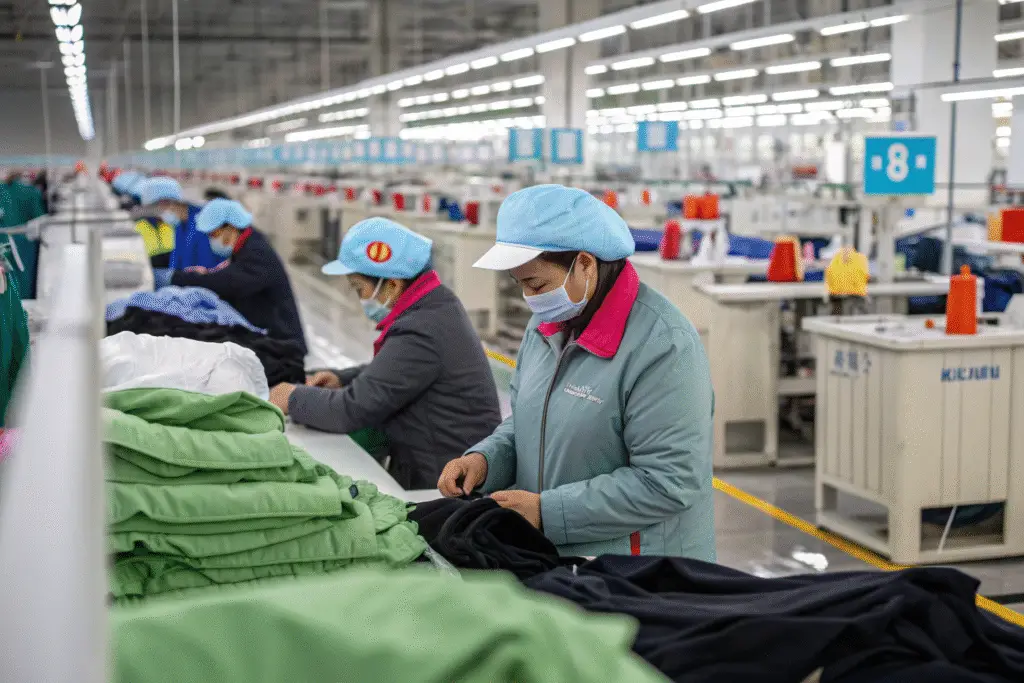
Material-related surprises often emerge from:
- Fabric yield miscalculations due to pattern complexity or shrinkage
- Trim and component substitutions when specified items are unavailable
- Minimum order quantity premiums for small material purchases
- Quality testing requirements not included in initial estimates
A sportswear brand recently faced a 22% cost increase when their specified fabric yielded 15% less than anticipated due to complex pattern pieces. The resulting fabric consumption miscalculation cost them $8,400 in additional material purchases. At Shanghai Fumao, we prevent such issues through detailed pre-production analysis.
Where do production process surprises typically occur?
Manufacturing complexities create unexpected costs through:
- Specialized labor requirements for complex construction techniques
- Additional quality control steps needed for specific garment types
- Equipment changeover costs for small batch production
- Sample revision charges beyond agreed quantities
When a luxury brand insisted on hand-finished details they hadn’t previously discussed, the additional 45 minutes per garment added $18.75 to their production cost. Establishing clear production process expectations during costing prevents such surprises.
How Can Detailed Technical Packages Prevent Cost Surprises?
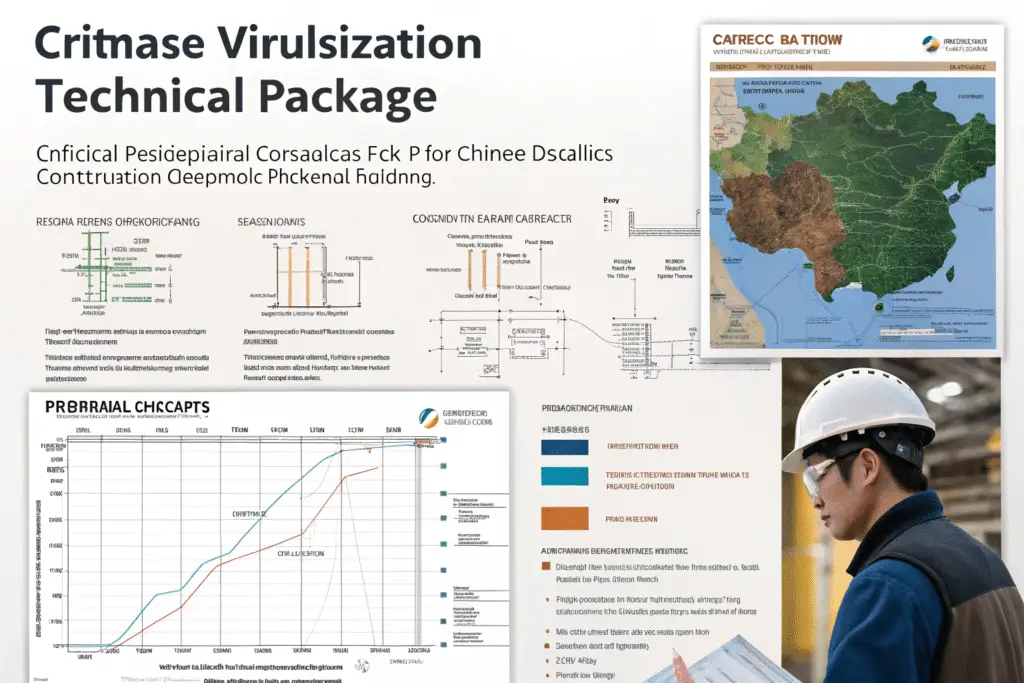
Your technical package serves as the single source of truth for your production run. An ambiguous or incomplete tech pack creates interpretation gaps that inevitably lead to cost increases as factories make assumptions or require clarifications.
Investing time in creating comprehensive technical documentation pays dividends throughout production by eliminating guesswork and establishing clear expectations.
What specific elements should your tech pack include?
Comprehensive tech packs must specify:
- Detailed construction callouts with stitch types and seam finishes
- Precise measurement specifications with tolerance ranges
- Exact material specifications including composition, weight, and source
- Trim placement details with exact positioning measurements
- Quality standards reference including AQL requirements
A denim brand reduced their surprise costs by 65% after implementing a standardized tech pack template that included 42 specific data points for each style. This comprehensive technical documentation eliminated interpretation errors and change requests.
How do visual specifications prevent misunderstandings?
Visual references provide clarity that text alone cannot:
- Technical flats showing every seam, stitch, and construction detail
- Photographic references for finishes, draping, and overall appearance
- Fabric handfeel samples physically attached to documentation
- Color standards with Pantone references and physical lab dips
When a client provided video references showing how their garment should move and drape, we identified potential construction issues during sampling that would have added $6.50 per unit if discovered during bulk production. Visual specification standards prevent costly mid-production corrections.
What Role Does Transparent Cost Breakdown Play?
Understanding exactly what’s included in your production estimate allows you to identify potential gaps before they become surprise charges. Vague or consolidated pricing often hides components that may be interpreted differently by manufacturers and brands.
Requesting and analyzing detailed cost breakdowns creates financial transparency and aligns expectations.
What cost components should be individually specified?
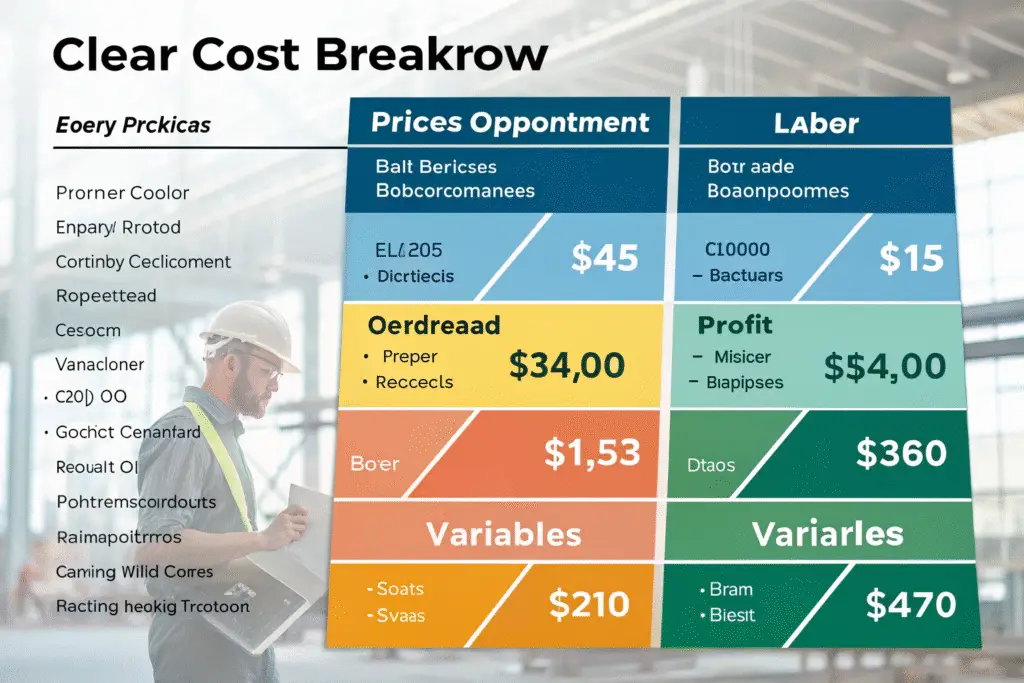
Transparent breakdowns should separate:
- Material costs by category (fabric, trims, packaging)
- Labor costs by operation (cutting, sewing, finishing)
- Overhead allocation with clear calculation methodology
- Profit margin stated as a separate line item
- Contingency amounts for potential variations
A contemporary brand discovered their "all-inclusive" pricing excluded compliance testing when they received a $3,200 bill for mandatory children’s wear safety verification. Now they insist on transparent cost breakdowns that specify every component.
How should potential variables be priced?
Clear variable pricing prevents surprises for:
- Sample revision costs beyond the initial agreed number
- Material substitution pricing when preferred options are unavailable
- Expedited production fees for timeline compression
- Quality failure remedies and responsibility allocation
By establishing upfront that sample revisions beyond three iterations would cost $150 each, a startup brand avoided $2,100 in unexpected development charges. Variable cost transparency creates fair expectations for both parties.
How Can Effective Change Management Prevent Cost Overruns?
Even with perfect planning, changes during production are sometimes necessary. However, unmanaged changes represent one of the largest sources of surprise costs. Implementing a formal change management process ensures that modifications are properly evaluated, priced, and approved before implementation.
A structured approach to changes protects your budget while allowing necessary adaptations.
What should a change control process include?
Effective change management requires:
- Written change request forms documenting requested modifications
- Impact assessment covering cost, timeline, and quality implications
- Formal approval workflow before implementation begins
- Updated documentation reflecting all approved changes
- Communication protocol to ensure all stakeholders are informed
When a brand requested a last-minute fabric change, our formal change process identified that it would delay production by two weeks and increase costs by 12%. The brand approved the implications before proceeding, avoiding surprise delays and charges. This structured change management prevented relationship strain.
How should emergency changes be handled?
Even urgent modifications need structure:
- Expedited assessment process for time-sensitive changes
- Authorization thresholds for different management levels
- Documentation completion even for emergency changes
- Post-implementation review to capture lessons learned
During a production emergency where specified buttons became unavailable, our emergency change process enabled substitution within 4 hours while documenting the cost and quality implications for formal approval the next day. Emergency change protocols maintain control during crises.
What Pre-Production Verification Prevents Surprises?
Thorough verification before bulk production begins represents your final opportunity to identify and resolve potential cost issues. Rushing into production without comprehensive pre-production checks almost guarantees unexpected expenses.
Methodical pre-production validation catches issues while they’re still inexpensive to fix.

What specific verifications should occur pre-production?
Essential pre-production checks include:
- Material testing results for shrinkage, colorfastness, and performance
- Production sample approval confirming construction and fit
- Trim and component availability confirmation with lead times
- Production planning review ensuring feasible timelines
- Cost confirmation based on final specifications
A outdoor gear brand avoided $28,000 in rework costs by conducting pre-production fabric testing that revealed their specified material shrank 8% during washing. The pre-production inspection allowed for pattern adjustment before cutting.
How does pilot production help identify cost issues?
Small batch production before full commitment:
- Validates production efficiency assumptions and timing
- Identifies material handling issues not apparent in sampling
- Tests quality consistency across multiple operators
- Confirms packaging and shipping requirements
By running a 50-unit pilot production, a fashion brand discovered their packaging took 35% longer than estimated, allowing for cost adjustment before their 5,000-unit production. Pilot production validation provides real-world cost confirmation.
Conclusion
Avoiding surprise costs in custom apparel production requires a proactive, systematic approach that emphasizes detailed planning, transparent communication, and rigorous verification. By investing time in comprehensive technical packages, transparent cost breakdowns, structured change management, and thorough pre-production checks, you can transform your production experience from unpredictable to reliably budgetable.
The most successful brands view cost predictability as a strategic advantage rather than a hopeful outcome. If you’re ready to eliminate surprise costs from your manufacturing process, Shanghai Fumao has implemented systematic cost-control measures that protect our clients’ budgets while maintaining quality standards. Contact our Business Director, Elaine, at elaine@fumaoclothing.com to discuss how our transparent pricing and thorough planning processes can bring predictability to your next production run.