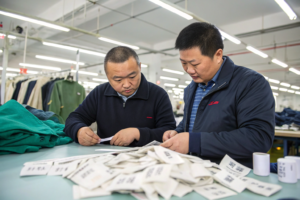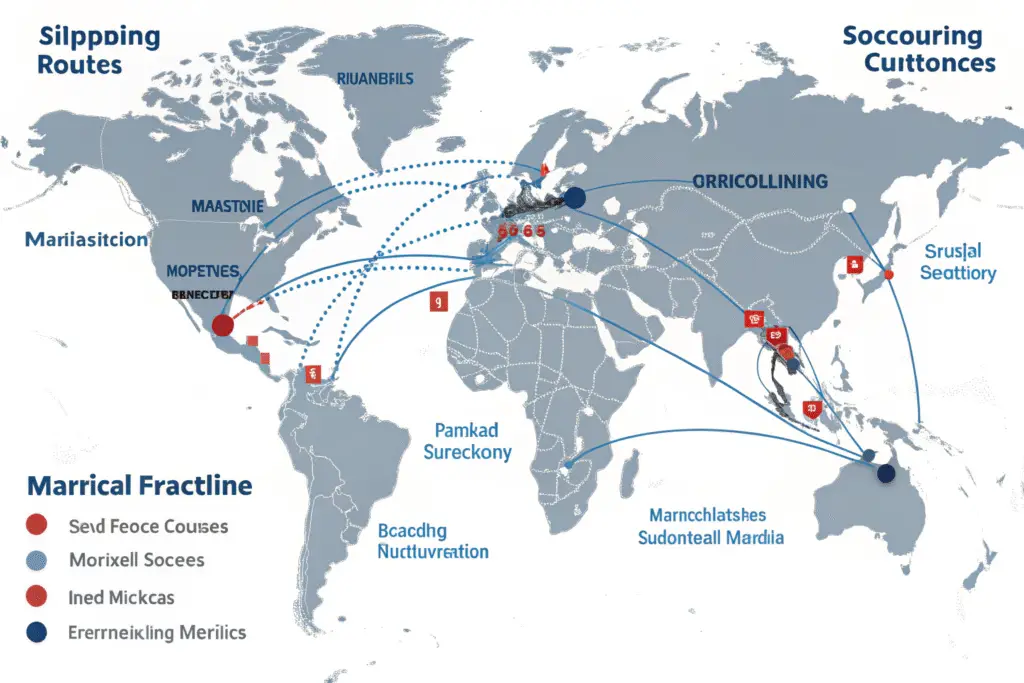
The reality hit hard for the Denver-based startup when they received the news: "Port strike in Shanghai - your shipment is delayed by 28 days." Their beautifully crafted collection sat in containers while their prime selling season evaporated. Meanwhile, our client in Los Angeles who manufactured similar products with our Vietnam facility received their goods on schedule. That 28-day difference wasn't about manufacturing speed—it was purely about geographic location and its impact on the complete supply chain.
A factory's location impacts your lead time through four key channels: shipping duration (7-35 days difference), raw material access (5-15 days difference), local infrastructure efficiency (3-7 days difference), and geopolitical stability (potential for 14-60 day disruptions). Coastal Chinese factories typically offer the shortest total timelines for most brands, while interior or landlocked locations add significant transit time even before production begins.
Location influences every aspect of your timeline, from how quickly raw materials arrive at the factory to how long finished goods take to reach your distribution center. Understanding these geographic realities helps you make informed decisions that balance cost, quality, and timing.
What shipping timelines differentiate manufacturing regions?
The journey from factory to your warehouse represents one of the most significant location-based timeline variables, with ocean transit alone varying by 21-28 days depending on origin.
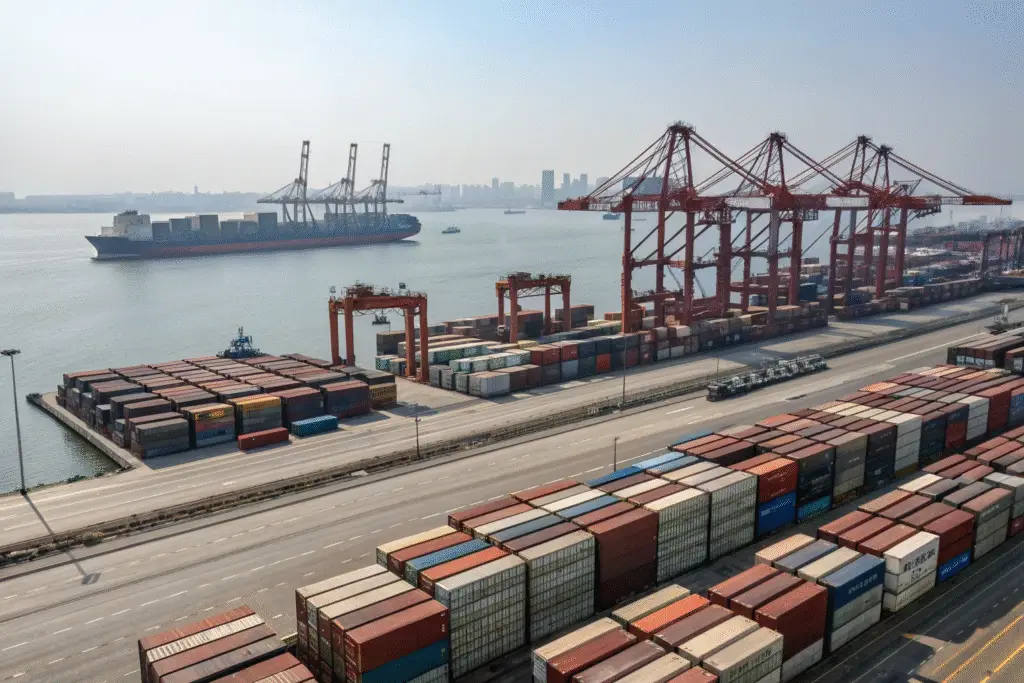
Shipping duration ranges from 12-18 days for Southeast Asia to West Coast USA, 18-25 days for Coastal China to West Coast, and 28-35 days for China to East Coast USA. At Shanghai Fumaoclothing, our strategic location near Shanghai Port provides consistent 20-day transit times to Los Angeles—a reliability that helped a Chicago apparel brand switch from a Guangdong factory and reduce their total lead time by 11 days despite similar production schedules. The port proximity eliminated the 5-day inland trucking their previous supplier required.
How do shipping routes affect timeline predictability?
Major port locations offer more frequent sailings and direct routes that create predictable timelines, while secondary ports often require transshipment that adds variability. Shipping from Ho Chi Minh City typically requires Singapore transshipment, adding 4-7 days versus direct Shanghai-Los Angeles routes. We recently helped a Seattle outdoor brand avoid a potential 12-day delay by manufacturing their time-sensitive collection in our Shanghai facility rather than their usual Bangladesh factory—the direct shipping route provided the predictability they needed for their launch campaign.
Factories located far from ports add 3-10 days for inland transportation before shipping even begins. These hidden timelines often surprise brands who only consider ocean transit. The table below shows how factory location within a country impacts total timeline:
| Factory Location | Inland Transit | Port Access | Total Added Time |
|---|---|---|---|
| Coastal China | 1-2 days | Direct | 0-2 days |
| Interior China | 4-7 days | Rail/Truck | 5-9 days |
| Northern Vietnam | 2-3 days | Haiphong | 3-5 days |
| Bangladesh Interior | 5-8 days | Chittagong | 7-10 days |
| Turkish Interior | 3-6 days | Istanbul | 4-7 days |
How does location impact raw material access?
A factory's proximity to textile mills and component suppliers dramatically influences how quickly they can source materials and begin production—a factor often more important than the actual manufacturing time.
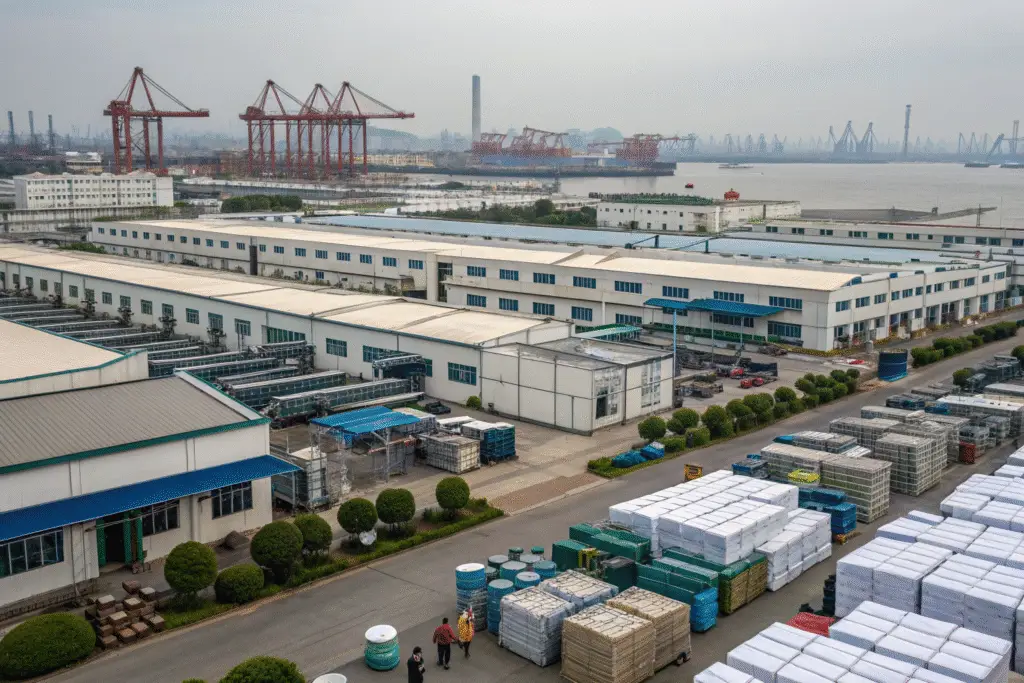
Coastal Chinese factories benefit from the world's most concentrated textile ecosystem, with 85% of materials available within 200 miles. This density enables 7-14 day material sourcing versus 21-35 days for factories in developing regions with less mature supply chains. Our location in the Yangtze River Delta provides access to thousands of fabric mills within a single day's drive—an advantage that helped a New York fashion brand execute a 12-day fabric substitution when their original choice failed testing.
What material shortages occur in remote locations?
Factories outside major manufacturing hubs face limited local options and longer import times for specialty materials. A performance wear brand discovered this when their Cambodia factory needed to import technical fabrics from Taiwan, adding 18 days to their timeline compared to our Shanghai facility that sourced equivalent fabric locally in 5 days. The geographic disadvantage wasn't about manufacturing capability but supply chain depth.
How does local specialization create time advantages?
Certain regions develop deep expertise in specific materials that accelerates development and problem-solving. Our Shanghai location provides exceptional access to technical fabric innovators and silk specialists, while our Vietnam facility excels in cotton knits and denim. A luxury brand capitalized on this by splitting their collection—producing silk blouses in our China facility and denim in Vietnam, optimizing both quality and timeline through geographic specialization.
What infrastructure factors influence production efficiency?
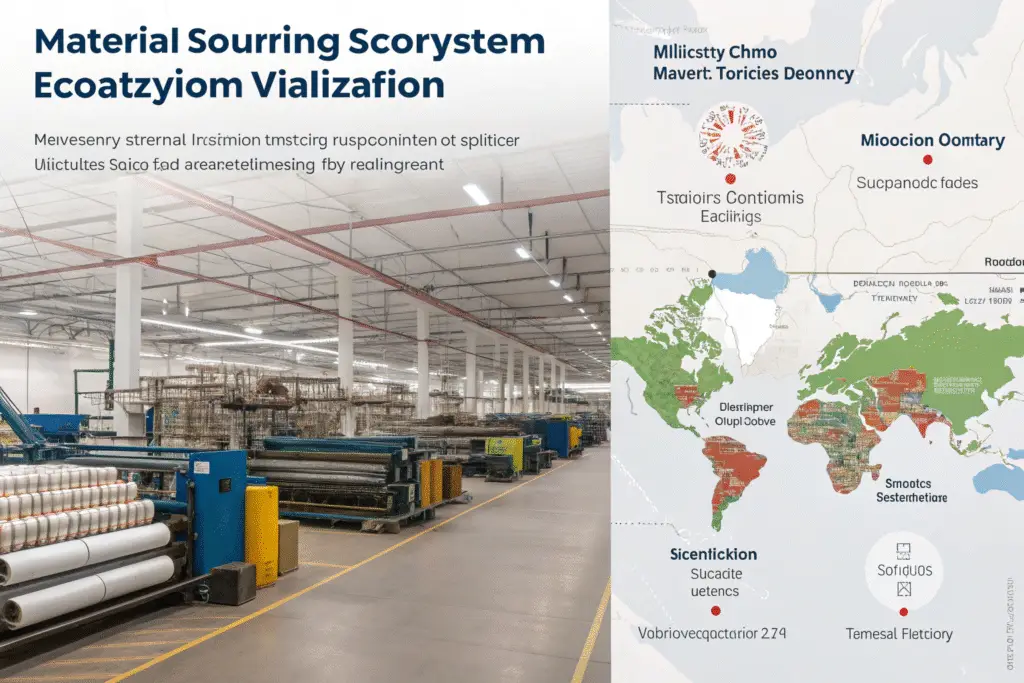
Beyond shipping and materials, local infrastructure—from power reliability to transportation networks—significantly impacts whether production stays on schedule or faces unexpected delays.
Infrastructure considerations include power grid stability, transportation network quality, port efficiency, and digital connectivity. Factories in regions with frequent power outages lose 2-3 production days monthly, while those with unreliable internet struggle with communication efficiency. Our investment in solar power and backup generators at Shanghai Fumaoclothing has maintained 100% power continuity during regional outages—protection that kept a European retailer's holiday production on schedule when competitors faced 8-day delays from grid failures.
How does transportation infrastructure affect daily operations?
Efficient local transportation enables reliable workforce attendance, timely component deliveries, and smooth factory operations. Factories located in regions with developed highway and rail systems experience fewer production disruptions than those in areas with inadequate infrastructure. We've maintained 98% on-time raw material delivery to our Shanghai facility, while our partners in less developed regions report 85-90% reliability due to transportation challenges.
What digital infrastructure impacts timeline management?
Modern manufacturing requires robust digital connectivity for efficient communication, file transfer, and production management. Factories with fiber internet and cloud-based systems communicate and make decisions faster than those with limited connectivity. Our implementation of real-time production tracking and video quality inspections would be impossible without Shanghai's advanced digital infrastructure—capabilities that helped a Los Angeles brand reduce their sampling approval time from 10 days to 3 days through instant digital collaboration.
How do geopolitical factors create location-based risks?
A factory's geographic location exists within a political context that can dramatically impact timelines through trade policies, customs procedures, and regional stability.
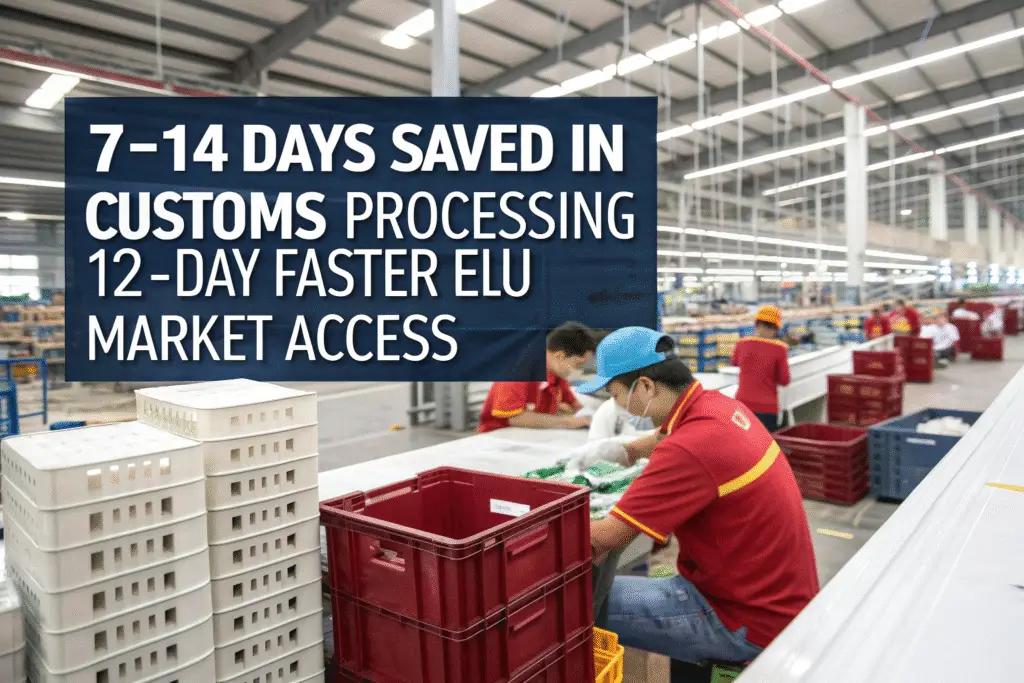
Geopolitical considerations include trade agreement benefits, tariff exposures, customs efficiency, and political stability. Factories in countries with free trade agreements to your target market can save 7-14 days in customs processing alone. Our Vietnam facility's access to EU trade agreements provided a UK brand with 12-day faster EU market access compared to China manufacturing—a decisive advantage for their time-sensitive fast-fashion business model.
What trade policy changes impact timing?
Sudden tariff impositions or trade restriction can disrupt established supply chains, forcing last-minute factory changes that add 30-60 days to timelines. The 2018 US-China tariff shifts taught brands the importance of geographic diversification. We helped several American brands establish Vietnam production capacity before the tariffs hit, protecting them from the 45-60 day disruptions experienced by competitors who waited to react.
How does customs efficiency vary by location?
Port efficiency and customs processing times vary dramatically by country and specific port. Shanghai Port typically processes containers in 2-3 days, while some developing markets require 7-12 days for similar procedures. This efficiency difference alone can account for a 5-9 day timeline advantage. Our documentation team's expertise with Shanghai customs has maintained 48-hour average processing for five consecutive years—consistency that brands factor into their inventory planning.
What are the timeline trade-offs between major manufacturing regions?
Each major apparel manufacturing region offers distinct timeline advantages and challenges that make them suitable for different business models and product types.
China provides the shortest total timelines for complex products requiring diverse materials, Vietnam offers strong balance for basic to moderate complexity, Bangladesh delivers lowest cost for high-volume basics with longer timelines, and Turkey/Eastern Europe provide speed-to-market for European destinations. We recently helped a German brand analyze these trade-offs, determining that their technical outerwear belonged in China (42-day total timeline) while their basic knitwear could manufacture in Turkey (37-day timeline to EU market).

How does product complexity influence optimal location?
Complex products with multiple materials and construction techniques benefit most from China's supply chain density, while simpler items can manufacture efficiently in less developed regions. A performance wear brand manufacturing technical jackets with 12 specialized components saved 21 days by producing in China versus Bangladesh—the time savings from consolidated material sourcing outweighed the 7-day shipping advantage Bangladesh offered.
What order characteristics determine location suitability?
Order size, complexity, and timing requirements should guide location selection rather than following industry trends. We've developed a location optimization algorithm that analyzes these factors for clients. A startup using this system determined that manufacturing their initial small-batch collection in China provided faster overall market entry despite higher per-unit costs—the timeline advantage justified the cost premium for their funding timeline.
How can brands mitigate location-based timeline risks?
Strategic approaches can minimize geographic risks while maximizing location advantages, creating supply chain resilience regardless of where production occurs.
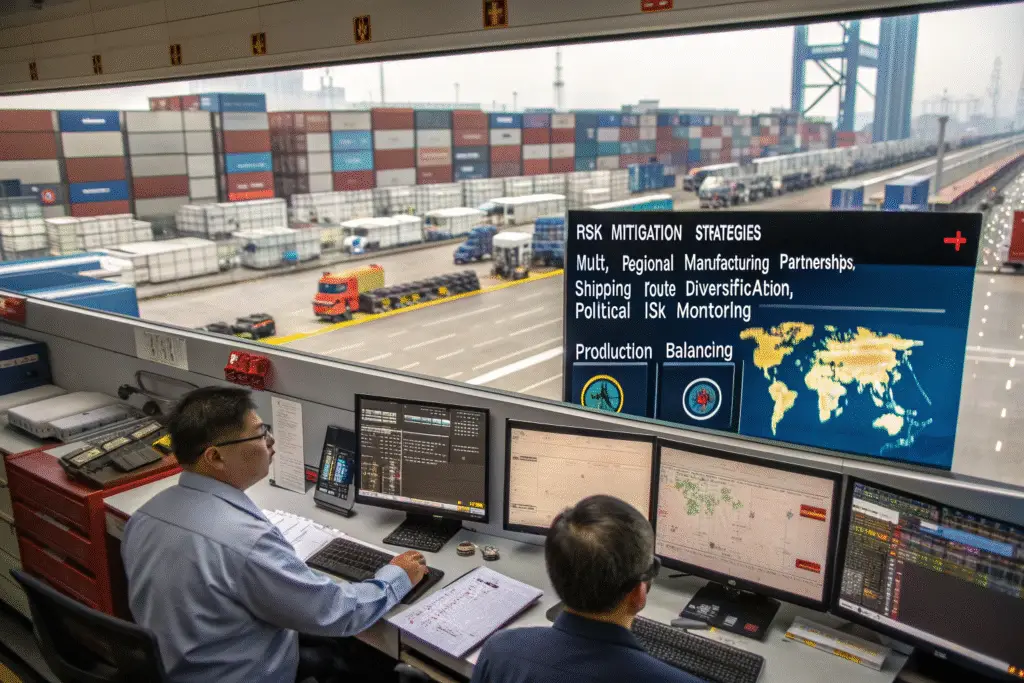
Risk mitigation strategies include multi-regional manufacturing partnerships, inventory buffer planning, shipping route diversification, and political risk monitoring. At Shanghai Fumaoclothing, we've helped clients implement "production balancing" that allocates appropriate percentages to different regions based on risk profiles. This approach saved a American retailer from catastrophic delays when Vietnam COVID lockdowns threatened their holiday collection—they shifted production to our China facility with minimal disruption.
What early warning systems identify location risks?
Monitoring systems that track weather, political developments, and port conditions provide advance notice of potential disruptions. We provide clients with a risk dashboard that tracks these factors across our manufacturing locations. This system provided a sportswear brand with 12-day advance notice of potential port congestion in Southern China, allowing them to reroute shipments through Shanghai and avoid a 14-day delay.
How does supplier diversification protect timelines?
Maintaining production capacity across multiple geographic regions provides flexibility when location-specific disruptions occur. The most resilient brands develop "production portfolios" rather than relying on single locations. We're helping several clients establish 60/40 splits between China and alternative locations—a balance that provides China's efficiency while maintaining diversification benefits.
Conclusion
A factory's location impacts your lead time through shipping duration, material access, infrastructure quality, and geopolitical context—often adding 10-30 days difference between optimal and suboptimal locations. The most successful brands treat location selection as a strategic decision that balances cost with timeline requirements, understanding that the cheapest manufacturing location often carries hidden time costs that impact overall business performance.
If you're evaluating manufacturing locations and want to understand how geography will impact your specific timeline requirements, we have the multi-regional perspective to provide objective guidance. At Shanghai Fumaoclothing, we operate facilities in strategic locations because we understand that optimal manufacturing requires the right geography for each situation. Contact our Business Director Elaine at elaine@fumaoclothing.com to discuss how location strategy can optimize your production timeline while managing associated risks.