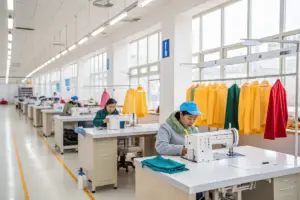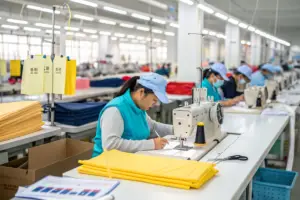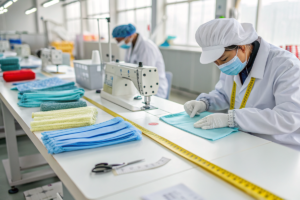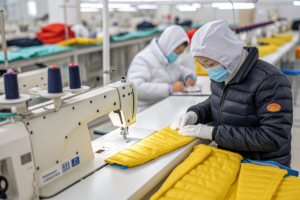
I remember the panic in the voice of the Miami-based brand owner who called me last summer. A celebrity had unexpectedly worn one of their designs, and they needed 500 units in three weeks to meet exploding demand. Their current manufacturer told them it was impossible. We delivered in 19 days. That experience taught me that "impossible" timelines often just require the right approach and partnership.
The absolute fastest possible lead time for custom apparel is 15-21 days for basic to moderately complex items, but this requires perfect conditions: using stock materials, simplified designs, dedicated production lines, and expedited processes at every stage. This accelerated timeline comes with important trade-offs in cost, customization options, and order flexibility that every brand owner must understand.
Achieving these compressed timelines isn't about cutting corners—it's about strategic optimization and partnership with a manufacturer who understands emergency production. Let me walk you through what's realistically achievable and how to determine if rush production makes sense for your situation.
What factors determine minimum production time?
Understanding what drives production timelines helps identify where time can be saved—and where it can't. The manufacturing process has inherent physical limitations that even the most efficient factories cannot circumvent.
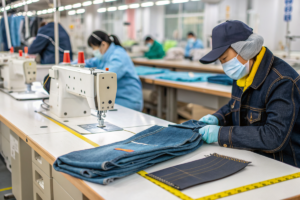
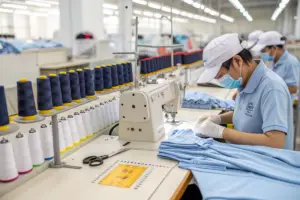
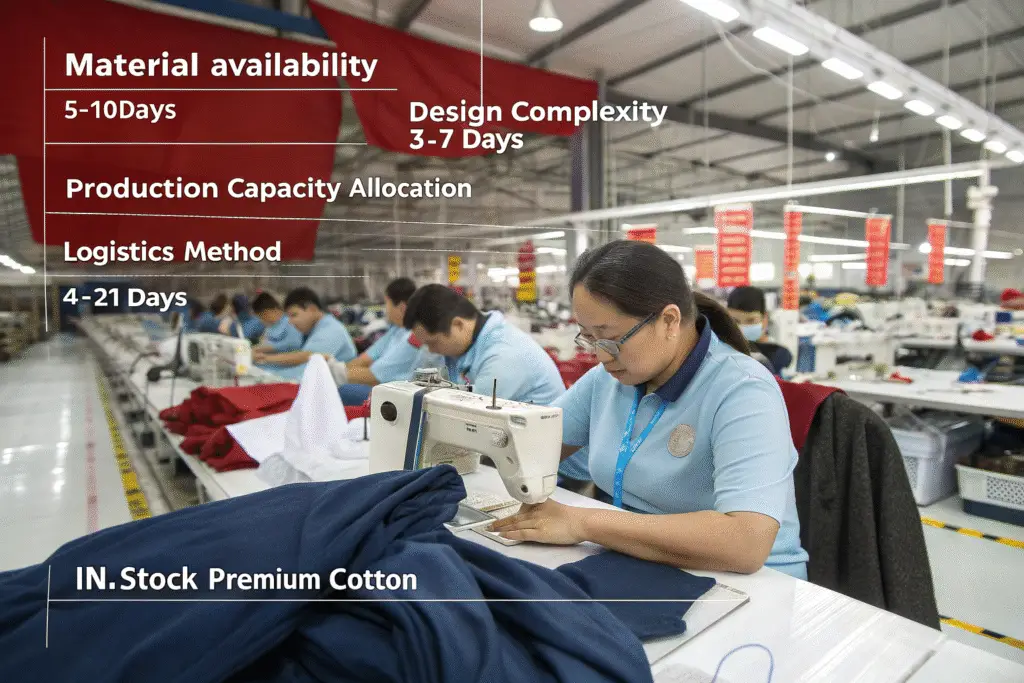
The key factors are material availability (5-10 days potential savings), design complexity (3-7 days impact), production capacity allocation (2-5 days variable), and logistics method (4-21 days range). The single biggest time savings comes from using available stock fabrics rather than custom materials. Last month, we helped an e-commerce brand launch a viral-inspired design in 17 days by using our in-stock premium cotton instead of their usual custom-dyed fabric, saving 12 days immediately. The production used our dedicated quick-response line and shipped via express air freight.
How does material selection impact speed?
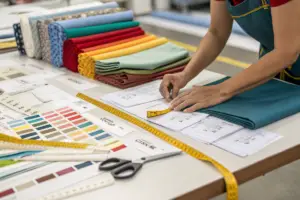
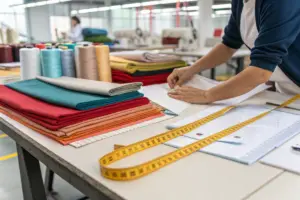
Material availability is the most significant timeline determinant. Stock fabrics from the manufacturer's inventory can be cut immediately, while custom fabrics require weaving, dyeing, and finishing—adding 2-4 weeks. Our fabric inventory management system at Shanghai Fumao maintains strategic stock of 50+ commonly requested materials specifically for rush orders. Basic cotton jersey, standard polyester, and common blended fabrics are typically available for immediate production. Specialty materials like organic cottons, technical fabrics, or custom-developed textiles simply cannot be rushed through the manufacturing process without massive cost premiums.
What design elements slow production most?
Complex designs inherently require more time. The table below shows how common design elements impact production speed:
| Design Element | Time Impact | Reason |
|---|---|---|
| Basic cut-and-sew (t-shirts) | Baseline | Simple construction |
| Multiple fabric types | +2-4 days | Additional sourcing and handling |
| Custom embroidery | +3-5 days | Digitizing and setup time |
| Complex printing | +2-6 days | Separation and setup |
| Custom hardware/trims | +5-10 days | Sourcing and quality checks |
| Technical construction | +4-8 days | Complex patterning and sewing |
What are the trade-offs of expedited production?
Rush production always involves compromises. Understanding these trade-offs helps determine when accelerated timelines make business sense versus when they create more problems than they solve.
The primary trade-offs include significantly higher costs (25-100% premium), reduced customization options, minimum quantity requirements, and limited quality assurance time. Expedited shipping alone can triple logistics costs compared to standard sea freight. Additionally, complex embellishments, custom dye lots, and detailed fit adjustments become impractical or impossible. We're transparent with our partners at Shanghai Fumao that our 15-day production option works only for basic to moderate complexity items using our standard materials and approved design templates.
How much do rush fees typically cost?
Rush production premiums vary based on how much compression is required. A 25-35% premium applies for 30-day production, 40-60% for 21-day timelines, and 75-100%+ for 15-day emergency production. These costs cover overtime wages, expedited material handling, dedicated production line allocation, and premium logistics. Last quarter, a Los Angeles streetwear brand paid a 85% rush fee to produce 1,000 hoodies in 16 days for an unexpected retail opportunity—but calculated the premium was justified by the $92,000 in additional revenue the timing enabled.
What quality compromises might occur?
Expedited timelines compress quality assurance processes, potentially increasing defect risks. Standard production allows for multiple inspection points, thorough testing, and methodical addressing of issues. Rush production typically reduces fabric testing, limits in-process inspections, and condenses final quality control. While we maintain our basic quality standards even on rush orders at Shanghai Fumao, we're transparent that the comprehensive quality assurance process we apply to standard orders simply cannot be completed in compressed timelines.
When does rush production make business sense?
Despite the trade-offs, there are strategic situations where rush production delivers tremendous value. The key is calculating whether the opportunity cost of missing a deadline exceeds the additional production expenses.
Rush production makes sense when facing time-sensitive retail opportunities, replacing unexpectedly successful products, addressing emergency inventory shortages, or capitalizing on viral moments. The business case depends on a simple calculation: does the gross profit from the timed opportunity exceed the rush production premium? We helped an athletic brand execute 18-day production for an Olympic-related collection that generated $147,000 in additional revenue—far outweighing the $28,000 rush fees. Their CMO later told me the accelerated timeline was "the most profitable production premium we've ever paid."
How to calculate if rush production is worthwhile?
The calculation involves comparing the opportunity value against the production premium. Estimate the revenue that would be lost by waiting for standard production, then subtract the additional rush costs. For example: $100,000 potential revenue × 40% gross margin = $40,000 gross profit. Subtract $15,000 rush premium = $25,000 net benefit. If the net benefit is positive and strategically important, rush production likely makes sense. This calculation helped a European retailer we work with decide to pay 65% premium for 19-day production when a key competitor went bankrupt, allowing them to capture abandoned market share.
What are the most common successful use cases?
The most successful rush production scenarios we see include: pop-up retail events with fixed dates, celebrity endorsement opportunities, social media-driven demand spikes, seasonal extensions for weather anomalies, and emergency replenishment of best-selling SKUs. A Chicago-based brand used our 21-day service to produce 2,000 units of a design that went viral on TikTok, generating $86,000 in sales that would have been completely lost with their standard 60-day timeline. The $18,000 rush premium represented excellent ROI.
How to prepare for potential rush production needs?
Strategic brands prepare for rush scenarios before they're needed. Advance preparation can significantly reduce timelines and costs when emergencies arise.
Preparation involves maintaining manufacturer relationships, pre-approving materials, simplifying design templates, and understanding logistical options. We encourage our partners at Shanghai Fumao to conduct occasional small rush orders to test capabilities before major emergencies arise. This preparation helped a New York fashion brand execute 16-day production when a magazine cover opportunity emerged unexpectedly—they already had approved fabrics and simplified tech packs ready for rapid deployment.

What can be pre-approved to save time?
Significant time savings come from pre-approving fabrics, establishing standard specifications, creating design templates, and vetting decoration methods. Maintaining a library of pre-approved materials with your manufacturer can save 7-14 days when rush needs arise. Simplified tech packs with standardized measurements, construction details, and approved trim options eliminate days of back-and-forth clarification. We maintain digital "rush ready" profiles for our partners that shave 3-5 days off standard rush timelines.
How to build relationships with quick-turn manufacturers?
Developing rush production capability requires treating manufacturers as strategic partners rather than transactional vendors. Share your business calendar and potential rush scenarios, understand their capacity constraints, and be reasonable in your expectations. The most successful brands we work with for rush production communicate regularly, pay promptly, and understand that emergency service is a premium offering. This partnership approach ensures priority treatment when true emergencies arise.
Conclusion
While 15-21 days represents the absolute fastest possible lead time for custom apparel, achieving these timelines requires perfect conditions, significant cost premiums, and careful trade-off management. The brands that successfully leverage rush production view it as a strategic capability rather than a manufacturing failure—planning for emergencies before they occur and calculating the business case objectively.
If you're facing a time-sensitive opportunity or want to develop rush production capability for future needs, we can help you understand what's realistically achievable. At Shanghai Fumao, we're transparent about both the possibilities and limitations of accelerated timelines. Contact our Business Director Elaine at elaine@fumaoclothing.com to discuss your specific situation and whether our quick-response manufacturing solutions might fit your strategic needs.