As a garment factory owner in China, I hear this question daily from European brand owners. The fashion cycle moves fast. Missing a delivery date can mean missing the entire selling season. You need a supplier who not only makes quality clothes but also delivers them on time, every time. This reliability is what separates profitable partnerships from costly mistakes.
Current lead times for European brands are not a single number; they are a dynamic factor influenced by product complexity, order quantity, and seasonal peaks. However, for a reliable full-service manufacturer, standard lead times for woven and knit items typically range from 45 to 60 days, with opportunities to optimize this timeline through strategic planning and partnership. Understanding the components of this timeline is key to managing your supply chain effectively and avoiding the frustration of delayed shipments.
Let's break down the factors that determine your production schedule and explore how you can gain more control over your delivery dates.
What is the typical production timeline from order to delivery?
You place an order and then the waiting begins. You need a clear, realistic timeline to plan your marketing and sales. A transparent manufacturer will break down the process for you, so you know exactly what to expect and when.
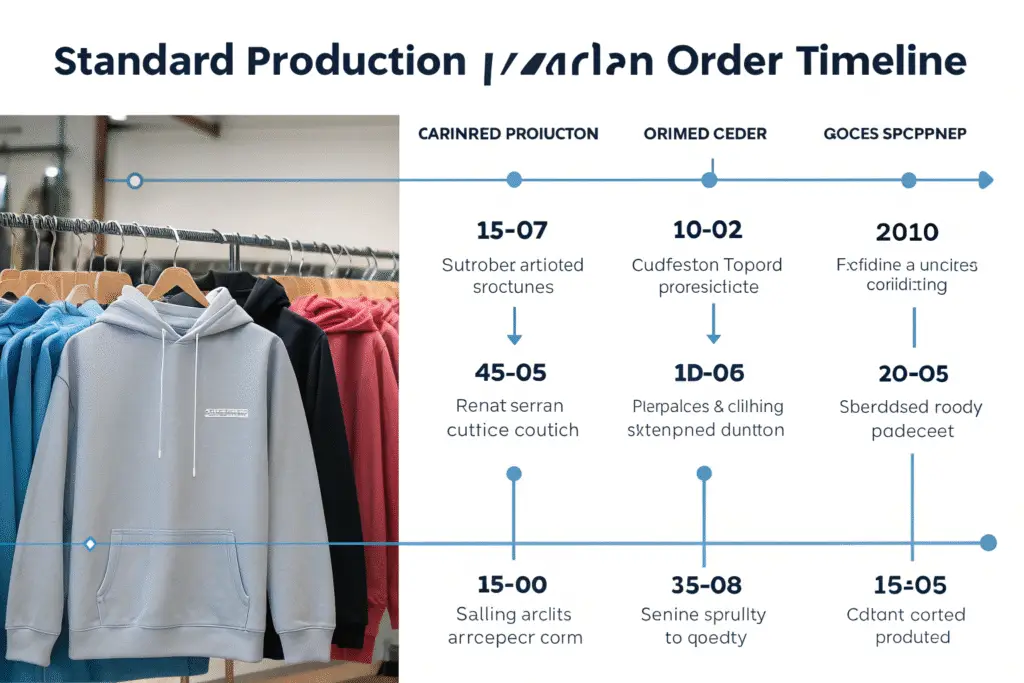
A standard production timeline for a garment order, from confirmed purchase order to goods ready for shipment, generally takes 45 to 60 days. This timeline is a well-orchestrated sequence of events, not a single action. We recently streamlined an order for a German streetwear brand, delivering 5,000 custom-printed hoodies in just 50 days by having all fabric and trims pre-approved. This required close collaboration from the first day.
What are the key stages in the apparel production process?
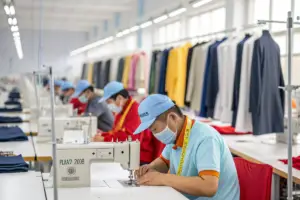
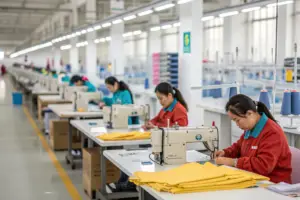
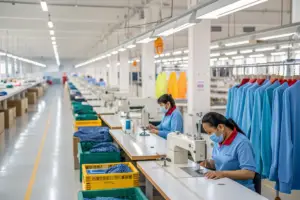
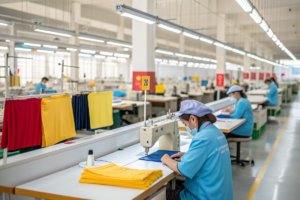
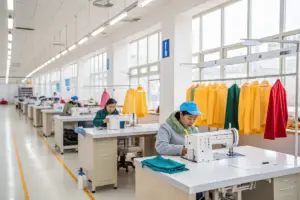
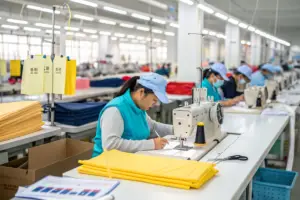
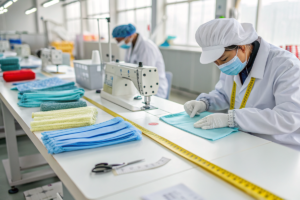
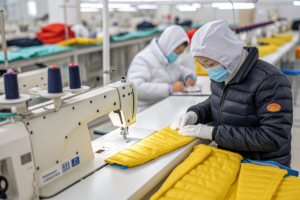
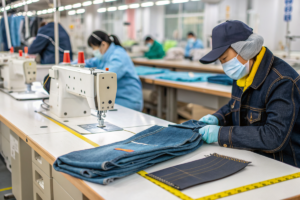
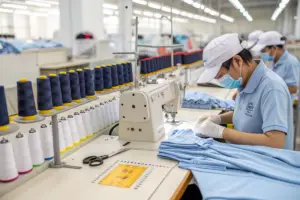
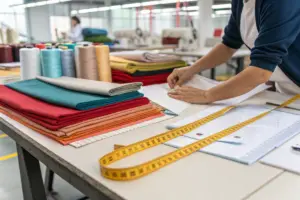
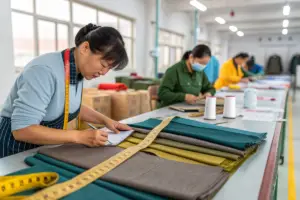
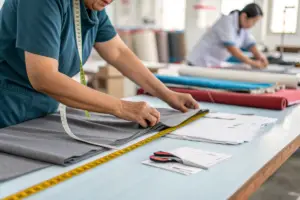
The journey of your order involves several critical stages. First is the fabric sourcing and procurement stage. This can take 10-15 days. We work closely with trusted mills, but securing the right sustainable fabrics can sometimes add time, though it's worth it for quality. Next is the production planning and cutting stage, which takes about 5-7 days. Then, the sewing and assembly line operates for 10-15 days. After that, finishing processes like washing, printing, or embroidery take another 5-7 days. Finally, a rigorous quality control inspection and packing stage requires 5-7 days before the goods are ready for export. Each stage depends on the previous one, so a delay in fabric arrival, for instance, has a domino effect on the entire schedule.
How can you plan your collection around this timeline?
Smart planning is your greatest tool. The best practice is to initiate contact with your manufacturer 4-5 months before your ideal delivery date. This gives ample time for sampling and development. For example, a British retailer we work with now provides us with their forecast 6 months in advance for their core items. This allows us to reserve production capacity and even pre-book raw materials, effectively shielding them from sudden market shortages. We at Shanghai Fumao always advise our partners to finalize their designs and place orders as early as possible, especially for complex items like technical outerwear, to navigate the lead time confidently.
What factors most impact clothing manufacturing lead times?
Lead times are not fixed. They stretch and shrink based on specific variables in your order. Knowing these factors allows you to make informed decisions that can speed up your production. The main culprits for delays are often related to materials and design complexity.
The three biggest factors are fabric availability, design complexity, and order quantity. If you choose a common, in-stock fabric, we can start production almost immediately. However, if you require a special yarn-dyed stripe or a specific custom-developed fabric, the lead time can extend by 2-3 weeks. Furthermore, a simple polo shirt will be produced much faster than a jacket with multiple components, waterproof zippers, and specialized finishing. Last year, we helped a Dutch brand switch from a custom-woven fabric to a high-quality stock alternative for their trousers line, cutting 18 days off their lead time without compromising on look or feel.
How does fabric choice affect your schedule?
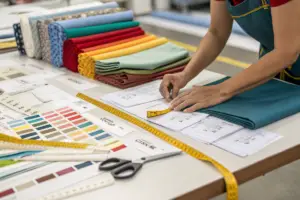
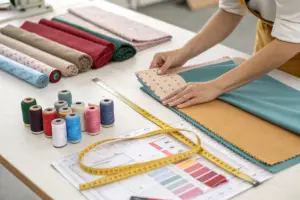
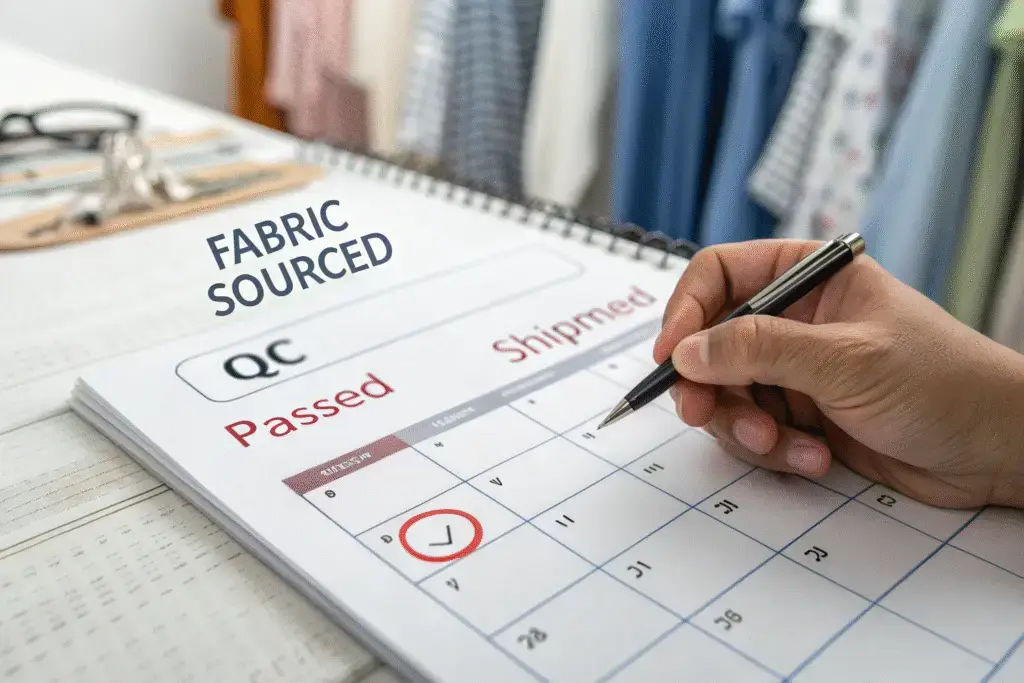
Your fabric choice is the first major timeline determinant. Standard cotton knits and basic woven fabrics are often readily available. However, specialized materials like organic cottons, certified fabrics, or performance textiles with moisture-wicking properties require extra sourcing and testing time. We maintain a library of pre-vetted fabrics to help clients make faster choices. If a client insists on a unique fabric from a specific mill, we must factor in that mill's own production and shipping schedule, which can add significant time. Our sourcing team at Shanghai Fumao is expert at finding the right balance between your aesthetic vision and the practical timeline.
Why do order volume and customization matter?
Larger quantities naturally take longer to produce. However, the relationship isn't always linear. For very large orders, we can run multiple production lines simultaneously to optimize time. Customization is the other key player. Items requiring extensive embroidery, custom dyeing, or complex garment washing each add separate, time-consuming steps to the process. A basic T-shirt order might be simple, but a T-shirt with a complex all-over print and custom neck label requires coordination across several specialized departments.
How to ensure on-time delivery for your fashion brand?
You need more than just hope; you need a system. On-time delivery is the result of proactive communication, rigorous process control, and a manufacturer with a proven track record. It's about preventing problems before they happen.
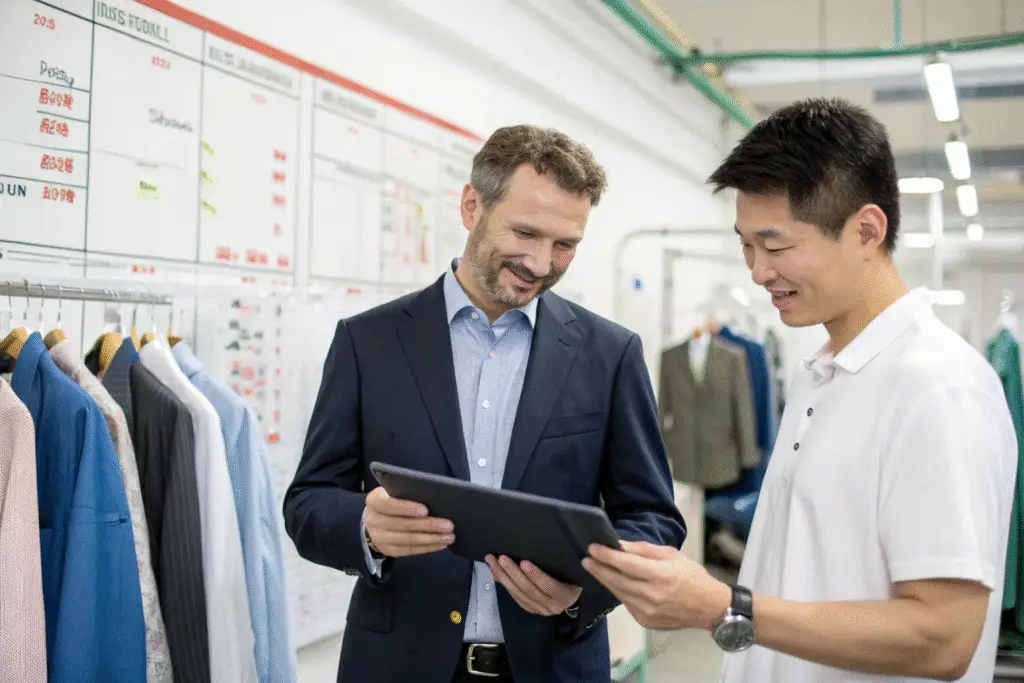
Ensuring on-time delivery starts with choosing a manufacturer with a transparent communication process and robust project management systems. We implement a milestone-based tracking system for every order. Our clients receive weekly updates with photos and videos from the production floor. This transparency allowed us to maintain a 98% on-time delivery rate for our European clients last year, even during the peak Q3 production season. We believe that you shouldn't have to chase your supplier for updates.
What logistics solutions speed up shipping to Europe?
Once production is complete, logistics take center stage. The choice between sea freight and air freight is a classic trade-off between cost and speed. For most of our clients, sea freight is the most cost-effective choice for full container loads. We manage the entire process, handling all customs documentation for a smooth DDP (Delivered Duty Paid) experience. For urgent orders, air freight is an option, though it increases costs significantly. We also leverage consolidated shipping for smaller orders, grouping them with other shipments to optimize both cost and transit time. A French client of ours uses a hybrid model: they air freight a small quantity for an initial launch and sea freight the main inventory, balancing market presence with cost efficiency.
Why is a reliable factory partner crucial for deadlines?
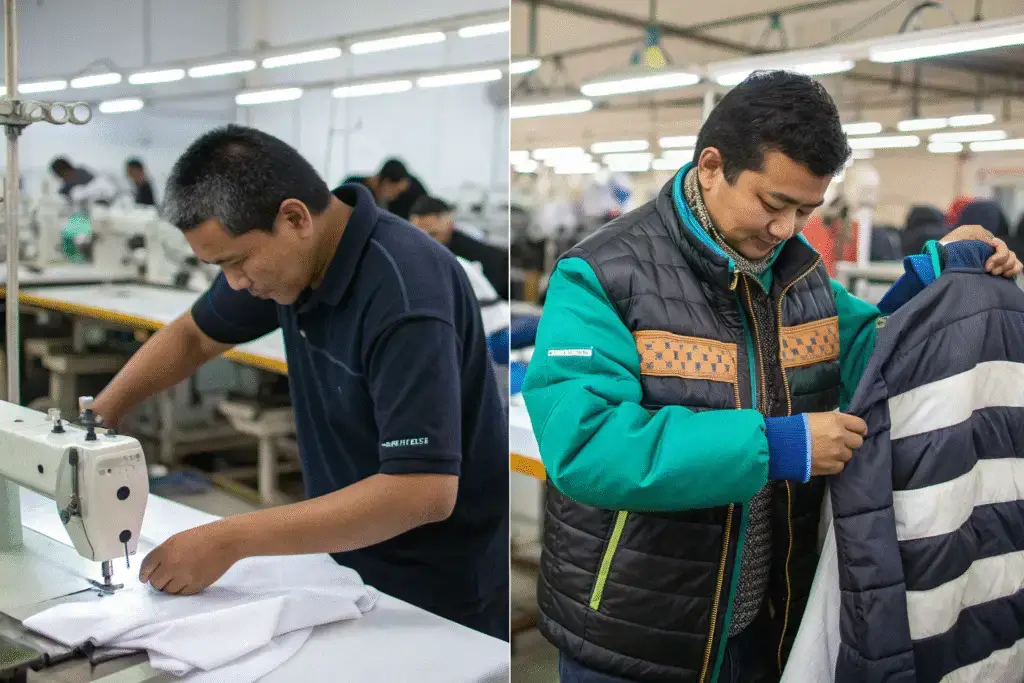
A reliable partner has the experience and scale to handle unforeseen issues. A small workshop might offer a cheaper price, but if a sewing machine breaks down, the entire production stops. A factory like Shanghai Fumao with multiple production lines has the redundancy to keep your order moving. Furthermore, an experienced partner has strong relationships with fabric mills and trim suppliers, which can expedite material sourcing. They also have seasoned quality controllers who identify potential issues early, preventing a batch from failing inspection at the final stage and causing a major delay. Your factory's operational strength is your best insurance for on-time delivery.
Can you reduce lead times without sacrificing quality?
This is the ultimate challenge. The answer is yes, but it requires strategic choices and a strong partnership. Rushing production typically compromises quality, but optimizing the process does not.
Yes, you can reduce lead times without sacrificing quality by simplifying designs, using stock materials, and building a long-term partnership with your manufacturer. For instance, we have a preferred partner program where we pre-qualify fabrics and trims for our clients' recurring seasonal collections. This shaves off 1-2 weeks from their standard lead time because the material approval step is already complete. We also use advanced pattern-making software to reduce sampling iterations, getting to a perfect sample faster.

What are the risks of rushing the manufacturing process?
Rushing production is a high-risk strategy. It puts immense pressure on the factory floor, leading to skipped steps in the quality control process. This often results in an increase of defects, inconsistent stitching, and improper fitting. The consequence is a higher return rate from your customers, damaging your brand's reputation. A rushed order also leaves no room for error; if one small thing goes wrong, the entire timeline collapses because there is no buffer. It's always better to plan for a realistic timeline from the start than to force an unrealistic one that fails.
How does strategic planning with your manufacturer help?
When you treat your manufacturer as a strategic partner, you unlock efficiencies. Share your annual forecast, not just your immediate order. This allows us to plan our raw material purchases and capacity in advance. Collaborate with our technical designers early in the development phase; their input can often suggest design modifications that are easier and faster to produce without changing the aesthetic. Last autumn, we worked with a Scandinavian brand from the initial sketch phase, suggesting slight changes to seam construction on a dress that reduced the sewing time by 15%. This collaborative approach builds a foundation for both speed and quality.
Conclusion
In today's fast-paced market, understanding and managing apparel production lead times is a critical business skill. We've seen that a typical timeline is 45-60 days, influenced by your choices in fabric, design, and order volume. The path to reliable, on-time delivery is built on transparency, strategic planning, and choosing a manufacturing partner with the systems and experience to execute your vision efficiently. By focusing on these elements, you can navigate the complexities of global sourcing with confidence, ensuring your collections hit the market at the right time.
If you are looking for a dependable manufacturing partner who values your timeline as much as you do, we are here to help. Let us prove how our commitment to reliability and quality can make your supply chain a competitive advantage. For a discussion on your specific production needs and how we can meet your deadlines, please contact our Business Director Elaine at elaine@fumaoclothing.com. Let Shanghai Fumao be the reliable, high-value manufacturing extension for your brand.