You’ve finalized your designs, prepared your tech packs, and are ready to start production. Then you encounter the reality that fabric sourcing will determine your entire timeline. Why does this single element consistently create the longest delays in clothing manufacturing, and what can you do about it?
Fabric sourcing represents the most significant lead time hurdle because it involves multiple interdependent processes including raw material procurement, textile production, finishing treatments, and quality verification – each with its own timeline, variability, and potential for delays. This phase typically consumes 30-50% of total production time because it operates at the beginning of your critical path, where any delay cascades through all subsequent stages.
Let’s examine the specific components that make fabric sourcing the primary timeline challenge and how strategic approaches can mitigate these delays.
What Makes Fabric Production Inherently Time-Consuming?
The transformation from raw fiber to finished fabric involves multiple specialized processes across different facilities, each requiring significant time and coordination.
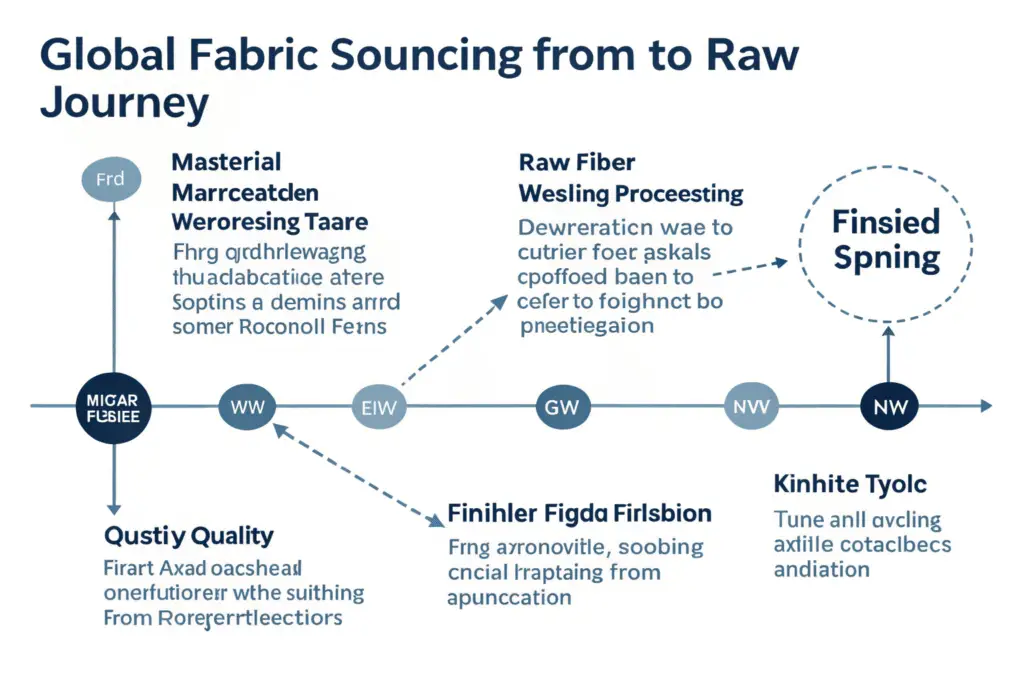
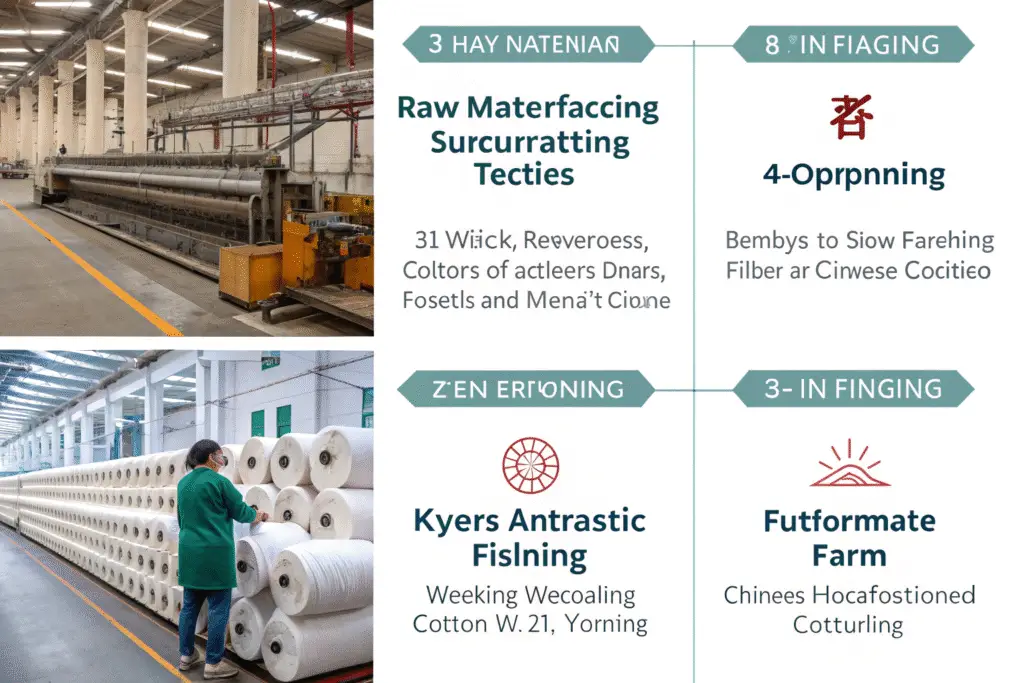
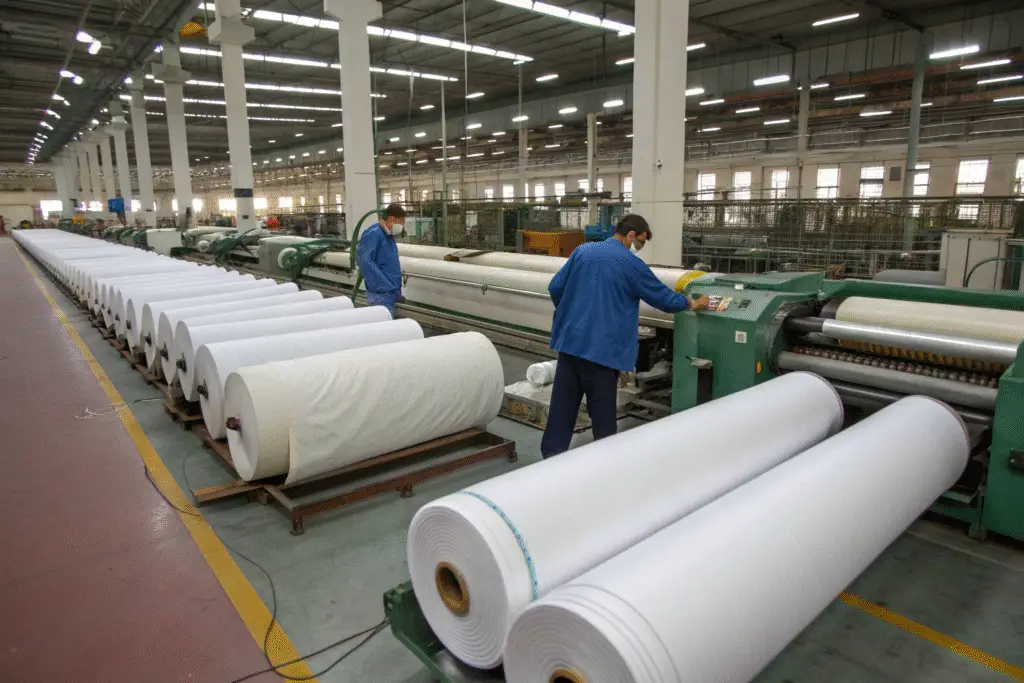
Fabric manufacturing is fundamentally a multi-stage industrial process that cannot be rushed without compromising quality. The journey from raw material to finished textile typically includes: fiber sourcing and processing (1-2 weeks), yarn spinning (1-2 weeks), fabric formation through weaving or knitting (2-3 weeks), and dyeing/finishing (1-2 weeks). These stages often occur in different specialized facilities, adding transportation and coordination time. A recent case with a San Francisco-based sustainable brand illustrates this perfectly: their organic cotton jersey required 4 weeks from farm to yarn, 2 weeks for knitting, and 2 weeks for dyeing – totaling 8 weeks before cutting could even begin, representing 60% of their total production timeline.
Why Do Raw Materials Create Initial Delays?
Raw material availability creates foundational timeline uncertainty because natural fiber production follows agricultural cycles, synthetic fibers depend on petrochemical availability, and specialty fibers face limited production capacity. Natural fibers like cotton and wool have seasonal harvesting periods that can create 2-4 month gaps between demand and availability. Synthetic fibers like polyester face price and supply volatility based on oil markets. Even when materials are available, verification of sustainability certifications like organic or recycled content adds 1-2 weeks for documentation and testing. This initial stage sets the minimum possible timeline regardless of how quickly other processes might theoretically proceed.
How Does Specialized Manufacturing Extend Timelines?
Textile manufacturing requires specialized equipment and expertise that cannot be easily accelerated, with setup times, minimum order quantities, and technical processes that demand careful execution. Fabric mills typically operate with 2-3 week production queues even after order placement. Complex constructions like jacquards or technical fabrics require specialized loom setup adding 1-2 weeks. Minimum dye lots often exceed what small to medium brands need, forcing them to either order excess fabric or wait for consolidation with other orders. Each specialization adds both time and coordination complexity that manufacturers of finished garments rarely have direct control over.
How Do Global Supply Chains Amplify Fabric Delays?
The distributed nature of modern textile production creates logistical challenges and coordination overhead that systematically extend sourcing timelines beyond the actual production requirements.
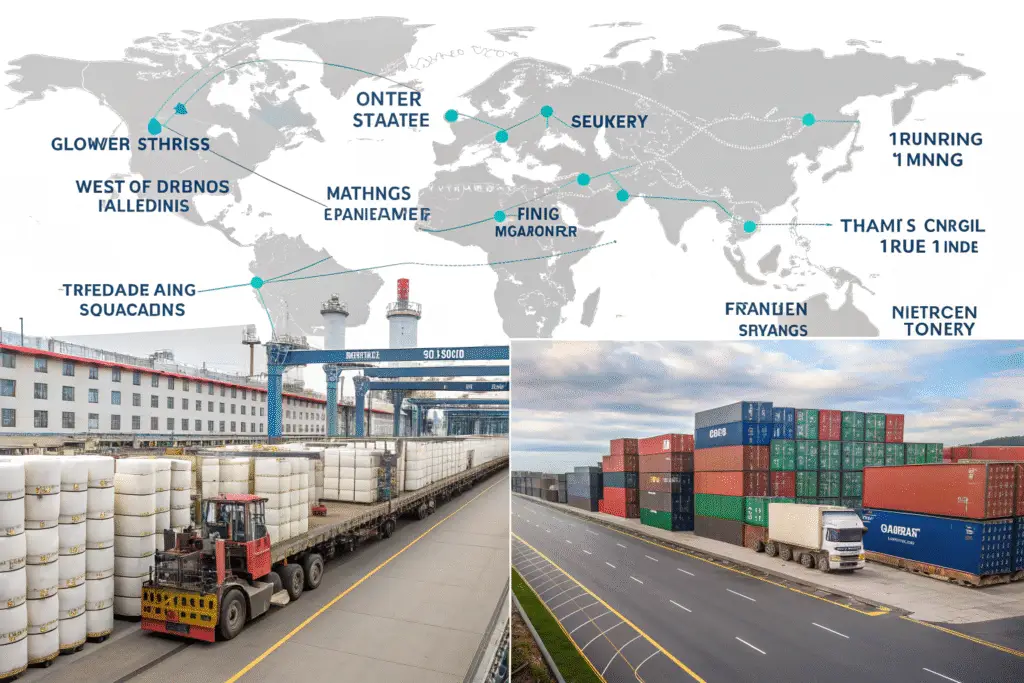
Global fabric sourcing involves coordinating multiple specialized suppliers across different regions, each with their own lead times, capacity constraints, and communication challenges. A typical sourcing journey might involve: fiber from the United States, spinning in Vietnam, weaving in China, and finishing in Turkey – with transportation and customs between each stage adding 2-3 weeks. This geographic specialization, while optimizing costs and expertise, creates a supply chain that is inherently fragile to disruptions. The International Textile Manufacturers Federation documents that the average fabric moves through 3.7 countries before reaching the garment factory, with each border crossing adding 3-5 days of transit and documentation time.
What Transportation Factors Impact Fabric Timelines?
Textile transportation faces multiple delay points including port congestion, customs processing, documentation requirements, and capacity limitations that add 2-4 weeks to sourcing timelines. Ocean freight for textiles typically requires 4-5 weeks from Asia to North America including port operations and inland transportation. Customs clearance for textiles involves detailed documentation verification for trade compliance, often requiring 5-7 days compared to 2-3 days for other goods. During peak shipping seasons, equipment availability constraints can add another 1-2 weeks. These logistical realities mean that even after fabric production completes, substantial time is required before materials reach the cutting room.
How Does Supplier Coordination Create Delays?
Coordinating multiple specialized suppliers creates communication overhead, quality standardization challenges, and scheduling conflicts that systematically extend timelines. Each supplier in the chain operates with their own capacity constraints and planning systems, making synchronized scheduling difficult. Quality standards must be maintained across facilities with different capabilities and inspection processes. Communication barriers across time zones and languages add 2-3 days for each clarification or decision. Our experience shows that brands working with a single source for fabric reduce coordination delays by 40% compared to those managing multiple specialized suppliers independently.
What Quality Verification Processes Extend Timelines?
Fabric quality assurance involves multiple testing stages, approval processes, and potential rejections that add significant time but are essential for preventing bulk production failures.
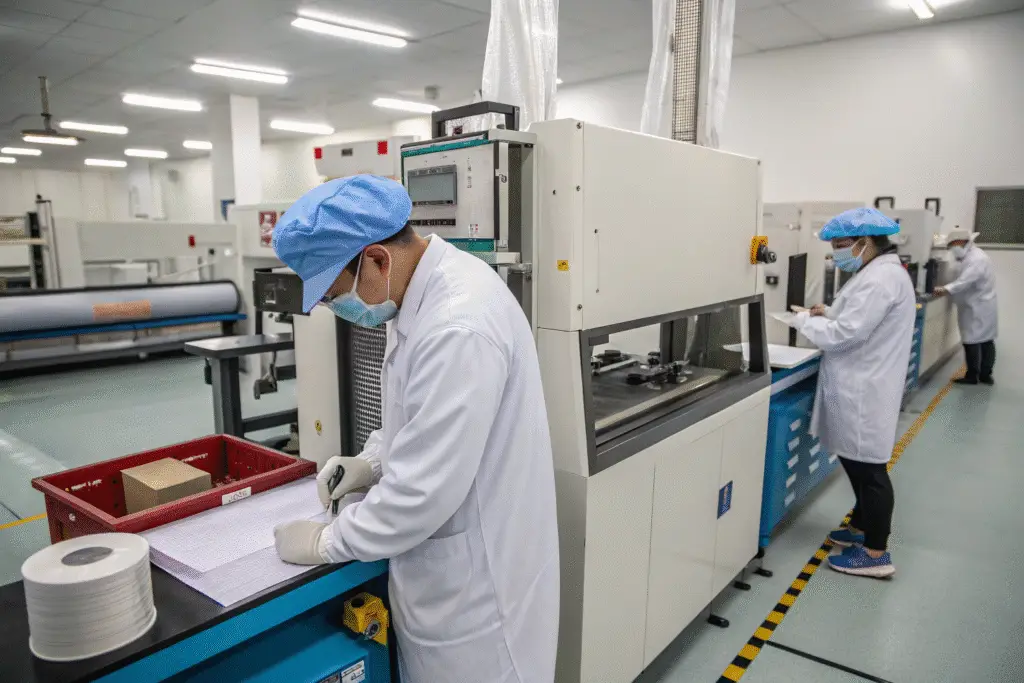
Comprehensive fabric testing is non-negotiable for quality assurance but requires 1-2 weeks for physical testing, performance verification, and compliance documentation. Standard testing includes: composition verification, colorfastness assessment, dimensional stability testing, and performance validation for specific attributes like waterproofing or stretch recovery. Each test requires specialized equipment and trained technicians, with results typically taking 3-5 business days. When issues are identified, the resolution process involves resampling, retesting, and potential production adjustments adding another 1-2 weeks. A Miami-based activewear brand learned this lesson when they skipped full testing to save time, only to discover their fabric shrank 8% after first wash – requiring remanufacture of 500 units and extending their timeline by 5 weeks.
Why Do Approval Processes Take So Long?
Fabric approval involves multiple stakeholders, subjective evaluation elements, and documentation requirements that typically require 1-2 weeks even for standard materials. The approval process includes: lab dip evaluation for color matching, hand feel assessment, performance testing review, and compliance documentation verification. Each stage often involves multiple decision-makers across design, technical, and merchandising teams, creating coordination challenges. Subjective elements like color matching under different lighting conditions or hand feel assessment often require 2-3 iteration cycles. The American Association of Textile Chemists and Colorists standards provide frameworks, but practical application still requires careful evaluation time.
How Do Compliance Requirements Add Time?
Growing compliance and sustainability documentation requirements add 1-2 weeks to fabric sourcing through verification processes, certification checks, and due diligence requirements. Modern fabric sourcing must verify: restricted substance compliance, fiber origin tracking, environmental impact documentation, and social responsibility auditing. Each compliance area requires specific testing, documentation, and often third-party verification. The Uyghur Forced Labor Prevention Act alone has added 3-5 days to sourcing timelines for all cotton products through required supply chain mapping and documentation. These requirements, while important for ethical manufacturing, have become significant timeline factors that cannot be circumvented.
How Can Strategic Sourcing Mitigate Timeline Risks?
Proactive fabric sourcing strategies can compress timelines by 30-40% through relationship development, inventory planning, and specification flexibility.
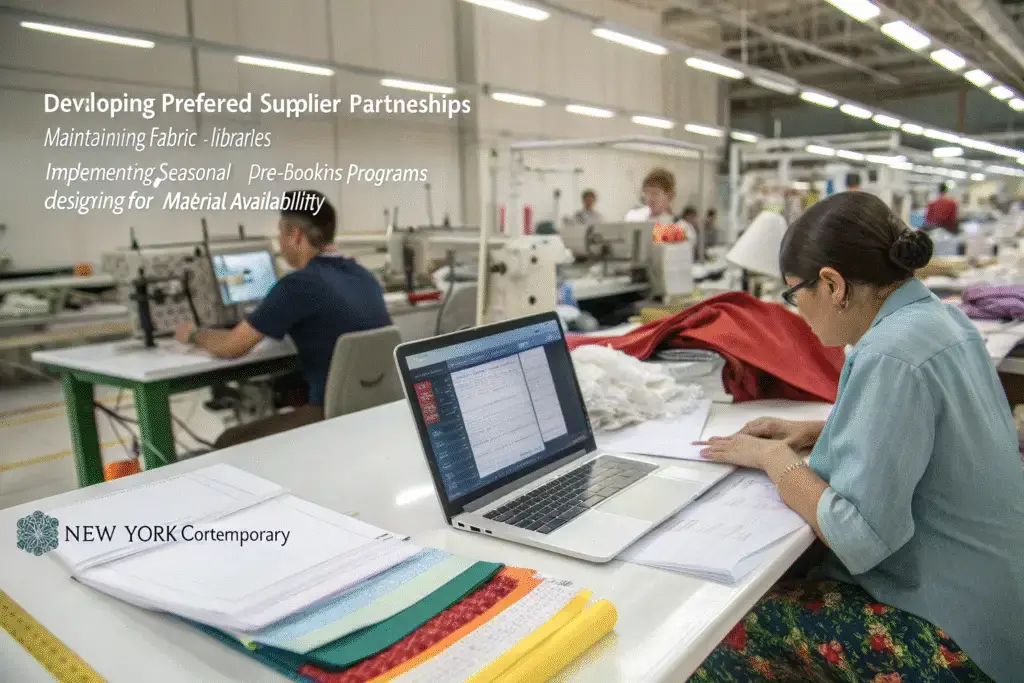
Strategic approaches to fabric sourcing include: developing preferred supplier partnerships, maintaining fabric libraries for quick access, implementing seasonal pre-booking programs, and designing for material availability rather than ideal specifications. Brands that establish strategic partnerships with key mills gain priority access to production capacity and faster response times. Maintaining relationships with 3-4 core fabric suppliers rather than sourcing anew each season typically reduces lead times by 2-3 weeks through established communication channels and mutual understanding of requirements. A New York contemporary brand reduced their average fabric timeline from 7 to 4 weeks by implementing our fabric library program, which provides pre-approved materials with stock availability.
How Does Supplier Relationship Management Help?
Strong supplier relationships provide timeline advantages through: priority production access, transparent capacity information, collaborative problem-solving, and established quality standards. Manufacturers with long-term mill partnerships typically receive 1-2 week faster production slots during peak periods. Transparent capacity sharing allows for better planning and avoids the 2-3 week delays that occur when orders are placed with already-booked suppliers. Established quality standards reduce approval iterations by 50% through mutual understanding of requirements. These relationship benefits explain why we maintain partnerships with 12 core fabric suppliers despite higher costs compared to spot sourcing.
What Role Do Fabric Libraries Play?
Pre-approved fabric libraries compress sourcing timelines by 3-4 weeks through immediate availability, pre-completed testing, and established pricing. Our fabric library contains 200+ pre-approved materials with complete technical documentation, test reports, and stock availability information. Clients selecting from this library bypass the 2-week sampling process, 1-week testing period, and 1-week negotiation phase that custom sourcing requires. The Fashion Incubator methodology emphasizes that fabric libraries represent one of the most effective timeline compression strategies for brands producing under 1,000 units per style.
What Is The Real Impact On Overall Production?
Fabric sourcing delays create exponential timeline impacts because they occur at the project start, affecting all subsequent stages and creating resource allocation challenges.
The position of fabric sourcing at the beginning of the critical path means that each week of delay in fabric availability typically creates 1.5-2 weeks of total project delay through cascading effects. When fabric arrives late: production lines scheduled for cutting sit idle, skilled operators are reassigned to other projects, and subsequent production slots are missed. This cascading effect means a 2-week fabric delay often results in a 3-4 week total project delay. Our production data shows that 65% of overall project delays originate in fabric sourcing, yet they account for 85% of the total delay impact due to this critical path position.
How Does This Affect Production Planning?
Fabric uncertainty forces conservative production scheduling, earlier commitment dates, and larger inventory buffers that increase costs and reduce flexibility. Manufacturers facing fabric timeline variability typically: schedule production starts 1-2 weeks later than theoretically possible, require fabric commitment 2-3 weeks earlier than ideal, and maintain larger raw material buffers. These conservative approaches protect against disruptions but systematically extend overall timelines. Brands that provide accurate fabric forecasts 12 weeks in advance typically achieve 25% faster production through more aggressive scheduling made possible by timeline certainty.
What Are The Financial Implications?
Fabric-driven timeline delays create significant financial impacts through: missed selling seasons, promotional cost increases, inventory carrying cost escalation, and lost sales opportunities. Each week of delay during peak selling seasons can represent 5-15% of seasonal revenue for fashion brands. Expedited shipping to recover timeline adds 25-40% to logistics costs. Extended raw material inventory periods increase carrying costs by 1.5-2% per week. These financial impacts explain why sophisticated brands increasingly treat fabric timeline management as a strategic priority rather than an operational detail.
Conclusion
Fabric sourcing remains the most significant hurdle for manufacturing lead times due to its complex multi-stage production process, global supply chain dependencies, extensive quality verification requirements, and critical path position. While these challenges cannot be eliminated entirely, strategic approaches including supplier relationship development, fabric library utilization, and advanced planning can compress timelines by 30-40% while maintaining quality and compliance standards.
The brands that successfully navigate fabric timeline challenges are those who recognize sourcing as a strategic function rather than a transactional activity, investing in relationships and systems that provide timeline certainty. If you’re facing fabric sourcing challenges in your production planning, contact our Business Director, Elaine, at elaine@fumaoclothing.com to discuss how our fabric sourcing approach can help optimize your timelines.