You’re planning your 2025 collections and need realistic timeline expectations. The fashion industry has experienced significant supply chain disruptions in recent years, but what does the manufacturing landscape actually look like now? How long should you realistically budget from design concept to finished goods in your warehouse?
The typical garment manufacturing lead time in 2025 ranges from 8-14 weeks for standard orders, representing a stabilization from pandemic-era volatility but still longer than pre-2020 timelines due to continued supply chain adaptations, evolving compliance requirements, and strategic buffer integration. This timeframe varies significantly based on fabric sourcing complexity, order quantity, and manufacturing location strategy.
Let’s examine the specific factors influencing 2025 lead times and how strategic planning can help you navigate the current manufacturing timeline landscape effectively.
How Have Global Factors Reshaped 2025 Lead Times?
The manufacturing timeline landscape in 2025 reflects adaptation to persistent global challenges while incorporating new efficiencies through technology adoption and supply chain diversification.
2025 lead times represent a new equilibrium that balances the need for faster market responsiveness with the reality of more complex global supply chains. Key factors shaping current timelines include: strategic inventory buffering at multiple supply chain stages, diversified sourcing across regions to mitigate single-point failures, increased compliance documentation requirements, and technology integration for better visibility. A contemporary brand from Austin working with us has adapted by implementing a "hybrid sourcing" model – combining quicker 6-week production for trend-responsive items in our facility with 12-week production for basics through specialized factories, creating a balanced flow that supports their monthly collection drops.
What Supply Chain Changes Affect 2025 Timelines?
Several supply chain structural changes specifically impact 2025 manufacturing lead times: regionalized raw material sourcing, multi-modal transportation strategies, and digitized customs clearance processes. Where pre-2020 supply chains emphasized cost efficiency through single sourcing, 2025 supply chains prioritize resilience through geographic diversification. This means brands might source fabrics from Turkey, manufacture in China, and complete finishing in Vietnam – adding coordination time but reducing vulnerability to regional disruptions. The International Trade Administration notes that companies using diversified sourcing strategies experience 30% fewer production disruptions despite slightly longer baseline timelines.
How Has Compliance Documentation Extended Timelines?
Increased compliance documentation has added approximately 7-10 days to typical 2025 manufacturing timelines compared to pre-2020 standards. Additional requirements include: enhanced due diligence documentation for forced labor prevention, detailed carbon footprint tracking for sustainability reporting, and country-of-origin verification for trade preference programs. These documentation processes, while valuable for ethical and sustainable manufacturing, require additional time for verification and processing. We’ve integrated digital documentation systems that streamline these requirements, but they still represent a permanent addition to the manufacturing timeline that brands must factor into their planning.
What Are Realistic Category-Specific Timelines?
Lead times vary significantly across garment categories in 2025 based on complexity, material requirements, and production specialization, making category-specific planning essential for accurate scheduling.
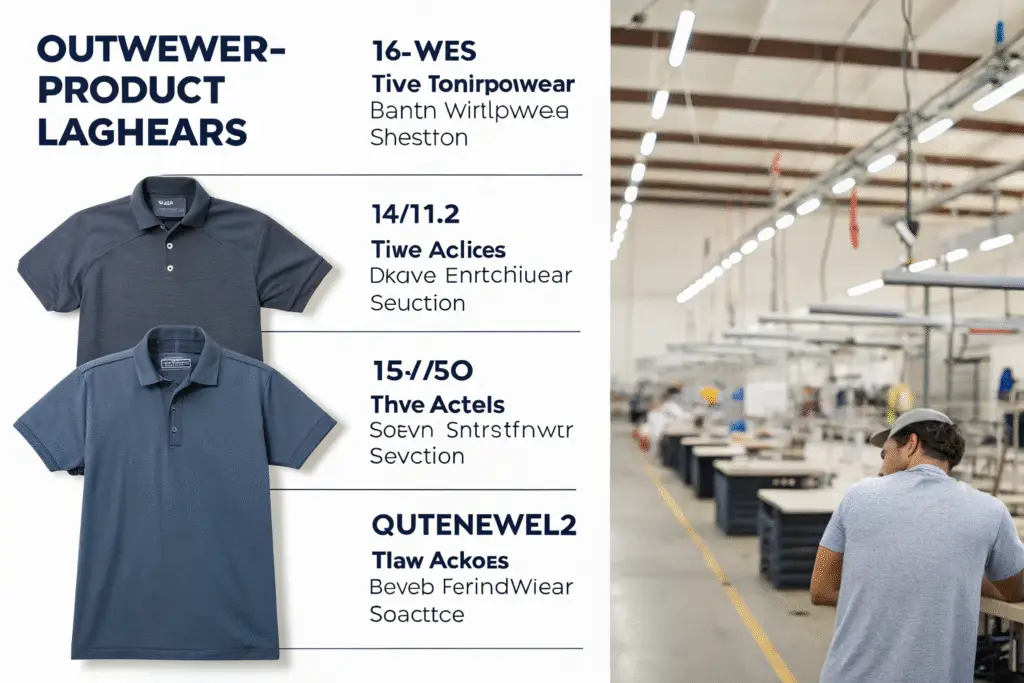
Different product categories face distinct manufacturing challenges that create predictable variations in production timelines. Basic knitwear (tees, polos) typically requires 8-10 weeks, woven shirts 9-11 weeks, denim 10-12 weeks, and technical outerwear 12-16 weeks in 2025. These variations reflect the different material lead times, construction complexity, and specialized processes required for each category. A Los Angeles-based activewear brand we work with has optimized their planning by grouping products with similar timeline requirements, allowing them to maintain consistent monthly introductions despite category variations.
Why Do Knit Versus Woven Timelines Differ?
Knit and woven garments maintain their traditional timeline differential in 2025, with knitwear typically requiring 1-2 weeks less production time due to simpler construction processes and more flexible material sourcing. Knit fabrication involves fewer pattern pieces, less complex assembly, and greater availability of gray goods for quick dyeing. Woven garments require more precise pattern engineering, additional construction steps, and often involve fabric production as a separate stage before cutting and sewing. The American Apparel & Footwear Association confirms that this fundamental timeline difference has persisted despite other supply chain evolutions.
What Complex Categories Require Extended Timelines?
Technical outerwear, tailored clothing, and intricate dresses continue to require the longest lead times in 2025 (12-16 weeks) due to their multi-component construction, specialized material requirements, and complex assembly processes. These categories involve: sourcing multiple specialized fabrics and components from different suppliers, complex pattern engineering for structured garments, and detailed quality control for intricate construction details. Our technical outerwear clients successfully manage these extended timelines by overlapping development cycles – while one collection is in production, the next is in development, maintaining consistent market presence despite longer individual production timelines.
How Does Order Quantity Impact 2025 Lead Times?
The relationship between order quantity and manufacturing timeline has evolved in 2025, with new efficiency thresholds and strategic approaches for different production volumes.
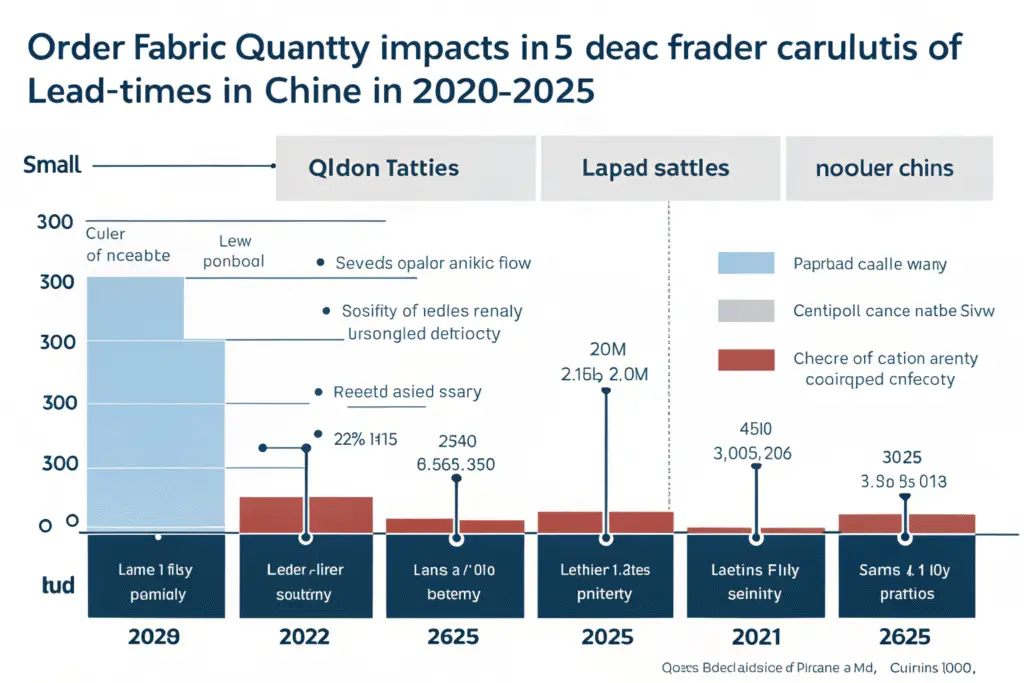
In 2025, order quantity impacts lead times in non-linear ways: small batches (100-300 units) require 6-8 weeks through specialized low-MOQ facilities, medium runs (500-2,000 units) take 8-11 weeks, and large productions (3,000+ units) need 12-14 weeks. This represents a compression of small batch timelines through manufacturing adaptations while larger quantities face extended material sourcing phases. A Denver-based sustainable brand has leveraged this dynamic by producing 200-unit initial collections for trend testing followed by 1,500-unit core production runs, optimizing both speed to market and cost efficiency.
Why Are Small Batches Faster in 2025?
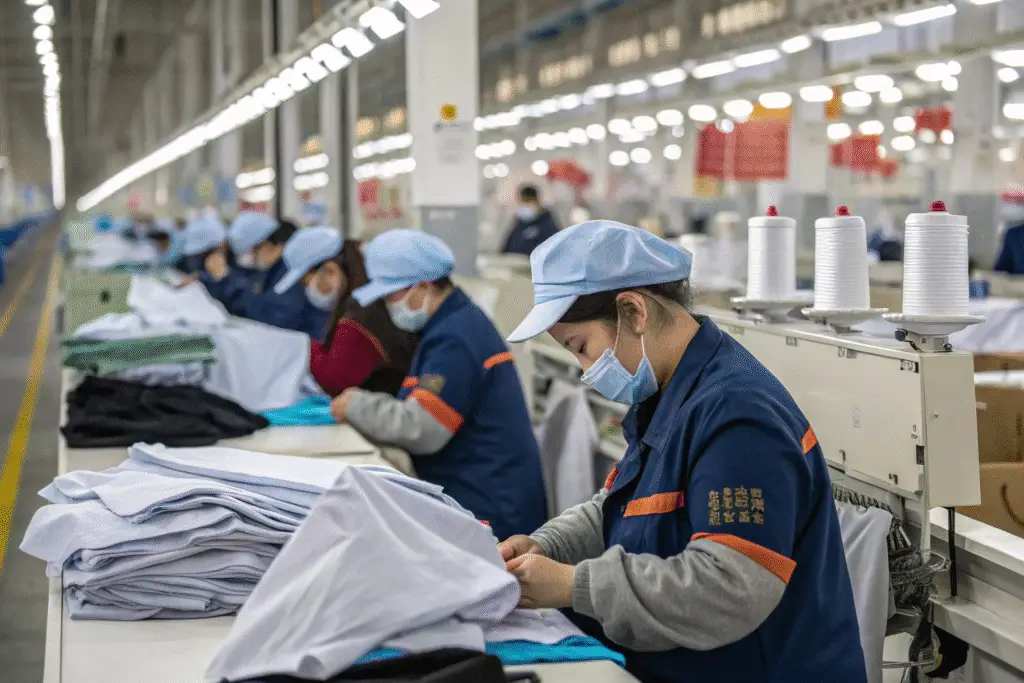
Small batch production has accelerated in 2025 through manufacturer specialization in low-MOQ processes, including: strategic inventory of common fabrics, modular production line design, and dedicated small batch coordination teams. These specializations allow 150-300 unit orders to complete in 6-8 weeks compared to 8-10 weeks for 500-700 unit orders, reversing the traditional assumption that larger quantities always benefit from faster per-unit production. This acceleration makes small batches increasingly strategic for trend testing and initial market launches despite higher per-unit costs.
What Creates Timeline Extensions at Scale?
Larger production quantities face timeline extensions in 2025 primarily through extended raw material procurement, complex production allocation, and comprehensive quality implementation. Orders exceeding 3,000 units typically require mill-direct fabric production (adding 3-4 weeks), multi-line production coordination (adding 1-2 weeks), and statistical quality control implementation (adding 3-5 days). These extensions mean the production efficiency gains of scale must be balanced against longer time-to-market, requiring careful strategic planning for volume-oriented brands.
How Can Strategic Planning Optimize 2025 Timelines?
Proactive timeline management strategies can compress manufacturing lead times by 15-25% in 2025 through advanced planning, relationship development, and process integration.
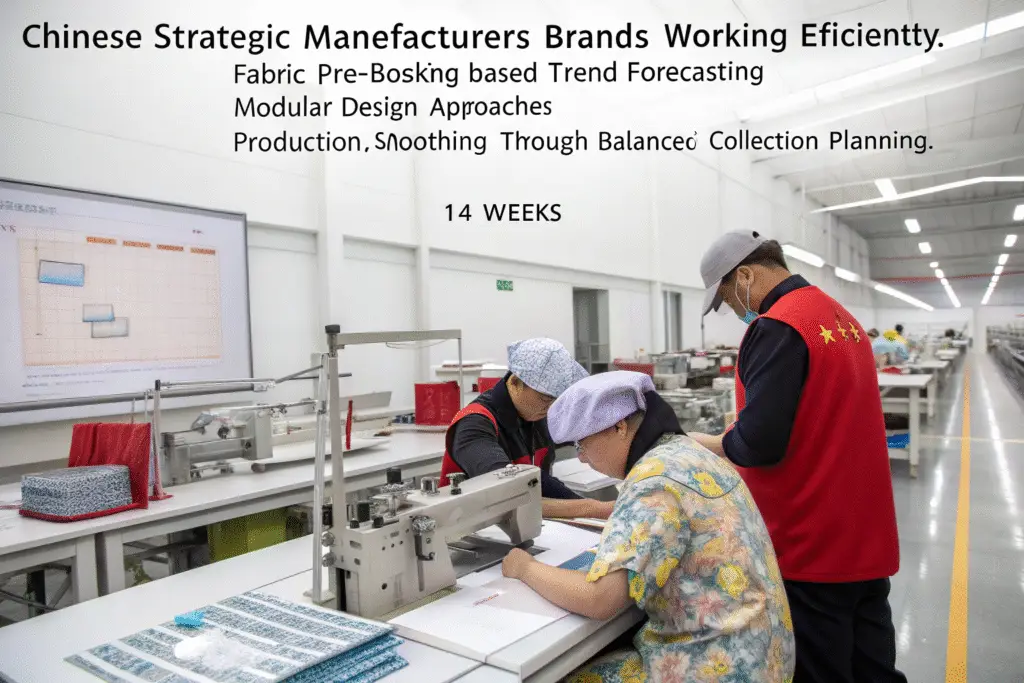
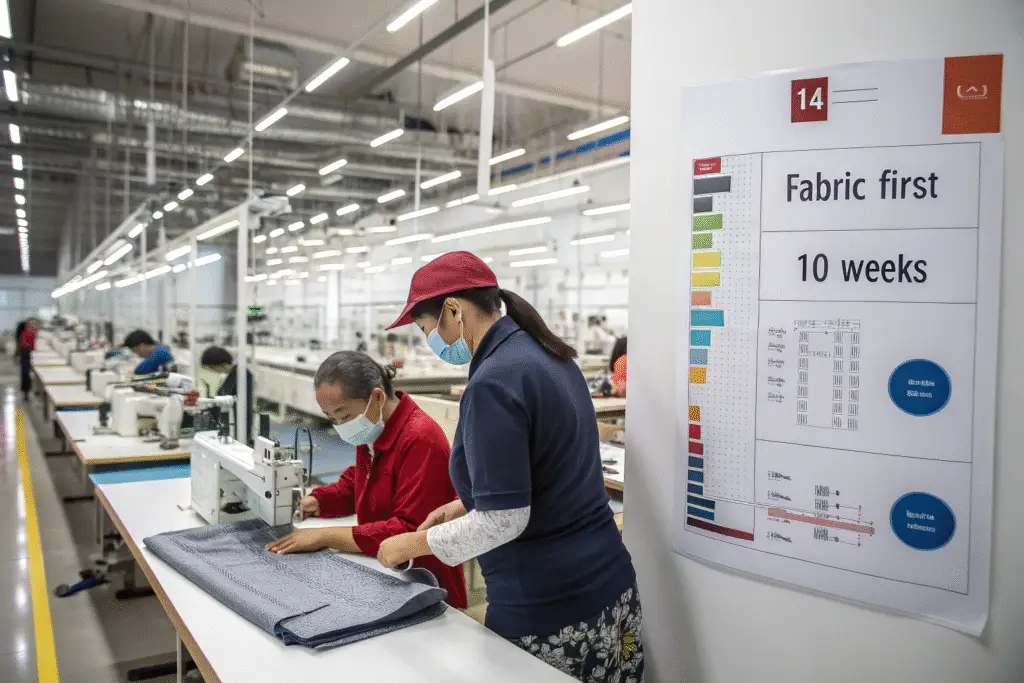
Strategic manufacturers and brands are achieving timeline compression through: fabric pre-booking based on trend forecasting, modular design approaches that share components across styles, and production smoothing through balanced collection planning. We’ve helped clients implement "fabric first" planning where seasonal fabric selections are finalized 4-6 weeks before style designs are completed, allowing material procurement to overlap with design development. This approach reduced a New York contemporary brand’s typical lead time from 14 to 10 weeks despite increasing order complexity.
What Advanced Planning Compresses Timelines?
Advanced planning strategies that specifically compress 2025 manufacturing timelines include: multi-season fabric strategy development, component standardization across collections, and production calendar integration with marketing plans. Brands that plan fabric needs 9-12 months in advance can secure production slots during off-peak periods, avoiding the 2-3 week delays common during seasonal production rushes. Similarly, standardizing trims, labeling, and packaging across multiple collections creates manufacturing efficiencies that reduce timelines by 5-7 days per order. The Fashion Innovation Center documents that brands implementing comprehensive advanced planning achieve 25% faster time-to-market than reactive planners.
How Does Relationship History Impact Timelines?
Established manufacturer relationships provide timeline advantages of 10-15% in 2025 through: prioritized production scheduling, streamlined communication protocols, and mutual understanding of quality standards. Manufacturers naturally prioritize clients with proven payment reliability, clear communication histories, and realistic expectations when allocating production capacity during constrained periods. This relationship advantage manifested clearly when a long-term client needed an urgent 4-week production during peak season – our familiarity with their standards and processes allowed us to accommodate their request while new clients faced 8-week timelines for similar orders.
What Transportation Realities Affect 2025 Timelines?
The final phase of manufacturing timelines – transportation and logistics – has stabilized but remains variable in 2025, requiring strategic approach selection based on timeline sensitivity versus cost optimization.
2025 transportation timelines show stabilization from pandemic-era volatility but with continued variability based on route, season, and service level. Ocean freight from Asia to major U.S. ports requires 25-35 days, air freight 5-8 days, and expedited ocean services 18-22 days. These transportation segments must be added to production timelines for accurate total lead time calculation. A Miami-based resort wear brand optimizes this balance by using expedited ocean shipping for their time-sensitive first seasonal delivery while standard ocean freight suffices for replenishment orders.
How Have Shipping Times Stabilized?
Ocean shipping times have stabilized in 2025 within predictable ranges: 28-32 days from Shanghai to Los Angeles, 32-36 days to East Coast ports, and 35-40 days to European ports. This stabilization reflects improved port efficiency, better vessel scheduling, and reduced congestion compared to 2021-2023 extremes. However, seasonal variations still create 5-7 day extensions during peak periods (August-October and January-February). The World Shipping Council confirms that schedule reliability has improved to 70-75% in 2025 compared to 30-40% during the pandemic period.
What Logistics Strategies Optimize Timelines?
Effective logistics strategies in 2025 include: port diversification to avoid congestion, balanced modal selection based on urgency, and customs pre-clearance preparation. Brands are increasingly using secondary ports like Savannah instead of solely relying on Los Angeles/Long Beach, reducing port delay exposure by 40%. Similarly, the calculated use of air freight for initial stock with ocean freight for replenishment creates optimal balance between speed and cost. Our logistics team guides clients through customs pre-clearance documentation that can reduce clearance time from 5-7 days to 1-2 days, representing significant timeline compression.
Conclusion
Garment manufacturing lead times in 2025 have stabilized into predictable ranges of 8-14 weeks, representing a new normal that balances efficiency with supply chain resilience. Successful navigation of these timelines requires category-specific planning, strategic quantity decisions, advanced preparation, and logistics optimization tailored to current market conditions.
The manufacturers and brands thriving in 2025’s timeline landscape are those who have moved from reactive scheduling to proactive timeline management, building relationships and processes that compress lead times while maintaining quality standards. If you’re planning your 2025 production and want to optimize your timeline strategy, contact our Business Director, Elaine, at elaine@fumaoclothing.com to discuss how our manufacturing approach can support your scheduling objectives.