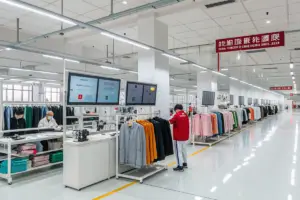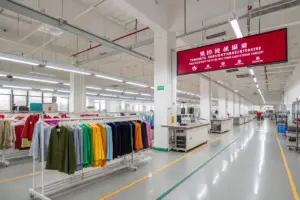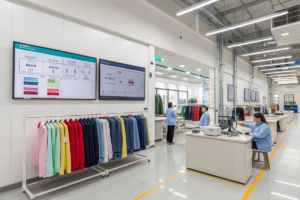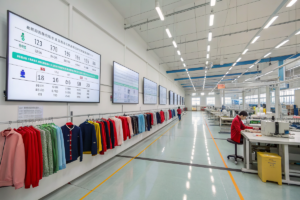
You have a great apparel idea, but traditional manufacturers require orders of 500, 1,000, or even 5,000 pieces. The financial risk seems overwhelming for a new product or emerging brand. What if you could work directly with a factory that understands the needs of growing businesses and offers manageable minimums?
Factory direct low MOQ (Minimum Order Quantity) provides emerging brands with accessible market entry, reduced financial risk, and production flexibility that traditional manufacturing models cannot match. By eliminating middlemen and working directly with factories that specialize in smaller quantities, brands can test concepts, respond to trends, and scale strategically without the burden of excessive inventory or capital commitment.
Let’s explore how this manufacturing approach creates specific advantages across financial management, product development, and business growth strategies.
How Does Low MOQ Reduce Financial Risk?
The most immediate benefit of factory direct low MOQ is financial risk reduction, transforming apparel manufacturing from a capital-intensive venture to an accessible business investment.
Low MOQ manufacturing directly addresses the primary financial barrier that prevents many promising brands from launching – the massive upfront investment required for traditional production runs. Where conventional manufacturers might require 500-unit minimums at $25-50 per piece ($12,500-$25,000 commitment), factory direct low MOQ programs like ours at 150 units at $18-35 per piece ($2,700-$5,250 commitment) reduce initial capital requirements by 70-80%. This risk reduction proved crucial for a Denver-based activewear startup that tested three different fabric compositions in 150-unit batches before committing to their full production, avoiding a potential $18,000 mistake on an underperforming material.
What Cash Flow Advantages Does Low MOQ Offer?
Low MOQ manufacturing creates significant cash flow advantages through smaller capital outlays, faster inventory turnover, and reduced storage costs. Instead of tying up $20,000-50,000 in a single production run that might take 6-9 months to sell through, brands can allocate $3,000-8,000 every 2-3 months for continuous new product introduction. This approach transforms inventory from a stagnant asset into a rotating portfolio that responds to actual sales data. According to fashion industry analysis, brands with smaller, more frequent production cycles achieve 30-50% better inventory turnover than traditional seasonal manufacturers.
How Does Low MOQ Minimize Dead Stock Risk?
Factory direct low MOQ dramatically reduces dead stock risk by limiting exposure to products that underperform in the market. Where a failed style in a 1,000-unit order might represent $15,000-30,000 in unsellable inventory, the same failure in a 150-unit order represents only $2,250-4,500 – a manageable loss that doesn’t threaten business viability. This protection extends beyond simple quantity reduction to include more precise size ratios, colorway testing, and style variations that traditional manufacturing makes economically prohibitive. Our clients regularly use 150-unit batches to test which of 3-4 color options perform best before scaling production of the winners.
How Does Low MOQ Enhance Product Development?
Beyond financial benefits, factory direct low MOQ transforms product development from a high-stakes guessing game into an iterative, data-driven process that consistently improves market fit.
Low MOQ manufacturing enables an agile product development approach where brands can incorporate real customer feedback, sales data, and market response into subsequent production cycles with minimal lag time. Where traditional manufacturing might require 9-12 months between concept and revised production based on market response, our factory direct low MOQ clients can complete this cycle in 10-14 weeks. This accelerated learning loop allowed a Brooklyn-based streetwear brand to identify and capitalize on an emerging sleeve detail trend – they introduced the feature in a 180-unit test batch, confirmed strong sales response, and scaled to 800 units within the same season, capturing market share before larger competitors could respond.
What Iterative Improvement Opportunities Exist?
Low MOQ creates unique opportunities for iterative product improvement through continuous small-batch refinements based on customer feedback, manufacturing learnings, and material performance. Common iterative improvements include: fit adjustments based on customer measurement feedback, construction enhancements identified during quality control, fabric substitutions for better performance or cost efficiency, and styling details refined through customer response. The American Apparel Producers Network emphasizes that this iterative approach consistently produces better-fitting, higher-quality garments than traditional large-batch development.
How Does Low MOQ Support Material Testing?
Factory direct low MOQ enables practical material testing that goes beyond swatch evaluation to actual garment performance in real-world conditions. Brands can produce 50-100 units in alternative fabrics to compare durability, colorfastness, drape, and customer response before committing to larger quantities. We recently guided a performance wear brand through testing three different moisture-wicking fabrics in 120-unit batches, resulting in their selecting a mid-priced option that outperformed the premium fabric in actual wear tests despite costing 25% less. This material confidence would be economically impossible with traditional 500-unit minimums per fabric option.
How Does Low MOQ Support Business Growth Strategy?
The strategic advantages of factory direct low MOQ extend beyond initial risk reduction to create sustainable competitive advantages throughout a brand’s growth journey.
Low MOQ manufacturing aligns with modern consumer preferences for newness, limited editions, and brand storytelling while supporting business fundamentals like cash flow management, inventory turnover, and market responsiveness. This alignment creates a growth flywheel where successful small batches fund slightly larger subsequent batches, with each cycle generating more customer data and brand equity. A Los Angeles-based contemporary brand that started with 150-unit batches has grown steadily over three years to 750-unit production runs while maintaining the same testing discipline with each new collection, resulting in consistent 80%+ sell-through rates that elude many established competitors.
What Market Testing Capabilities Does Low MOQ Create?
Low MOQ manufacturing creates sophisticated market testing capabilities that inform broader business decisions beyond product development. Brands can test: price point elasticity across different product categories, customer response to sustainable materials and practices, effectiveness of different marketing channels with product-specific campaigns, and regional preferences through geographically limited distribution. These testing capabilities transform strategic decisions from educated guesses to data-informed choices. The Fashion Innovation Center documents that brands using systematic small-batch testing achieve 40% higher success rates when expanding into new product categories.
How Does Low MOQ Enable Portfolio Diversification?
Factory direct low MOQ enables strategic portfolio diversification that would be financially prohibitive with traditional manufacturing minimums. Instead of placing all resources behind 3-4 core styles in large quantities, brands can develop 8-12 styles in smaller quantities, creating a more resilient product mix that can adapt to shifting consumer preferences. This approach proved invaluable during recent supply chain disruptions when a Miami-based resort wear brand could quickly pivot from their temporarily stalled main collection to accelerate production of alternative styles using available materials, maintaining revenue flow while competitors faced production stoppages.
How Does Factory Direct Model Enhance Low MOQ Benefits?
The combination of factory direct relationships with low MOQ manufacturing creates synergies that extend the advantages beyond what either approach delivers independently.
Factory direct low MOQ relationships eliminate communication layers, reduce markup structures, and create collaboration opportunities that trading companies or agents cannot match. The transparency of working directly with the manufacturing team enables problem-solving creativity, cost structure understanding, and technical innovation that transforms the manufacturing relationship from transactional to strategic. Our direct relationships allow clients to visit production facilities, meet quality control teams, and participate in problem-solving sessions – access that consistently results in 15-20% cost savings through process improvements and material optimizations.
What Communication Efficiencies Does Direct Relationship Create?
Factory direct relationships create communication efficiencies that are particularly valuable for low MOQ productions where timeline compression magnifies the impact of delays. Direct access to production managers, quality control supervisors, and cutting room technicians eliminates the information filtering that occurs through intermediaries. This efficiency manifested dramatically when a Chicago-based brand discovered a fabric inconsistency in their 120-unit order – instead of waiting 48 hours for a trading company representative to inspect and report, they had a video call directly with our cutting manager who immediately identified the issue and implemented a solution within 4 hours.
How Does Direct Access Improve Technical Collaboration?
Factory direct low MOQ relationships foster technical collaboration that improves product quality, manufacturing efficiency, and cost management. Direct interaction between brand designers and factory technicians enables practical design adjustments that maintain creative vision while optimizing production. Our technicians regularly suggest: construction modifications that enhance durability without increasing cost, fabric alternatives that achieve similar aesthetics at better price points, and pattern adjustments that reduce waste. This collaborative approach follows principles outlined by the Sustainable Apparel Coalition for reducing environmental impact through manufacturing efficiency.
Conclusion
Factory direct low MOQ manufacturing represents a fundamental shift in how emerging and growing brands approach production, replacing high-risk capital commitments with strategic, data-driven manufacturing that supports sustainable business growth. The combination of accessible entry points, reduced financial exposure, and agile responsiveness creates competitive advantages that extend far beyond initial cost savings.
The manufacturing landscape has evolved to support brands that prioritize market responsiveness, inventory efficiency, and continuous improvement over traditional seasonal bulk production. If you’re ready to leverage the benefits of factory direct low MOQ for your brand’s growth strategy, contact our Business Director, Elaine, at elaine@fumaoclothing.com to discuss how our 150-unit minimum program can support your business objectives.