You're planning your new collection and encountering minimum order quantities at different stages of production. Fabric mills require one MOQ, while garment factories require another. Understanding this distinction is crucial for budgeting, planning, and managing your supply chain effectively.
Fabric MOQ refers to the minimum amount of material you must purchase from a textile mill, typically measured in kilograms or meters, while garment MOQ is the minimum number of finished pieces a factory requires to begin production. These differing minimums exist because of the distinct operational, financial, and technical constraints at each stage of manufacturing.
Let's explore how these MOQs work in practice and how they impact your sourcing strategy from raw material to finished product.
Why Do Fabric MOQs Exist?
Fabric MOQs protect textile mills from the significant setup costs and technical challenges involved in creating custom materials. These minimums ensure production remains economically viable for the manufacturer.
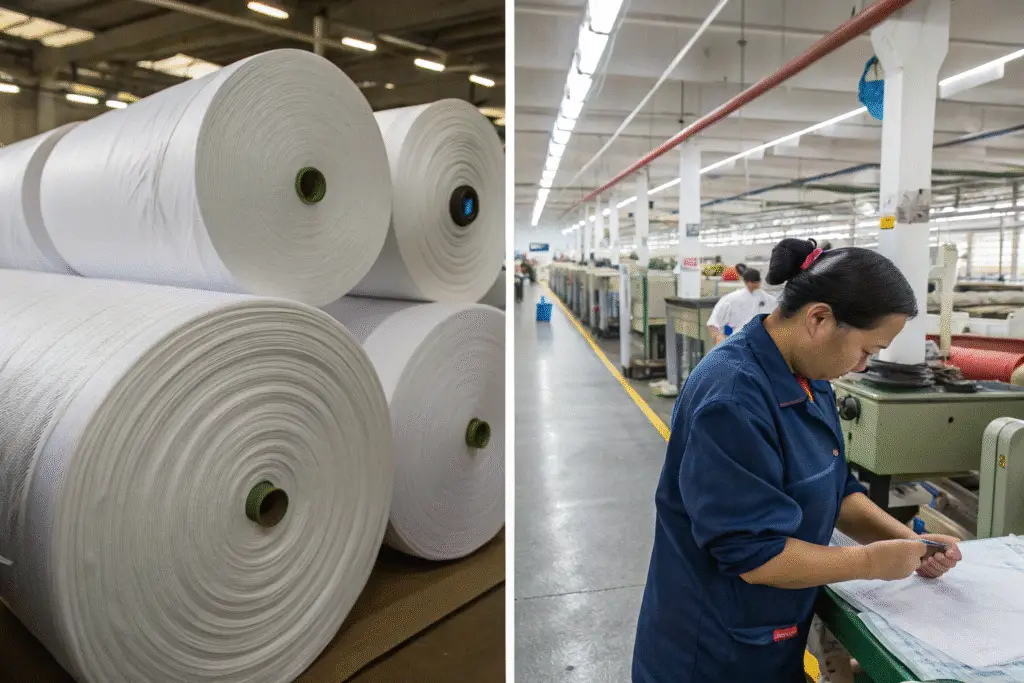
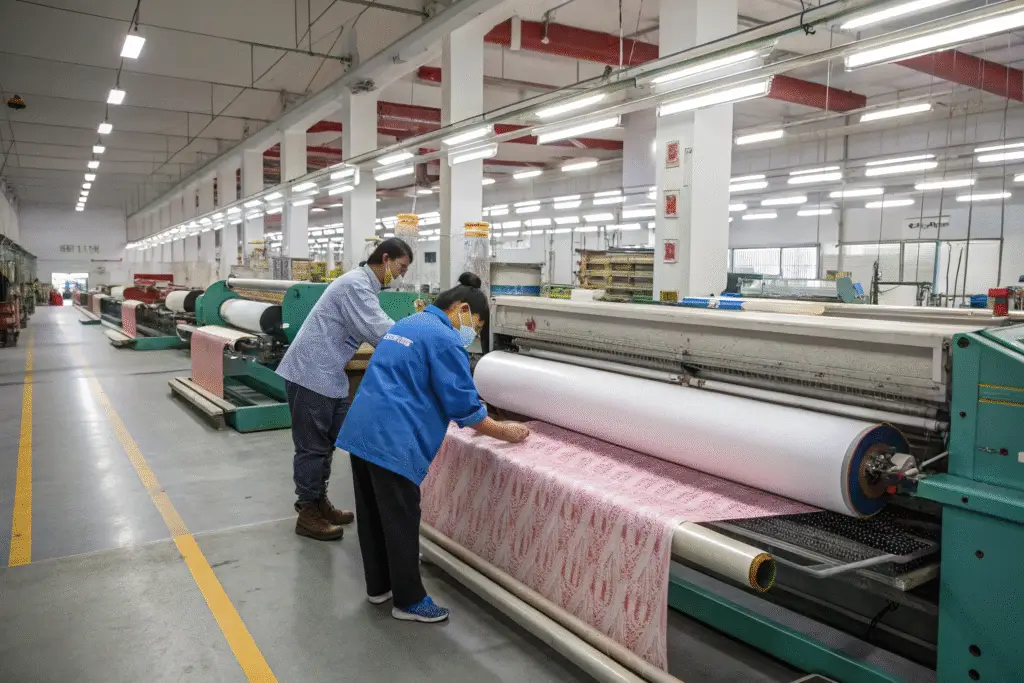
Textile manufacturing involves substantial fixed costs for machine setup, dye preparation, and pattern calibration that must be distributed across the production run. A fabric MOQ typically represents the minimum quantity where these costs can be absorbed while maintaining reasonable pricing. We recently worked with a sportswear brand that needed custom moisture-wicking fabric - the mill's 1,000kg MOQ translated to approximately 800-900 garments, which became the driving factor for their production planning rather than the factory's 300-piece garment MOQ.
What Factors Determine Fabric MOQ?
Several technical and economic factors determine fabric MOQ requirements: fiber composition, construction complexity, dyeing processes, and certification requirements. Custom-developed fabrics with unique fiber blends or specialized weaves typically have the highest MOQs (often 2,000-5,000kg), while standard materials from mill stock may have no MOQ or very low minimums. The dyeing process significantly impacts MOQ - solid colors might require 500kg minimums, while complex patterns or custom color development can increase requirements to 2,000kg or more. Additionally, fabrics requiring specific certifications like OEKO-TEX Standard 100 often have higher MOQs due to testing and compliance costs.
How Do Fabric MOQs Impact Cost Structure?
Fabric MOQs directly impact your cost per meter through economies of scale. The relationship between quantity and price is rarely linear - doubling your order typically reduces the per-meter cost by 15-30% due to better absorption of fixed costs. This pricing structure means that understanding your fabric MOQ is essential for accurate cost forecasting. For example, a mill might charge $8/meter at 500kg MOQ but only $5.50/meter at 2,000kg MOQ. This dramatic difference explains why some brands collaborate with non-competing companies to combine orders and reach more favorable pricing tiers.
How Do Garment MOQs Differ From Fabric MOQs?
Garment MOQs operate on different principles than fabric MOQs, focusing on factory efficiency, labor allocation, and production line optimization rather than material setup costs.
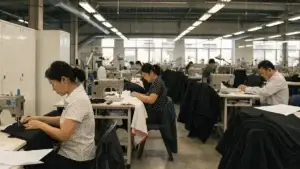
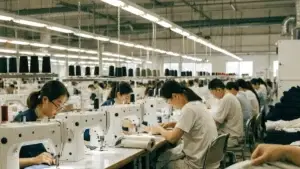
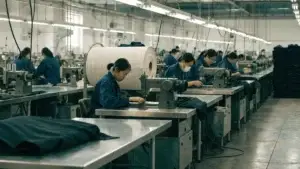
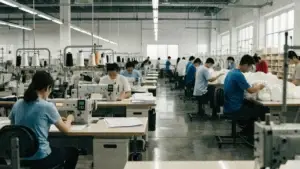
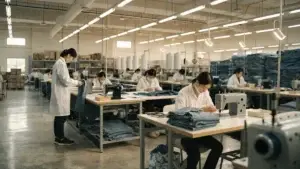
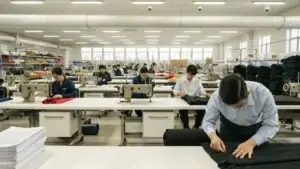
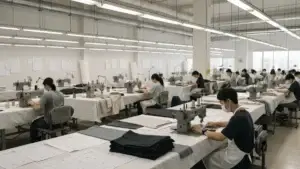
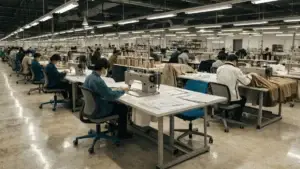
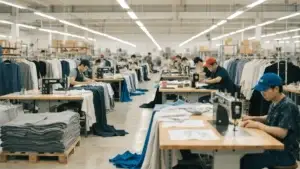
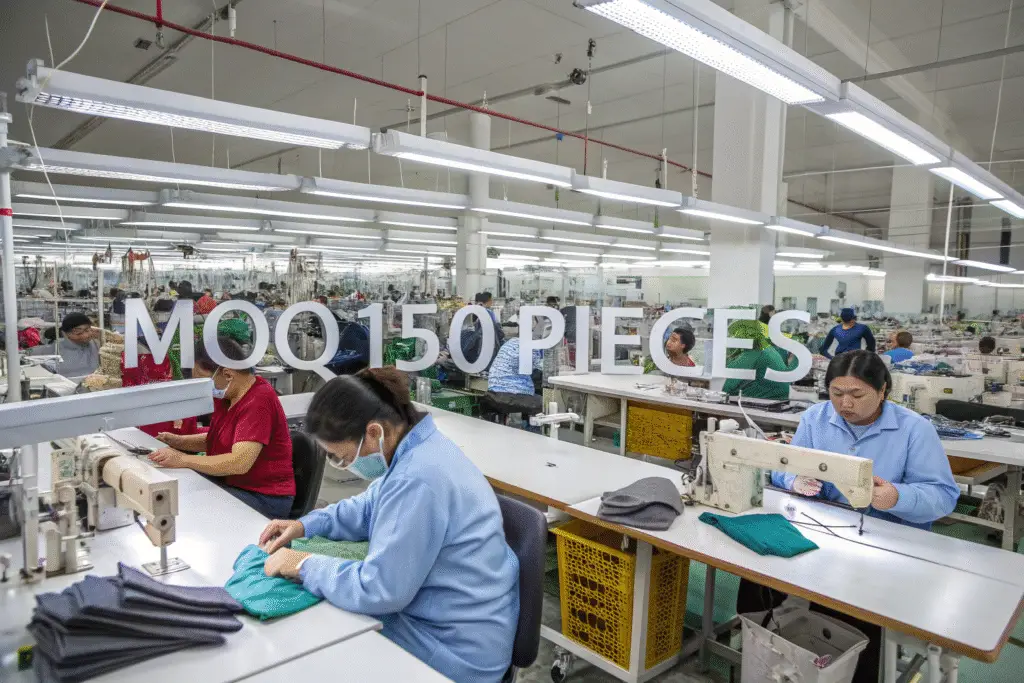
While fabric MOQs are driven by technical production constraints, garment MOQs primarily address factory operational efficiency. A clothing factory's MOQ represents the minimum number of pieces that makes productive use of their production lines, cutting tables, and quality control processes. We maintain a 150-piece MOQ for most categories because this quantity allows efficient cutting (minimizing fabric waste), proper line balancing, and comprehensive quality control procedures that wouldn't be economically feasible with smaller runs.
What Determines Garment MOQ Levels?
Garment MOQ levels are determined by style complexity, size ranges, and decoration requirements rather than material quantity. Simple styles like basic t-shirts might have MOQs as low as 50-100 pieces, while complex outerwear with multiple components could require 300-500 pieces minimum. The number of sizes and colors in your order significantly impacts MOQ - factories typically require minimum quantities per color-way to justify setup time for thread changes, printing screens, or embroidery digitization. This is why understanding your size breakdown before approaching manufacturers is crucial for accurate MOQ discussions.
How Does Style Complexity Affect Garment MOQ?
Style complexity dramatically affects garment MOQ through several mechanisms: pattern difficulty, construction steps, and specialized operator requirements. A simple polo shirt might involve 15-20 production steps, while a technical jacket could require 80-100 separate operations. Complex styles need more extensive worker training, quality checkpoints, and production time, all of which increase the minimum quantity needed to make the production run efficient. Additionally, styles requiring specialized equipment or skilled operators (like tailored blazers or technical outerwear) typically have higher MOQs to justify allocating these limited resources.
The most common sourcing challenge occurs when fabric MOQ dictates one production quantity and garment MOQ suggests another. Strategic planning is required to align these differing requirements.
Successfully navigating conflicting MOQ requirements involves understanding the flexibility points at each manufacturing stage and developing creative solutions. The fabric MOQ typically establishes your absolute minimum production quantity, while garment MOQs can sometimes be negotiated based on style simplification, fabric substitution, or production timing. We recently helped a startup brand facing a 1,200kg fabric MOQ but only needing 600 garments by suggesting they develop a capsule collection using the same fabric across multiple styles, effectively meeting both requirements.
What Strategies Reduce Effective Fabric MOQ?
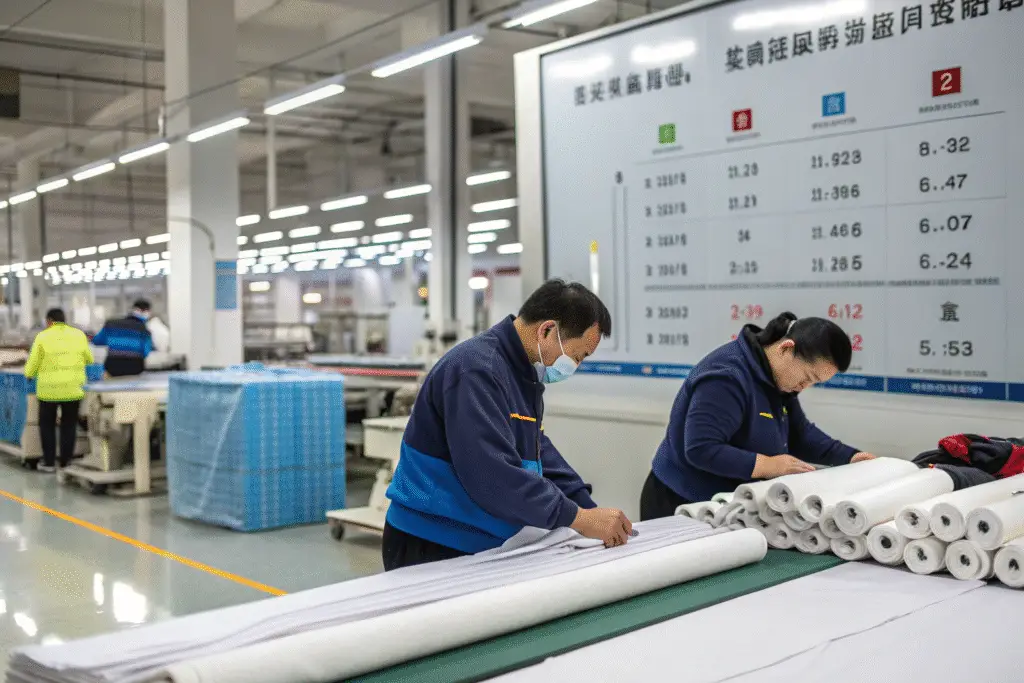
Several practical strategies can help reduce the effective fabric MOQ burden: utilizing mill stock fabrics, participating in fabric buy-ins, selecting standard color palettes, and developing multi-seasonal fabrics. Many mills maintain stock programs for their most popular fabrics with no MOQ requirements. Additionally, some factories (including ours) maintain fabric inventories for common materials, effectively eliminating fabric MOQ concerns for those selections. When custom fabric is necessary, coordinating with other brands for collective ordering or planning multiple seasons around the same fabric can make higher MOQs more manageable.
How Can Factories Help With MOQ Challenges?
Forward-thinking factories can help navigate MOQ challenges through several approaches: maintaining fabric partnerships, offering standard material alternatives, and providing production planning advice. We maintain relationships with fabric mills that allow us to aggregate orders from multiple clients to meet high MOQs while providing each brand with their required quantity. Additionally, we often advise clients on similar alternative fabrics with lower MOQs that achieve comparable aesthetic and performance characteristics. This guidance has helped numerous brands launch collections that would otherwise be stalled by fabric minimums.
What Are The Hidden Costs Of Low MOQs?
While pursuing lower MOQs seems financially prudent, understanding the complete cost implications reveals why manufacturers establish these minimums and why sometimes paying for higher quantities proves more economical.
Low MOQs often carry hidden costs that extend beyond the per-piece price, including higher material costs, reduced quality control attention, limited production flexibility, and missed opportunity costs. A 50-piece order might have a 40% higher per-garment cost compared to a 300-piece order once all factors are considered. More importantly, extremely small runs often receive less experienced operators and abbreviated quality control processes because they cannot justify allocating premium factory resources.
How Do MOQs Impact Per-Piece Pricing?
MOQs impact per-piece pricing through both fixed cost absorption and production efficiency. Every production run incurs fixed costs for pattern making, sample development, production planning, and machine setup. With a 50-piece order, these fixed costs might represent 30-40% of the total, while with a 300-piece order they might drop to 10-15%. Additionally, production efficiency improves with quantity - workers develop muscle memory, quality becomes more consistent, and material utilization improves. This efficiency curve means the cost difference between 150 pieces and 200 pieces is often minimal, making the higher quantity strategically advantageous.
What Operational Limitations Come With Low MOQs?
Low MOQs create operational limitations that can impact quality, timing, and flexibility. Factories typically schedule small orders during production gaps or assign them to less experienced teams. Quality control may be simplified, and fabric cutting might be less efficient (higher waste percentage). Most significantly, low MOQ orders receive lower priority during production conflicts, making them more vulnerable to delays. Understanding these trade-offs helps brands make informed decisions about order quantities rather than simply pursuing the lowest possible MOQ regardless of consequences.
Conclusion
Understanding the distinction between fabric MOQ and garment MOQ is fundamental to effective supply chain management. Fabric MOQs address the technical and economic realities of textile production, while garment MOQs optimize factory operations and quality assurance. The most successful brands develop strategies that acknowledge both requirements, sometimes using fabric MOQ as their production driver and other times finding creative solutions to align these differing minimums.
Navigating MOQ requirements is a balancing act that benefits from experienced manufacturing guidance. Our team specializes in helping brands optimize their production quantities based on both market testing needs and manufacturing realities. If you're facing MOQ challenges for your next collection, contact our Business Director, Elaine, at elaine@fumaoclothing.com to discuss strategic approaches that align with your business objectives.