If you're launching a brand, running a promotional event, or starting a print-on-demand business, one of your first questions is likely about Minimum Order Quantity (MOQ) for custom t-shirts. You want to know the minimum number you need to order to make custom manufacturing feasible. The answer isn't as simple as a single number—it depends on multiple factors including customization complexity, fabric quality, and your manufacturer's capabilities.
The MOQ for custom t-shirt manufacturing typically ranges from 50 to 500 pieces per design, with most quality manufacturers settling around 100-300 pieces as a standard starting point. This range balances production efficiency for the factory with accessibility for brands and businesses. However, understanding what drives these numbers and how to negotiate them is key to getting the best value for your investment.
Many people assume all custom t-shirt manufacturing follows the same MOQ rules, but the reality is much more nuanced. The type of customization, fabric choices, and even the season can impact what minimum quantity a factory will accept while maintaining quality standards and profitability.
What factors determine MOQ for custom t-shirts?
Several key elements influence where your MOQ will land within that 50-500 piece range. The primary factors include the type of decoration method, fabric source, size breakdown, and the manufacturer's business model. Understanding these variables helps you make informed decisions and potentially lower your minimum order requirements.
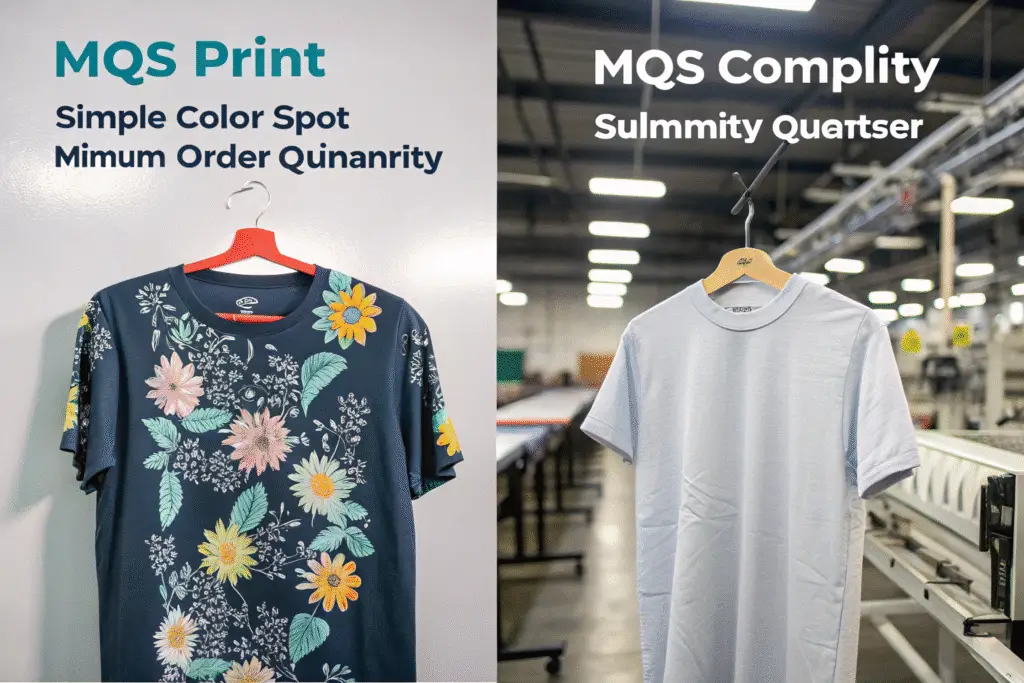
Print complexity represents one of the biggest MOQ drivers. A simple one-color spot print has much lower setup requirements than a complex all-over sublimation print. Similarly, the source of your blanks matters—using the manufacturer's standard fabric versus bringing your own custom material can significantly impact MOQ thresholds. We work with clients to analyze these factors and find the most cost-effective approach for their specific needs.
How does decoration method affect MOQ?
Different printing techniques come with varying setup costs and minimum requirements:
| Printing Method | Typical MOQ Range | Key Considerations |
|---|---|---|
| Screen Printing | 24-100 pieces | Higher setup cost, but lower per-unit cost at volume |
| DTG (Direct to Garment) | 1-50 pieces | Low setup cost, ideal for complex designs and small runs |
| Heat Transfer | 50-200 pieces | Moderate setup, good for detailed designs |
| Embroidery | 50-300 pieces | High setup cost, thread color limitations |
| Sublimation | 100-500 pieces | Requires polyester garments, specialized equipment |
Last month, a university club needed 75 t-shirts for an event with a complex four-color design. Screen printing would have been expensive due to setup costs, but DTG printing allowed them to meet their quantity needs while maintaining design integrity at a reasonable price point.
Why does fabric choice impact minimum quantities?
The source of your t-shirt blanks significantly affects MOQ. When you use the manufacturer's standard inventory fabrics, they're purchasing these materials in bulk, achieving better pricing and having flexibility with smaller cut quantities. However, if you require custom-dyed fabric or specific mill requirements, the MOQ will increase substantially to meet the fabric mill's minimums.
We maintain an extensive inventory of popular cotton and blended fabrics specifically to serve clients ordering 100-300 piece custom t-shirt runs. This allows us to offer competitive MOQs without compromising on material quality. A startup sportswear brand recently saved 30% on their 150-piece order by selecting from our stock fabric options rather than insisting on custom-dyed material.
What are typical MOQs for different customization types?
MOQs vary significantly based on what type of customization you need. Basic printing on standard t-shirts has the lowest barriers to entry, while technical customization or specialized garments require higher commitments. Understanding these categories helps you set realistic expectations for your project scope and budget.
The most accessible entry point is standard cut-and-sew t-shirts with basic printing, where MOQs of 100 pieces are common. As you add complexity through multiple print locations, specialized fabrics, or custom dyeing, MOQs typically increase to 200-500 pieces. For complete customizations including custom fabric development and unique pattern creation, MOQs can reach 500-1000 pieces to justify development costs.
What MOQ can I expect for basic printed tees?
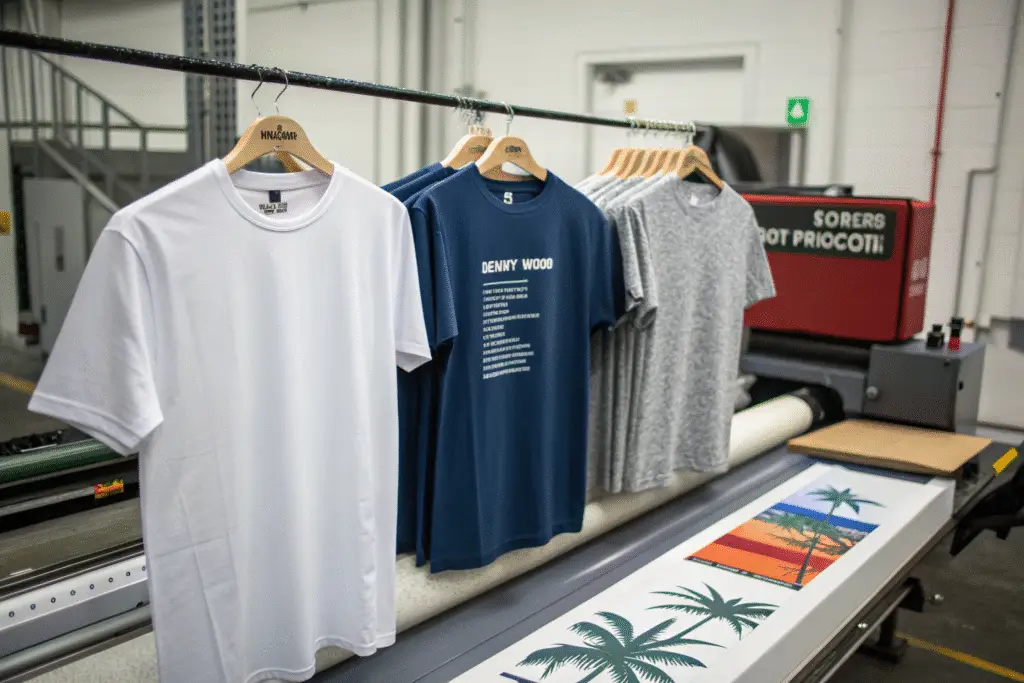
For standard custom t-shirts using stock fabrics with single-location printing, most quality manufacturers set MOQs between 50-200 pieces. This range allows efficient production runs while keeping the project accessible for smaller brands. The exact number within this range depends on:
- Number of print colors (more colors often means higher MOQ)
- Print location (chest prints typically have lower MOQs than all-over prints)
- Garment type (basic tees have lower MOQs than performance wear)
- Order timing (off-season orders may have more flexibility)
We typically recommend starting with 100 pieces for basic custom tees—this quantity provides enough units for meaningful market testing while keeping initial investment manageable.
How do MOQs change for fully custom t-shirts?
Fully custom t-shirts—where you're creating original patterns, specifying custom fabric, or developing unique garment constructions—require significantly higher MOQs. These projects involve substantial upfront development work including pattern making, sample creation, and fabric sourcing coordination.
For fully custom development projects, expect MOQs starting at 300 pieces and often ranging to 1000 pieces depending on complexity. The investment makes sense when you're building a distinctive brand identity that standard blanks can't achieve. A emerging streetwear brand we worked with last quarter ordered 400 units of their custom-designed oversized tee, which featured unique sleeve construction and custom-dyed fabric. The higher MOQ allowed them to create a product that truly stood out in a crowded market.
How can you reduce MOQ for custom t-shirt orders?
While MOQs exist for valid business reasons, there are several strategies to make custom t-shirt production more accessible for smaller quantities. The key is understanding what factors manufacturers are most flexible on and where you might have negotiation leverage based on your specific situation.
The most effective approach is often choosing standard options rather than custom specifications. Selecting from the manufacturer's existing fabric inventory, using their standard t-shirt templates, and limiting print colors can significantly reduce your MOQ. Additionally, demonstrating potential for repeat business or ordering multiple designs simultaneously can provide negotiation power.
What negotiation strategies work for lower MOQs?
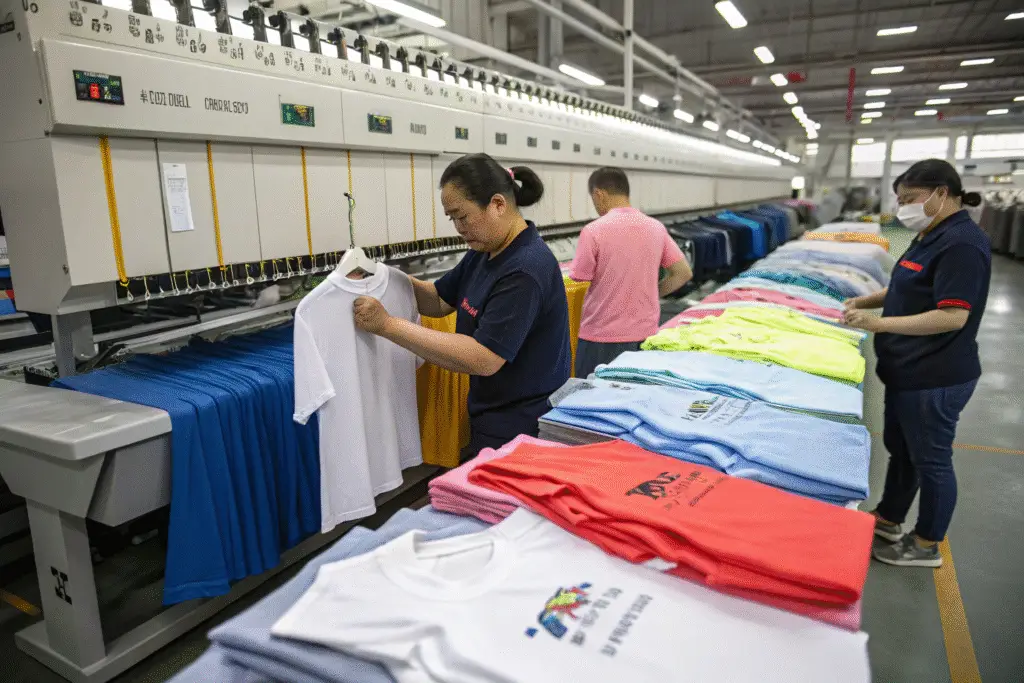
Successful MOQ negotiation requires understanding the manufacturer's perspective and finding mutually beneficial arrangements:
- Combine multiple designs: If you need three designs at 50 pieces each, some manufacturers will accept this as a 150-piece order
- Commit to future business: Showing your growth plan and potential for repeat orders can incentivize flexibility
- Off-season production: Scheduling production during traditionally slower periods may yield better terms
- Flexible timelines: Allowing the manufacturer to fit your order into production gaps can lower MOQs
We recently worked with a corporate client who needed five different logo designs for various departments, each at 40 pieces. By combining these into a single 200-piece production run with staggered delivery dates, we achieved their quantity goals while maintaining our production efficiency.
When does it make sense to pay more for lower MOQ?
Sometimes paying a higher per-unit cost for a lower quantity is the smarter business decision. Consider accepting higher pricing for lower MOQs when:
- You're testing a new design or market and want to minimize risk
- You need samples for photoshoots or trade shows before full production
- Your budget is limited but you need inventory to start generating sales
- You're creating limited edition or seasonal designs with uncertain demand
A pop-up restaurant we supplied last season ordered 75 custom aprons at a 25% higher per-unit cost rather than committing to the standard 200-piece MOQ. This approach matched their limited-time business model and prevented excess inventory they couldn't use.
Focusing solely on MOQ can be misleading if you're not considering the complete cost picture. Several expenses beyond the per-garment price can significantly impact your total investment, especially with smaller quantity orders where setup costs represent a larger percentage of the total.
The most commonly overlooked costs include screen setup fees (for screen printing), digitization charges (for embroidery), pattern making costs (for custom garments), and sample fees. Additionally, shipping costs for smaller orders often have a higher per-unit impact, and payment terms may be less favorable for orders barely meeting MOQ requirements.

How do setup costs impact small quantity orders?
Setup costs represent fixed expenses that get amortized across your total order quantity. With smaller MOQs, these costs constitute a larger percentage of your per-unit price:
- Screen printing: $15-50 per color depending on complexity
- Embroidery digitizing: $25-75 per design
- Pattern making: $100-300 for new designs
- Sample creation: $50-150 plus shipping
For a 50-piece order, a $75 embroidery setup fee adds $1.50 to each garment. For a 500-piece order, the same fee adds only $0.15 per unit. Understanding this math helps explain why per-unit costs decrease significantly as quantities increase.
What quality compromises might occur at minimum MOQ?
When ordering at the absolute minimum MOQ, be aware of potential quality limitations. Factories may:
- Use leftover fabric from larger productions (potential color inconsistency)
- Assign less experienced production staff to small runs
- Rush quality control to meet tight scheduling
- Limit customization options or design complexity
We maintain consistent quality standards regardless of order size by dedicating specific production lines to small batch orders. However, not all manufacturers have this capability, so it's important to discuss quality control processes specifically for MOQ-level orders.
Conclusion
Understanding MOQ for custom t-shirt manufacturing requires looking beyond a simple number to comprehend the factors that drive minimum quantities and costs. While typical MOQs range from 50-500 pieces, the right quantity for your project depends on your customization needs, budget, and business objectives. The most successful approach involves honest conversation with your manufacturer about your goals and constraints.
At Shanghai Fumao, we specialize in helping brands navigate custom t-shirt manufacturing at various quantity levels. Our transparent pricing and flexible approach have helped numerous clients from startups to established brands achieve their production goals. If you're planning a custom t-shirt project and want expert guidance on MOQs and production strategies, contact our Business Director, Elaine, at elaine@fumaoclothing.com to discuss how we can bring your designs to life.