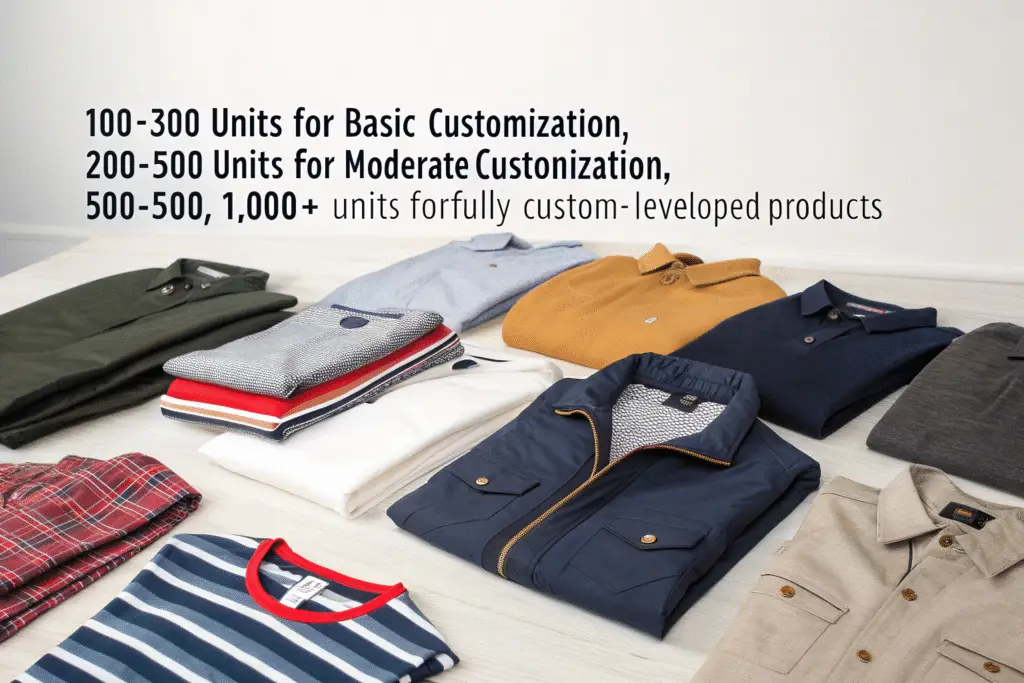
As the owner of Fumao Clothing with extensive experience serving American brands, I've found that "standard MOQ" is one of the most misunderstood concepts in custom clothing production. While many brands hope for a simple number, the reality is that MOQs vary dramatically based on customization level, garment complexity, and factory specialization. Understanding this spectrum helps brands make informed production decisions.
There is no single standard MOQ for custom clothing production, but typical ranges are 100-300 units for basic customization, 200-500 units for moderate customization, and 500-1,000+ units for fully custom developed products. These ranges reflect the economic realities of balancing customization with manufacturing efficiency.
I've seen brands become frustrated when comparing vastly different MOQ quotes, not realizing they're comparing apples to oranges in terms of customization level. Let me break down what actually determines MOQs in custom production and how to navigate this complex landscape.
How does customization level impact MOQ requirements?
The term "custom" means different things to different brands, and this definition directly impacts minimum order quantities. Factories categorize customization into distinct levels that carry dramatically different cost and quantity implications.
Customization levels range from simple color/fabric selection (lowest MOQ) to full product development (highest MOQ), with each increase in customization complexity typically raising minimum quantity requirements by 100-300%. Understanding where your project fits on this spectrum is crucial for realistic planning.
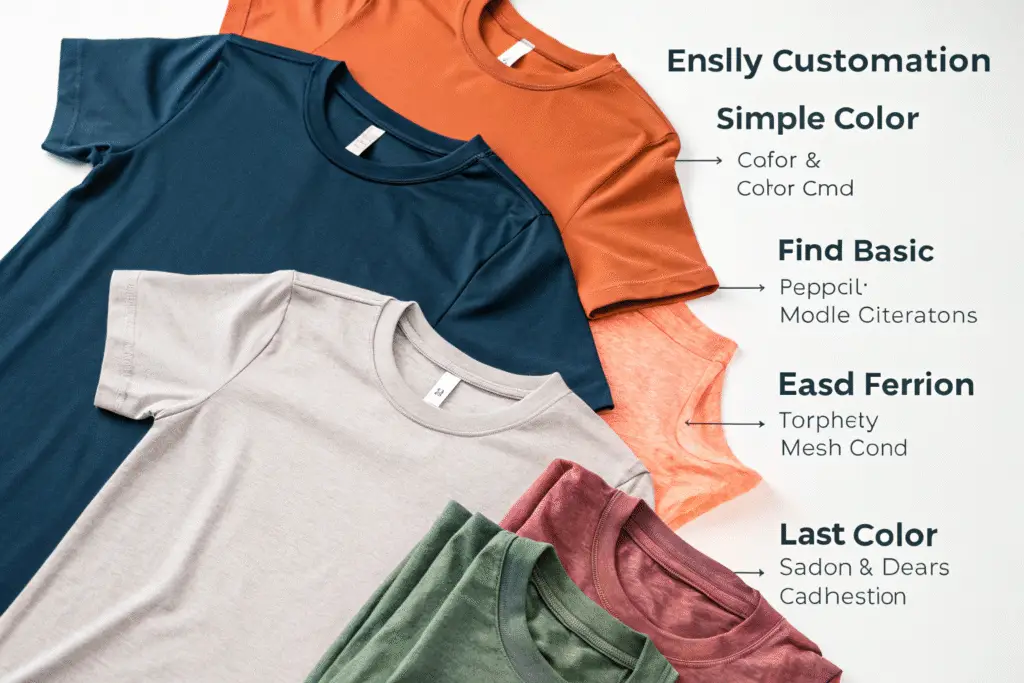
What MOQ should you expect for basic customization?
Basic customization involves selecting from a manufacturer's existing material library and modifying simple elements like color placement or standard trims. This approach typically carries the lowest MOQs because it minimizes factory setup requirements.
Our factory offers 150-unit MOQs for basic customization using our existing materials and standard components. A sportswear brand recently used this approach to create a distinctive collection by combining our stock fabrics in novel ways and adding their branding to standard garment shapes. This strategy allowed them to launch with manageable quantities while maintaining their custom vision.
How do moderate customization requirements affect MOQs?
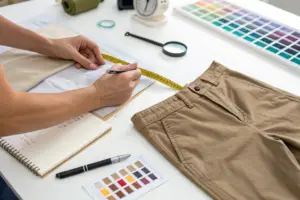
Moderate customization involves custom dyeing, pattern modifications, or specialized construction techniques that require additional setup but don't involve full product development. These projects typically require 200-500 units to justify the increased engineering time.
We recently produced a 300-unit order for a brand that wanted custom-dyed versions of our standard fabrics and modified sleeve constructions on existing patterns. The custom dyeing alone required meeting the dye house's 300-yard minimum, while the pattern modifications needed additional technical time. These factors determined our MOQ rather than the sewing production itself.
How does garment complexity influence standard MOQs?
Simple garments and complex garments have completely different MOQ profiles, even with identical customization levels. The number of components, construction steps, and specialized operations all impact the quantity needed to make production economically viable.
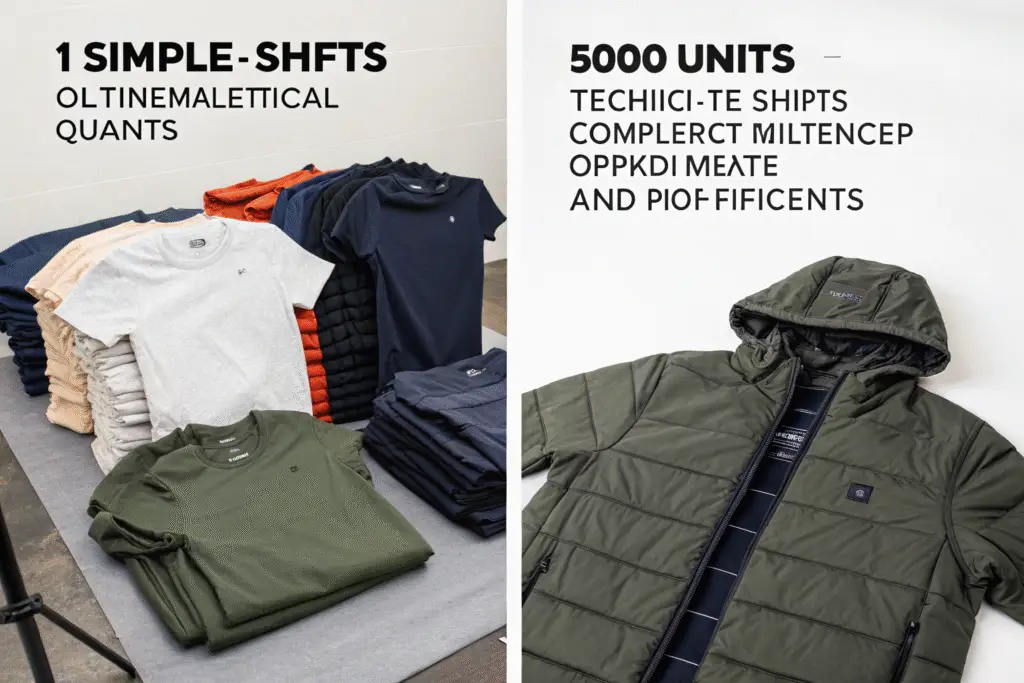
Garment complexity dramatically impacts MOQs, with simple items like t-shirts potentially starting at 50-100 units, while complex technical outerwear might require 500+ units even with minimal customization. This variation reflects the substantial differences in setup time and production efficiency.
Why do simple garments have lower MOQs?
Basic garments like t-shirts, simple woven shirts, and basic skirts typically have lower MOQs because they involve standardized construction methods, faster production speeds, and simpler material requirements. The efficiency of producing these items makes smaller quantities more feasible.
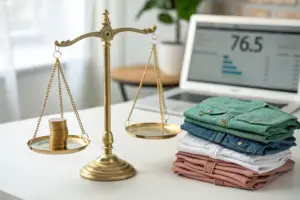
Our MOQ for custom t-shirts starts at 100 units because the production process is highly efficient and material waste is minimal. However, brands should understand that the per-unit cost at 100 units will be significantly higher than at 500 units. One brand calculated they paid 45% more per unit at our 100-unit MOQ compared to what they'd pay at 400 units.
What drives high MOQs for complex garments?
Technically complex garments like tailored blazers, technical outerwear, and intricate dresses require significantly higher MOQs due to extended setup times, specialized equipment requirements, and complex quality control processes. The fixed costs are simply higher and must be distributed across more units.
Our MOQ for a custom technical jacket is 400 units because the production involves 50+ separate operations, specialized waterproof sewing equipment, and extensive quality testing. An outdoor brand initially struggled with this MOQ until they understood that the production complexity justified the quantity requirement for custom development.
How do material choices determine MOQ thresholds?
Material selection represents one of the most significant factors in custom clothing MOQs, as fabric and trim suppliers impose their own minimums that factories must accommodate. These upstream requirements directly impact what quantities are feasible for custom production.
Material minimums often dictate factory MOQs, with custom fabrics typically requiring 500-1,000+ yard minimums, while using stock materials can enable 100-300 unit production. Strategic material selection is therefore crucial for managing quantity requirements.
Why do custom fabrics increase MOQ requirements?
Textile production involves massive setup costs that mills recover through minimum order quantities. When brands request custom-developed fabrics, they're often required to purchase quantities sufficient for 500-2,000 units, regardless of their actual production needs.
We recently guided a brand through a custom fabric development that required a 900-yard minimum—enough for approximately 600 units of their dress design. Since they only wanted 200 units, we helped them explore alternative approaches using stock fabrics with custom finishes that achieved similar aesthetics with a 200-unit MOQ.
How can trim selection impact MOQ feasibility?
Custom trims, labels, and hardware often come with significant minimum order requirements that can dictate overall production quantities. Strategic trim selection or modification of standard components can dramatically reduce MOQ requirements.
A luxury brand wanted custom metal buttons developed specifically for their 250-unit order. The button manufacturer's 5,000-piece minimum made this economically unfeasible. By selecting from our existing hardware options and adding custom branding through engraving, they maintained their premium aesthetic while working within a realistic 250-unit MOQ.
What factory characteristics influence standard MOQs?
Not all factories operate with the same MOQ structure, as their equipment, specialization, and business model significantly impact what quantities they can profitably produce. Understanding these differences helps brands identify the right manufacturing partners for their specific needs.
Factory MOQs vary based on production technology, workforce specialization, business model focus, and current capacity utilization. These factors explain why similar factories might have dramatically different minimum quantity requirements.
How does production technology affect MOQ policies?
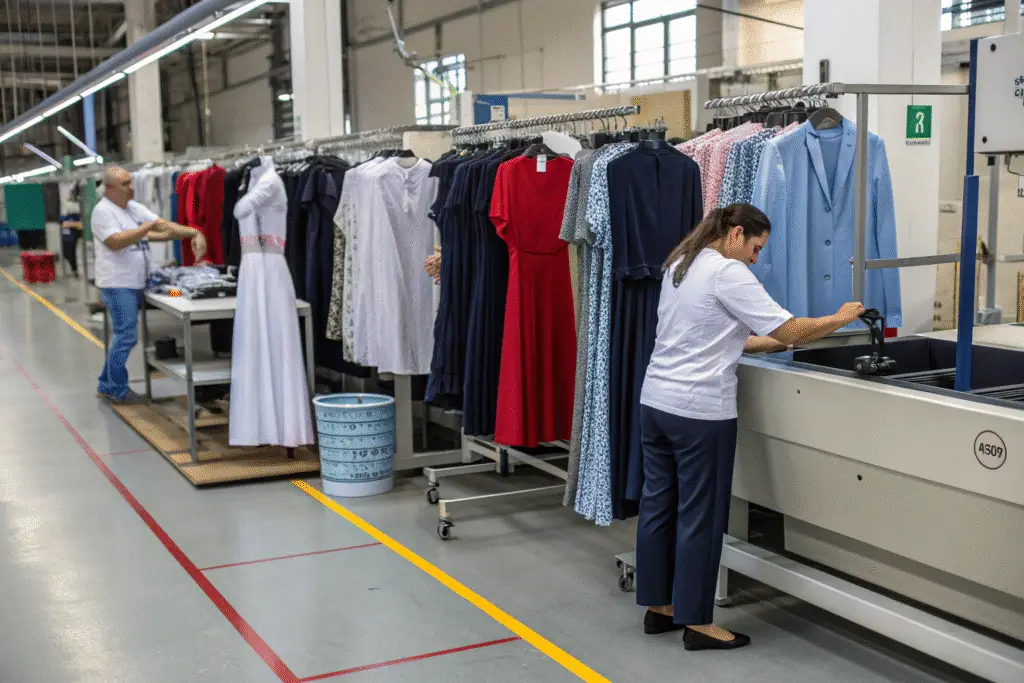
Factories with highly automated equipment typically require higher MOQs to justify their capital investment, while smaller operations with more manual processes can often accommodate lower quantities more flexibly.
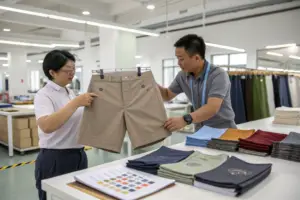
We've invested in semi-automated cutting equipment that requires significant setup time but dramatically increases cutting accuracy and efficiency. This technology investment means our efficient production threshold starts around 150 units, below which the setup costs become prohibitive. Smaller factories without this equipment might accept 50-unit orders but with different efficiency trade-offs.
Why do specialized factories have different MOQ structures?
Factories specializing in specific product categories often have MOQ structures optimized for their niche. Knit specialists, woven experts, and technical apparel manufacturers each have different economic models that impact their quantity requirements.
Our factory specializes in woven and technical apparel, which naturally carries higher MOQs than knit production. A brand comparing our 200-unit MOQ for woven shirts against a knit specialist's 80-unit MOQ for t-shirts wasn't comparing equivalent production scenarios. Understanding these specialization differences helps brands set realistic expectations when sourcing different product categories.
Successful brands develop strategies to work within MOQ constraints while still achieving their custom vision. The most effective approaches involve strategic planning, flexibility, and understanding what elements drive quantity requirements.
Brands can navigate MOQ requirements through style consolidation, phased production planning, strategic material selection, and building manufacturer relationships that create flexibility. These approaches have helped hundreds of our partners achieve their custom goals.
How does style consolidation help meet MOQs?
Producing multiple styles using the same custom materials effectively increases your fabric quantity without changing per-style MOQs. This approach makes custom materials feasible by aggregating demand across your collection.
We worked with a brand that developed a custom fabric but wanted to produce four different styles at 150 units each. By using the same custom textile across all styles, they effectively created a 600-unit fabric order that met mill minimums while maintaining their per-style quantity target. This strategic approach made their custom vision achievable.
Can relationship building create MOQ flexibility?
Manufacturers often provide MOQ flexibility to brands that demonstrate growth potential, reliability, and professional partnership. Building strong manufacturer relationships can eventually lead to more favorable terms as trust develops.
We've gradually reduced MOQs for several brands that started with our standard minimums but demonstrated consistent payment, clear communication, and steady growth. One brand began with 300-unit orders and, over two years, built the trust that allowed us to accommodate 150-unit special projects. This relationship development takes time but creates significant long-term advantages.
Conclusion
The "standard MOQ" for custom clothing production depends entirely on your specific customization needs, garment complexity, material choices, and manufacturer selection. Rather than seeking a universal number, successful brands understand the factors that drive quantity requirements and develop strategies to align their production plans with manufacturing realities.
The most effective approach involves clearly defining your customization must-haves versus nice-to-haves, being strategic about material selection, and building manufacturing partnerships that can grow with your business. This nuanced understanding transforms MOQs from frustrating barriers into manageable business parameters.
If you're planning custom clothing production and want to understand what MOQ might be realistic for your specific project, we'd be happy to discuss your requirements. Contact our Business Director, Elaine, at elaine@fumaoclothing.com to explore how your customization goals align with practical manufacturing constraints.