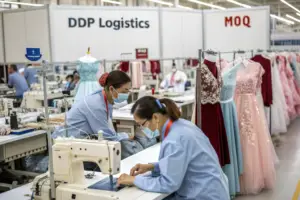
After fifteen years in garment manufacturing, I've reviewed thousands of tech packs from brands of all sizes. Last month, a promising startup sent us what they called a "complete tech pack" that consisted of a single sketch and fabric swatch. Their subsequent three sampling rounds and $3,200 in unnecessary costs could have been avoided with one properly constructed document. The difference between amateur and professional manufacturing consistently comes down to one factor: comprehensive technical documentation.
A complete tech pack contains twelve essential components that work together to provide manufacturers with everything needed to accurately execute your design vision. These components include technical flats, detailed measurement specs, materials documentation, construction callouts, and supporting references that eliminate guesswork and ensure consistency from sampling through mass production. Missing even one of these elements creates ambiguity that leads to errors, delays, and cost overruns that compromise your product's success.
Think of your tech pack as the universal language between your creative vision and our manufacturing expertise. When properly constructed, it aligns designers, pattern makers, sample developers, and production teams with precise, unambiguous instructions. Let me walk you through each critical component and explain why it matters for your manufacturing success.
Why are technical sketches and flats fundamental?
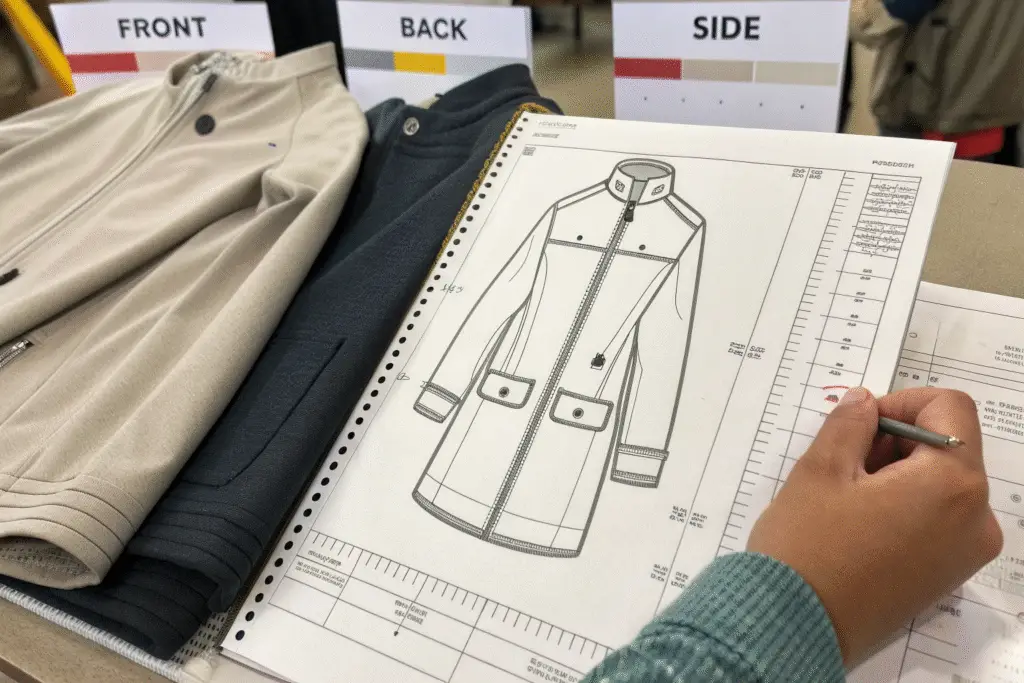
Technical drawings form the visual foundation of your tech pack, providing the blueprint that shows exactly what you want to create without artistic interpretation or stylistic exaggeration.
Unlike fashion illustrations that convey mood and attitude, technical flats are precise, scaled drawings that show the garment from all necessary angles with all construction details clearly indicated. They serve as the primary visual reference throughout the manufacturing process. Last quarter, a client provided beautiful rendered sketches but no technical flats, resulting in samples that captured the "feeling" of their design but missed critical structural elements that only technical drawings would have shown.
What views should technical flats include?
Comprehensive technical flats must show the garment from front, back, and often side views, with close-up callouts for complex details like plackets, pockets, and unique seam treatments. These multiple perspectives ensure three-dimensional understanding of how the garment constructs. According to the Fashion Institute of Technology's technical design guidelines, multi-view flats reduce construction misinterpretation by up to 70% compared to single-view drawings.
How do construction callouts improve accuracy?
Callouts—numbered or lettered annotations connected to specific garment areas—direct the manufacturer's attention to critical construction details that might be overlooked. These might indicate special stitching, unique seam treatments, or precise placement of trims and hardware. We've found that tech packs with detailed callouts require 50% fewer clarification questions during sampling compared to those with unannotated flats.
What makes a comprehensive measurement spec sheet?
The measurement specification sheet transforms your design from a visual concept into quantifiable, producible dimensions that can be consistently replicated across all sizes and production runs.
This component provides precise numerical data for every critical dimension of your garment, complete with acceptable tolerances for each measurement. It serves as the objective standard for pattern making, grading, and quality control. A sportswear client recently learned the importance of complete measurement documentation when their initial spec sheet omitted underarm and bicep measurements, resulting in restrictive armholes that required complete pattern redevelopment after sampling.

Which measurements are most frequently overlooked?
Beyond basic body and length measurements, tech packs often miss critical points like armhole depth, cross-back width, sleeve cap height, and garment openings (neck, cuff, hem). These overlooked measurements significantly impact fit and comfort. The American Society for Testing and Materials provides standardized measurement points that form an excellent foundation for comprehensive spec sheets.
How should grade rules be documented?
Grade rules specify how measurements change between sizes, ensuring proportional scaling rather than simply making garments larger or smaller. Your tech pack should include either a complete graded spec sheet showing measurements for all sizes or a separate grade rule table indicating how much each measurement increases or decreases between consecutive sizes. Proper grading documentation has reduced our clients' size-related returns by an average of 35%.
Why is detailed materials specification critical?
The Bill of Materials (BOM) section provides a complete inventory of every component needed to construct your garment, ensuring consistency in materials sourcing and preventing unauthorized substitutions.
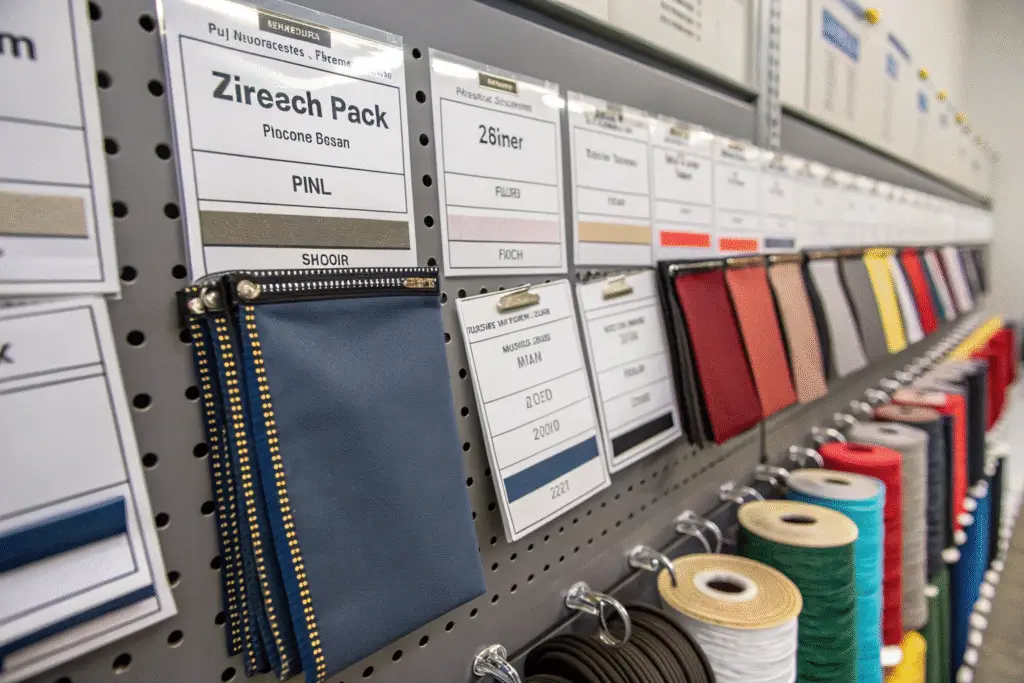
This comprehensive list goes beyond basic fabric description to include precise specifications for every thread, zipper, button, interlining, and trim. Material ambiguities create some of the most expensive production errors. I recall a client who simply specified "brass buttons" without providing composition details, only to discover their manufacturer used cheap plated plastic that tarnished after first wash, ruining 2,000 units of a premium product.
What fabric information is essential?
Complete fabric specification includes composition (percentage of each fiber), weight (GSM or ounces per square yard), width, construction (knit vs woven, with specific details), finish, and performance characteristics like stretch percentage and recovery. Additionally, reference to international standards like OEKO-TEX certification provides important quality and safety verification.
How should trims and components be specified?
Beyond basic description, trim specifications should include material composition, size, color, brand/manufacturer (when specific performance is required), and attachment method. For example, rather than "nylon zipper," specify "YKK #5 vislon nylon zipper in navy blue with antique brass puller." This precision prevents the quality compromises that occur with vague descriptions.
What construction details ensure proper assembly?
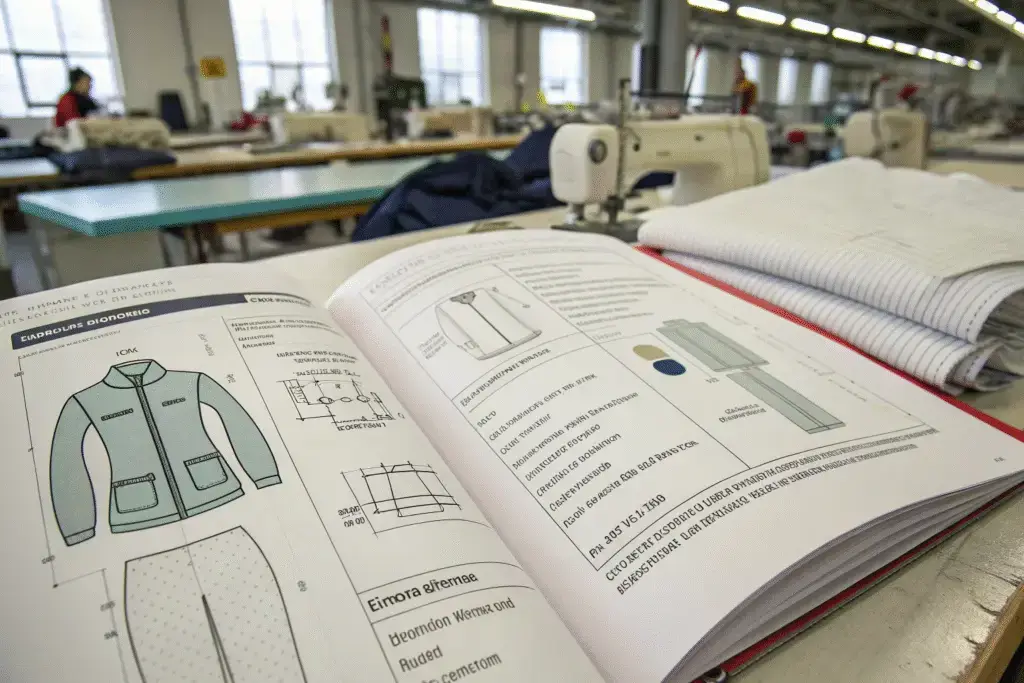
Construction documentation provides the "how-to" instructions that ensure your garment is assembled correctly, using appropriate techniques that affect durability, appearance, and cost.
This section specifies seam types, stitch types, stitch density (SPI), seam finishes, and assembly sequence—details that dramatically impact the final product but are invisible in the finished garment. A denim brand learned this importance when their tech pack omitted stitch specification, resulting in flatlock seams instead of the chainstitch seams essential for authentic denim appearance, requiring complete production rework.
How do seam and stitch specifications prevent errors?
Specific seam types (French, flat-fell, overlock) and stitch types (lockstitch, chainstitch, coverstitch) serve different functional and aesthetic purposes. Specifying these details ensures the right technique is used for each garment section. The International Association of Clothing Designers provides technical standards that help brands specify appropriate construction methods for different garment types and fabrics.
What assembly sequence details matter?
The order in which garment components are assembled affects efficiency, quality, and final appearance. While factories optimize assembly sequences for production efficiency, certain design elements may require specific construction sequences to achieve the intended result. Documenting these requirements prevents manufacturing shortcuts that compromise design integrity.
How do supporting components complete the tech pack?
Additional documentation provides crucial context, reference, and administrative details that support the core technical components and ensure smooth manufacturing execution.
These supporting elements include colorways, print/embroidery artwork, packaging requirements, and administrative details that facilitate clear communication and project management throughout production. A children's wear client recently discovered the importance of packaging specifications when their beautifully manufactured garments arrived without the required retail hangers and polybags, delaying their store distribution by three weeks.
| Supporting Component | Purpose and Importance |
|---|---|
| Colorway Documentation | Shows all color variations with precise Pantone references |
| Artwork Specifications | Provides print/embroidery artwork with size, placement, and color separation |
| Labeling Requirements | Specifies content, placement, and construction of all labels |
| Packaging Instructions | Details folding, tagging, and packing methods for distribution |

Why are color standards essential?
Color specifications should include Pantone references for solid colors, and strike-offs or lab dips for prints and dyed fabrics, along with approved physical swatches. Digital color representations are notoriously unreliable due to variations in monitor calibration. The Pantone Color System provides the industry standard for color communication that prevents costly color mismatches.
What artwork specifications ensure accuracy?
Print and embroidery artwork requires precise specifications including size, placement coordinates, color breakdown, repeat instructions (for patterns), and technique (screen print, digital print, embroidery type). Without these details, placement errors and color inaccuracies are common. We recommend providing artwork in vector format whenever possible to ensure scalability without quality loss.
Conclusion
A complete tech pack is a sophisticated document that combines visual, numerical, descriptive, and administrative components to create a comprehensive manufacturing roadmap. Each element—from technical flats and measurement specs to material documentation and construction details—plays a vital role in translating your design vision into a consistently producible product. Investing in thorough technical documentation upfront saves significant time and money throughout production while ensuring the quality and consistency that build brand reputation.
If you need guidance developing any of these tech pack components or want our team to review your existing documentation for completeness, we're here to help. Our technical experts can ensure your tech pack contains all essential elements for manufacturing success. Contact our Business Director Elaine to discuss your technical documentation needs at elaine@fumaoclothing.com.