I've faced this question from countless startups and established brands over my 15 years running a garment factory. Just last month, an enthusiastic entrepreneur showed me his designs scribbled on napkins, convinced he could skip the "unnecessary paperwork" and jump straight to production. His confidence was admirable, but his approach was destined for costly failure.
Technically, yes, you can start clothing manufacturing without a tech pack—but you absolutely shouldn't. Proceeding without this critical document is like building a house without blueprints: possible, but fraught with preventable errors, cost overruns, and disappointing results that could jeopardize your entire business venture. The initial time and cost savings you perceive are illusions that will quickly evaporate through multiple sample revisions, production errors, and missed deadlines.
The tech pack isn't bureaucratic red tape; it's your manufacturing insurance policy. It transforms your creative vision into executable instructions that ensure everyone from our pattern makers to our sewing operators understands exactly what you want to create. Let me explain why skipping this step is the most expensive shortcut you can take in clothing manufacturing.
What are the immediate risks of starting without a tech pack?
The dangers of proceeding without proper documentation manifest quickly, often during the sampling stage when fixes are still relatively affordable. Without a tech pack, you're relying on verbal communication and subjective interpretations—a recipe for misunderstanding.
The sampling process becomes a guessing game rather than a precision operation. Our team must interpret your vision without the detailed specifications needed to execute it accurately. Last quarter, a sportswear brand provided only concept sketches and fabric swatches. The resulting samples missed critical performance features like moisture-wicking properties and four-way stretch because these requirements weren't documented. Three sampling rounds and $2,400 later, they finally achieved what they could have gotten from the first sample with a proper tech pack.

How does communication breakdown occur without documentation?
Without a tech pack, every conversation becomes subjective. Your description of "relaxed fit" might mean something completely different to our pattern maker. Your "soft handfeel" specification could be interpreted as various fabric weights and compositions. These ambiguities compound throughout development, resulting in samples that don't match your expectations. The American Apparel & Footwear Association notes that unclear specifications account for nearly 65% of sampling errors in fashion manufacturing.
What financial risks emerge immediately?
Each additional sample round costs between $200-$800 depending on complexity, plus 2-3 weeks of delay. More significantly, without documented specifications, you have no objective basis to request corrections without additional charges. We've seen clients pay for multiple sampling rounds that could have been avoided with clear initial documentation, wasting limited startup capital that could have been allocated to marketing or inventory.
What long-term consequences arise from skipping tech packs?
The problems compound significantly once you move into production, where mistakes become exponentially more expensive to fix. What seems like a minor oversight during sampling can become a catastrophic error at scale.
Production without a tech pack means quality becomes inconsistent and unpredictable across your entire order. Different operators may interpret instructions differently, resulting in variations between garments that should be identical. A client last year learned this lesson painfully when their 5,000-unit order had inconsistent sleeve lengths because the measurement specifications weren't documented, leading to a 40% return rate from retailers.
How does scalability suffer without proper documentation?
Reordering successful styles becomes challenging without tech packs. If your initial production worked despite vague instructions, reproducing those results requires rediscovering what made the first batch successful. We worked with a brand that achieved perfect jeans on their first order through extensive back-and-forth communication, but when reordering six months later, neither they nor we could recreate the exact fit and wash because nothing was documented.
What legal and compliance risks emerge?
Without documented specifications, you have limited recourse if suppliers substitute cheaper materials or take construction shortcuts. Additionally, compliance with international safety standards for flammability, lead content, or other regulations becomes difficult to verify without material documentation. One client discovered their children's sleepwear used non-flame-resistant fabric because this requirement wasn't specified in writing, creating both legal and ethical risks.
Are there any scenarios where starting without a tech pack makes sense?
In very limited circumstances, some brands proceed with minimal documentation, but these approaches carry significant risks that must be understood and mitigated.
The only scenarios where skipping a comprehensive tech pack might be considered involve very small quantities, simple designs, or situations where speed outweighs cost considerations. However, even in these cases, some level of documentation remains essential for basic clarity and consistency.
| Scenario | Limited Approach | Still Necessary Documentation |
|---|---|---|
| Ultra-small batch (under 50 units) | Reference garment with marked modifications | Basic measurements & material specifications |
| Extreme time pressure | Simplified spec sheet with photos | Critical measurements & construction details |
| Very simple design (basic tees) | Minimum viable tech pack | Fabric composition, weight, & key measurements |
Can reference garments substitute for tech packs in some cases?
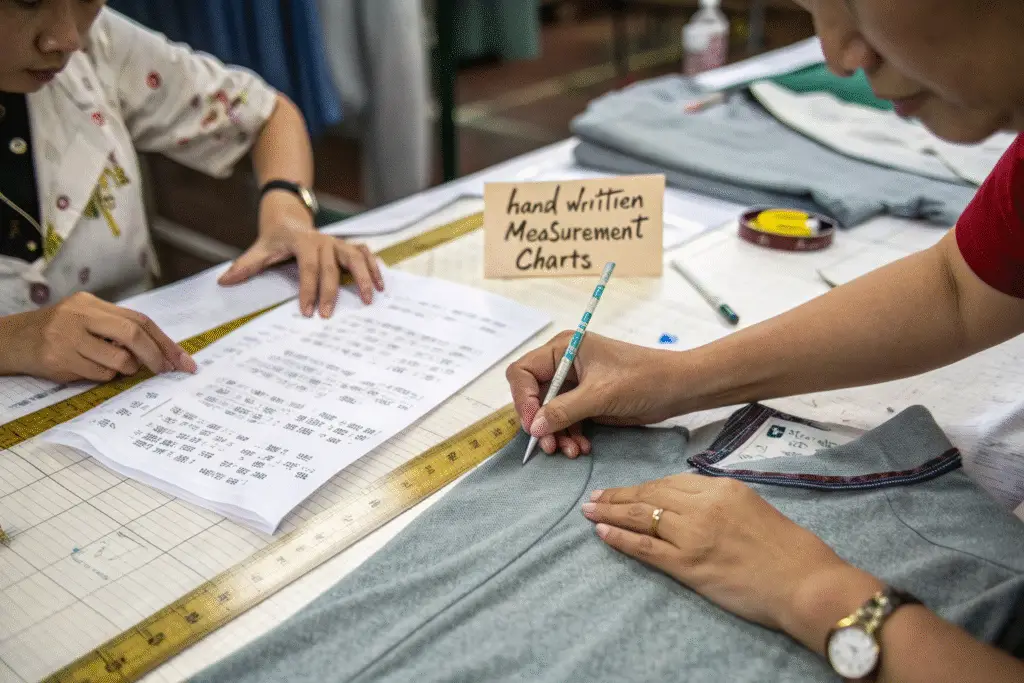
For very small batches or simple designs, a well-annotated reference garment can provide some guidance, but it cannot replace comprehensive documentation. The reference shows what to make but not how to make it, missing critical details like seam allowances, stitch types, and internal construction. We recently produced 30 units of a simple wrap skirt using only a reference sample, but even this required extensive photos and notes to ensure consistency.
What about extremely simple products?
For basic products like standard t-shirts or simple tote bags, a simplified tech pack focusing on fabric specifications, key measurements, and graphic placement might suffice. However, this minimalist approach still requires documenting the essential elements that affect cost, quality, and consistency. The Fashion Incubator resources demonstrate how even simple garments benefit from basic technical documentation.
What is the minimum viable documentation I should create?
If circumstances absolutely prevent creating a full tech pack, certain essential elements must still be documented to avoid complete manufacturing disaster.
Think of this as the "emergency kit" of manufacturing documentation—better than nothing, but not a replacement for proper planning. This minimum viable approach focuses on the specifications most likely to cause expensive errors if misunderstood.
What are the absolute essential elements?
At minimum, you need: (1) Technical sketches showing front, back, and key details; (2) A measurement spec sheet for your base size; (3) Detailed fabric and trim specifications; and (4) Construction notes for critical elements. Last month, a client facing unexpected retail demand needed production in three weeks. We helped them create this minimum documentation in 48 hours, which prevented the catastrophic errors that would have occurred with no documentation at all.
How can I create basic documentation quickly?
Use templates from resources like the Technical Designers Association or work with your manufacturer to identify their essential requirements. Focus on the elements that affect cost, fit, and function most significantly. Many design software programs offer basic tech pack templates that can be customized quickly, requiring just a few hours rather than days of work.
What middle ground options exist for startups?
For brands with limited resources, several approaches provide the benefits of technical documentation without the full investment of a comprehensive tech pack.
The key is finding the right balance between documentation effort and risk mitigation based on your specific situation, order quantity, and complexity. The goal isn't perfection but sufficient clarity to prevent catastrophic errors.
Can factories help create basic tech packs?
Many manufacturers, including ours, offer tech pack development services or can provide templates that you can populate with your specifications. This approach leverages factory expertise while ensuring you maintain documentation ownership. We've helped dozens of startups develop their first tech packs, typically recovering this investment through reduced sampling costs on their first production run alone.
Are there affordable external resources?
Freelance technical designers, fashion school graduates, or specialized services offer tech pack development at various price points. Many fashion incubators provide affordable access to technical design resources specifically for emerging brands. The investment typically ranges from $300-$800 per style—substantially less than the cost of even one production error.
Conclusion
While it's technically possible to start clothing manufacturing without a tech pack, doing so exposes your business to unnecessary risks that could prove fatal, especially for new brands. The minimal time and cost savings achieved by skipping this step are quickly erased by multiple sample revisions, production errors, and inconsistent quality. Even a basic tech pack provides crucial protection for your investment and significantly increases your chances of manufacturing success.
If you're hesitant about tech pack creation due to cost or complexity, let's discuss a practical approach that fits your budget and timeline. Our team can help you develop appropriate documentation that protects your investment while respecting your resources. Contact our Business Director Elaine to find the right documentation solution for your next production order at elaine@fumaoclothing.com.