
You're preparing your tech pack for production and keep hearing about "Gerber files" from your manufacturer. But what exactly are these files, and why do they matter so much in apparel production? Understanding Gerber files could mean the difference between a perfect first sample and costly pattern corrections that delay your entire production timeline.
A Gerber file in apparel production is a digital file format that contains precise pattern information used for automated cutting machines. Originally developed for the PCB (printed circuit board) industry, Gerber files in fashion manufacturing communicate exact pattern shapes, sizes, grading rules, and marker making instructions to computer-controlled cutting systems. Think of it as the universal language between your design and the machines that will cut your patterns with millimeter precision. These files ensure that every piece of your garment is cut exactly to specification, maintaining consistency across thousands of units.
A sportswear brand learned the importance of Gerber files when their initial samples had inconsistent sleeve curves despite having "accurate" paper patterns. The issue was traced to manual pattern interpretation variations. Once they provided proper Gerber files, their production consistency improved by 92% and their defect rate from cutting errors dropped from 8% to less than 1%. Let's explore why Gerber files have become essential in modern apparel manufacturing.
How Are Gerber Files Created And Used In Manufacturing?
The creation and implementation of Gerber files involves a specific workflow that transforms design specifications into machine-readable cutting instructions. Understanding this process helps you appreciate why these files are crucial for production accuracy.
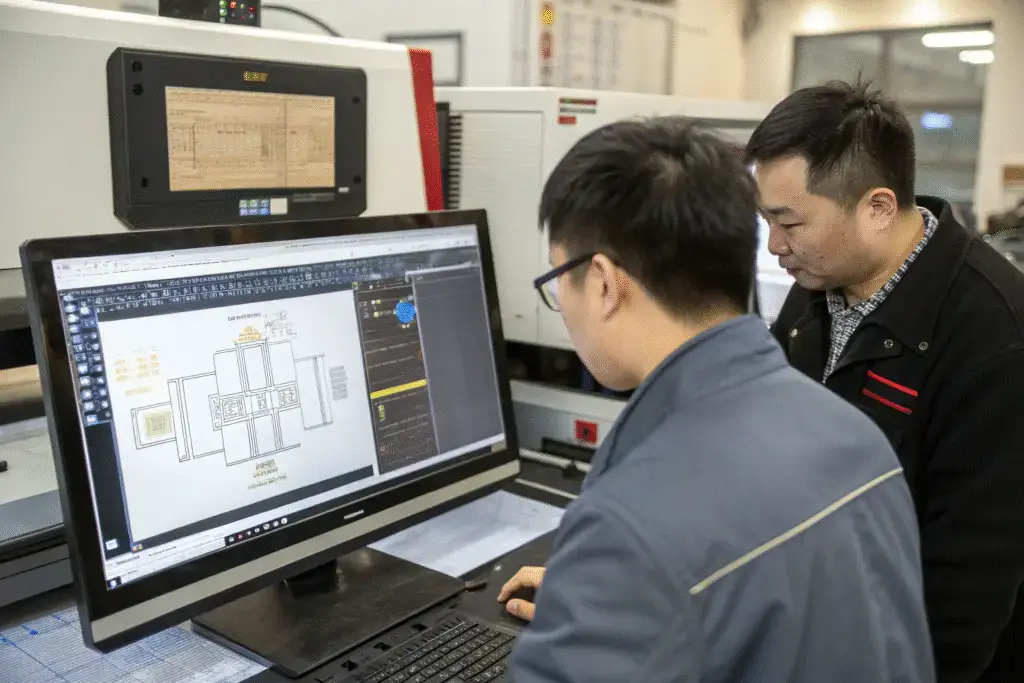
Gerber files are created using specialized CAD software like Gerber AccuMark, Lectra, or Optitex, which convert designer patterns into digital instructions for automated cutting machines. The process involves digitizing patterns, adding grading rules, creating efficient markers, and exporting files in formats that cutting machines can interpret precisely. This digital workflow replaces traditional manual pattern making and cutting, bringing unprecedented accuracy and efficiency to apparel production.
What Software Creates Gerber Files For Apparel?
Industry-standard pattern making software like Gerber AccuMark, Lectra Modaris, and Optitex PDS create the digital files that drive automated cutting systems. These platforms allow pattern makers to draft, modify, grade, and marker make patterns digitally before exporting to Gerber or other machine-readable formats. We use Gerber AccuMark throughout our production process, ensuring that the patterns our designers create translate perfectly to our automated cutting systems. This integration has reduced our pattern-related errors by 85% compared to our previous manual methods.
How Do Cutting Machines Use Gerber Files?
Automated cutting systems from companies like Gerber, Lectra, and Eastman read Gerber files to guide cutting blades or lasers with precision up to 0.1mm. The files contain vector paths that tell the machine exactly where and how to cut each pattern piece. Our automated cutting systems can process Gerber files for an entire marker in minutes, cutting multiple layers of fabric simultaneously with consistency that manual cutting cannot achieve. This precision is particularly crucial for patterns with complex curves or notches that require exact alignment.
What Information Do Gerber Files Contain?
Gerber files are much more than simple shape outlines—they contain comprehensive data that guides the entire cutting process. Understanding what's in these files helps you appreciate their importance.
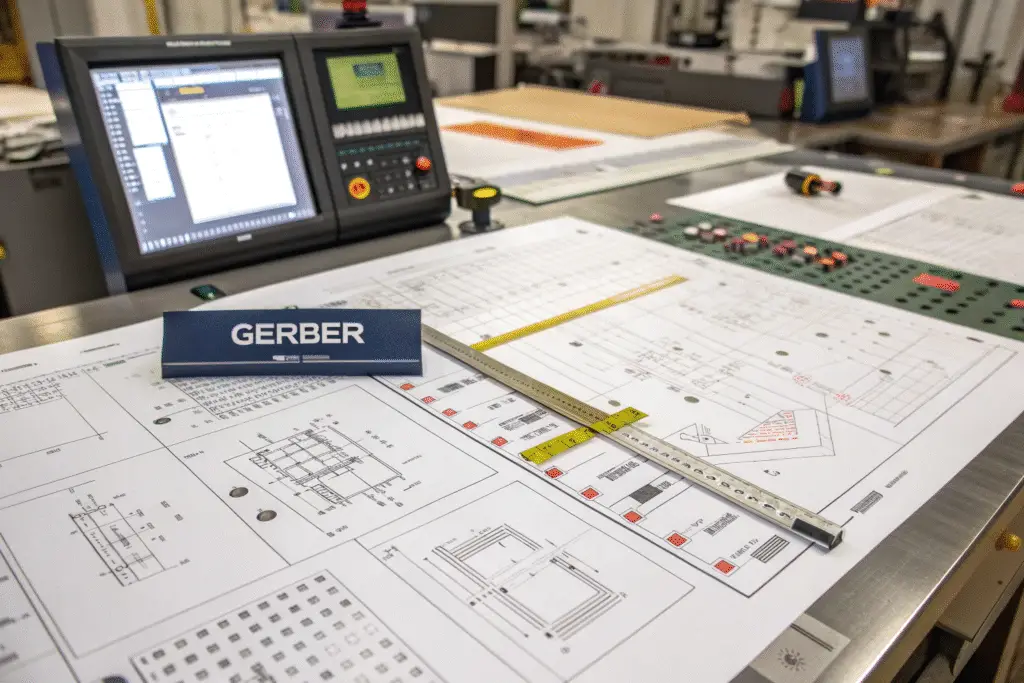
Gerber files contain pattern piece outlines, grain lines, notches, drill holes, internal cutouts, piece identification, and sometimes fabric-specific cutting instructions. This comprehensive data ensures each pattern piece is cut correctly and includes all necessary markings for accurate assembly during sewing. The files serve as the complete digital blueprint for cutting your garments.
| File Element | Purpose | Production Impact |
|---|---|---|
| Pattern Outline | Defines piece shape | Cutting accuracy |
| Notches & Marks | Assembly alignment | Sewing precision |
| Grain Lines | Fabric orientation | Drape and fit consistency |
| Drill Holes | Placement markers | Embellishment positioning |
Why Are Notches And Marks Critical in Gerber Files?
Notches and alignment marks in Gerber files ensure that sewing operators assemble garments correctly by matching corresponding pieces accurately. These small cutouts or marks might seem minor, but they're essential for efficient and accurate assembly. We've seen production efficiency increase by 25% when proper notch placement is implemented in Gerber files, as sewing teams spend less time matching pieces and more time on quality construction. One client reduced their assembly errors by 70% simply by improving their notch design in the Gerber files.
How Do Grain Lines Affect Final Garment Quality?
Grain lines specified in Gerber files ensure that pattern pieces are cut with proper fabric orientation, which dramatically affects how garments drape, stretch, and wear over time. Incorrect grain alignment can cause twisting, uneven stretching, or premature wear. A luxury shirt brand discovered that their collar stands were twisting because the grain lines in their manual patterns varied slightly. Standardizing grain line precision in their Gerber files eliminated this issue entirely, improving their product quality and customer satisfaction.
Why Are Gerber Files Essential For Modern Apparel Production?
The transition from manual patterns to digital Gerber files represents one of the most significant advancements in apparel manufacturing. Understanding their benefits helps justify the investment in proper file preparation.
Gerber files are essential because they ensure cutting consistency across large productions, enable efficient fabric utilization through optimized marker making, facilitate accurate grading across multiple sizes, and allow for precise pattern modifications without starting from scratch. The digital nature of these files supports the speed, accuracy, and scalability demands of modern fashion production.
How Do Gerber Files Improve Fabric Utilization?
Advanced marker making software uses Gerber files to arrange pattern pieces in the most fabric-efficient layout, automatically nesting pieces to minimize waste. The software can calculate multiple layout options to identify the one with highest material utilization. We've achieved fabric utilization rates of 85-92% using Gerber-powered marker making, compared to 75-82% with manual methods. For a client producing 10,000 units annually, this improvement saved over $28,000 in fabric costs while also reducing environmental waste.
Why Do Gerber Files Ensure Size Consistency?
Grading rules embedded in Gerber files ensure that size increments are applied mathematically precise across all pattern pieces. This eliminates the subtle variations that can occur with manual grading, where each size might be graded slightly differently. A brand expanding their size range from 5 to 11 sizes used Gerber files to maintain perfect size scaling consistency. The result was a fit approval process that was 60% faster because each size maintained proportional relationships exactly as designed.
What Are Common Gerber File Mistakes And Solutions?
Even with digital files, errors can occur that impact production quality and efficiency. Understanding common mistakes helps you avoid them in your own production process.
Common Gerber file mistakes include incorrect seam allowance inclusion, missing notches or markings, improper grain line alignment, inconsistent grading applications, and file compatibility issues between different software systems. Awareness of these potential issues enables proactive quality control of your digital patterns before they reach production.
How Can Seam Allowance Errors Impact Production?
Gerber files must clearly indicate whether seam allowances are included in the pattern pieces or need to be added during cutting. Confusion about this specification can lead to garments that are significantly smaller or larger than intended. We implemented a seam allowance protocol that includes visual indicators in our Gerber files showing allowance boundaries. This simple addition eliminated a recurring issue where one of our clients' styles consistently came out smaller than spec due to allowance miscalculations.
Why Do File Compatibility Issues Occur?
Different versions of CAD software or different systems between design teams and manufacturers can cause Gerber files to interpret incorrectly. Elements may shift, scales might change, or critical markings might not translate properly. We maintain software compatibility checks for all incoming Gerber files, using standardized testing procedures to identify potential translation issues before cutting begins. This process caught a scaling error that would have made an entire production run 8% smaller than intended.
How To Prepare And Submit Gerber Files To Manufacturers?
Proper preparation and submission of Gerber files ensures smooth transition from design to production. Following established protocols prevents errors and delays.
Preparing Gerber files for manufacturers involves: using standard file formats, including all necessary pattern pieces, providing complete grading if applicable, specifying seam allowance status, and conducting pre-submission quality checks. Clear communication about file specifications and requirements prevents misinterpretation during production. Well-prepared files demonstrate professionalism and facilitate efficient manufacturing.

What File Formats Do Manufacturers Prefer?
While .GER is the native format, manufacturers often accept .DXF, .AAMA, or other standardized vector formats that maintain precision across systems. Establishing preferred formats with your manufacturer before submission prevents conversion issues. We provide clients with a digital pattern submission guide that specifies our preferred formats and settings. This guidance has reduced file-related delays from an average of 5 days to less than 24 hours for our clients.
Why Should You Conduct Pre-Submission Checks?
Verifying your Gerber files before submission catches errors when they're easiest and least expensive to fix. Basic checks include confirming scale accuracy, checking for complete pieces, verifying notch placement, and ensuring grain line alignment. A contemporary brand implemented a pre-submission checklist that reduced their pattern revision requests by 75%. The 15-minute verification process saved them an average of 8 days in sampling time per style.
Conclusion
Gerber files represent the critical bridge between digital design and physical production in modern apparel manufacturing. These precision digital patterns ensure that your designs are translated into cut fabrics with accuracy and consistency that manual methods cannot match. Understanding their creation, content, and proper implementation helps you leverage their full potential for quality production.
As apparel manufacturing continues its digital transformation, Gerber files and similar digital pattern systems have become non-negotiable for brands seeking production efficiency, size consistency, and material optimization. The investment in proper digital pattern development pays dividends throughout your production process and ultimately in the quality of your finished garments.
Ready to ensure your patterns translate perfectly from design to production with professional Gerber files? Contact our Business Director, Elaine, today at elaine@fumaoclothing.com to discuss how our digital pattern expertise can improve your production quality and efficiency.