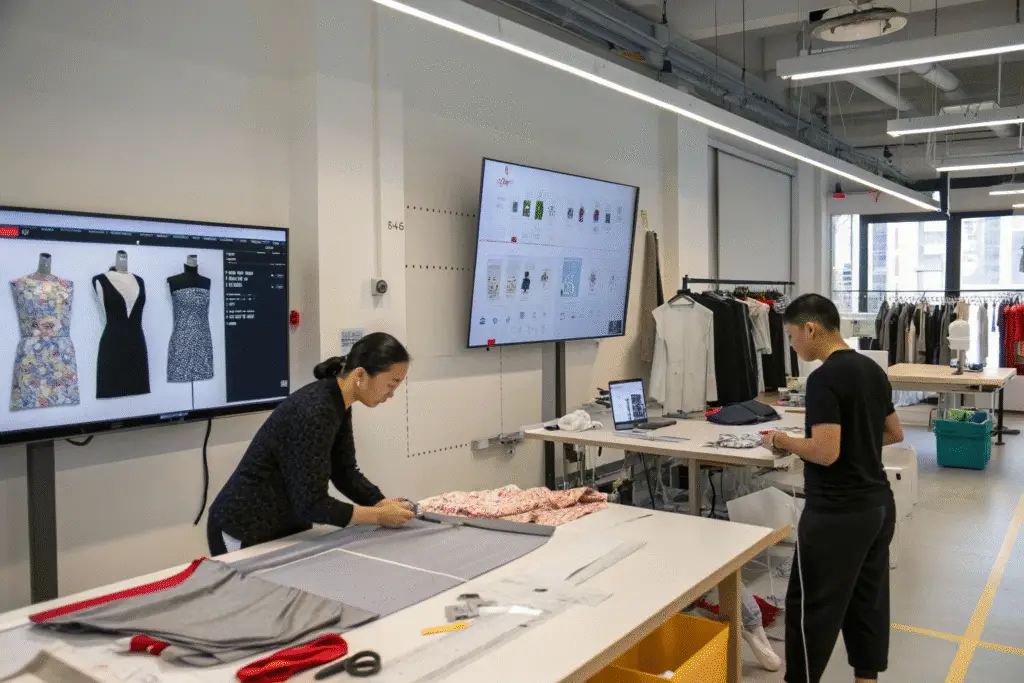
You've created activewear designs that look amazing in concept, but will they translate effectively to mass production? Designing for performance wear requires balancing aesthetics, functionality, and manufacturability in ways that everyday apparel doesn't. How do you ensure your designs can be produced efficiently at scale while maintaining the technical performance your customers expect?
Designing activewear for mass production requires integrating technical fabric knowledge, manufacturing constraints, and performance requirements from the earliest concept stage. Successful designs balance aesthetic vision with production reality by selecting appropriate materials, simplifying construction, standardizing components, and designing for manufacturing efficiency. The most beautiful activewear design fails if it cannot be produced consistently at scale with the required performance characteristics.
A yoga apparel startup learned this lesson when their intricate seaming pattern, while visually stunning, required specialized equipment that only one factory possessed. Their production costs were 40% higher than competitors, and delivery times stretched to 16 weeks instead of the standard 8. After redesigning for manufacturability, they maintained their aesthetic while reducing costs by 28% and cutting production time in half. Let's explore how to design activewear that excels in both performance and production.
What Fabric Considerations Impact Manufacturing?
Fabric selection fundamentally determines both the performance characteristics and manufacturing feasibility of your activewear. The wrong fabric choice can make even simple designs difficult to produce consistently at scale.
Key fabric considerations for mass production include: consistent stretch and recovery properties, colorfastness during washing, moisture-wicking reliability, and availability in production quantities. Technical fabrics must perform identically across large rolls and multiple dye lots to ensure consistency in mass production. Understanding how fabrics behave during cutting, sewing, and finishing prevents production bottlenecks and quality issues.
How Does Fabric Stretch Impact Production Efficiency?
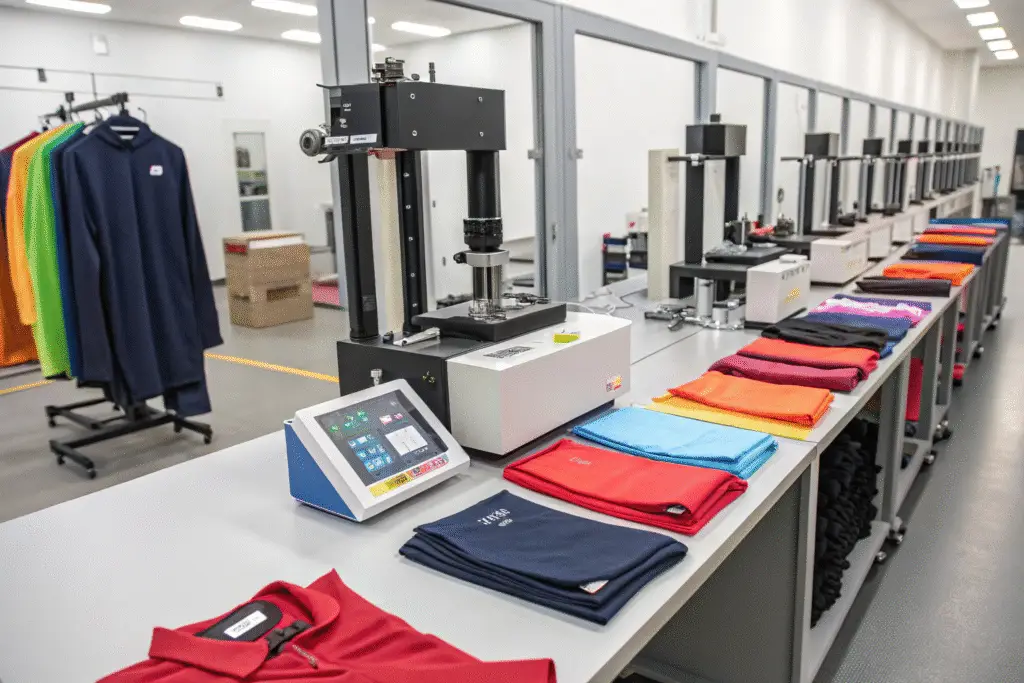
The degree and consistency of fabric stretch directly affect cutting accuracy, sewing tension, and final garment dimensions. Four-way stretch fabrics require specialized handling compared to two-way stretch materials. We worked with a brand that selected an innovative 85% stretch fabric without understanding the production implications. The fabric distorted during cutting, resulting in size variations up to 1.5 inches between garments. After switching to a more stable 65% stretch fabric with better recovery properties, their size consistency improved dramatically while maintaining performance.
Why Is Fabric Availability Crucial For Scaling Production?
Innovative fabrics with limited availability create production bottlenecks. Always verify that your chosen materials can be sourced in the quantities and timeframes needed for your production schedule. A running wear brand designed their entire collection around a specialty fabric, only to discover the mill could only produce 500 meters per month against their need for 5,000 meters. The resulting supply chain disruption delayed their launch by four months. We now advise clients to select from pre-qualified fabrics with verified availability before finalizing designs.
How Should You Design For Manufacturing Efficiency?
Design decisions made during the creative process directly impact production speed, cost, and quality consistency. Designing with manufacturing in mind from the beginning prevents costly revisions later.
Design for manufacturing efficiency by minimizing piece count, standardizing seam types, reducing complex operations, and designing for flat knitting where possible. Efficient designs use construction methods that leverage factory expertise and equipment capabilities rather than requiring custom setups. The most successful activewear designs achieve visual interest through fabric and color rather than complex construction.
| Design Element | Production-Friendly Approach | Manufacturing Impact |
|---|---|---|
| Seams | Flatlock seams throughout | Standardized operations, faster production |
| Elastic Application | Consistent channel widths | Reduced machine adjustments |
| Pattern Pieces | Minimal pieces, efficient marker | Less fabric waste, faster cutting |
| Special Features | Standardized placement | Simplified worker training |
Why Does Piece Count Directly Affect Production Cost?
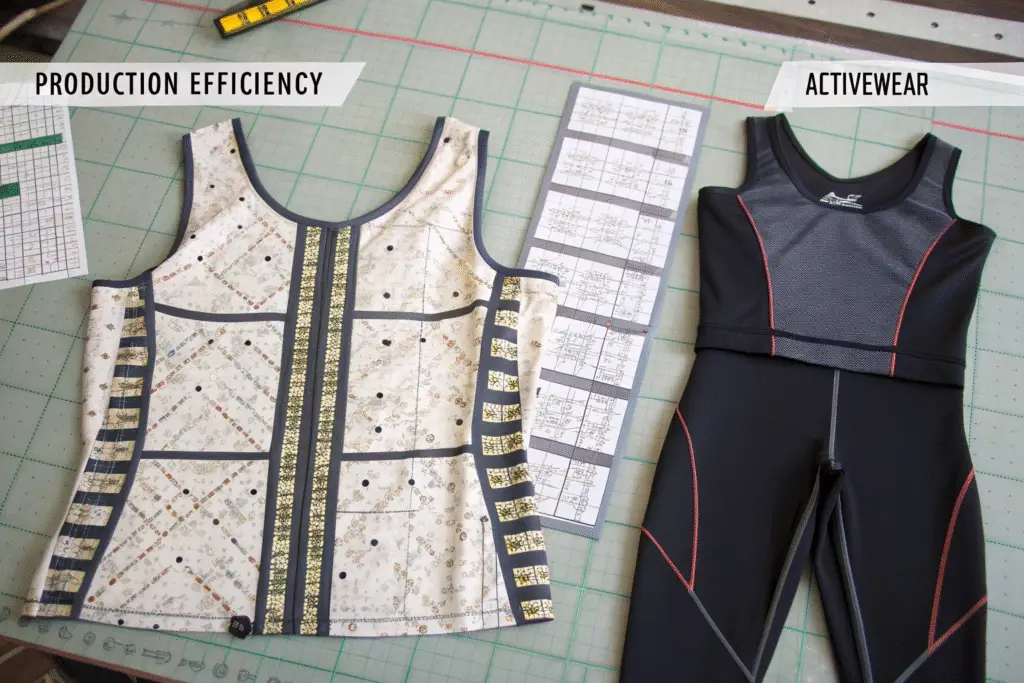
Each additional pattern piece increases cutting time, sewing operations, and potential quality issues. A design with 15 pieces takes significantly longer to produce than one with 8 pieces achieving similar aesthetics. We analyzed a client's leggings design that used 11 separate pieces for color blocking. By redesigning with 6 pieces using strategic cutting, we reduced their production cost by 22% while maintaining the color-blocked appearance. The simplified design also improved comfort by eliminating unnecessary seams.
How Can Standardized Seam Types Improve Quality?
Using consistent seam types throughout your collection allows factories to optimize machine settings and operator training. When every garment uses the same flatlock stitch with identical tension settings, quality becomes more consistent and production faster. A fitness brand initially specified five different seam types across their collection. Standardizing to two primary seam constructions reduced their defect rate from 8% to 3% while increasing production speed by 15%. Workers became specialists rather than generalists.
What Performance Requirements Must Be Designed In?
Activewear must perform under stress, moisture, and movement conditions that ordinary clothing never encounters. Performance features must be designed into the product rather than added as afterthoughts.
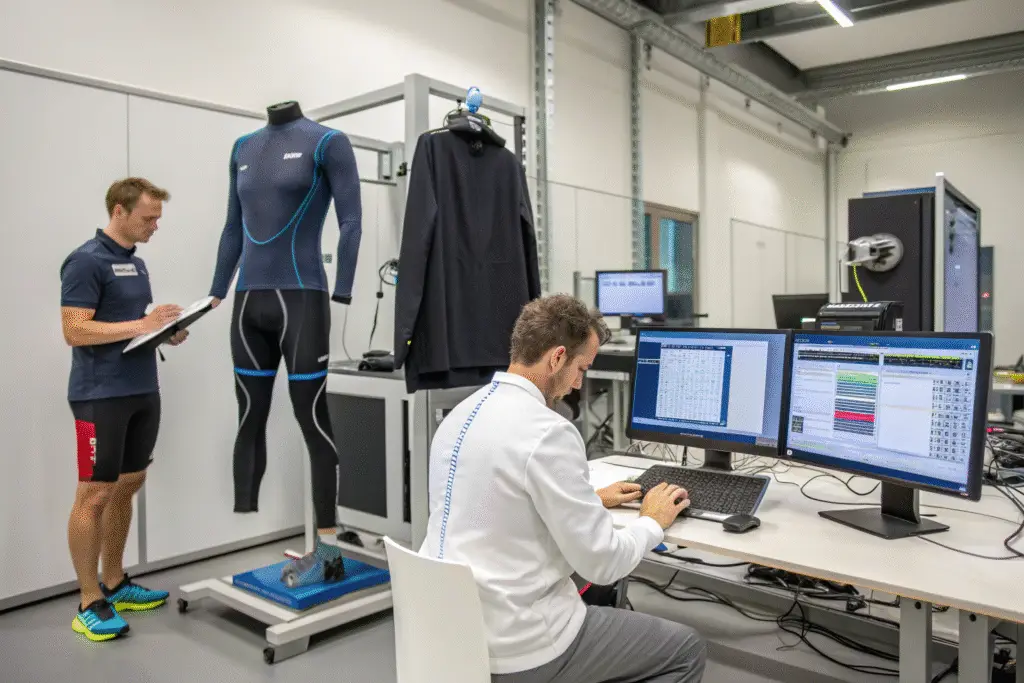
Essential performance considerations include: ergonomic patterning for dynamic movement, strategic ventilation, moisture management systems, and durability at stress points. These elements must be tested and verified during prototyping to ensure they translate to production units. Performance cannot be inspected into a garment; it must be designed and manufactured into it.
How Does Ergonomic Patterning Enhance Performance?
Activewear patterns should accommodate the body in motion, not just at rest. This means designing for stretched positions, dynamic movements, and muscle expansion during exercise. A high-intensity interval training brand discovered their leggings became transparent when stretched during deep squats. Redesigning with ergonomic patterning that accounted for maximum stretch positions solved the issue while improving comfort during movement. The revised pattern used strategic grainline adjustments and added ease where needed most.
Why Must Stress Points Be Reinforced Strategically?
Areas like crotch gussets, underarms, and shoulder seams experience disproportionate stress during activity. These regions require reinforcement through bartacks, double stitching, or stronger seam types. However, reinforcements must be carefully designed to avoid creating uncomfortable pressure points. We helped a cycling apparel brand redesign their chamois attachment, moving from a single bartack to distributed reinforcement that eliminated the chafing issue their customers reported. The durability engineering increased product lifespan without compromising comfort.
How To Create Technical Packages For Activewear?
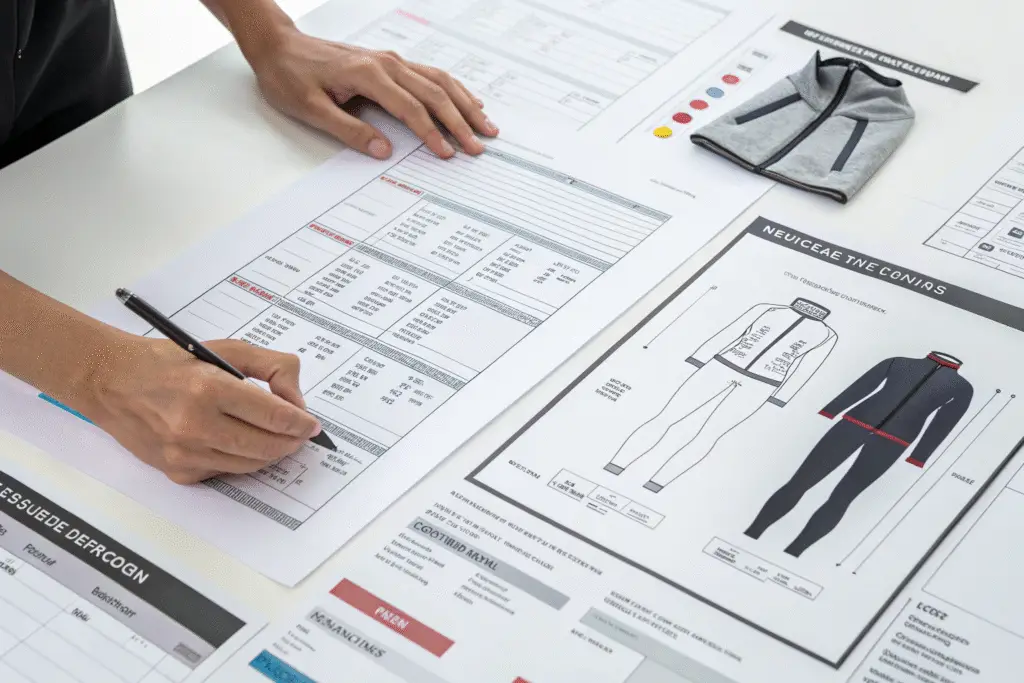
The technical package is the communication bridge between your design vision and manufacturing execution. For activewear, these documents must capture both aesthetic details and technical performance requirements.
An effective activewear tech pack includes: performance specifications beyond standard measurements, stretch requirement documentation, seam construction details, reinforcement locations, and testing protocols. The package should be so comprehensive that any qualified factory can reproduce your design with identical performance characteristics. Ambiguity in tech packs leads to interpretation errors during production.
What Performance Specifications Are Often Overlooked?
Beyond standard measurements, activewear tech packs should specify stretched measurements, recovery time requirements, and performance under specific conditions. For example, a swimming brand should specify chlorine resistance, while a running brand should define breathability standards. We developed a performance specification template that includes 15 activewear-specific metrics beyond standard apparel requirements. One client used this template to communicate their moisture-wicking expectations quantitatively, resulting in perfect first samples.
Why Must Stretch Requirements Be Quantified?
Simply specifying "stretch fabric" is insufficient. Define the required stretch percentage in both directions, recovery expectations, and tension requirements for elastics. A yoga brand learned this when their initial production had inconsistent stretch recovery, causing garments to bag out during practice. Adding quantified stretch specifications to their tech pack resolved the inconsistency in subsequent production. We now recommend specifying both immediate recovery (after 30 seconds) and delayed recovery (after 5 minutes) for critical areas.
How To Design For Size Consistency And Grading?
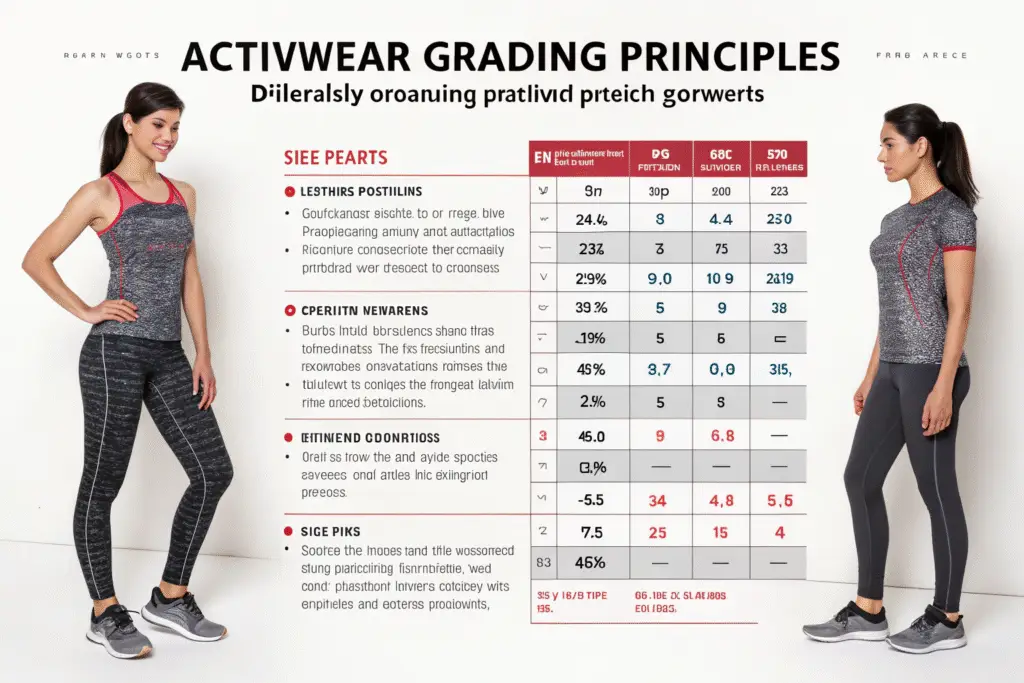
Activewear fits closer to the body than most apparel, making size consistency and accurate grading particularly crucial. A slight variation that would be unnoticeable in casual wear becomes problematic in form-fitting activewear.
Design for size consistency by creating comprehensive grade rules that account for stretch properties, establishing clear points of measurement for fitted garments, and specifying tolerance levels tighter than standard apparel. Activewear grading must consider how stretch affects fit across sizes rather than simply scaling patterns proportionally. The same grading rules don't apply to both woven shirts and stretch activewear.
Why Does Stretch Complicate Standard Grading Approaches?
Standard grading increases dimensions proportionally across sizes, but stretch fabrics require different approaches. A size Medium with 50% compression becomes a size Large with different compression if graded traditionally. We helped a compression wear brand develop activewear-specific grading that maintained consistent compression levels across sizes by adjusting the stretch percentage calculations. This approach eliminated their fit inconsistency issues between sizes while maintaining the therapeutic benefits of their garments.
How Can You Ensure Consistency in Production?
Implement in-process measurement checks at critical control points during production. For activewear, key areas include waistband tension, leg opening circumference, and critical seam lengths. A pilates brand reduced their return rate from 12% to 4% by implementing additional quality control checkpoints specifically for their leggings' waistband consistency. The additional inspections added minimal time but significantly improved customer satisfaction.
Conclusion
Designing activewear for mass production requires a specialized approach that balances aesthetic vision with technical performance and manufacturing practicality. The most successful activewear designs emerge from collaboration between designers, technical developers, and manufacturing experts from the earliest stages.
Remember that beautiful renders don't always translate to producible garments. By designing with manufacturing constraints in mind, selecting appropriate technical fabrics, creating comprehensive tech packs, and implementing rigorous testing protocols, you can create activewear that performs brilliantly for your customers and produces efficiently for your business.
Ready to transform your activewear designs into manufacturable, high-performance products? Contact our Business Director, Elaine, today at elaine@fumaoclothing.com to leverage our expertise in activewear development and production.