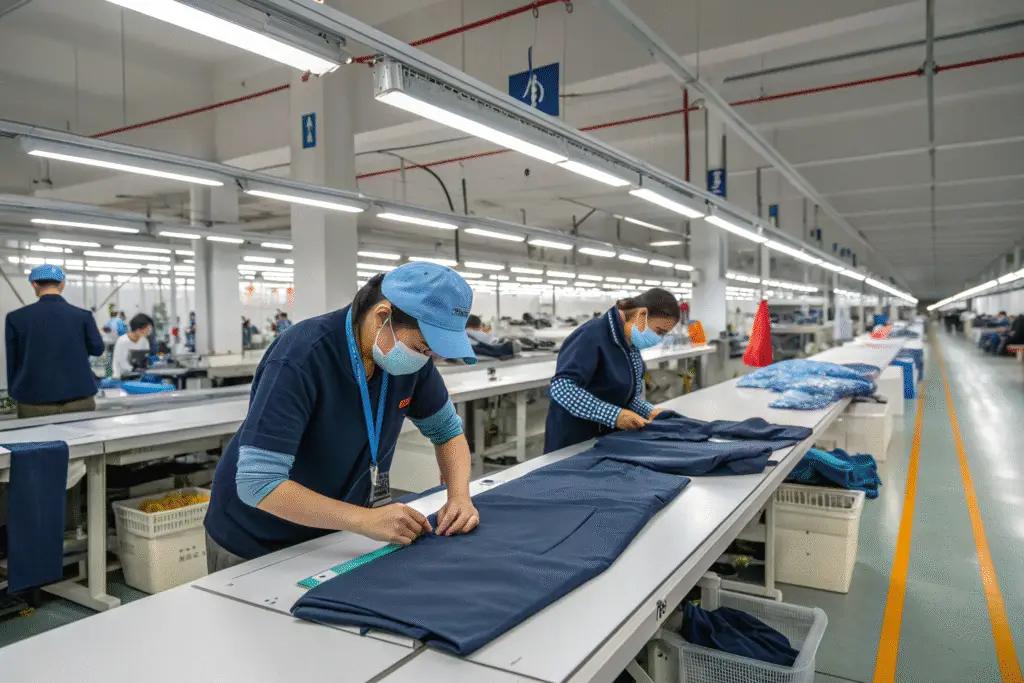
You've invested months developing your clothing line, perfecting designs, and selecting fabrics. Now comes the critical moment: production. How can you sleep well knowing that thousands of garments being manufactured overseas will meet your quality standards? Effective quality control separates successful fashion brands from those that struggle with returns, unhappy customers, and damaged reputations.
Ensuring quality control in clothing production requires implementing a comprehensive system that includes raw material inspection, in-process checks during manufacturing, pre-shipment audits, and clear communication of your standards through detailed tech packs and reference samples. Quality cannot be inspected into a product at the end; it must be built into every step of the production process through proactive measures and continuous monitoring.
A sportswear brand from Portland learned this lesson the hard way when they discovered an entire shipment of 3,000 jackets had inconsistent color matching between bodies and sleeves. The factory had used fabric from different dye lots. The resulting returns and discounting cost them over $45,000 in losses. Now they implement the multi-stage quality system we'll explore below.
What Are The Essential Stages Of Garment Quality Control?
Quality control isn't a single event but a continuous process that begins before production starts and continues until goods are shipped. Implementing checks at multiple stages catches issues early when they're easier and less expensive to correct.
The essential stages include: raw material inspection, in-process production checks, pre-shipment inspection, and during-production audits. Each stage addresses different potential issues, with early detection preventing costly corrections later in the process. A robust system monitors both product quality and process consistency throughout manufacturing.
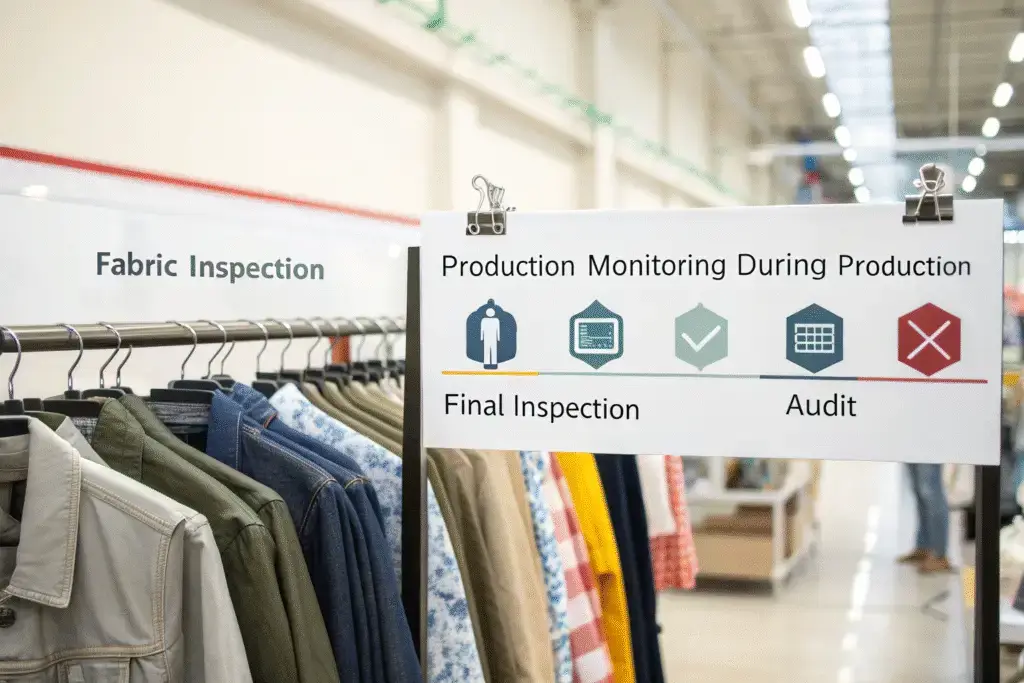
Why Is Raw Material Inspection Fundamental?
Fabric and trim quality determines the final product's potential quality. Inspect all incoming materials for defects, color consistency, weight, width, and composition before cutting begins. This prevents manufacturing perfect garments from flawed materials. We recently caught a fabric shipment with inconsistent shrinkage rates during our fabric quality control - one roll shrank 8% while others shrank only 3%. Catching this before production saved our client from what would have been massive size variation issues in the finished garments. Always test for colorfastness, pilling, and shrinkage with laboratory standards.
What Happens During In-Process Quality Checks?
In-process monitoring occurs during cutting, sewing, and assembly stages. Supervisors check pattern alignment, stitching quality, seam allowances, and component attachment while production is underway. This allows immediate correction before errors multiply. A denim brand discovered during in-process checks that their new sewing operators were using the wrong stitch density for bar tacks, which would have caused premature failure at stress points. The production monitoring caught this after only 50 units were affected rather than the full order of 2,000 pieces.
How To Establish Clear Quality Standards And Communication?
Your quality expectations must be communicated so clearly that there's no room for interpretation. Ambiguity in quality standards is the primary cause of disputes between brands and manufacturers.
Establish clear quality standards through detailed tech packs, reference samples, approved prototypes, and measurable acceptance criteria for various defect types. Provide visual examples of both acceptable and unacceptable quality levels for critical aspects. Documentation alone isn't enough - physical references are essential for alignment.
| Quality Element | Documentation Method | Physical Reference |
|---|---|---|
| Stitch Quality | SPI specifications in tech pack | Seam samples with approved stitch density |
| Color Matching | Pantone codes in tech pack | Approved lab dip and bulk fabric swatch |
| Measurement Tolerance | Grade rules with +/- allowances | Approved fit sample on designated model |
| Fabric Hand Feel | Technical specifications | Reference fabric swatch from agreed mill |

How Do Reference Samples Prevent Quality Issues?
A sealed reference sample signed by both parties serves as the ultimate quality benchmark. This should include main fabric, all trims, and a complete garment representing perfect execution. When questions arise during production, manufacturers compare against this standard. We create "limit samples" that show the absolute minimum acceptable quality for clients who want to define tolerance boundaries. One activewear brand provides videos showing how their garments should perform during movement tests - this quality assurance method has eliminated disputes about stretch and recovery expectations.
Why Are Detailed Tech Packs Critical For Quality?
Tech packs must specify every quality-related detail: stitch types and SPI (stitches per inch) for different seams, seam allowance measurements, reinforcement requirements, and precise grading rules. Without this information, factories use their standard practices which may not meet your expectations. A luxury brand discovered their $200 dresses were being finished with a basic overlook stitch instead of the specified flatlock seam because this detail was missing from their initial tech pack. Comprehensive technical documentation prevents such costly misunderstandings.
What Inspection Methods And Tools Ensure Consistency?
Systematic inspection methodologies and proper tools transform subjective quality assessment into measurable, consistent evaluation. The right approach depends on your order size, risk tolerance, and quality requirements.
Effective inspection methods include the AQL (Acceptable Quality Level) system, statistical sampling, specialized measurement tools, and standardized lighting conditions. These methods provide objective data for quality decisions rather than relying on subjective opinions. Consistency in methodology allows for meaningful comparison across production runs.

How Does The AQL System Work In Practice?
The AQL (Acceptable Quality Level) system uses statistical sampling to determine how many pieces to inspect from a production lot and defines acceptable defect levels. For general clothing inspection, AQL 2.5 is standard for major defects, AQL 4.0 for minor defects. This means for an order of 2,000 pieces, you would inspect 125 garments randomly selected. The order passes if you find 7 or fewer major defects and 10 or fewer minor defects. Implementing AQL inspection standards helped a children's wear brand reduce their defect rate from 8% to 2% within three production cycles by providing clear pass/fail criteria.
What Specialized Tools Improve Inspection Accuracy?
Professional inspection equipment includes color matching light boxes (D65 standard daylight), tension gauges for elastic and thread tension, seam gauges, and magnifiers for stitch examination. Standardized tools eliminate variables like lighting conditions that affect color perception. We provide clients with inspection reports that include photographic evidence using standardized tools and conditions. One brand was able to resolve a long-standing dispute with another factory about shade variation by providing inspection documentation taken under controlled lighting conditions that proved the shipment failed their agreed standards.
How To Manage Quality Across Your Supply Chain?
Quality responsibility extends beyond your immediate manufacturer to include fabric mills, trim suppliers, and subcontractors. A weakness at any point in your supply chain can compromise your final product quality.
Manage supply chain quality by auditing all partners, establishing clear specifications for each component, implementing traceability systems, and conducting regular performance reviews. Quality risks increase with supply chain complexity, so simplification sometimes improves control. Knowing each partner's capabilities and limitations helps prevent unrealistic expectations.

Why Should You Audit Your Fabric And Trim Suppliers?
Visit or hire third-party auditors to assess your suppliers' quality systems, testing capabilities, and consistency processes. A beautiful fabric sample means little if the mill cannot maintain consistency across production quantities. We assisted a client who was experiencing inconsistent elastic recovery in their waistbands across multiple production runs. The issue traced back to the elastic supplier varying their latex content without notification. Implementing supplier quality audits identified this variable and led to switching to a more consistent supplier.
How Does Traceability Improve Quality Management?
Component traceability through lot numbering, barcoding, or other identification systems allows you to track issues back to their source. When problems occur, you can identify affected batches and implement targeted corrections rather than blanket rejections. A sustainable brand uses QR codes on their fabric rolls to track organic certification back to specific farm sources. This supply chain transparency not only supports their marketing claims but also helps quickly isolate quality issues to specific material batches when they occur.
Conclusion
Ensuring quality control in clothing production requires a systematic, multi-stage approach that begins with clear standard setting and continues through raw material inspection, production monitoring, and final verification. The most successful brands view quality control not as an expense but as an investment in customer satisfaction, brand reputation, and long-term profitability.
Remember that quality is ultimately the result of good processes, not just final inspection. By building quality into every step of your production, communicating clearly with manufacturing partners, and using objective measurement systems, you can consistently deliver products that meet your customers' expectations and protect your brand's value.
Ready to implement a comprehensive quality control system for your next production order? Contact our Business Director, Elaine, today at elaine@fumaoclothing.com to learn how our integrated quality management approach can protect your investment and build your brand reputation.