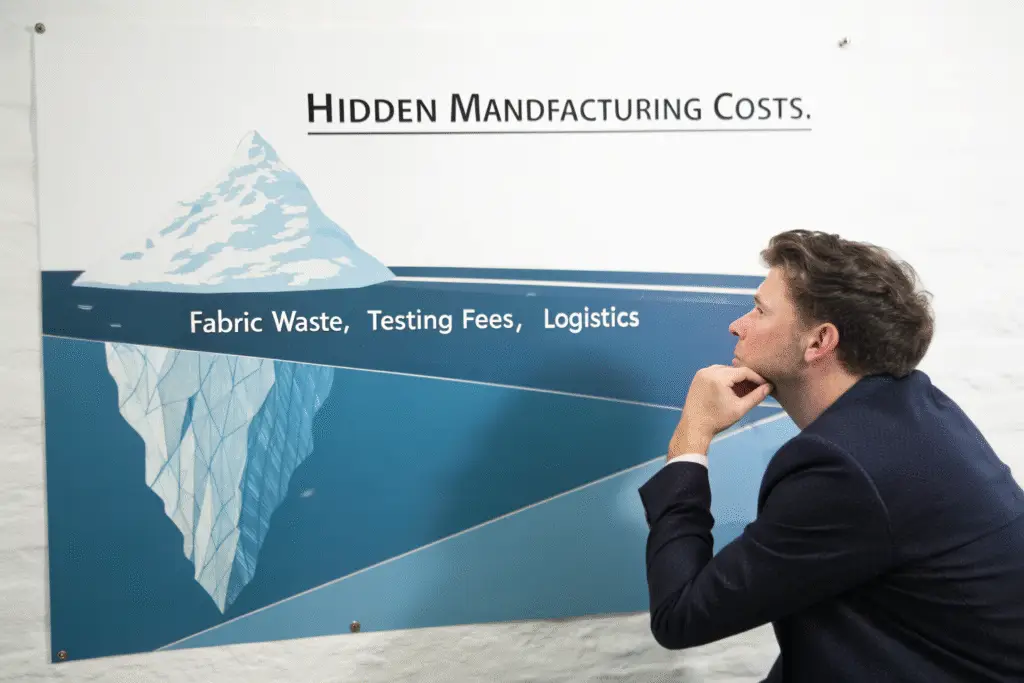
You’ve received a quotation for your clothing production that seems perfect. The unit price fits your budget, and you’re ready to place your order. But wait – are you seeing the complete financial picture? Many fashion entrepreneurs discover too late that the initial quote was just the tip of the iceberg, leaving them with unexpected expenses that jeopardize their profit margins.
Hidden costs in garment manufacturing typically include fabric waste, testing and compliance fees, shipping and logistics surcharges, sample development charges, currency fluctuation impacts, and quality control expenses that aren’t included in initial quotes. These additional costs can add 15-30% to your initial estimate, turning a profitable order into a financial burden. Understanding these potential expenses helps you budget accurately and negotiate transparent pricing with manufacturers.
Last year, a startup from Austin faced a 22% cost overrun on their first production order because they hadn’t accounted for fabric testing, import bond fees, and unexpected pattern adjustment charges. After that experience, they now use our comprehensive checklist to identify all potential costs before production begins. Let’s uncover these hidden expenses so you can avoid similar surprises.
What Pre-Production Costs Are Often Overlooked?
The expenses incurred before cutting and sewing begins can significantly impact your total budget. Many brands focus solely on the per-piece production cost while missing critical development and preparation charges.
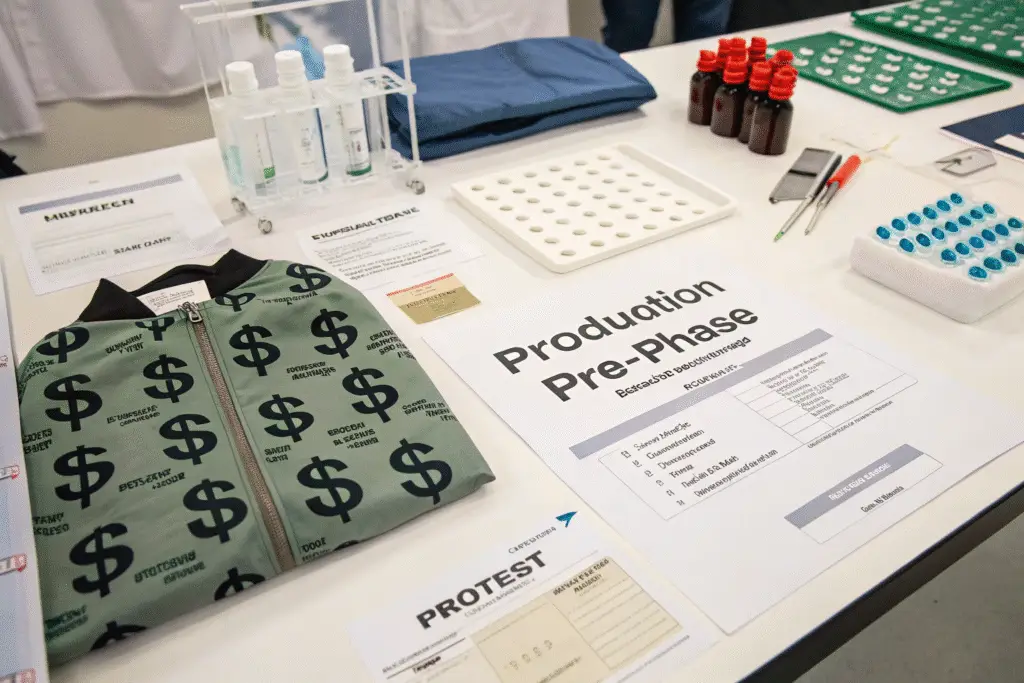
Common overlooked pre-production costs include pattern making, sample development, fabric testing, compliance certification, and design modification fees. These expenses typically range from $500 to $5,000 depending on your order complexity and can represent 5-15% of your total project cost. Proper planning for these items prevents budget shortfalls before manufacturing even begins.
Why Does Sample Development Add Unexpected Costs?
Many manufacturers offer "free" first samples, but subsequent samples, fit corrections, and size set samples often carry charges ranging from $50-300 per sample. Complex designs requiring multiple iterations can accumulate thousands in unplanned sampling costs. A San Francisco-based brand developing technical outerwear spent $2,800 on additional samples beyond their initial "free" sample because their design required 4 fit revisions. We now provide clients with a clear sampling cost schedule upfront so they can budget appropriately for the development phase.
How Do Testing And Certification Fees Accumulate?
Fabric testing for colorfastness, shrinkage, pilling, and flammability typically costs $150-400 per test. Compliance certifications for standards like OEKO-TEX or GOTS can range from $500-2,000 depending on the certification scope. These are essential for market access but rarely included in initial quotes. One of our clients importing children’s sleepwear was surprised by $1,200 in mandatory CPSC flammability testing fees that hadn’t been included in their original cost calculation. We now include a testing requirements assessment in our initial consultations.
What Production Process Costs Surprise Brands?
Once production begins, several factors can increase costs beyond the agreed unit price. These expenses often relate to material utilization, production efficiency, and quality standards that weren’t fully specified initially.
Surprising production costs typically include fabric waste, trim and accessory minimums, premium positioning charges, inspection fees, and rework expenses. These items can add 8-20% to your expected production costs and often only become apparent after order placement. Understanding these variables helps you ask the right questions during negotiations.

How Much Does Fabric Waste Impact Total Cost?
Fabric waste depends on pattern efficiency and typically ranges from 10-25% of purchased fabric. Inefficient marker making or complex patterns can increase this percentage significantly. A client producing asymmetrical dresses discovered their unique pattern created 28% fabric waste instead of the standard 15% they had budgeted for, adding $1.75 to their cost per unit. We help clients optimize pattern efficiency during the development phase to minimize this often-overlooked expense.
Why Do Trim Minimums Increase Costs?
Zippers, buttons, labels, and other trims often have high minimum order quantities (MOQs) that exceed your production needs. You might pay for 10,000 custom buttons when you only need 3,000 for your current order. This inventory carrying cost is rarely factored into initial quotes. A sportswear brand paid $840 for custom aglets with their logo – enough for 15,000 units when their order was only for 2,500 pieces. We now guide clients toward trim selection that matches their order volume to avoid these surplus expenses.
What Logistics And Shipping Costs Aren’t Quoted?
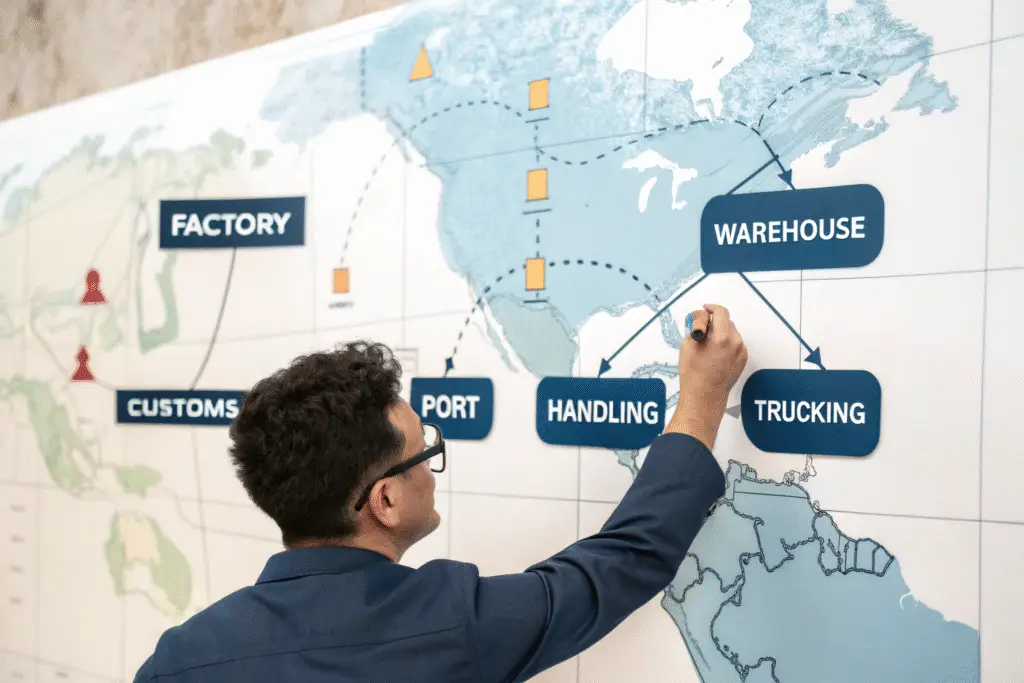
The journey from factory to your warehouse involves numerous charges beyond basic freight costs. These logistics expenses can represent the most significant hidden costs for importers, particularly those new to international manufacturing.
Unquoted logistics costs typically include customs bond fees, port handling charges, warehousing demurrage, insurance premiums, fuel surcharges, and last-mile delivery expenses. These can add 12-25% to your expected shipping costs and create cash flow challenges upon arrival. Proper Incoterms understanding is crucial for anticipating these expenses.
| Logistics Cost Type | Typical Range | Who Usually Pays |
|---|---|---|
| Customs Bond Fee | $250-$500 per entry | Importer |
| Port Handling Charges | $100-$300 per container | Importer |
| Demurrage Fees | $150-$500 per day | Importer if delays occur |
| Fuel Surcharges | 5-20% of freight cost | Varies by Incoterms |
How Do Customs and Import Fees Add Up?
Customs bond fees (approximately $500), merchandise processing fees (0.3464% of shipment value), harbor maintenance fees, and import duties (varies by HTS code) are rarely included in manufacturer quotes. A Chicago-based brand importing $80,000 worth of knitted sweaters was surprised by $14,200 in total import costs that hadn’t been factored into their initial budget. We provide clients with a detailed import cost calculation during the quoting phase to prevent these surprises.
What Are The Hidden Charges In International Shipping?
Beyond ocean or air freight, expect terminal handling charges, bunker adjustment factors (fuel surcharges), currency adjustment factors, peak season surcharges, and container imbalance fees. These can increase your shipping costs by 15-40% above the base freight rate. During the pandemic, one client saw their shipping costs triple due to congestion surcharges and equipment fees they hadn’t anticipated. Our supply chain management team now monitors these variables and advises clients on optimal shipping timing.
How Do Compliance And Quality Costs Impact Budgets?
Meeting regulatory requirements and maintaining quality standards involves expenses that many brands don’t anticipate. These costs ensure your products are market-ready but can significantly impact your bottom line.
Compliance and quality costs include factory social audits, product safety testing, labeling compliance verification, third-party inspections, and rejection/waste handling. These essential expenses typically add 3-10% to your total product cost but are crucial for brand protection. Skipping them risks much costlier recalls and reputation damage.
Why Are Third-Party Inspections Necessary And Costly?
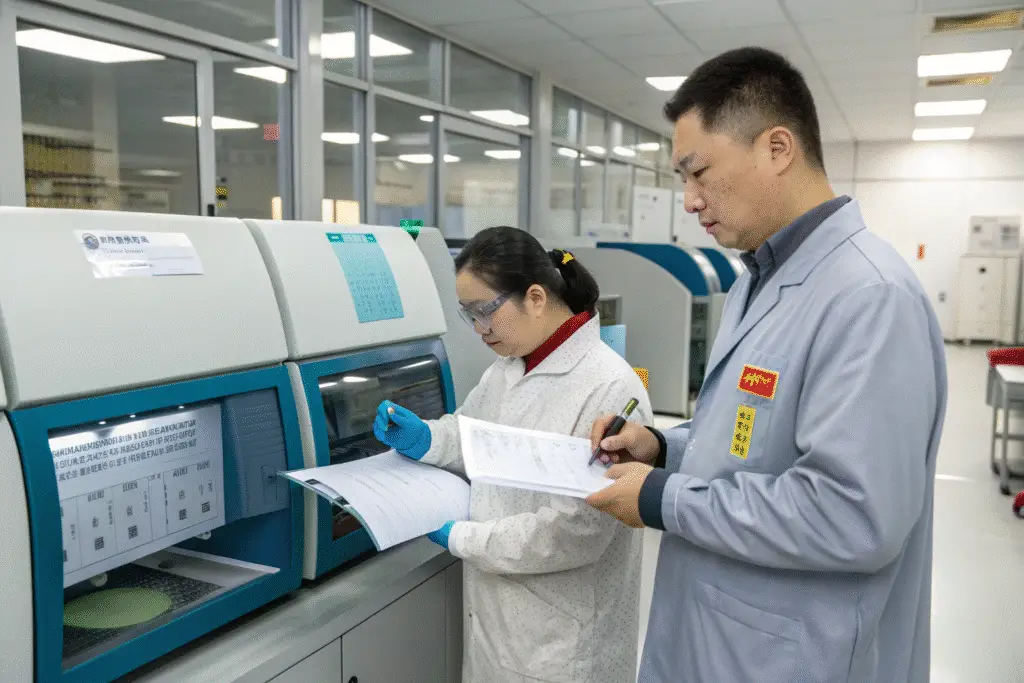
Pre-shipment inspections cost $300-800 per day plus inspector travel expenses. While seemingly expensive, they prevent much costlier issues like entire shipments being rejected for quality issues. A Los Angeles brand skipped inspection to save $650, then received a shipment where 40% of units had misaligned stripes, resulting in $18,000 in losses. We build quality assurance costs into our transparent pricing model so clients understand this value-added service.
How Do Labeling and Packaging Requirements Add Costs?
Compliance labeling for care instructions, fiber content, and country of origin requires specific materials and applications. Packaging elements like hangtags, polybags, and cartons have setup charges and minimum quantities. A sustainable brand was surprised by $2,200 in costs for custom recycled polybags and FSC-certified hangtags that weren’t in their initial quote. We now provide detailed packaging cost breakdowns during the quoting process.
Conclusion
Hidden costs in garment manufacturing can transform an apparently profitable order into a financial challenge, but they don’t have to be surprises. By understanding common additional expenses in pre-production, manufacturing, logistics, and compliance, you can ask the right questions during manufacturer negotiations and build appropriate contingencies into your budget.
The most effective strategy against hidden costs is working with transparent partners who provide detailed breakdowns and educate you about potential additional expenses. Remember that some "hidden" costs are actually essential investments in quality, compliance, and supply chain reliability that protect your brand in the long term.
Ready to work with a manufacturing partner that provides complete cost transparency from day one? Contact our Business Director, Elaine, today at elaine@fumaoclothing.com to receive detailed quotes that leave no cost unaccounted for.