You've finalized your designs and are ready to place a bulk clothing order. The most pressing question now is: how long until you receive your goods? Understanding the timeline is crucial for planning your inventory, marketing campaigns, and sales seasons. A delayed shipment can mean missing a crucial selling window entirely.
The lead time for bulk clothing orders typically ranges from 45 to 90 days, but this is not a one-size-fits-all answer. The exact timeline depends on three core factors: order complexity, fabric sourcing, and production capacity. A simple order for basic t-shirts will be faster than a complex order for technical outerwear with custom prints and multiple components. Knowing what influences this timeline helps you set realistic expectations with your team and customers.
Many brands underestimate the time required for a quality-driven production process. Rushing any stage can compromise the final product. Let's break down the typical stages of a production timeline and what you can expect at each step.
What Factors Influence Production Lead Times?
The total production time is not just about sewing garments. It's a sum of multiple processes, each with its own variables. Understanding these factors allows you to anticipate potential delays and work proactively with your manufacturer.
Key factors include fabric availability, design complexity, order quantity, and the manufacturer's current schedule. Custom or special-order fabrics can add 2-4 weeks, while intricate designs with multiple decoration techniques require more production time. Seasonal peaks can also impact scheduling, so planning ahead is vital. A transparent manufacturer will outline these factors from the beginning.

How Does Fabric Sourcing Impact The Schedule?
Fabric sourcing is often the most unpredictable phase. If we have the fabric in stock, we can start cutting immediately. However, if your order requires a specific, custom-dyed, or imported fabric, the lead time can extend significantly. For example, a client from Chicago needed a specific sustainable organic cotton blend with a unique color. The mill's production alone took 25 days before the fabric even arrived at our factory for inspection and cutting. This is why we always recommend discussing fabric options early. Using a pre-approved fabric sourcing platform can sometimes streamline this, but customizations always add time. We provide our clients with a fabric availability report before confirming the order to set clear expectations.
Why Does Order Complexity Cause Delays?
A simple polo shirt order will naturally move faster than a technical ski jacket. Complexity comes from multiple elements: the number of components, type of trims (zippers, buttons, drawstrings), and logo application methods. An order for 5,000 men's dress shirts with custom embroidery and printed inner collars will require coordination between different specialist teams. Last year, we had an order for performance activewear that required both sublimation printing and silicone gel logos. The process of perfecting the application of both on the same garment added an extra 10 days to the sampling stage alone. Each added feature introduces a new variable that must be meticulously planned and executed.
What Is A Typical Bulk Order Production Timeline?
While every order is unique, most follow a standard sequence of events. Breaking down the timeline into clear phases helps you visualize the journey of your order from concept to delivery.
A standard 60-day timeline can be divided into four key phases: Pre-Production (15 days), Fabric & Trims Sourcing (15 days), Production & Quality Control (25 days), and Final Inspection & Shipping (5 days). This timeline assumes standard fabrics and designs. Your manufacturer should provide a detailed, week-by-week schedule after order confirmation.

What Happens During The Pre-Production Phase?
This is the foundation of a smooth production run. The pre-production phase includes finalizing all technical details. We create tech packs, make precise patterns, and confirm the Production Sample (or top sample). This sample is your final chance to approve the fit, fabric, and workmanship before mass production begins. Rushing this phase is a common mistake. A European client once pressured us to skip a second fit sample for their tailored trousers. We advised against it, but they insisted. The result was an entire batch with an inconsistent fit, leading to costly alterations later. We now enforce a rigorous quality control checklist during pre-production to prevent such expensive errors.
How Long Does Cutting, Sewing, and QC Take?
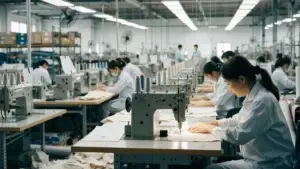
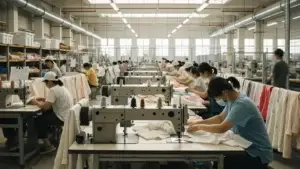
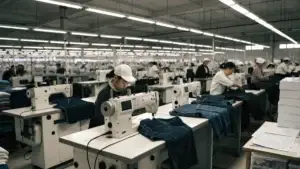
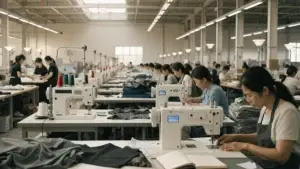
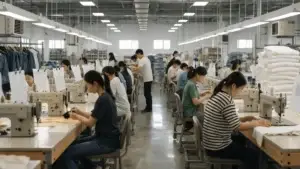
This is the core manufacturing process. After pre-production approval and fabric arrival, the fabric is laid out, cut according to the patterns, and then assembled by sewing teams. After sewing, each garment undergoes initial quality checks for stitching, construction, and overall finish. This phase is highly dependent on your order quantity and the garment's complexity. For a standard order of 3,000 knitted t-shirts, this process might take about 15-20 days. For a similar quantity of complex woven garments like structured blazers, it could take 30 days or more. We maintain a transparent factory floor and can often provide photos or videos during this stage upon request.
How Can You Ensure Your Order Stays On Schedule?
A successful on-time delivery is a partnership between your brand and the manufacturer. While the factory manages the production, there are actions you can take to prevent unnecessary delays.
You can ensure timeliness by providing all required information upfront, making prompt decisions during the sampling phase, and maintaining clear, consistent communication with your manufacturer. Delays often occur when brands are slow to approve samples or request significant changes after production has started.

What Information Do You Need To Provide Early?
To avoid delays, provide a complete tech pack, clear artwork files (in vector format), and confirmed fabric swatches at the very beginning. Also, be decisive about your packaging requirements. A common bottleneck is waiting for brand approval on hangtags, labels, or polybag designs. For instance, a client last month had everything ready except for the final copy on their care labels. This single item held up the entire shipping process for five days. We recommend using a standardized product development checklist to ensure you have all assets ready before placing the order.
Why Is Sample Approval The Most Critical Step?
The sample approval is your official "go" signal for production. Any delay in approving the sample directly delays the production start date. Similarly, requesting changes after approving the sample can reset the clock, as new samples must be made and sent. We work to make this process efficient. For a client in Canada, we implemented a digital approval system for their color matching, which cut their sample approval time from 10 days to 48 hours. Prompt and clear feedback during sampling is the single biggest factor you control in keeping your bulk order on track.
What Are Realistic Timelines For Different Product Types?
Different apparel categories have inherently different production challenges and therefore, different timelines. Setting expectations based on your product type is essential for accurate planning.
Simple knitwear (like t-shirts) can be produced in 30-45 days, while complex outerwear (like winter coats) often requires 75-90 days. Woven shirts and trousers typically fall in the middle, at around 50-65 days. These estimates include standard sampling and assume all materials are available.

What Is The Lead Time For Basic T-Shirts?
For a standard order of basic cotton t-shirts (e.g., 5,000 pieces) with a single screen-printed logo, a lead time of 30-45 days is standard. This is because the fabric is usually readily available, and the construction is simple. The process is highly streamlined. We recently fulfilled an urgent order of 10,000 promotional t-shirts for a US event company in 35 days by allocating a dedicated production line and using our in-stock fabric. However, this requires prior planning and cannot always be guaranteed during peak seasons.
How Long Does Complex Outerwear Take?
Complex outerwear, such as waterproof jackets with multiple layers, insulation, and specialized components, is at the top end of the lead time spectrum. Expect 75 to 90 days. The reason is the multi-stage assembly process, the need for specialized machinery, and more rigorous quality testing, including water resistance checks. A brand from Colorado ordered 2,000 technical ski jackets from us last fall. The timeline was 85 days, which included sourcing specific waterproof zippers from Japan, laminating the fabric, and conducting multiple quality checks on the sealed seams. Rushing this process would have compromised the product's core functionality.
Conclusion
Understanding the lead time for bulk clothing orders is about recognizing the journey your products take from raw material to finished goods. A typical timeline of 45-90 days accounts for crucial steps like sourcing, sampling, production, and quality control, ensuring you receive a product that meets your standards.
By partnering with a transparent manufacturer, providing clear information, and respecting the sampling process, you can significantly increase the chances of your order arriving on time and perfectly made. Planning your production cycle well in advance of your sales season is the ultimate key to success.
Ready to get a precise timeline for your next bulk order? Let's discuss your specific requirements and create a realistic production schedule together. Contact our Business Director, Elaine, today at elaine@fumaoclothing.com to start your smooth and timely production journey with Shanghai Fumao.