You're ready to produce your custom clothing designs but keep hitting the same question: what's the minimum order quantity (MOQ) factories will accept? You've received quotes with wildly different minimums—from 50 pieces to 5,000—and you're unsure what's realistic for a new brand or why these requirements vary so dramatically. Understanding MOQs is crucial because getting this wrong can either leave you with unsustainable inventory or prevent you from working with quality manufacturers entirely.
Minimum order quantities for custom clothing typically range from 50-300 pieces per design for cut-and-sew manufacturers, with significant variation based on product complexity, factory size, and material requirements. MOQs exist primarily to ensure manufacturing efficiency and cost-effectiveness for both brands and factories, balancing setup costs with production viability. The specific minimum depends on multiple factors including garment type, customization level, fabric sourcing, and your target price point. Let's explore what drives these numbers and how to find MOQs that work for your business stage.
What factors determine MOQ requirements?
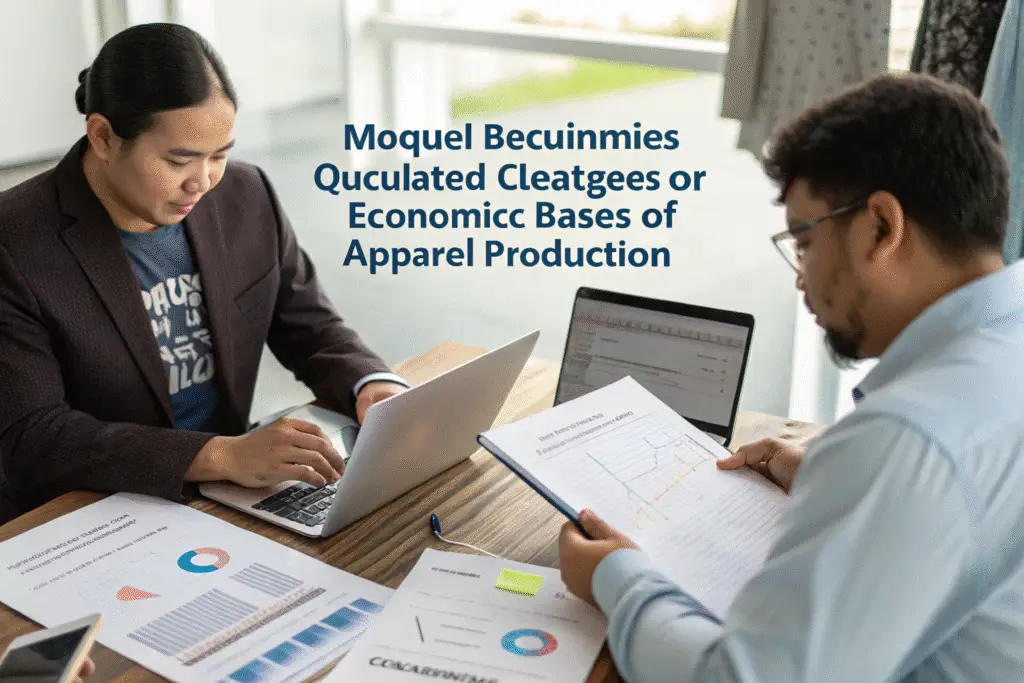
MOQs aren't arbitrary numbers—they're calculated based on the economics of apparel production. Understanding what drives these requirements helps you negotiate better terms or adjust your strategy to meet viable minimums for your business stage.
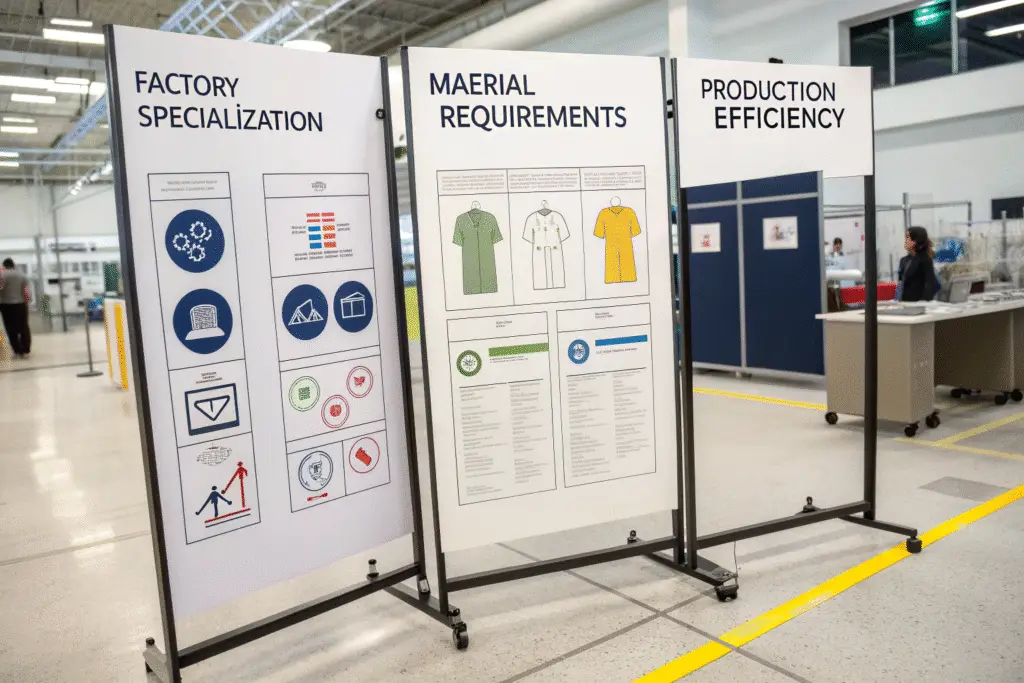
The primary factors influencing MOQs include factory type and specialization, garment complexity, material minimums, and production efficiency thresholds. Small boutique factories might accept 50-100 pieces per style, while larger operations typically require 300-500+ pieces to justify production line setup. We recently worked with a contemporary brand that was surprised by our 150-piece MOQ for their complex dresses until we explained that the pattern making, sampling, and specialized sewing required made lower quantities economically unfeasible while maintaining our quality standards.
How does factory specialization affect MOQ?
Factories specializing in specific product categories often have lower MOQs for those items because they maintain dedicated equipment and skilled operators. A t-shirt manufacturer might accept 100-piece orders because they're optimized for that garment type, while requiring 500 pieces for woven shirts that need different equipment and expertise. We've developed specialized lines for knitwear that allow us to offer 120-piece MOQs for simple tees while maintaining 250-piece minimums for more complex woven garments that require different production processes.
What role do material minimums play?
Fabric and trim suppliers often impose their own MOQs that directly impact your production minimums. Mills might require 500-yard minimums for custom fabrics, while zipper manufacturers might require 1,000-piece orders for custom colors. We help clients navigate these constraints by identifying which materials are available at lower thresholds or suggesting alternatives that maintain their vision while meeting practical sourcing requirements. One activewear brand reduced their MOQ from 300 to 150 pieces by switching from a custom-dyed fabric to a stock color with similar properties.
How do MOQs vary by garment type?
Different clothing categories have dramatically different production processes, which directly impacts their viable minimum order quantities. Understanding these variations helps you plan your collection with realistic expectations for each product category.
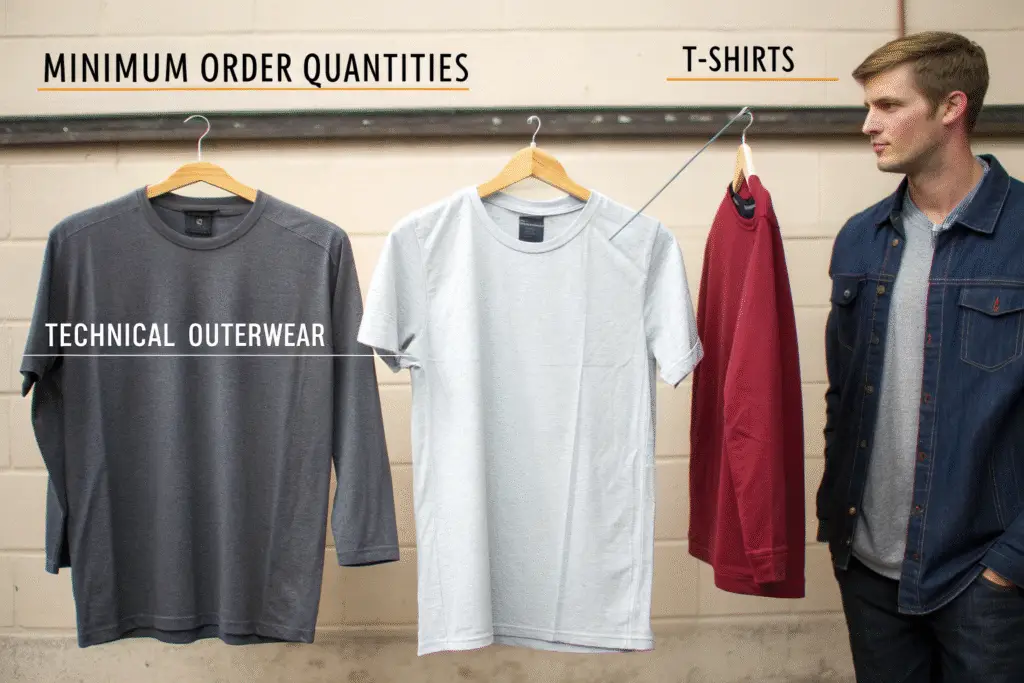
Simple garments like basic t-shirts and tanks typically have the lowest MOQs (50-150 pieces), while complex items like structured jackets and technical outerwear require higher minimums (200-500+ pieces). The difference lies in the number of operations, specialized equipment, and skill required. We maintain a tiered MOQ structure: 100 pieces for simple knits, 200 for woven bottoms and shirts, and 300 for complex outerwear and dresses. This approach recognizes the different production workflows and setup requirements for each category.
Why do simple garments have lower MOQs?
Basic items like t-shirts and leggings involve fewer pattern pieces, simpler construction, and faster sewing operations, making smaller batches more efficient. These garments often use readily available fabrics and standard components, reducing material minimum constraints. A startup focused on organic basics successfully launched with 75-piece orders for each of their 5 styles by choosing simple silhouettes and stock fabrics—an approach that would have been impossible with more complex designs requiring higher minimums.
What makes technical apparel MOQs higher?
Garments with multiple components, specialized construction, or technical features require more setup time, specialized equipment, and skilled operators. A waterproof jacket with sealed seams, multiple compartments, and technical fabrics might need 10+ separate production stations compared to 3-4 for a basic sweater. We recently explained to a performance wear brand why their technical jacket required a 350-piece MOQ—the specialized seam sealing equipment alone needed significant setup time that couldn't be justified across smaller batches.
Can you reduce MOQs through strategic choices?
While MOQs are grounded in production economics, strategic decisions about your designs, materials, and production timing can significantly reduce minimum requirements. Understanding these leverage points helps you achieve viable production scales earlier in your brand's growth.
Yes, MOQs can often be reduced by 30-50% through careful design simplification, material selection, and production timing. The most effective strategies include design modification to reduce complexity, using stock materials rather than custom-developed fabrics, and grouping production with other brands during factory downtime. We helped a sustainable brand reduce their MOQ from 200 to 120 pieces by simplifying their sleeve construction and switching from custom-woven fabric to a high-quality stock option with similar aesthetic and performance characteristics.
How does design simplification affect MOQ?
Reducing the number of pattern pieces, eliminating complex construction details, and standardizing components can dramatically lower MOQs. Each unique operation requires setup time that must be amortized across your order quantity. A client reduced their dress MOQ from 250 to 150 pieces by changing from a six-panel skirt to a four-panel design and replacing custom-developed buttons with a stock option—maintaining their design vision while achieving a more accessible production threshold.
What's the impact of material selection?
Choosing readily available fabrics and standard trims from supplier inventory rather than custom-developed materials often reduces MOQs by eliminating material minimums. We maintain a curated selection of "low MOQ friendly" fabrics that clients can choose from to reduce their minimums. One brand accessed our stock fabric program and reduced their MOQ by 40% while actually improving quality by selecting a premium stock fabric over the mid-grade custom fabric they'd originally specified.
How do MOQs impact your cost per unit?
MOQs directly influence your cost per unit through the relationship between fixed costs (spread across all units) and variable costs (increasing with each additional unit). Understanding this relationship helps you make informed decisions about order quantities and pricing strategy.
Fixed costs like pattern making, sampling, and production setup are distributed across all units in your order—the more units you produce, the lower these costs per piece. This creates a sliding scale where cost per unit typically decreases 15-30% when doubling from minimum to optimal production quantities. We provide clients with detailed cost breakdowns showing exactly how their cost structure changes at different quantities. One brand discovered that increasing from 150 to 300 pieces reduced their cost per unit by 22%, making their retail pricing significantly more competitive while maintaining margins.

What's the true cost of producing at MOQ?
Producing at minimum quantities means absorbing the highest possible fixed costs per unit, which impacts both your margins and retail pricing competitiveness. A client producing dresses at our 150-piece MOQ had a cost per unit of $38, while the same dress at 400 pieces cost $29—a 24% difference that significantly affected their retail strategy. Understanding this dynamic helps brands plan for growth by recognizing that early small batches may require higher price points or slimmer margins.
How do MOQs affect your inventory risk?
Higher MOQs increase both your initial investment and inventory risk if products don't sell as projected. We help clients analyze the trade-off between lower per-unit costs and higher inventory commitment. A cautious startup chose to produce at our 120-piece MOQ for their first collection despite the higher per-unit cost, recognizing that the reduced risk was worth the margin sacrifice until they validated market demand. This conservative approach prevented what could have been catastrophic overstock of their slowest-moving design.
Conclusion
Minimum order quantities represent a practical balance between manufacturing efficiency and brand accessibility. While MOQs of 50-300 pieces per design are typical for custom clothing production, the specific number depends on your garment complexity, material choices, and factory capabilities. Understanding what drives these requirements enables you to make strategic decisions that align with your business stage, budget, and growth plans.
Remember that the right MOQ balances production viability with manageable risk—it should challenge you to commit to your designs while remaining within your operational capacity. For guidance on MOQs that match your specific products and business stage, contact our Business Director Elaine at elaine@fumaoclothing.com. We'll help you navigate minimum requirements and develop a production strategy that supports your growth while maintaining quality and feasibility.