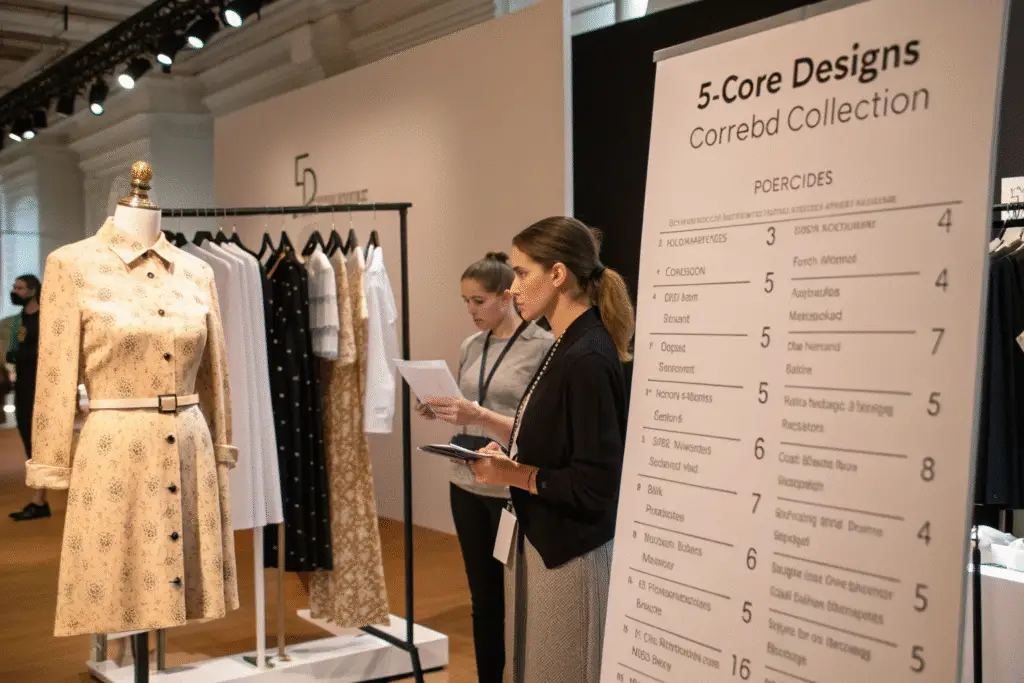
You're launching your clothing brand and facing one of the most critical early decisions: how many designs should comprise your first collection? Order too few and you risk appearing insignificant to customers and retailers; order too many and you're stuck with excess inventory and strained cash flow. Finding that sweet spot between establishing your brand identity and maintaining financial viability determines whether your launch succeeds or struggles.
Most new clothing brands should start with 5-8 core designs that strongly communicate their brand identity while remaining manageable for production, inventory, and marketing. This range provides enough variety to attract different customer preferences without overextending resources, allowing for focused storytelling and efficient inventory management. The ideal number balances creative expression with operational reality, considering your budget, production capabilities, and market positioning. Let's explore how to determine the right quantity for your specific situation and goals.
What factors determine your ideal starting quantity?
The perfect number of designs for your launch depends on multiple variables unique to your brand, market, and resources. A luxury brand targeting specialty boutiques has different requirements than a direct-to-consumer basics company or a streetwear label building hype through scarcity. Understanding these factors helps you make a strategic rather than emotional decision.
Key considerations include your production budget, minimum order quantities (MOQs), target sales channels, marketing capacity, and operational capabilities. We recently advised a minimalist womenswear brand that initially planned 15 designs but scaled back to 6 after analyzing their resources. This focused approach allowed them to invest in better fabric and production quality for each piece, resulting in stronger customer response and fewer markdowns than if they'd spread their budget thinner across more designs.
How does your budget impact design quantity?
Your production budget should be divided across sampling costs, fabric purchases, manufacturing, and inventory holding—not just spread across more designs. A useful guideline: allocate no more than 60-70% of your total budget to initial production, reserving the remainder for reorders, marketing, and operational expenses. A streetwear startup learned this when they exhausted their entire budget on 12 designs, leaving nothing for marketing—their beautiful collection sat unseen because they couldn't afford to promote it effectively.
What role do minimum order quantities play?
MOQs determine how many units you must produce per design, directly impacting how many designs you can afford to develop. If a factory requires 300 units per style and you have budget for 2,100 units total, 7 designs is your mathematical maximum. We helped a sustainable brand navigate this by identifying which of our production lines had lower MOQs for their simpler designs, allowing them to include 2 additional styles while staying within their unit count budget and maintaining their sustainability standards.
How does design quantity affect production efficiency?
The number of designs in your collection directly impacts your manufacturing experience, costs, and timeline. While variety seems appealing, operational complexity increases disproportionately with each additional design, affecting everything from sampling to final delivery.
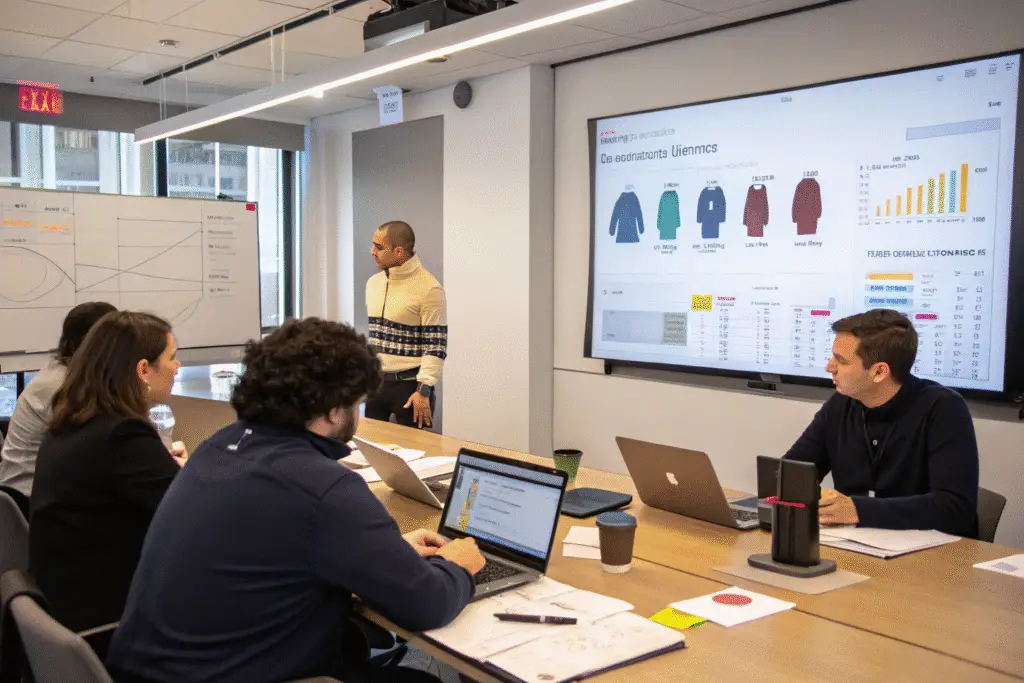
Each new design requires separate tech packs, patterns, samples, fabric sourcing, and production scheduling. We've observed that brands launching with 5-8 designs typically complete their first production run 3-4 weeks faster than those attempting 12-15 designs, with 25% lower unexpected costs due to better focus and fewer complications. A recent client launching their activewear line found that reducing from 10 to 6 designs allowed them to properly develop each piece's technical features rather than rushing all designs simultaneously.
How does sampling efficiency change with quantity?
Each design typically requires 2-3 sample iterations to perfect fit, fabric, and construction. More designs mean more samples to evaluate, approve, and potentially revise. A luxury brand client initially planned 10 designs but found the sampling process overwhelming—they struggled to give each piece the attention it deserved. By focusing on 5 exceptional designs, they achieved prototype perfection on each one, establishing their reputation for impeccable quality from their very first collection.
What are the cost implications of design variety?
Fixed costs like pattern making, sample development, and production setup are multiplied by each additional design. Meanwhile, production efficiency decreases as operators frequently switch between different constructions and specifications. We calculated for one client that their 8th design cost 18% more to produce than their 3rd design due to these efficiency losses and the complexity of managing more SKUs through production and quality control.
What's the marketing impact of your design count?
Your number of designs significantly influences how effectively you can market your collection. Too few designs might limit your storytelling, while too many can dilute your message and overwhelm customers. The psychological principle of "choice overload" suggests that beyond an optimal point, more options actually decrease conversion rates.
Research indicates that 5-8 products typically represents the sweet spot where customers feel they have meaningful choice without decision paralysis. A contemporary brand we worked with found that their 6-design collection generated 40% higher sales per design than their previous 12-design collection because they could market each piece more effectively and customers found the decision process easier. Their focused assortment also allowed for clearer brand storytelling around each garment's unique features and inspiration.

How does design count affect inventory risk?
Each additional design represents another inventory risk—another product that might not sell and require discounting. The 80/20 rule often applies: approximately 20% of your designs will generate 80% of your revenue. By starting with fewer designs, you identify your winners with less capital at risk. One entrepreneur discovered through their 5-design launch that two pieces accounted for 70% of their sales—knowledge that shaped their second collection far more effectively than if they'd launched with 12 designs and struggled to identify patterns in the noise.
What's the ideal number for brand storytelling?
A focused collection allows you to develop a cohesive narrative around your brand and each design's purpose. With 5-8 designs, you can meaningfully explain the inspiration, craftsmanship, and unique features of each piece without overwhelming your audience. A sustainable brand found that their 6-piece "capsule collection" approach enabled them to thoroughly communicate their sustainability story for each garment—from material sourcing to production ethics—creating deeper customer connections than a larger assortment would have permitted.
How should you structure your design assortment?
The composition of your collection matters as much as the quantity. A strategic assortment includes a mix of hero pieces, core styles, and potentially entry-point items that work together to communicate your brand while addressing different customer needs and price points.
A balanced launch collection typically includes 1-2 statement pieces that define your brand aesthetic, 3-4 core designs that represent your signature style, and 1-2 accessible items that offer lower price points or broader appeal. A minimalist menswear brand successfully launched with 2 hero jackets, 3 core shirts, and 2 basic tees—this structure allowed them to establish their design philosophy while providing multiple price entry points for customers to discover their brand.
What's the role of colorways in design count?
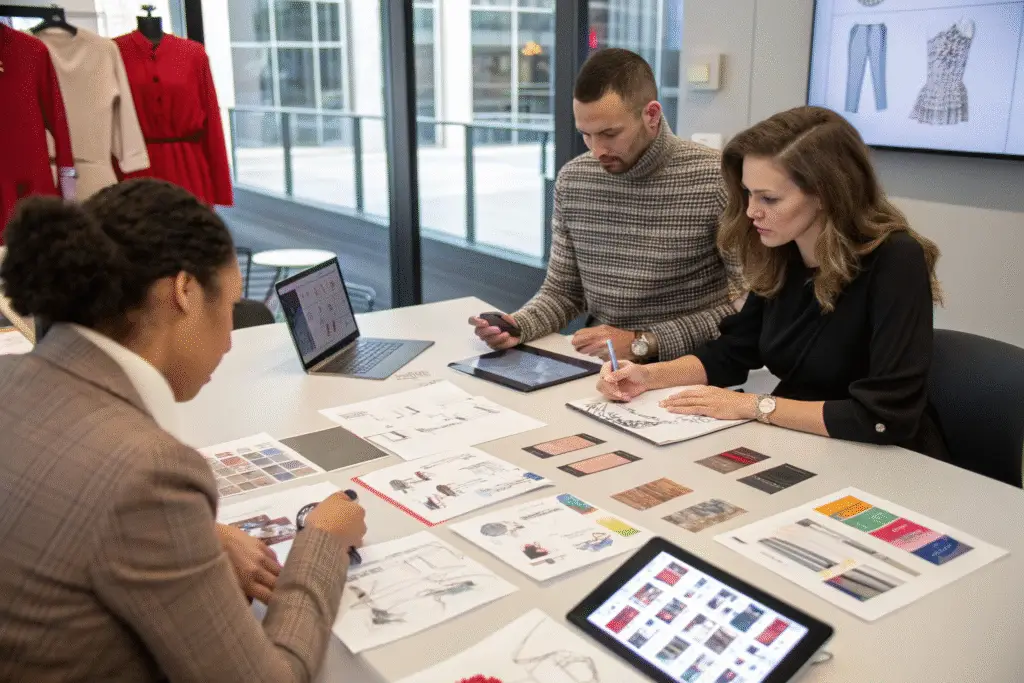
Color variations effectively extend your assortment without the complexity of entirely new designs. Many successful brands launch with 4-6 designs in 2-3 colorways each, creating visual variety while maintaining production efficiency. A womenswear client found that offering their 5 designs in 3 carefully curated colors each gave them 15 SKUs—enough to fill a retail rack and provide choice—while requiring only 5 sets of patterns, samples, and production setups.
How do you plan for collection expansion?
Your initial collection should establish a foundation that future seasons can build upon. Consider how designs might evolve into additional colors, fabrics, or related styles. One activewear brand launched with 6 core silhouettes designed to work together, then expanded each subsequent season by adding new colors and 1-2 new designs that complemented the originals. This strategic approach created collection continuity that loyal customers appreciated while always offering something new.
Conclusion
The optimal number of designs for your clothing brand launch balances creative ambition with operational reality. For most new brands, 5-8 thoughtfully developed designs provides the ideal foundation: enough variety to establish your brand identity and appeal to different customers, while remaining manageable for production, inventory, and marketing. This focused approach allows you to perfect each design, tell compelling stories about each piece, and identify what resonates with your audience before scaling.
Remember that a smaller, well-executed collection typically outperforms a larger, compromised one. Your first collection should establish your brand's quality standards and design philosophy while leaving room for growth and evolution. For guidance on planning your ideal collection size and navigating your first production run, contact our Business Director Elaine at elaine@fumaoclothing.com. Let's help you launch with the right quantity of designs to build momentum while managing risk effectively.