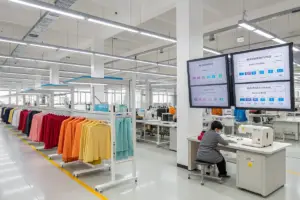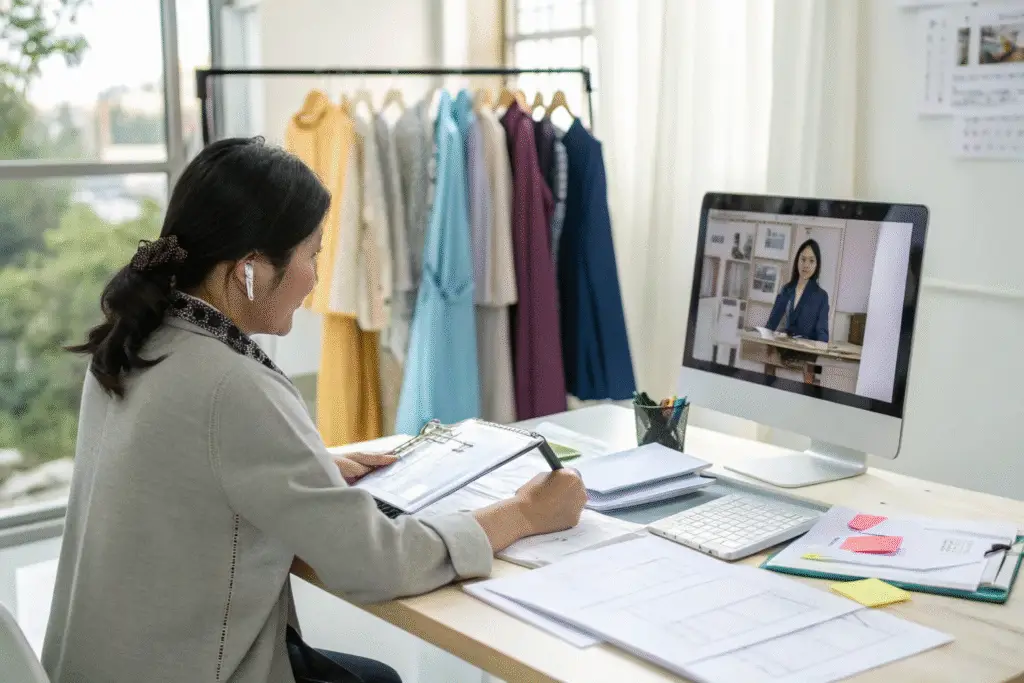
You’ve identified potential manufacturing partners and scheduled your first discovery calls. This is your opportunity to evaluate whether a factory can bring your vision to life, but you’re unsure what information to have ready. How do you ensure you cover all critical aspects without overwhelming the conversation? Proper preparation transforms this initial discussion from a simple introduction into a strategic session that saves weeks of back-and-forth later.
For a productive garment manufacturing discovery call, prepare your technical design documents, target pricing, quality expectations, timeline requirements, and specific questions about the factory’s capabilities and processes. This preparation demonstrates your professionalism, helps the manufacturer provide accurate initial guidance, and ensures you gather the information needed to make an informed partnership decision. A well-prepared discovery call typically covers 5 key areas: your project specifics, their manufacturing capabilities, quality standards, communication protocols, and next steps. Let’s explore what specific information and documents will make your discussion most effective.
What project information should you have ready?
Before the call, organize your project details into a clear, concise overview that helps the manufacturer quickly understand your needs and provide relevant information. Having this information structured demonstrates your professionalism and enables a more productive conversation about feasibility, timing, and costs.
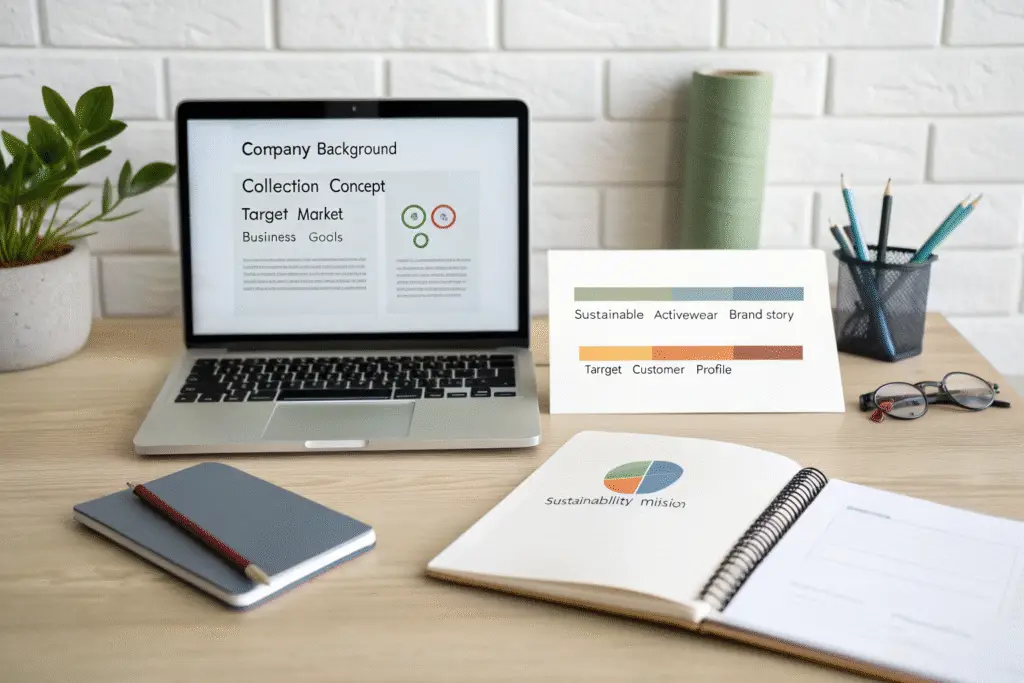
Prepare a one-page project summary that includes your company background, collection concept, target market, and business goals. For a recent discovery call with a sustainable activewear brand, they presented a beautifully organized digital folder containing their brand story, target customer profile, and sustainability mission. This immediately signaled they were serious partners and helped us tailor our discussion to their specific values and needs. Within the first 10 minutes, we were able to address their core concern: how to maintain their ethical standards while hitting their target price points.
What technical documents are essential?
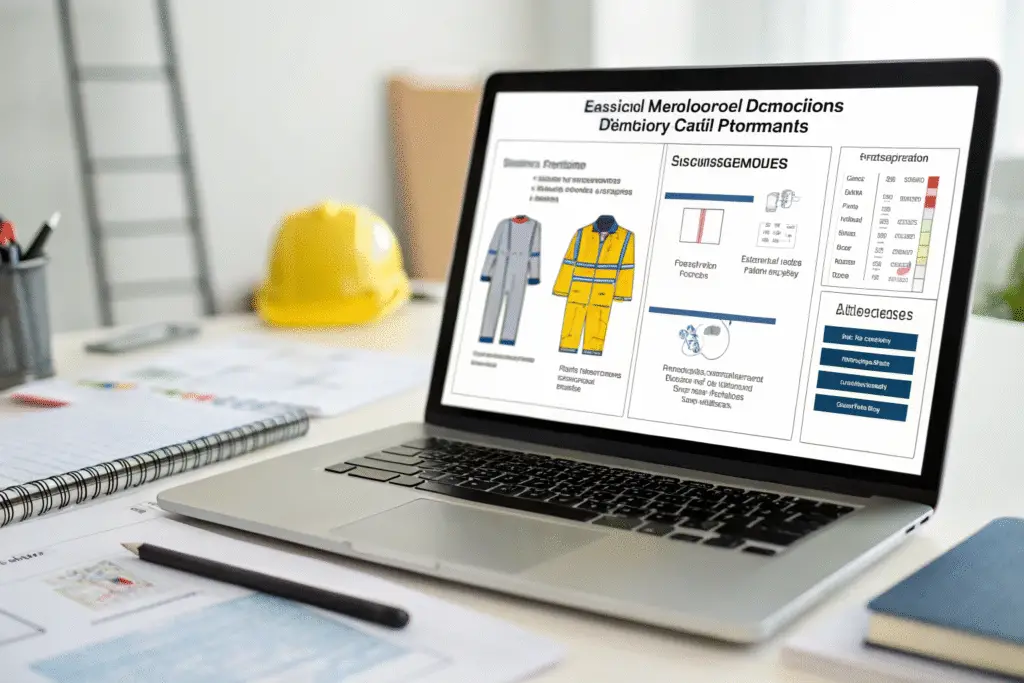
Your tech packs are the most critical documents—they should include flat sketches with measurements, materials list, construction details, and branding placement. Even if they’re preliminary, having these documents shows you understand the manufacturing process. One client arrived with basic but clear tech packs they’d created themselves, which allowed us to immediately identify potential production challenges with their sleeve construction and suggest modifications that would save them 15% in labor costs without compromising design integrity.
How specific should your quantity and timeline be?
Provide realistic target quantities and your ideal timeline, but be prepared to discuss flexibility. Instead of saying "I need 5,000 units," explain "I’m planning an initial production run of 3,000-5,000 units with potential reorders, and I need delivery 3 months before my peak selling season in September." This specificity helps the manufacturer assess capacity and provide accurate guidance. We recently helped a client adjust their timeline after realizing their desired delivery date would require paying 35% more for express freight—knowledge that saved them from a costly timing mistake.
What questions should you ask about manufacturing capabilities?
Your discovery call should verify that the factory can actually produce your specific types of garments at your quality standards and volume requirements. Asking targeted questions about their specialization, capacity, and experience prevents mismatches that become apparent only after you’ve invested time and money.
Create a checklist of capability questions tailored to your product type. If you’re producing technical outerwear, ask about their experience with waterproof construction, seam taping equipment, and insulation techniques. A performance wear brand we spoke with asked specifically about our experience with four-way stretch fabrics and flatlock stitching—questions that immediately revealed their technical knowledge and helped us demonstrate our relevant expertise with similar projects.
How do you assess their experience with your product type?
Ask for examples of similar products they’ve manufactured and their minimum order quantities for those categories. A knitwear designer recently asked to see examples of our cable knit sweaters and our specific equipment for this technique. We were able to share images of similar projects and explain our specialized knitting machines, which gave them confidence in our capabilities. This specific inquiry was far more valuable than generic questions about our overall experience.
What capacity and lead time information do you need?
Understand their current production load and how it might affect your timeline. Ask about typical lead times for your product category and whether they have dedicated lines for different garment types. One client discovered through these questions that their potential manufacturer was entering their peak season and would be unable to meet their timeline—information that saved them from pursuing a partnership that was doomed from the start due to scheduling conflicts.
How do you evaluate their quality standards and processes?
Quality consistency separates exceptional manufacturers from adequate ones. Your discovery call should explore not just their claimed quality standards but their specific processes for maintaining those standards throughout production. This discussion helps you understand whether their quality approach aligns with your brand expectations.
Ask specific questions about their quality control procedures at different production stages. Do they conduct inline checks during sewing? What AQL (Acceptable Quality Level) standard do they use for final inspection? A luxury brand client asked detailed questions about how we prevent fabric shading issues across different production batches—a sophisticated concern that revealed their high standards and allowed us to explain our fabric lot management system designed specifically for this challenge.
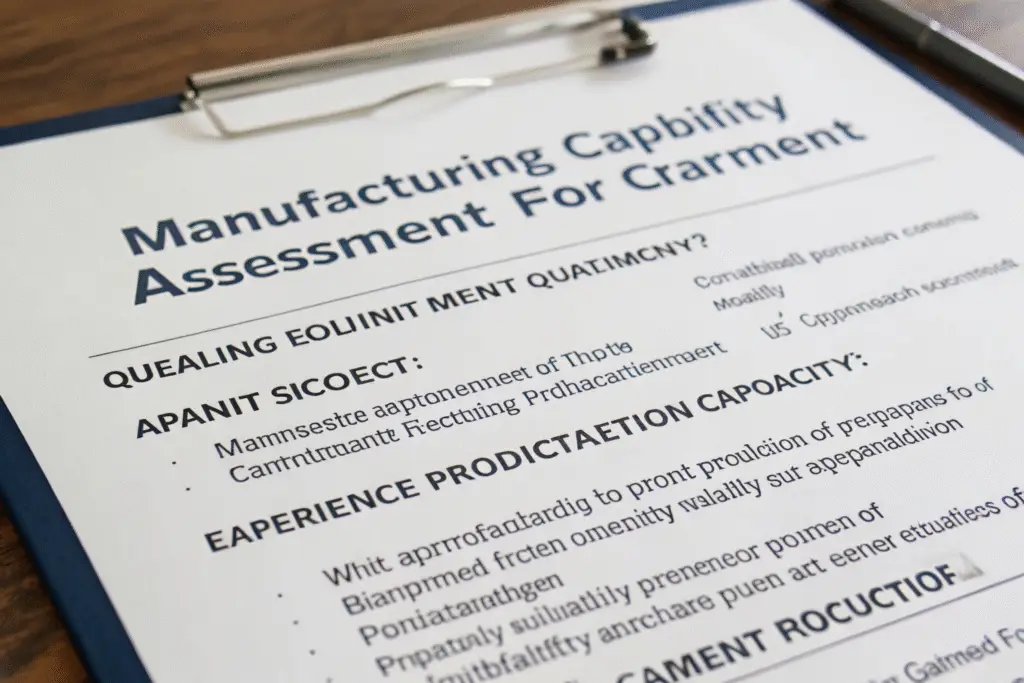
What certifications and testing should you inquire about?
Depending on your market and product type, ask about relevant certifications like GOTS (organic standards), Oeko-Tex (chemical safety), or specific compliance requirements for your region. A children’s wear brand appropriately asked about our CPSC compliance experience and fabric testing protocols for flammability standards. Their thorough questioning demonstrated they understood their regulatory responsibilities—a positive sign for any manufacturer.
How do they handle quality issues when they arise?
The true test of a manufacturer comes when problems occur. Ask about their process for addressing defects discovered during production or after delivery. One of our strongest partnerships began when a client asked not just about our quality standards but about a specific example of when we identified a quality issue and how we resolved it. Our transparent answer about a past fabric bleeding issue and the comprehensive solution we implemented built immediate trust.
What communication and project management details matter?
The manufacturing process involves constant communication and coordination. Understanding how your potential partner manages projects, communicates updates, and handles challenges is as important as understanding their production capabilities. This operational compatibility often determines the smoothness of your collaboration.
Ask about their primary communication methods, response time expectations, and key contacts throughout the process. Do they assign a dedicated account manager? How frequently will you receive updates? A client recently appreciated that we outlined our communication protocol upfront: weekly production reports, immediate notification of any issues, and a single point of contact for all communications. This clarity about our project management approach helped them understand how we would work together day-to-day.
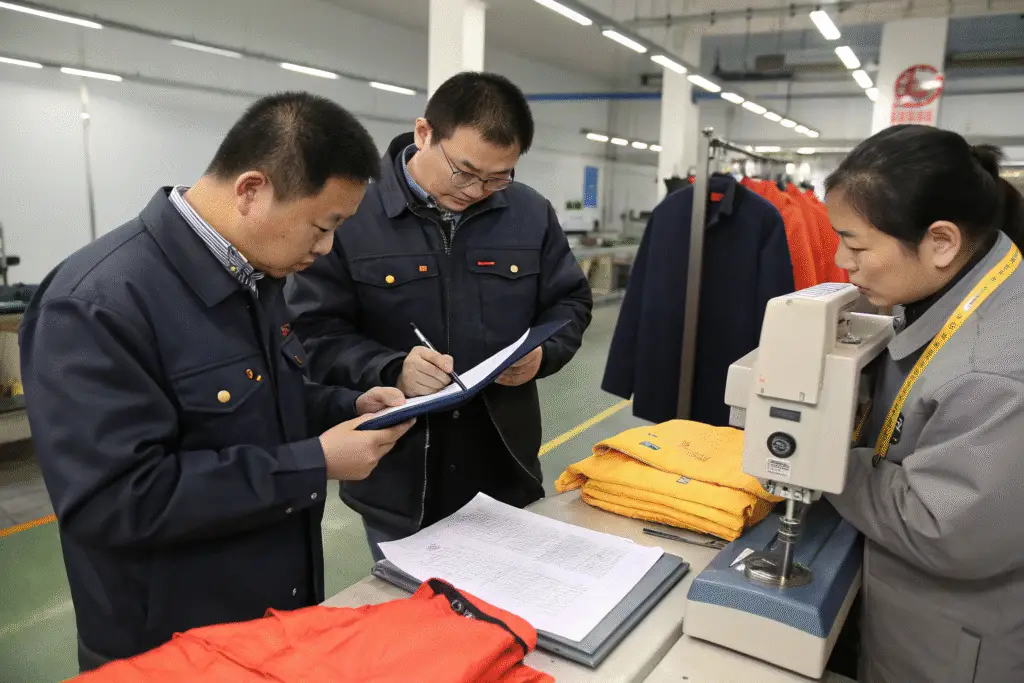
What information systems do they use?
Modern manufacturers typically use some form of production management software for tracking orders and sharing updates. Ask about their systems for providing visibility into your order’s progress. We demonstrate our client portal during discovery calls, showing how clients can track their order through each production stage. This transparency has become a key differentiator for brands accustomed to working with factories that provide minimal visibility between order placement and shipment.
How do they handle sampling and approvals?
The sampling process requires clear communication and efficient iteration. Ask about their sample creation process, timeline, and cost structure. One entrepreneur asked specifically about how we handle design modifications between sample rounds—a practical question that revealed their understanding of the development process. We explained our structured approach to sample evaluation and modification tracking, which gave them confidence in our systematic methodology.
What next steps should you establish?
A productive discovery call should conclude with clear next steps that move the relationship forward efficiently. Whether you’re proceeding to a detailed estimate, factory visit, or sample development, establishing mutual expectations prevents ambiguity and maintains momentum.
Before ending the call, confirm what information the manufacturer needs to provide a formal quotation and their typical timeframe for doing so. Also, clarify what additional information you need to provide. We typically conclude discovery calls by outlining our estimating process and timeline, then emailing a summary of our discussion and next steps. This approach recently impressed a potential client who had experienced disorganized follow-up from other factories—the professionalism of our process itself became a deciding factor in their manufacturer selection.
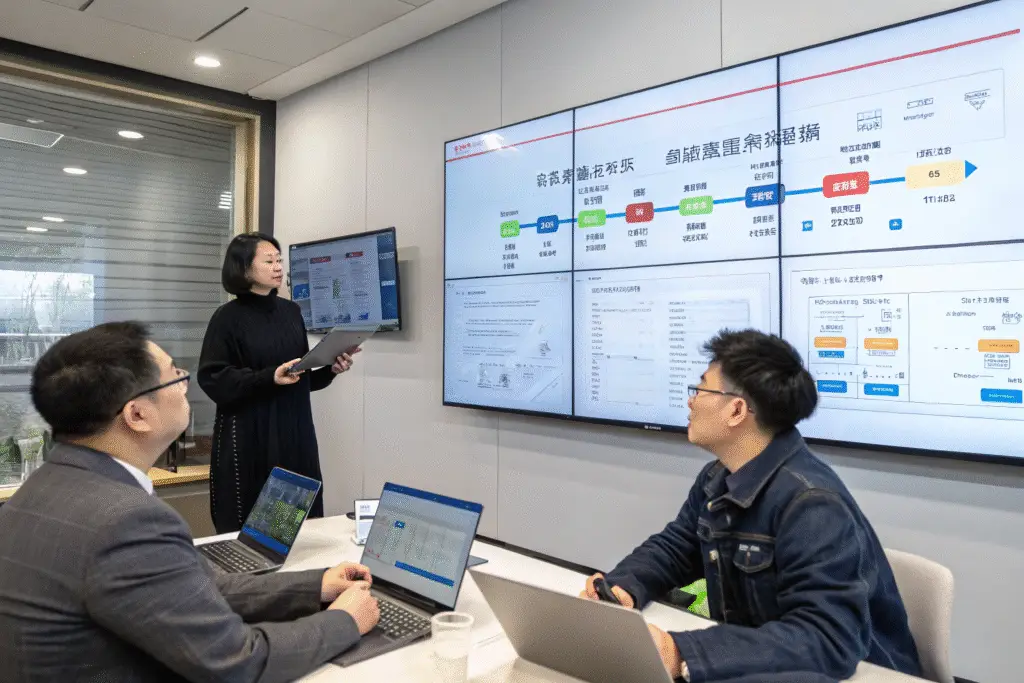
What should you expect after the call?
A professional manufacturer should send a follow-up email summarizing the discussion, answering any outstanding questions, and outlining the proposed next steps. This documentation ensures alignment and provides a reference point. One methodical client took notes during our call and sent their own summary afterward to confirm understanding—an approach we appreciated for its thoroughness and that demonstrated their commitment to clear communication.
How do you compare different manufacturers?
Create a standardized evaluation framework to objectively compare potential partners after your discovery calls. Include categories like technical capabilities, communication style, cost structure, and cultural fit. We’ve seen clients use simple scoring systems that help them make data-driven decisions rather than relying on gut feelings alone. This systematic approach to partner selection prevents overlooking important factors in the excitement of finding a manufacturer who seems enthusiastic about your project.
Conclusion
A well-prepared discovery call sets the foundation for a successful manufacturing partnership. By organizing your project details, preparing targeted questions, and establishing clear next steps, you transform an introductory conversation into a strategic session that saves time, prevents misunderstandings, and identifies the right manufacturing partner for your specific needs.
Remember that the discovery call is a two-way evaluation—you’re assessing whether the manufacturer can meet your requirements, and they’re determining if your project fits their capabilities and current capacity. For a discovery call with a partner who values preparation as much as you do, contact our Business Director Elaine at elaine@fumaoclothing.com. Let’s start your manufacturing journey with a conversation built on mutual understanding and clear expectations.