You’re evaluating manufacturing options for your clothing line and hearing conflicting messages. Some suggest moving production to other low-cost countries, while others claim Chinese manufacturing isn’t as competitive as it once was. Yet when you examine the numbers, Chinese factories consistently offer compelling value. What specific advantages make Chinese garment manufacturers continue to deliver the best balance of cost, quality, and reliability?
Chinese garment manufacturers remain the best value because they offer an unmatched combination of sophisticated infrastructure, comprehensive supply chains, technical expertise, and production efficiency that delivers superior cost-to-quality ratios even as wages increase. While other countries might offer lower labor rates, China’s mature ecosystem, vertical integration, and continuous innovation create value that extends far beyond simple per-unit pricing to include reliability, scalability, and problem-solving capabilities that emerging manufacturing regions struggle to match.
Let’s examine the specific factors that maintain China’s competitive advantage in garment manufacturing and how these benefits translate to tangible value for clothing brands.
What Infrastructure Advantages Support Chinese Manufacturing Value?
China’s decades of investment in manufacturing infrastructure create efficiencies that newer production regions require years to develop.
The comprehensive industrial ecosystem reduces costs and delays while improving quality consistency.
How does supply chain integration reduce costs?
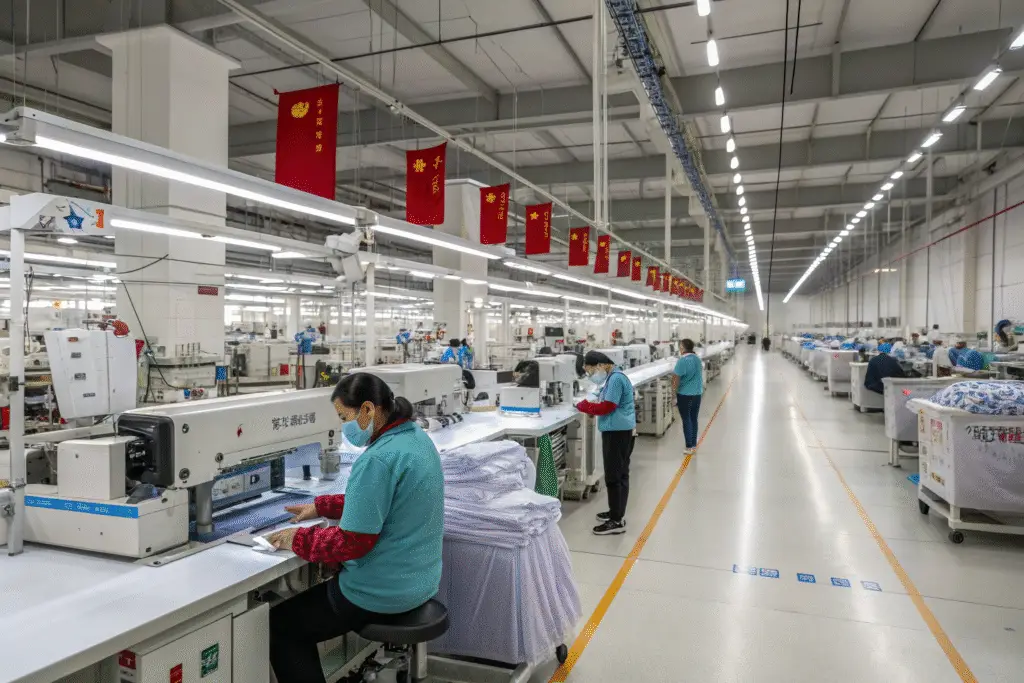
China’s concentrated textile industry means most components are available within short distances, reducing logistics costs and lead times. The Pearl River Delta region alone produces everything from raw fibers to finished garments, with complete supply chains within hours of each other. We recently helped a sportswear brand reduce their production timeline from 12 to 8 weeks by leveraging our local access to technical fabric mills, trim suppliers, and washing facilities all within 200 kilometers.
What transportation advantages reduce logistics expenses?
China’s modern ports, extensive highway systems, and reliable logistics networks ensure predictable shipping timelines and costs. Compared to manufacturers in regions with less developed infrastructure, Chinese factories benefit from efficient export processes and multiple shipping options. A European brand calculated that despite higher per-unit costs from China compared to Bangladesh, their total landed cost was 12% lower due to faster transit times and fewer shipping complications.
How Does Technical Expertise Create Value Beyond Price?
The knowledge accumulated through decades of manufacturing for global brands represents intellectual capital that newer manufacturing regions lack.
This expertise translates into better problem-solving, higher quality, and more efficient production.

What specialized skills distinguish Chinese manufacturers?
Chinese factories have developed deep expertise in specific product categories through repeated production refinement. Our factory has focused on knitwear and technical apparel, developing proprietary techniques for seamless construction and performance finishing. A outdoor brand accessed this expertise to perfect their jacket ventilation system, achieving performance features they couldn’t replicate with manufacturers in newer production regions despite lower labor rates.
How does experience reduce production risks?
Years of solving manufacturing challenges means Chinese factories anticipate and prevent issues that disrupt production in less experienced regions. Our quality management systems have evolved through addressing thousands of production scenarios. A luxury brand avoided potential fabric shrinkage issues because our experience with similar materials allowed us to adjust cutting patterns preemptively – knowledge that would have taken manufacturers in emerging regions several failed productions to acquire.
What Efficiency Advantages Maintain Cost Competitiveness?
While Chinese labor rates have increased, productivity gains and manufacturing innovations have maintained cost competitiveness through efficiency rather than cheap labor.
Advanced manufacturing approaches deliver more value per dollar than purely low-wage alternatives.

How has automation preserved cost advantages?
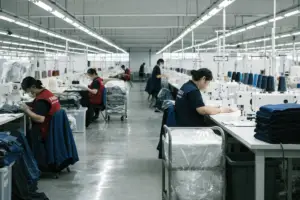
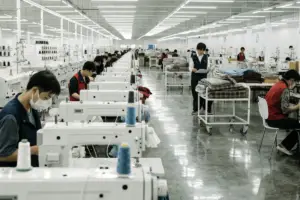
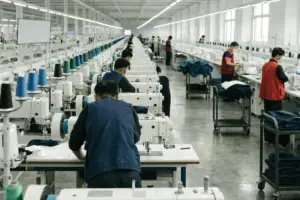
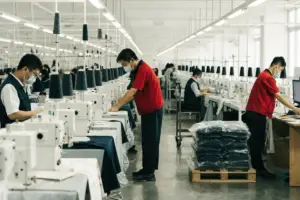
Strategic automation in cutting, sewing, and material handling maintains cost efficiency despite rising wages. We’ve implemented semi-automated cutting systems that reduce labor requirements while improving precision. A basic apparel brand found that although our per-hour labor rate was 60% higher than a Vietnamese factory, our automated systems produced 3.2 times more units per labor hour, resulting in 15% lower total labor costs.
What production system efficiencies reduce costs?
Lean manufacturing principles and optimized workflow systems maximize productivity throughout Chinese factories. Our implementation of cellular manufacturing reduces movement waste and improves quality consistency. A fast-fashion brand achieved 22% better efficiency with our factory compared to a lower-wage alternative because our production systems minimized non-sewing time and reduced quality issues that require rework.
How Does Scale Create Value For Clothing Brands?
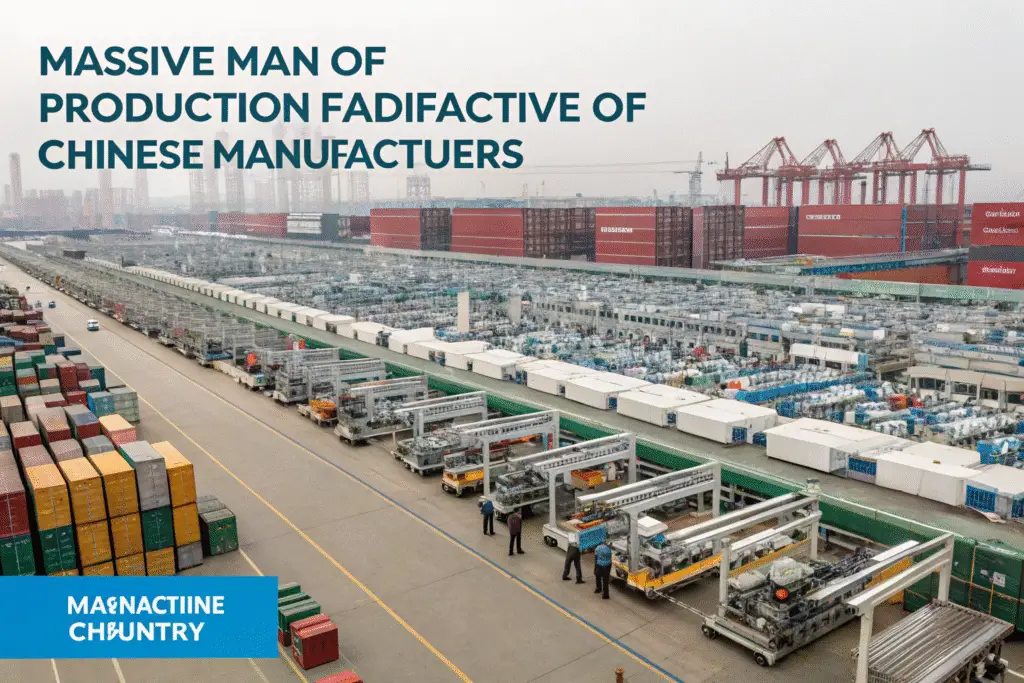
The massive production capacity of Chinese manufacturers creates economies of scale that smaller manufacturing countries cannot match.
This scale benefits brands through better pricing, flexibility, and production capability.
What pricing advantages come with scale?
Large-volume material purchasing and specialized equipment utilization reduce per-unit costs significantly. Our factory’s annual fabric consumption volumes secure pricing 15-25% better than smaller factories can achieve. A growing brand accessed these material savings despite their moderate order quantities because we consolidate purchasing across multiple clients, extending scale advantages to businesses of all sizes.
How does capacity support business growth?
Chinese factories can accommodate rapid scaling that would overwhelm manufacturers in smaller countries. Our multiple production lines and deep supplier relationships enable us to scale from 5,000 to 50,000 pieces without quality degradation. An e-commerce brand grew from 2,000 to 25,000 monthly units without changing manufacturers, avoiding the production disruptions and quality inconsistencies that often accompany rapid growth with less capable factories.
What Innovation Capabilities Enhance Long-Term Value?
Chinese manufacturers increasingly lead in manufacturing innovation, developing new techniques and processes that improve product quality and production efficiency.
This innovation focus delivers ongoing value beyond initial cost considerations.

How are Chinese factories advancing sustainable manufacturing?
Significant investments in eco-friendly production technologies reduce environmental impact while often lowering long-term costs. We’ve implemented water recycling systems and energy-efficient equipment that both reduce our environmental footprint and decrease operating expenses. A sustainable brand achieved their environmental goals while maintaining cost targets by partnering with our factory, accessing technologies that weren’t available in less developed manufacturing regions.
What technical innovations improve product quality?
Ongoing development of specialized equipment and techniques enhances product capabilities beyond what’s possible with basic manufacturing approaches. Our R&D in seam sealing technology has created more durable waterproof constructions for outdoor apparel. A performance wear brand accessed these innovations to differentiate their products in a competitive market, creating features that manufacturers in emerging regions couldn’t replicate with their more basic equipment.
How Do Comprehensive Services Provide Additional Value?
Chinese manufacturers typically offer full-package services that simplify the production process and reduce the administrative burden on brands.
These integrated services create value beyond simple manufacturing costs.

Integrated services covering fabric sourcing, trim procurement, quality control, and logistics prevent unexpected expenses that occur when coordinating multiple suppliers. Our DDP service model provides cost certainty that piecemeal approaches cannot match. A startup discovered that while our per-unit price was 12% higher than a basic manufacturing quote, our full-package service actually cost 18% less when they accounted for all the additional expenses and time required to manage multiple suppliers themselves.
How does vertical integration improve value?
Factories controlling multiple production stages achieve better coordination, quality control, and cost management. Our vertical integration includes knitting, dyeing, and cutting operations, reducing external dependencies. A luxury brand appreciated how our integrated approach ensured color consistency from dyeing through finishing, a coordination challenge that had caused quality issues when they worked with separate specialized factories.
Conclusion
Chinese garment manufacturers continue to offer the best value because they combine sophisticated infrastructure, deep expertise, production efficiency, innovation capability, and comprehensive services that deliver superior overall value beyond simple per-unit cost comparisons. While other regions might offer lower wage rates, China’s mature manufacturing ecosystem, technical knowledge, and continuous improvement create tangible benefits in quality consistency, production reliability, problem-solving capability, and long-term partnership value. These advantages explain why clothing brands continue to prioritize Chinese manufacturing even as production costs increase.
If you’re evaluating manufacturing options and want to understand how Chinese production might deliver better value for your specific product needs, we can provide detailed analysis of how the Chinese manufacturing advantage applies to your business. At Fumao Clothing, we’ve helped hundreds of brands leverage China’s manufacturing strengths to build successful clothing businesses. Contact our Business Director, Elaine, at elaine@fumaoclothing.com to discuss how Chinese manufacturing might provide the best value for your brand beyond simple cost comparisons.